

Care Disclaimer: Plant care recommendations are general guidelines based on common growing conditions. Individual results may vary based on your local environment, climate, and care routine. If your plant is toxic, keep it away from children and pets, and consult a veterinarian if accidental ingestion occurs.
1.Philodendron Tortum — Overview
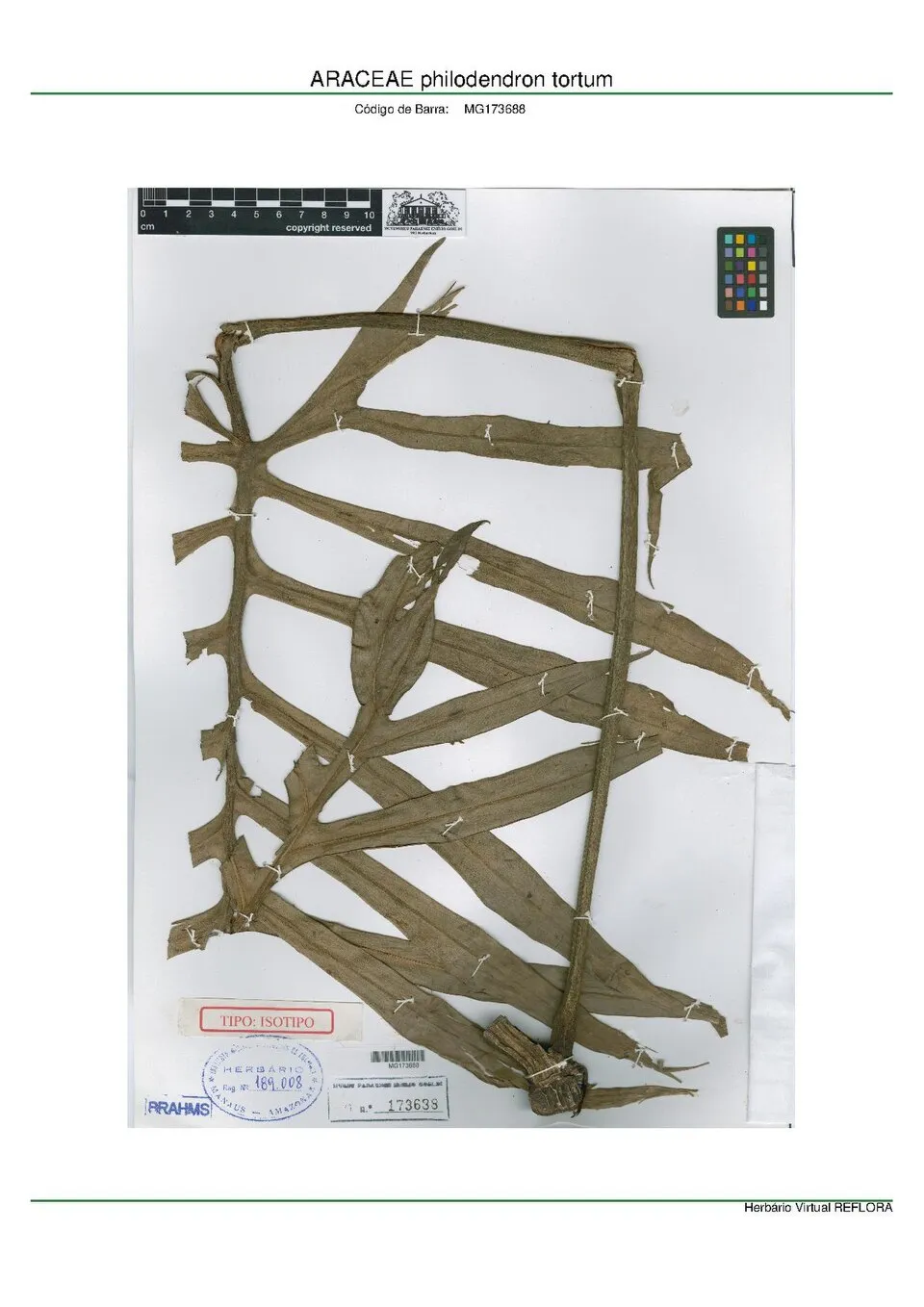
Philodendron tortum, a truly remarkable species within the expansive Araceae family, is celebrated for its exceptionally intricate and deeply lobed foliage. This hemiepiphytic plant originates from the humid, dappled light environments of tropical rainforest understories, predominantly found in South American countries like Colombia and parts of Brazil.
It showcases a versatile growth habit, capable of starting life terrestrially and then climbing host trees with robust aerial roots, or germinating epiphytically on a host before sending roots down to the forest floor. Its elongated, often slightly textured stems are adapted for climbing, providing both grip and some moisture retention in its native habitat.
The most distinctive characteristic of Philodendron tortum lies in its leaves, which are profoundly dissected, evoking a skeletal or 'finger-like' aesthetic. These striking leaves can typically grow to lengths of 30 to 45 centimeters, with mature specimens sometimes exceeding this. Each leaf is composed of numerous slender, elongated lobes that radiate from a central midrib, forming an elaborate, almost architectural pattern.
The vibrant green of newly unfurled leaves matures into a rich, glossy dark green, intensifying their dramatic visual appeal. This complex leaf morphology is not merely decorative; it represents an evolutionary adaptation to its dense rainforest home, potentially maximizing light capture in the low-light understory and facilitating efficient water runoff.
While primarily valued for its extraordinary foliage in horticulture, Philodendron tortum does produce characteristic inflorescences of the Araceae family. These structures feature a spathe, a modified leaf that envelops a central column-like spadix bearing numerous small, inconspicuous flowers.
The spathe typically presents in shades of white or cream, offering a subtle contrast to the plant's vivid green leaves.
Trusted Scientific References
1. Authoritative external sources for Philodendron tortum
1.1 Wikipedia — Philodendron tortum
1.2 Kew POWO (Plants of the World Online)
1.3 PubMed — peer-reviewed research
1.4 NCBI Taxonomy Browser
1.5 GBIF — Global Biodiversity
1.1.Philodendron Tortum — Key Features
- ✓ <strong>Deeply dissected, 'finger</strong> — like' or skeletal leaves — The most distinctive morphological trait.
- ✓ <strong>Hemiepiphytic growth habit</strong> — Can start terrestrially or epiphytically, then climbs.
- ✓ <strong>Native to South American rainforests</strong> — Thrives in warm, humid, dappled light conditions.
- ✓ <strong>Robust climbing stems with aerial roots</strong> — Aids in anchorage and nutrient absorption.
- ✓ <strong>Ornamental value</strong> — Highly sought after by plant enthusiasts for its unique aesthetic.
- ✓ <strong>Araceae family inflorescence</strong> — Produces a spathe and spadix, typical of its family.
- ✓ <strong>Requires bright, indirect light</strong> — Sensitive to prolonged direct sun exposure.
- ✓ <strong>Porous, well</strong> — draining substrate preference — Essential for healthy root development.
- ✓ <strong>Toxicity due to calcium oxalate</strong> — Causes irritation if ingested or comes into contact with skin/mucous membranes.
- ✓ <strong>Easy propagation from node cuttings</strong> — Facilitates reproduction and plant restructuring.
1.2.Philodendron Tortum — Quick Summary
- ✓ Philodendron tortum features unique, deeply lobed, 'finger-like' leaves, making it a prized ornamental.
- ✓ Native to the tropical rainforests of South America, it exhibits a hemiepiphytic climbing growth habit.
- ✓ Requires bright, indirect light, consistent warmth, high humidity, and a well-draining, aerated substrate.
- ✓ Propagates readily from node cuttings, ideal for expanding collections or restructuring.
- ✓ All parts of the plant contain calcium oxalate crystals, rendering it toxic if ingested and causing irritation.
- ✓ Primarily cultivated for its aesthetic appeal and botanical interest, with no established medicinal uses.
2.Philodendron Tortum — Scientific Identity
3.Philodendron Tortum — Quick Facts
4.Philodendron Tortum — Appearance & Identification
5.Philodendron Tortum — Native Habitat
6.Philodendron Tortum — Water Requirements
- ✓ Light — Provide bright, indirect light; ideally 200-400 FC (40-80 µmol/s/m²) for 12 hours daily, or up to 800 FC (160 µmol/s/m²) for more vigorous growth, avoiding direct sun for extended periods.
- ✓ Watering — Water thoroughly when the top half of the substrate feels dry, ensuring complete saturation and allowing excess water to drain away to prevent root rot.
- ✓ Substrate — Use a well-aerated, porous potting mix, typically a blend of coco coir or peat moss, perlite, and bark chips (e.g., 3 parts potting mix to 1 part bark) to mimic its epiphytic needs.
- ✓ Humidity — Thrives in high humidity (60-80%), mimicking its rainforest habitat; consider a humidifier, pebble tray, or grouping with other plants.
- ✓ Fertilizing — During the growing season, apply a high-nitrogen fertilizer (e.g., 3-1-2 ratio) with every watering at a diluted strength to support lush foliage growth.
- ✓ Temperature — Maintain warm temperatures, ideally between 18-29°C (65-85°F), protecting from cold drafts and sudden temperature fluctuations.
- ✓ Propagation — Easily propagated from node cuttings; place 2-node segments in moist sphagnum moss within a sealed propagation box to maintain high humidity and encourage rooting.
- ✓ Support — As a climbing plant, provide a moss pole or other vertical support to encourage larger, more mature leaf development.
Reviewed by the Flora Medical Global Botanical Review Panel
Multi-disciplinary editorial group · Botany · Ethnobotany · Herbal-medicine literature
Who reviewed this: This page was checked by the Flora Medical Global Botanical Review Panel — an in-house editorial group of botany graduates, ethnobotany researchers, and horticulture practitioners who collectively maintain our 7,000+ plant encyclopedia. Meet the team.
Our 4-step verification process
1. Taxonomic verification
Scientific names and synonyms cross-checked against Kew POWO, World Flora Online, and The Plant List.
2. Phytochemical & medicinal cross-reference
Active compounds, traditional uses, and reported activities are cross-referenced with PubMed, USDA Dr. Duke's database, and peer-reviewed ethnobotanical literature.
3. Conservation & distribution check
Distribution, ecology, and conservation status confirmed against GBIF occurrence records and the IUCN Red List.
4. Editorial & safety review
Every entry passes an editorial pass for clarity, originality, and safety notices (toxicity, contraindications, dosage caveats) before publication.
Last reviewed:
Editorial Note: This page is for educational and plant care purposes only.
Written by: Flora Medical Global Editorial Team
Reviewed by: Flora Medical Global Botanical Review Panel
Last Updated: June 15, 2026







Philodendron Tortum — Comments & Community Reviews
Rate this plant