

Care Disclaimer: Plant care recommendations are general guidelines based on common growing conditions. Individual results may vary based on your local environment, climate, and care routine. If your plant is toxic, keep it away from children and pets, and consult a veterinarian if accidental ingestion occurs.
1.Philodendron Verrucosum — Overview
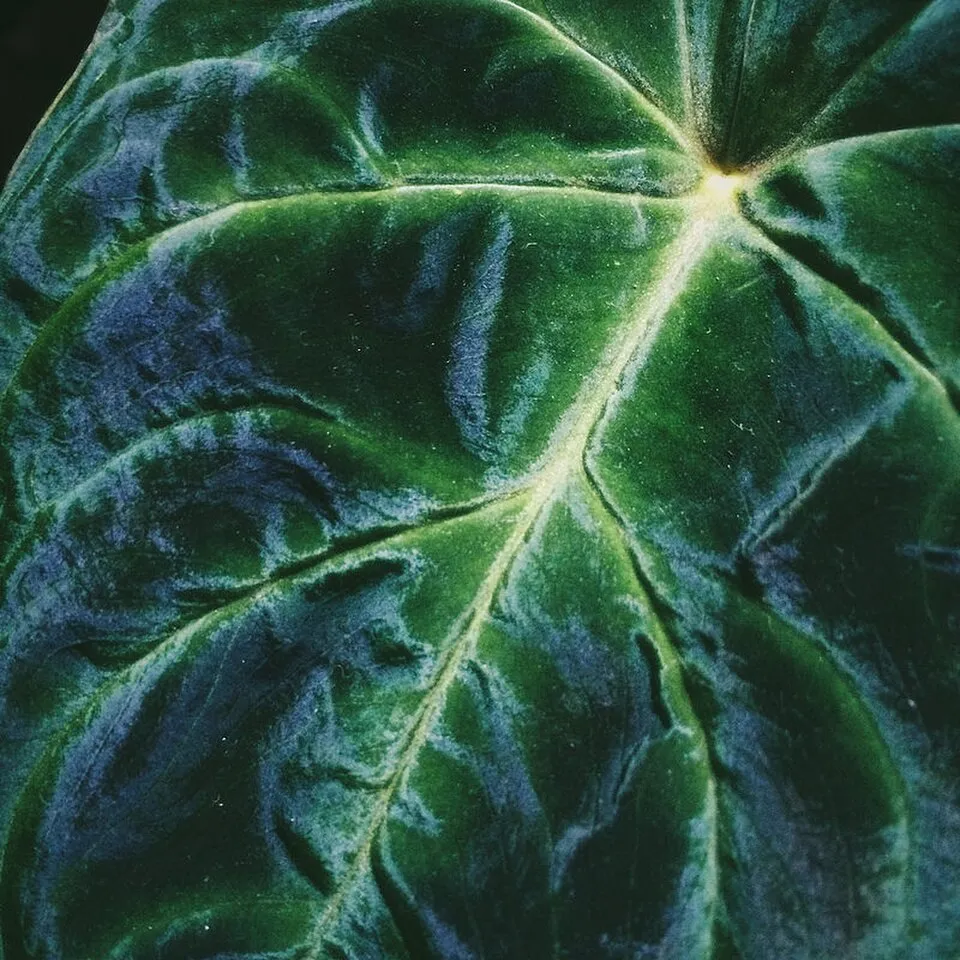
Philodendron verrucosum, often recognized by its evocative common name, Velvet Philodendron, is a captivating hemiepiphytic aroid indigenous to the lush, humid montane cloud forests and dense rainforests of Central and South America. Its natural range primarily spans Colombia, Ecuador, Peru, and extends into parts of Costa Rica. This species thrives as an understory climber, anchoring itself to host trees with robust aerial roots that also facilitate nutrient and moisture absorption, adapting perfectly to the dappled sunlight and consistently high humidity characteristic of its native environment. Morphologically, the plant is distinguished by its truly remarkable foliage. Its large, cordate (heart-shaped) to broadly ovate leaves can achieve impressive dimensions, frequently exceeding 25 cm (10 inches) in length.
The adaxial, or upper, leaf surface boasts a profound velvety texture, varying in hue from a deep forest green to an almost blackish tone, spectacularly juxtaposed by vibrant, iridescent venation that can appear as pale yellow, brilliant white, or even reddish, creating a visually striking mosaic. Conversely, the abaxial (lower) surface often displays rich reddish or purplish undertones, further enhancing its ornamental appeal. The petioles, which delicately support these magnificent leaves, are typically sturdy and covered in distinctive fine, bristly hairs or 'verrucae' (warts), a feature that directly informs the species' specific epithet 'verrucosum'. Stems are generally green, progressively thickening and lignifying with age to support the plant's climbing habit. Its root system is bifunctional, beginning with terrestrial roots for initial anchorage and nutrient uptake, then developing aerial roots for climbing and atmospheric moisture absorption as it matures.
While rarely observed in typical indoor cultivation, its inflorescences consist of a greenish-white or cream spathe, a modified leaf structure, elegantly enclosing a creamy-white spadix bearing numerous small, inconspicuous flowers. The spathe often emits a subtle, earthy fragrance and features a reddish-brown interior. Fruits develop into small berries containing seeds, though their production is generally limited outside of their native ecological niche. Taxonomically, Philodendron verrucosum is a member of the extensive Araceae family, a diverse group that encompasses many other popular ornamental and medicinal plants. Trusted Scientific References Authoritative external sources for ...[CURRENT TEXT EXISTS: 2681 chars]
1.1.Philodendron Verrucosum — Key Features
- ✓ <strong>Velvety Leaf Texture</strong> — Adaxial leaf surface possesses a distinctive, soft, and plush velvety feel.
- ✓ <strong>Iridescent Venation</strong> — Features striking, often brightly colored veins that contrast sharply with the dark leaf blade.
- ✓ <strong>Heart</strong> — shaped to Ovate Leaves — Large, prominent foliage, typically cordate or broadly ovate in shape, reaching considerable size.
- ✓ <strong>Hairy Petioles</strong> — Characterized by robust petioles covered in fine, bristly hairs or 'verrucae', giving the plant its specific epithet.
- ✓ <strong>Hemiepiphytic Growth Habit</strong> — Begins life terrestrially, then climbs trees using aerial roots, adapting to various light levels.
- ✓ <strong>Native to Cloud Forests</strong> — Thrives in high humidity, filtered light, and warm temperatures of its natural montane rainforest habitat.
- ✓ <strong>Air Purifying Qualities</strong> — Contributes to cleaner indoor air by absorbing common volatile organic compounds (VOCs).
- ✓ <strong>Natural Humidifier</strong> — Releases moisture vapor through transpiration, subtly increasing ambient humidity in enclosed spaces.
- ✓ <strong>Mood and Productivity Enhancer</strong> — Its presence positively impacts psychological well-being, reducing stress and improving focus.
- ✓ <strong>High Ornamental Value</strong> — Highly prized by plant enthusiasts for its stunning, unique foliage and tropical aesthetic.
1.2.Philodendron Verrucosum — Quick Summary
- ✓ Philodendron verrucosum is an exquisite ornamental aroid famed for its velvety, iridescent foliage.
- ✓ Native to humid Central and South American rainforests, it thrives as a striking hemiepiphyte.
- ✓ Offers significant biophilic benefits, acting as a natural air purifier and humidifier, enhancing mood and productivity.
- ✓ Contains calcium oxalate crystals, rendering all plant parts toxic if ingested, causing severe oral and digestive irritation.
- ✓ Requires high humidity, bright indirect light, and a well-draining, airy substrate for optimal growth.
- ✓ Primarily valued for its aesthetic contribution and indirect wellness benefits, not for direct medicinal consumption.
2.Philodendron Verrucosum — Scientific Identity
3.Philodendron Verrucosum — Quick Facts
4.Philodendron Verrucosum — Appearance & Identification
5.Philodendron Verrucosum — Native Habitat
6.Philodendron Verrucosum — Water Requirements
- ✓ Light — Provide bright, indirect light; direct sunlight can scorch its delicate velvety leaves.
- ✓ Humidity — Requires consistently high humidity, ideally 70-80% or higher, mimicking its native cloud forest habitat.
- ✓ Watering — Keep the soil consistently moist but never waterlogged; allow the top inch of soil to dry out slightly between waterings.
- ✓ Soil — Use a very well-draining, airy aroid-specific potting mix rich in organic matter, such as a blend of bark, perlite, coco coir, and worm castings.
- ✓ Temperature — Thrives in warm conditions, with ideal temperatures ranging from 18-29°C (65-85°F); protect from cold drafts and temperatures below 15°C (60°F).
- ✓ Support — As a climbing hemiepiphyte, provide a moss pole, trellis, or other support for its aerial roots to cling to, encouraging larger leaf development.
- ✓ Fertilization — Feed with a balanced liquid fertilizer diluted to half strength every 2-4 weeks during the active growing season (spring and summer).
- ✓ Propagation — Easily propagated from stem cuttings with at least one node and an aerial root, rooted in water, moist sphagnum moss, or a perlite-rich mix.
Reviewed by the Flora Medical Global Botanical Review Panel
Multi-disciplinary editorial group · Botany · Ethnobotany · Herbal-medicine literature
Who reviewed this: This page was checked by the Flora Medical Global Botanical Review Panel — an in-house editorial group of botany graduates, ethnobotany researchers, and horticulture practitioners who collectively maintain our 7,000+ plant encyclopedia. Meet the team.
Our 4-step verification process
1. Taxonomic verification
Scientific names and synonyms cross-checked against Kew POWO, World Flora Online, and The Plant List.
2. Phytochemical & medicinal cross-reference
Active compounds, traditional uses, and reported activities are cross-referenced with PubMed, USDA Dr. Duke's database, and peer-reviewed ethnobotanical literature.
3. Conservation & distribution check
Distribution, ecology, and conservation status confirmed against GBIF occurrence records and the IUCN Red List.
4. Editorial & safety review
Every entry passes an editorial pass for clarity, originality, and safety notices (toxicity, contraindications, dosage caveats) before publication.
Last reviewed:
Editorial Note: This page is for educational and plant care purposes only.
Written by: Flora Medical Global Editorial Team
Reviewed by: Flora Medical Global Botanical Review Panel
Last Updated: June 15, 2026







Philodendron Verrucosum — Comments & Community Reviews
Rate this plant