
Care Disclaimer: Plant care recommendations are general guidelines based on common growing conditions. Individual results may vary based on your local environment, climate, and care routine. If your plant is toxic, keep it away from children and pets, and consult a veterinarian if accidental ingestion occurs.
1.Pilea Dark Mystery — Overview
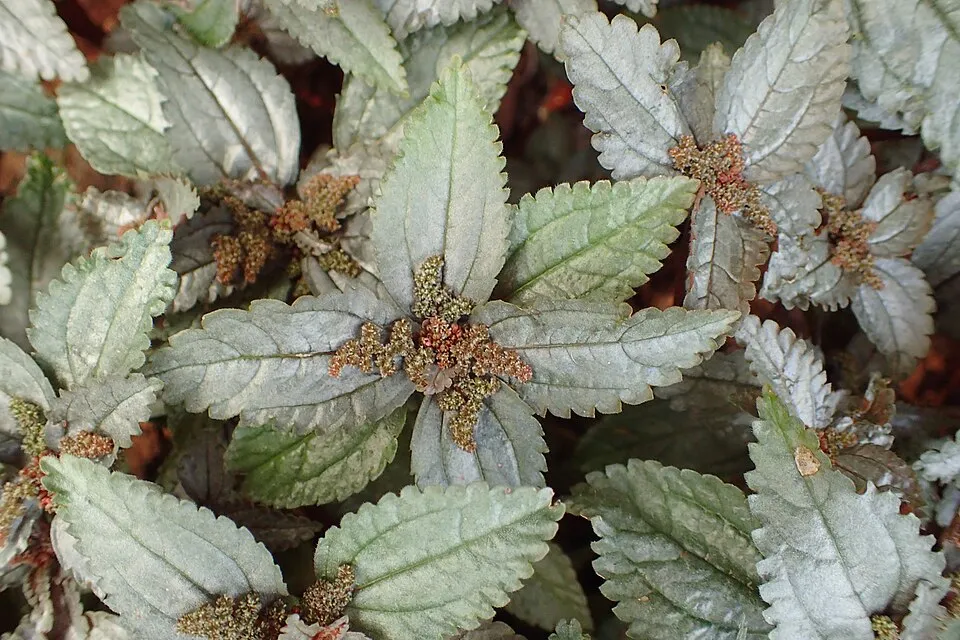
Pilea Dark Mystery, scientifically designated as Pilea spruceana 'Dark Mystery', is a distinguished cultivar within the genus Pilea, itself a member of the diverse Urticaceae family, commonly known as the nettle family. While Pilea spruceana is native to the tropical and subtropical regions of Central and South America, particularly thriving in humid, shaded understory environments, 'Dark Mystery' is specifically cultivated for its exceptional ornamental value. This cultivar typically exhibits a compact, bushy growth habit, making it an excellent choice for indoor cultivation, terrariums, and desktop display.
It generally reaches a mature height and spread of approximately 30 to 45 cm (12 to 18 inches). Its stems are characteristically slender, erect, and a delicate pale green, forming a robust yet elegant framework for its striking foliage. The root system is fibrous and relatively shallow, a common adaptation for herbaceous plants in nutrient-rich upper soil layers.
The most captivating feature of Pilea spruceana 'Dark Mystery' is undeniably its leaves. They are ovate to cordate, ranging from 3 to 6 inches (7.5 to 15 cm) in length, and possess a subtly serrated margin. The adaxial (upper) surface presents a profound, rich green base color, dramatically variegated with a shimmering, metallic silver pattern that often highlights the veins and central areas, creating its eponymous 'dark mystery' aesthetic.
The abaxial (underside) surface provides a stark contrast, typically displaying a reddish-purple hue, a common trait in many Pilea species believed to enhance light absorption in low-light conditions. The venation is pinnate, distinctively sunken on the upper surface, further contributing to the leaf's intricate texture. Although primarily cultivated for its foliage, Pilea spruceana can produce small, inconspicuous greenish-white to pinkish spiky flower clusters from the leaf axils, though these are seldom seen in typical indoor environments due to specific blooming requirements.
Trusted Scientific References
1. Authoritative external sources for Pilea spruceana dark mystery
1.1 Wikipedia — Pilea spruceana dark mystery
1.2 Kew POWO (Plants of the World Online)
1.3 PubMed — peer-reviewed research
1.4 NCBI Taxonomy Browser
1.5 GBIF — Global Biodiversity
1.1.Pilea Dark Mystery — Key Features
- ✓ <strong>Ornamental Foliage</strong> — Highly prized for its unique metallic silver variegation on deep green leaves, creating a 'dark mystery' pattern.
- ✓ <strong>Compact Growth Habit</strong> — Forms a bushy, mounding plant, ideal for tabletops, terrariums, and small spaces.
- ✓ <strong>Bicolor Leaves</strong> — Features a striking contrast with a dark green and silver adaxial surface and a reddish-purple abaxial surface.
- ✓ <strong>Easy Propagation</strong> — Readily roots from stem cuttings in water or moist potting mix, making it simple to multiply.
- ✓ <strong>High Humidity Preference</strong> — Thrives in environments with elevated humidity, mimicking its tropical understory origins.
- ✓ <strong>Low Light Tolerance</strong> — Prefers bright, indirect light but can tolerate lower light conditions, though variegation may be less pronounced.
- ✓ <strong>Non</strong> — Stinging — Unlike some Urticaceae family members, Pilea spruceana 'Dark Mystery' does not possess stinging hairs.
- ✓ <strong>Versatile Indoor Plant</strong> — Excellent for terrariums, vivariums, dish gardens, or as a standalone potted plant.
- ✓ <strong>Fast Grower</strong> — Under optimal conditions, it can grow quite quickly, filling out its space efficiently.
- ✓ <strong>Distinctive Texture</strong> — Sunken venation on the upper leaf surface adds to its unique tactile and visual appeal.
1.2.Pilea Dark Mystery — Quick Summary
- ✓ Pilea spruceana 'Dark Mystery' is an ornamental cultivar known for its striking metallic-patterned foliage.
- ✓ Belongs to the Urticaceae family, which includes medicinally valued species like Pilea microphylla.
- ✓ Related species (P. microphylla) show antioxidant, anti-inflammatory, and antimicrobial properties.
- ✓ Rich in flavonoids and polyphenols such as Quercetin, Rutin, and Chlorogenic acid.
- ✓ Primarily an indoor houseplant, requiring bright indirect light and high humidity.
- ✓ Medicinal uses are largely extrapolated from Pilea microphylla; specific research on 'Dark Mystery' is limited.
2.Pilea Dark Mystery — Scientific Identity
3.Pilea Dark Mystery — Quick Facts
4.Pilea Dark Mystery — Appearance & Identification
5.Pilea Dark Mystery — Native Habitat
6.Pilea Dark Mystery — Water Requirements
- Cultivating Pilea spruceana 'Dark Mystery' for ornamental purposes requires attention to specific environmental conditions to ensure vibrant foliage and healthy growth.
- ✓ Light Requirements — Provide bright, indirect light; direct sunlight can scorch the delicate leaves. An east or north-facing window is ideal.
- ✓ Watering Schedule — Keep the soil consistently moist but never waterlogged. Allow the top inch of soil to dry slightly between waterings, reducing frequency in winter.
- ✓ Humidity Levels — This tropical plant thrives in high humidity (above 60%). Misting regularly, using a pebble tray, or placing it near a humidifier is beneficial.
- ✓ Soil Composition — Use a well-draining, peat-based potting mix rich in organic matter. A mix suitable for African violets or ferns works well.
- ✓ Temperature Range — Maintain indoor temperatures between 18-24°C (65-75°F). Avoid sudden temperature fluctuations and cold drafts.
- ✓ Fertilization — Feed with a balanced liquid fertilizer diluted to half strength every 2-4 weeks during the growing season (spring and summer). Reduce or cease feeding in winter.
- ✓ Propagation — Easily propagated by stem cuttings. Cuttings root readily in water or moist potting mix.
- ✓ Pruning — Pinch back leggy stems to encourage a bushier growth habit and maintain its compact form.
Reviewed by the Flora Medical Global Botanical Review Panel
Multi-disciplinary editorial group · Botany · Ethnobotany · Herbal-medicine literature
Who reviewed this: This page was checked by the Flora Medical Global Botanical Review Panel — an in-house editorial group of botany graduates, ethnobotany researchers, and horticulture practitioners who collectively maintain our 7,000+ plant encyclopedia. Meet the team.
Our 4-step verification process
1. Taxonomic verification
Scientific names and synonyms cross-checked against Kew POWO, World Flora Online, and The Plant List.
2. Phytochemical & medicinal cross-reference
Active compounds, traditional uses, and reported activities are cross-referenced with PubMed, USDA Dr. Duke's database, and peer-reviewed ethnobotanical literature.
3. Conservation & distribution check
Distribution, ecology, and conservation status confirmed against GBIF occurrence records and the IUCN Red List.
4. Editorial & safety review
Every entry passes an editorial pass for clarity, originality, and safety notices (toxicity, contraindications, dosage caveats) before publication.
Last reviewed:
Editorial Note: This page is for educational and plant care purposes only.
Written by: Flora Medical Global Editorial Team
Reviewed by: Flora Medical Global Botanical Review Panel
Last Updated: June 15, 2026







Pilea Dark Mystery — Comments & Community Reviews
Rate this plant