

Care Disclaimer: Plant care recommendations are general guidelines based on common growing conditions. Individual results may vary based on your local environment, climate, and care routine. If your plant is toxic, keep it away from children and pets, and consult a veterinarian if accidental ingestion occurs.
1.Pilosocereus Azureus — Overview
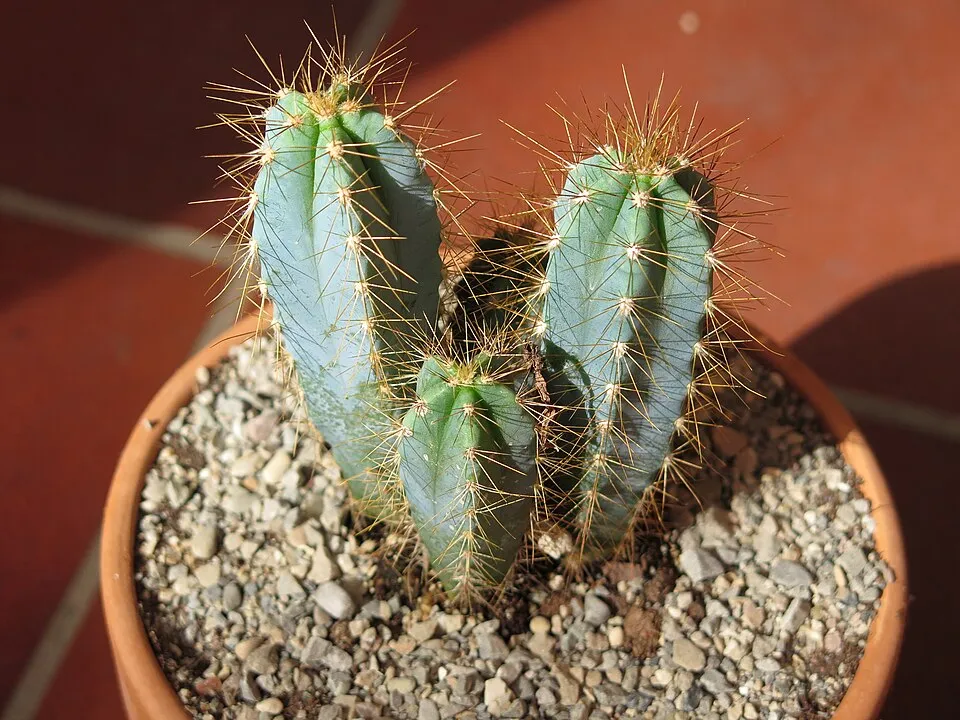
Pilosocereus azureus, commonly known as the Blue Torch Cactus or Azure Cereus, is an iconic member of the Cactaceae family, primarily indigenous to the semi-arid and arid regions of eastern Brazil, specifically in the states of Bahia and Minas Gerais. This striking columnar cactus thrives in challenging environments such as dry shrublands, caatinga, and rocky outcrops, where it often forms impressive, dominating clusters. Its natural habitat is characterized by intense solar radiation, elevated temperatures, and prolonged periods of drought, to which Pilosocereus azureus is remarkably adapted. Morphologically, it is distinguished by its vibrant blue-green, glaucous stems, which are typically unbranched or sparingly branched from the base, growing robustly upright to heights of 3 to 10 meters in its native range, though cultivated specimens tend to be smaller.
The stems are stout, cylindrical, and feature prominent, usually 8 to 12, well-defined ribs that extend vertically along their length. These ribs are adorned with clusters of short, creamy white to yellowish spines, typically 1-2 centimeters long, emerging from woolly areoles. These spines offer a protective barrier against herbivores and contribute to water conservation by creating a microclimate. The epidermis is covered with a thick, waxy cuticle, which imparts its distinctive blue coloration and further enhances its xerophytic adaptations.
Flowers of Pilosocereus azureus are nocturnal, large, funnel-shaped, and pure white, blooming from a specialized woolly and spiny structure near the apex of mature stems, known as a cephalium, during warmer months. These ephemeral blooms are primarily pollinated by bats and moths, emitting a subtle, sweet fragrance. Following successful pollination, the plant develops globose, often purplish-red fruits that contain numerous small, black seeds. Taxonomically, Pilosocereus azureus belongs to the genus Pilosocereus, whose name is derived from Latin, referring to its hairy or woolly structures.
Trusted Scientific References
1. Authoritative external sources for Pilosocereus azureus
1.1 Wikipedia — Pilosocereus azureus
1.2 Kew POWO (Plants of the World Online)
1.3 PubMed — peer-reviewed research
1.4 NCBI Taxonomy Browser
1.5 GBIF — Global Biodiversity
1.1.Pilosocereus Azureus — Key Features
- ✓ <strong>Distinctive glaucous blue</strong> — green columnar stems, reaching impressive heights.
- ✓ <strong>Native to the semi</strong> — arid and arid regions of eastern Brazil (Bahia, Minas Gerais).
- ✓ <strong>Highly drought</strong> — tolerant and adapted to intense sunlight and high temperatures.
- ✓ <strong>Features prominent ribs</strong> — Features prominent ribs adorned with clusters of creamy white to yellowish spines.
- ✓ <strong>Produces large, funnel</strong> — shaped, nocturnal white flowers from a specialized cephalium.
- ✓ <strong>Develops globose, often purplish</strong> — red fruits containing numerous small, black seeds.
- ✓ <strong>Symbolizes resilience, creativity,</strong> — Symbolizes resilience, creativity, ambition, and offers protection in cultural contexts.
- ✓ <strong>Contains significant amounts</strong> — Contains significant amounts of mucilage, providing emollient and hydrating properties.
- ✓ <strong>Possesses phytochemicals like</strong> — Possesses phytochemicals like flavonoids and phenolic acids with antioxidant potential.
- ✓ <strong>An excellent ornamental</strong> — An excellent ornamental plant for xeriscaping and drought-tolerant garden designs.
1.2.Pilosocereus Azureus — Quick Summary
- ✓ Pilosocereus azureus, or Blue Torch Cactus, is a distinctive blue-green columnar cactus native to Brazil.
- ✓ It is highly adapted to arid environments, known for its striking appearance and resilience.
- ✓ Traditionally used topically for skin soothing, hydration, and minor wound care due to its mucilage content.
- ✓ Rich in beneficial compounds like polysaccharides, flavonoids, and phenolic acids, offering antioxidant potential.
- ✓ Valued for its aesthetic appeal, symbolic significance, and contributions to mental well-being through biophilic design.
- ✓ Primarily for external application; internal consumption is not advised due to unknown safety and potential toxicity.
2.Pilosocereus Azureus — Scientific Identity
3.Pilosocereus Azureus — Quick Facts
4.Pilosocereus Azureus — Appearance & Identification
5.Pilosocereus Azureus — Native Habitat
6.Pilosocereus Azureus — Water Requirements
- ✓ Sunlight — Pilosocereus azureus thrives in full sun, requiring at least 6-8 hours of direct sunlight daily for optimal growth and coloration.
- ✓ Soil — Plant in a well-draining, sandy or rocky cactus-specific potting mix with a slightly acidic to neutral pH (6.0-7.5) to prevent root rot.
- ✓ Watering — Water infrequently and deeply during the active growing season (spring/summer), allowing the soil to dry out completely between waterings. Reduce watering significantly in winter.
- ✓ Temperature — Prefers warm temperatures between 20-35°C (68-95°F) and is sensitive to frost; protect from cold temperatures below 10°C (50°F).
- ✓ Propagation — Can be propagated from fresh seeds or by taking stem cuttings; allow cuttings to callus for several days to weeks before planting in dry soil.
- ✓ Fertilization — Feed sparingly with a balanced, low-nitrogen cactus fertilizer diluted to half strength once or twice during the spring and summer.
- ✓ Pests and Diseases — Generally robust, but monitor for common cactus pests like mealybugs and scale insects. The primary disease concern is root rot from overwatering.
- ✓ Container Growing — Ensure containers have ample drainage holes to prevent waterlogging, which is critical for the health of this drought-adapted cactus.
Reviewed by the Flora Medical Global Botanical Review Panel
Multi-disciplinary editorial group · Botany · Ethnobotany · Herbal-medicine literature
Who reviewed this: This page was checked by the Flora Medical Global Botanical Review Panel — an in-house editorial group of botany graduates, ethnobotany researchers, and horticulture practitioners who collectively maintain our 7,000+ plant encyclopedia. Meet the team.
Our 4-step verification process
1. Taxonomic verification
Scientific names and synonyms cross-checked against Kew POWO, World Flora Online, and The Plant List.
2. Phytochemical & medicinal cross-reference
Active compounds, traditional uses, and reported activities are cross-referenced with PubMed, USDA Dr. Duke's database, and peer-reviewed ethnobotanical literature.
3. Conservation & distribution check
Distribution, ecology, and conservation status confirmed against GBIF occurrence records and the IUCN Red List.
4. Editorial & safety review
Every entry passes an editorial pass for clarity, originality, and safety notices (toxicity, contraindications, dosage caveats) before publication.
Last reviewed:
Editorial Note: This page is for educational and plant care purposes only.
Written by: Flora Medical Global Editorial Team
Reviewed by: Flora Medical Global Botanical Review Panel
Last Updated: June 15, 2026







Pilosocereus Azureus — Comments & Community Reviews
Rate this plant