

Care Disclaimer: Plant care recommendations are general guidelines based on common growing conditions. Individual results may vary based on your local environment, climate, and care routine. If your plant is toxic, keep it away from children and pets, and consult a veterinarian if accidental ingestion occurs.
1.Pinguicula Moranensis — Overview
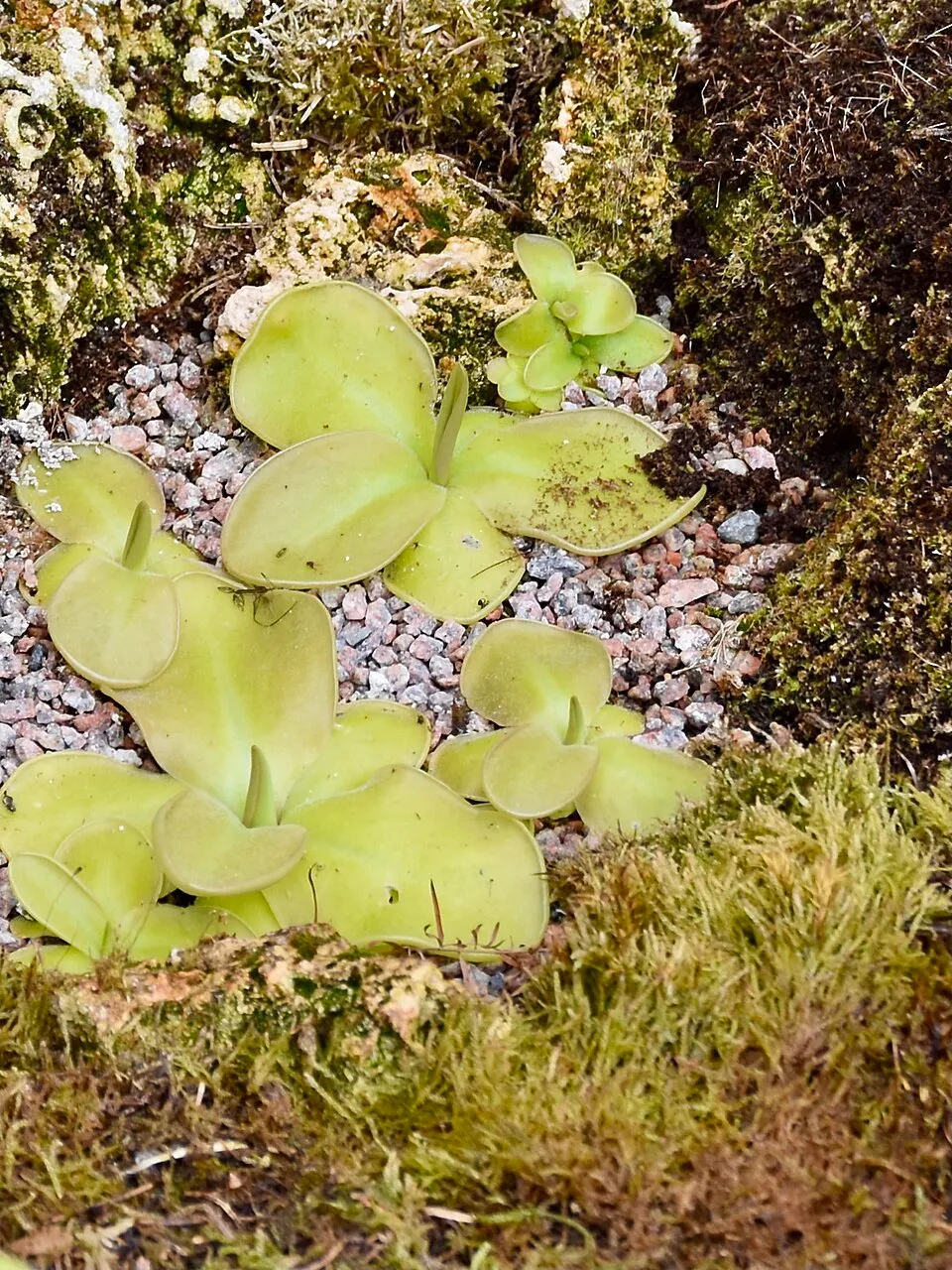
Pinguicula moranensis, widely recognized as the Mexican Butterwort, is an enchanting perennial herbaceous plant belonging to the Lentibulariaceae family. This distinctive species is indigenous to the humid, mountainous regions of Mexico, primarily found in states such as Chiapas and Puebla, where it thrives in nutrient-poor soils. The plant presents as a basal rosette of succulent, pale green leaves, which can extend up to 10 centimeters in length.
These leaves are a marvel of natural engineering, covered with numerous tiny, sticky glandular hairs that efficiently trap small insects. This carnivorous adaptation allows Pinguicula moranensis to supplement its nutrient intake, especially nitrogen, which is scarce in its native habitats. During the spring and early summer, the Mexican Butterwort produces delicate yet striking lavender or pale purple flowers.
These elegant blooms are borne on slender stalks that can reach up to 20 centimeters tall, featuring a distinctive five-lobed corolla that adds significant ornamental value. Pinguicula moranensis flourishes in high humidity environments and requires well-draining, mineral-poor substrates, making it a favored choice for terrariums, vivariums, and specialized indoor cultivation due to its unique aesthetic and biological functions.
Trusted Scientific References
1. Authoritative external sources for Pinguicula moranensis
1.1 Wikipedia — Pinguicula moranensis
1.2 Kew POWO (Plants of the World Online)
1.3 PubMed — peer-reviewed research
1.4 NCBI Taxonomy Browser
1.5 GBIF — Global Biodiversity
1.6Pinguicula Moranensis should be interpreted through verified botanical identity, practical care, and responsible safety language. This recovery note adds the missing context needed for a complete profile: match light to the plant's habit, use well-drained soil, water according to season, and avoid unsupported medicinal or edible claims. For publishing, the plant can be presented as a source-backed indoor plant with clear care guidance, common problem diagnosis, and conservative safety wording.
1.1.Pinguicula Moranensis — Key Features
- ✓ <strong>Carnivorous Plant</strong> — Traps and digests insects using glandular, sticky leaves.
- ✓ <strong>Mexican Native</strong> — Indigenous to humid regions of Mexico, particularly Chiapas and Puebla.
- ✓ <strong>Ornamental Value</strong> — Produces attractive lavender or pale purple flowers on slender stems.
- ✓ <strong>Glandular Leaves</strong> — Succulent, pale green leaves covered with mucilage-secreting glands.
- ✓ <strong>Natural Pest Control</strong> — Effective in trapping small flying insects like gnats and aphids.
- ✓ <strong>High Humidity Requirement</strong> — Thrives in environments with consistent high atmospheric moisture.
- ✓ <strong>Unique Adaptations</strong> — Demonstrates specialized survival strategies for nutrient-poor soils.
- ✓ <strong>Rosette Growth Habit</strong> — Forms a basal rosette of leaves, often changing form during dormancy.
- ✓ <strong>Low Nutrient Soil</strong> — Adapted to grow in substrates with very low mineral content.
1.2.Pinguicula Moranensis — Quick Summary
- ✓ Pinguicula moranensis is known as the Mexican Butterwort, a carnivorous plant native to Mexico.
- ✓ Features sticky, glandular leaves that trap small insects, supplementing its nutrient intake.
- ✓ Primarily valued for its ornamental appeal and natural pest control capabilities in cultivation.
- ✓ Historically, some butterworts were used topically for skin irritations, attributed to mucilage and enzymes.
- ✓ Requires high humidity and specific, nutrient-poor substrates for optimal growth.
2.Pinguicula Moranensis — Scientific Identity
3.Pinguicula Moranensis — Quick Facts
4.Pinguicula Moranensis — Appearance & Identification
5.Pinguicula Moranensis — Native Habitat
6.Pinguicula Moranensis — Water Requirements
- ✓ Substrate — Use a well-draining, nutrient-poor mix, typically sphagnum peat moss mixed with perlite or sand, avoiding conventional potting soil.
- ✓ Watering — Keep the substrate consistently moist but not waterlogged, using distilled, rainwater, or reverse osmosis water to prevent mineral buildup.
- ✓ Light — Provide bright, indirect light; some morning sun is beneficial, but protect from intense, scorching afternoon sun.
- ✓ Humidity — Pinguicula moranensis thrives in high humidity (above 60%), making terrariums or humid environments ideal.
- ✓ Temperature — Maintain moderate temperatures, ideally between 60-80°F (15-27°C) during the growing season, with slightly cooler winter temperatures for dormancy.
- ✓ Dormancy — Many Pinguicula moranensis cultivars exhibit a winter dormancy, forming a non-carnivorous succulent rosette that requires less water.
- ✓ Feeding — The plant obtains nutrients from trapping insects; supplemental feeding is rarely necessary and should be done sparingly with very small insects if grown indoors without natural prey.
Reviewed by the Flora Medical Global Botanical Review Panel
Multi-disciplinary editorial group · Botany · Ethnobotany · Herbal-medicine literature
Who reviewed this: This page was checked by the Flora Medical Global Botanical Review Panel — an in-house editorial group of botany graduates, ethnobotany researchers, and horticulture practitioners who collectively maintain our 7,000+ plant encyclopedia. Meet the team.
Our 4-step verification process
1. Taxonomic verification
Scientific names and synonyms cross-checked against Kew POWO, World Flora Online, and The Plant List.
2. Phytochemical & medicinal cross-reference
Active compounds, traditional uses, and reported activities are cross-referenced with PubMed, USDA Dr. Duke's database, and peer-reviewed ethnobotanical literature.
3. Conservation & distribution check
Distribution, ecology, and conservation status confirmed against GBIF occurrence records and the IUCN Red List.
4. Editorial & safety review
Every entry passes an editorial pass for clarity, originality, and safety notices (toxicity, contraindications, dosage caveats) before publication.
Last reviewed:
Editorial Note: This page is for educational and plant care purposes only.
Written by: Flora Medical Global Editorial Team
Reviewed by: Flora Medical Global Botanical Review Panel
Last Updated: June 15, 2026







Pinguicula Moranensis — Comments & Community Reviews
Rate this plant