
Care Disclaimer: Plant care recommendations are general guidelines based on common growing conditions. Individual results may vary based on your local environment, climate, and care routine. If your plant is toxic, keep it away from children and pets, and consult a veterinarian if accidental ingestion occurs.
1.Piper Crocatum — Overview
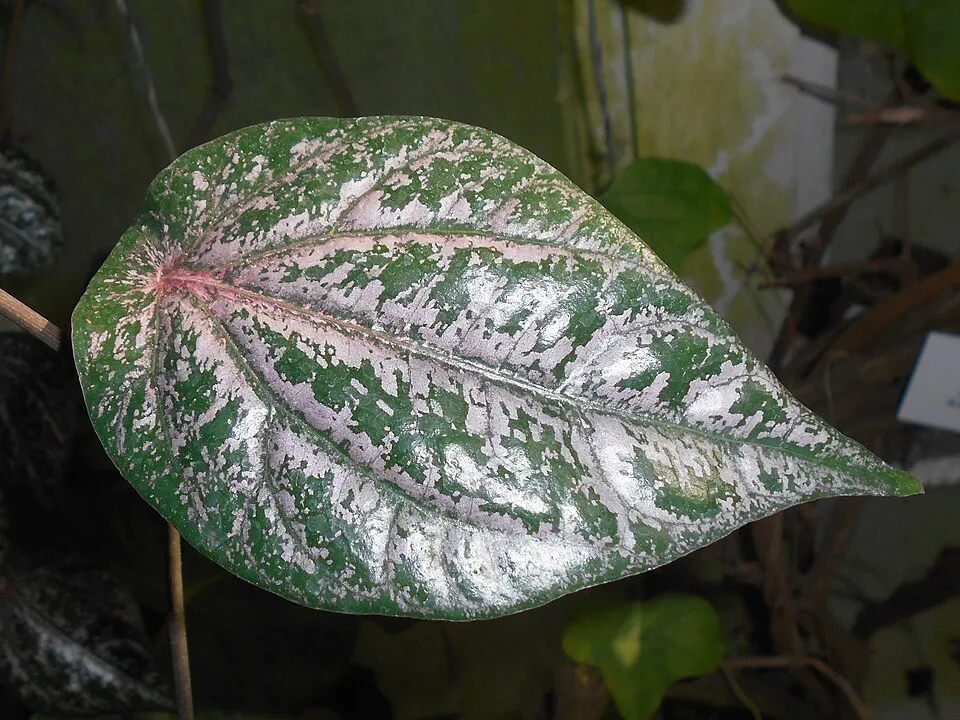
Piper crocatum, often recognized by its striking ornamental foliage, is a perennial herbaceous plant belonging to the diverse Piperaceae family. This captivating species is indigenous to the humid, tropical rainforests of South America, with a natural distribution spanning countries like Brazil, Colombia, and Peru. It exhibits a characteristic climbing or trailing growth habit, making it a versatile plant in its native ecosystem and a popular choice for cultivation. The leaves are a defining feature, typically heart-shaped (cordate), glossy, and a vibrant green, often displaying intricate red or pink veining on the undersides, which adds to its aesthetic appeal.
They are arranged alternately along the stem and possess a slightly wavy or undulate margin. While its flowers are inconspicuous, appearing as small, greenish-white spikes clustered in the leaf axils, the plant is primarily valued for its aromatic leaves and medicinal properties. Following successful pollination, these spikes develop into small, spherical berries that transition from green to black as they mature. Piper crocatum thrives in environments characterized by high humidity and prefers shaded understory conditions, mimicking its natural jungle habitat.
When its leaves are brushed or crushed, they emit a distinct, peppery aroma, hinting at its kinship with other Piper species. Its adaptability and visual charm also contribute to its widespread popularity as an indoor ornamental plant, often grown in hanging baskets or containers.
Trusted Scientific References
1. Authoritative external sources for Piper crocatum
1.1 Wikipedia — Piper crocatum
1.2 Kew POWO (Plants of the World Online)
1.3 PubMed — peer-reviewed research
1.4 NCBI Taxonomy Browser
1.5 GBIF — Global Biodiversity
1.6Piper Crocatum should be interpreted through verified botanical identity, practical care, and responsible safety language. This recovery note adds the missing context needed for a complete profile: match light to the plant's habit, use well-drained soil, water according to season, and avoid unsupported medicinal or edible claims. For publishing, the plant can be presented as a source-backed indoor plant with clear care guidance, common problem diagnosis, and conservative safety wording.
1.1.Piper Crocatum — Key Features
- ✓ <strong>Heart</strong> — shaped, glossy, vibrant green leaves often with distinctive red or pink venation.
- ✓ <strong>Native to the</strong> — Native to the humid tropical regions of South America, particularly Brazil, Colombia, and Peru.
- ✓ <strong>Exhibits a climbing</strong> — Exhibits a climbing or trailing growth habit, adaptable for indoor cultivation in containers or hanging baskets.
- ✓ <strong>Possesses a distinct</strong> — Possesses a distinct peppery and aromatic scent when its leaves are bruised or crushed.
- ✓ <strong>Contains the potent</strong> — Contains the potent alkaloid piperine, known for its significant bioavailability-enhancing properties.
- ✓ <strong>Demonstrates notable anti</strong> — inflammatory and broad-spectrum antimicrobial activities.
- ✓ <strong>Emerging research indicates</strong> — Emerging research indicates strong potential in ameliorating diabetic wound healing processes.
- ✓ <strong>Historically valued in</strong> — Historically valued in traditional medicine systems such as Ayurveda and Unani for various ailments.
- ✓ <strong>Requires specific environmental</strong> — Requires specific environmental conditions including high humidity, consistent moisture, and shaded light.
- ✓ <strong>Often cultivated for</strong> — Often cultivated for its striking ornamental appeal alongside its recognized medicinal benefits.
1.2.Piper Crocatum — Quick Summary
- Piper crocatum is a tropical South American vine valued for its ornamental leaves and significant medicinal properties.
- Traditionally used as a digestive aid, anti-inflammatory, and antimicrobial agent in various traditional medicine systems.
- Recent research highlights its promising potential in accelerating diabetic wound healing by modulating cellular pathways.
- Its key bioactive compounds include piperine, flavonoids, and essential oils, contributing to its diverse therapeutic actions.
- Caution is essential regarding potential drug interactions, especially due to piperine's bioavailability-enhancing effects, and its use during pregnancy.
- Thrives in high humidity and shaded conditions, making it a popular indoor plant with both aesthetic and functional value.
2.Piper Crocatum — Scientific Identity
3.Piper Crocatum — Quick Facts
4.Piper Crocatum — Appearance & Identification
5.Piper Crocatum — Native Habitat
6.Piper Crocatum — Water Requirements
- Provide well-drained, rich potting soil, ideally amended with ample organic matter to ensure nutrient availability and moisture retention for Piper crocatum.
- Maintain a consistently high humidity environment, mimicking its native tropical jungle habitat; regular misting of leaves or using a humidity tray can be highly beneficial.
- Water regularly to keep the soil consistently moist, but be cautious to avoid waterlogging, which can lead to root rot and fungal issues.
- Position the plant in a shaded or partially shaded location, as direct sunlight can scorch its glossy leaves and hinder growth.
- Propagate Piper crocatum effectively using stem cuttings, which root readily in a warm, humid environment with high success rates.
- Ensure ambient temperatures remain consistently warm, ideally between 18-30°C (65-85°F), diligently avoiding cold drafts or temperatures below 10°C (50°F).
- Fertilize monthly during the active growing season (spring and summer) with a balanced liquid fertilizer diluted to half strength to support lush foliage.
- Monitor diligently for common pests such as spider mites, mealybugs, and scale insects, treating promptly with organic horticultural oil or insecticidal soap if detected.
Reviewed by the Flora Medical Global Botanical Review Panel
Multi-disciplinary editorial group · Botany · Ethnobotany · Herbal-medicine literature
Who reviewed this: This page was checked by the Flora Medical Global Botanical Review Panel — an in-house editorial group of botany graduates, ethnobotany researchers, and horticulture practitioners who collectively maintain our 7,000+ plant encyclopedia. Meet the team.
Our 4-step verification process
1. Taxonomic verification
Scientific names and synonyms cross-checked against Kew POWO, World Flora Online, and The Plant List.
2. Phytochemical & medicinal cross-reference
Active compounds, traditional uses, and reported activities are cross-referenced with PubMed, USDA Dr. Duke's database, and peer-reviewed ethnobotanical literature.
3. Conservation & distribution check
Distribution, ecology, and conservation status confirmed against GBIF occurrence records and the IUCN Red List.
4. Editorial & safety review
Every entry passes an editorial pass for clarity, originality, and safety notices (toxicity, contraindications, dosage caveats) before publication.
Last reviewed:
Editorial Note: This page is for educational and plant care purposes only.
Written by: Flora Medical Global Editorial Team
Reviewed by: Flora Medical Global Botanical Review Panel
Last Updated: June 15, 2026







Piper Crocatum — Comments & Community Reviews
Rate this plant