

Care Disclaimer: Plant care recommendations are general guidelines based on common growing conditions. Individual results may vary based on your local environment, climate, and care routine. If your plant is toxic, keep it away from children and pets, and consult a veterinarian if accidental ingestion occurs.
1.Primula Obconica — Overview
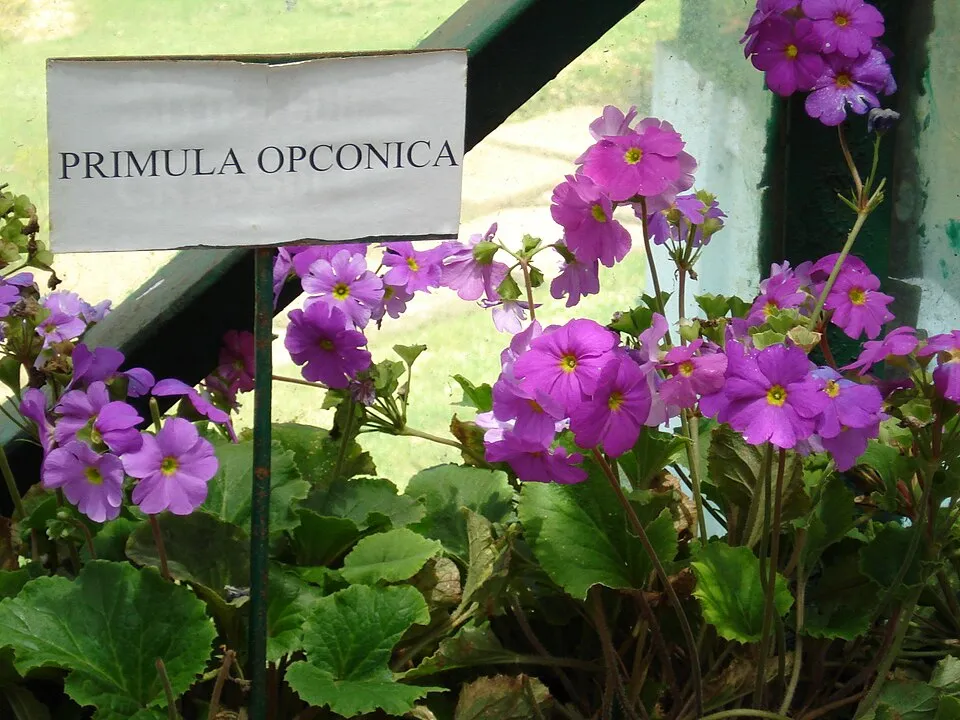
Primula obconica, commonly known as the Chinese primrose or 'good luck plant', is a charming perennial herb belonging to the family Primulaceae. Native to the mountainous regions of central and western China, particularly flourishing in shaded, damp woodland areas, it forms a basal rosette of broad, ovate leaves. These leaves typically measure between 5 to 10 cm in length, exhibiting a glossy, somewhat leathery texture with distinctly serrated or scalloped margins.
From the central crown, the lush foliage creates an attractive ground cover or potted specimen. The plant is celebrated for its vibrant floral display, which typically emerges from late winter through spring. Clusters of delicate, often fragrant flowers appear on leafless scapes that can reach heights of 20-30 cm.
The blossoms come in a diverse palette of pink, white, lavender, and purple hues, frequently adorned with a contrasting yellow eye at their center, adding to their ornamental appeal. Adapted to cool, moist environments, Primula obconica thrives in well-draining, humus-rich soil, mimicking its natural forest understory habitat. While widely cultivated for its aesthetic beauty and symbolic association with good fortune, its botanical characteristics underscore its resilience and adaptability in temperate climes.
Trusted Scientific References
1. Authoritative external sources for Primula obconica
1.1 Wikipedia — Primula obconica
1.2 Kew POWO (Plants of the World Online)
1.3 PubMed — peer-reviewed research
1.4 NCBI Taxonomy Browser
1.5 GBIF — Global Biodiversity
1.6Primula Obconica should be interpreted through verified botanical identity, practical care, and responsible safety language. This recovery note adds the missing context needed for a complete profile: match light to the plant's habit, use well-drained soil, water according to season, and avoid unsupported medicinal or edible claims. For publishing, the plant can be presented as a source-backed indoor plant with clear care guidance, common problem diagnosis, and conservative safety wording.
1.1.Primula Obconica — Key Features
- ✓ <strong>Botanical Name</strong> — Primula obconica (Chinese Primrose).
- ✓ <strong>Family</strong> — Primulaceae (Primrose family).
- ✓ <strong>Native Range</strong> — Central and Western China.
- ✓ <strong>Growth Habit</strong> — Perennial herb with a basal rosette of leaves.
- ✓ <strong>Foliage</strong> — Broad, ovate, glossy leaves with serrated margins.
- ✓ <strong>Flowers</strong> — Clusters of pink, white, purple flowers, often with a yellow eye.
- ✓ <strong>Flowering Season</strong> — Late winter to spring.
- ✓ <strong>Medicinal Compounds</strong> — Rich in saponins, flavonoids, and glycosides.
- ✓ <strong>Traditional Uses</strong> — Skin conditions (eczema, chapped hands, itching), respiratory support.
- ✓ <strong>Primary Concern</strong> — Known to cause contact dermatitis.
1.2.Primula Obconica — Quick Summary
- ✓ Ornamental perennial native to China, known for vibrant flowers.
- ✓ Traditionally used for skin conditions like eczema, chapped hands, and itching.
- ✓ Contains saponins, flavonoids, and glycosides with potential medicinal properties.
- ✓ Primary caution: can cause contact dermatitis due to primin.
- ✓ Grown for its aesthetic appeal, preferring cool, moist, shaded environments.
- ✓ Not recommended for internal consumption; strictly external use with caution.
2.Primula Obconica — Scientific Identity
3.Primula Obconica — Quick Facts
4.Primula Obconica — Appearance & Identification
5.Primula Obconica — Native Habitat
6.Primula Obconica — Water Requirements
- ✓ Soil Preference — Thrives in rich, well-draining potting mix or garden soil that retains consistent moisture without becoming waterlogged.
- ✓ Light Requirements — Prefers partial shade to bright, indirect light; direct sunlight can scorch its delicate leaves.
- ✓ Watering Schedule — Water regularly to keep the soil consistently moist, especially during active growth and flowering, but avoid overwatering.
- ✓ Temperature Range — Prefers cool temperatures, ideally between 10-18°C (50-65°F), making it suitable for indoor cultivation.
- ✓ Humidity Needs — Benefits from moderate to high humidity; consider misting or placing near a humidifier, particularly indoors.
- ✓ Fertilization — Apply a balanced liquid fertilizer every 2-4 weeks during the growing season (spring to early summer).
- ✓ Propagation — Can be propagated by seed, typically sown in late winter or early spring, or by division of established clumps after flowering.
- ✓ Pest and Disease Management — Generally robust, but watch for common pests like aphids and spider mites; ensure good air circulation to prevent fungal issues.
Reviewed by the Flora Medical Global Botanical Review Panel
Multi-disciplinary editorial group · Botany · Ethnobotany · Herbal-medicine literature
Who reviewed this: This page was checked by the Flora Medical Global Botanical Review Panel — an in-house editorial group of botany graduates, ethnobotany researchers, and horticulture practitioners who collectively maintain our 7,000+ plant encyclopedia. Meet the team.
Our 4-step verification process
1. Taxonomic verification
Scientific names and synonyms cross-checked against Kew POWO, World Flora Online, and The Plant List.
2. Phytochemical & medicinal cross-reference
Active compounds, traditional uses, and reported activities are cross-referenced with PubMed, USDA Dr. Duke's database, and peer-reviewed ethnobotanical literature.
3. Conservation & distribution check
Distribution, ecology, and conservation status confirmed against GBIF occurrence records and the IUCN Red List.
4. Editorial & safety review
Every entry passes an editorial pass for clarity, originality, and safety notices (toxicity, contraindications, dosage caveats) before publication.
Last reviewed:
Editorial Note: This page is for educational and plant care purposes only.
Written by: Flora Medical Global Editorial Team
Reviewed by: Flora Medical Global Botanical Review Panel
Last Updated: June 15, 2026







Primula Obconica — Comments & Community Reviews
Rate this plant