
Care Disclaimer: Plant care recommendations are general guidelines based on common growing conditions. Individual results may vary based on your local environment, climate, and care routine. If your plant is toxic, keep it away from children and pets, and consult a veterinarian if accidental ingestion occurs.
1.Primulina — Overview
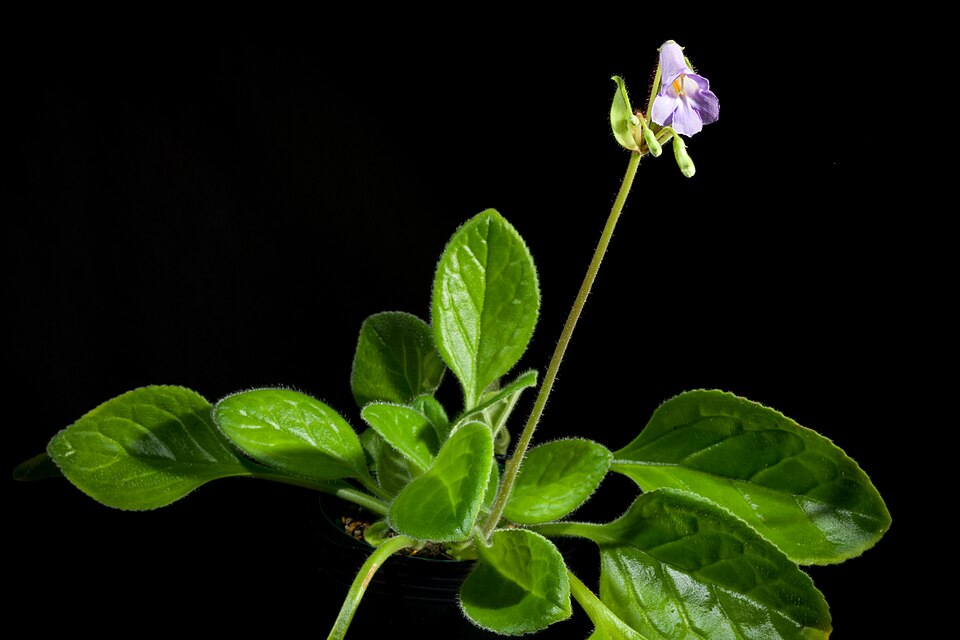
Primulina tabacum, commonly known as the tobacco primrose, is a captivating perennial herbaceous plant belonging to the Gesneriaceae family. This species is indigenous to the humid, subtropical, and tropical forest regions of China, where it thrives in the understory. Its preferred habitat includes shaded and consistently moist environments, typically found nestled on forest floors, allowing it to absorb dappled or filtered sunlight. Morphologically, Primulina tabacum presents a distinctive basal rosette of leaves.
These leaves are characteristically oval to oblong, possessing a smooth, almost velvety surface and a rich, dark green coloration. Individual leaves can grow substantially, ranging from 10 to 25 centimeters in length and approximately 5 to 10 centimeters in width. From the center of this attractive foliage, slender peduncles emerge, often reaching heights of 10 to 30 centimeters. Each peduncle gracefully bears several tubular flowers, which typically measure between 2 and 5 centimeters long.
The blossoms display a delicate palette, predominantly in shades of bright or pale yellow. These charming flowers are known to open primarily in the afternoon, relying on various insects, particularly bees, for pollination. Beyond its aesthetic appeal as an ornamental plant, the foliage of P. tabacum is also recognized for its potential to contribute to indoor air quality by purifying the surrounding environment.
Trusted Scientific References
1. Authoritative external sources for Primulina tabacum
1.1 Wikipedia — Primulina tabacum
1.2 Kew POWO (Plants of the World Online)
1.3 PubMed — peer-reviewed research
1.4 NCBI Taxonomy Browser
1.5 GBIF — Global Biodiversity
1.6Primulina should be interpreted through verified botanical identity, practical care, and responsible safety language. This recovery note adds the missing context needed for a complete profile: match light to the plant's habit, use well-drained soil, water according to season, and avoid unsupported medicinal or edible claims. For publishing, the plant can be presented as a source-backed indoor plant with clear care guidance, common problem diagnosis, and conservative safety wording.
1.1.Primulina — Key Features
- ✓ <strong>Scientific Name</strong> — Primulina tabacum Hance
- ✓ <strong>Common Name</strong> — Tobacco Primrose
- ✓ <strong>Family</strong> — Gesneriaceae
- ✓ <strong>Native Region</strong> — Subtropical and tropical forests of China
- ✓ <strong>Traditional Uses</strong> — Anti-inflammatory, analgesic, respiratory aid (TCM)
- ✓ <strong>Key Phytochemicals</strong> — Flavonoids, Alkaloids, Linalool
- ✓ <strong>Habitat Preference</strong> — Shaded, moist forest floors
- ✓ <strong>Ornamental Value</strong> — Prized for attractive dark green foliage and yellow tubular flowers
- ✓ <strong>Growth Habit</strong> — Perennial herbaceous plant forming a basal rosette
- ✓ <strong>Known Pests</strong> — Aphids, spider mites, and *Meloidogyne enterolobii* (root-knot nematode)
1.2.Primulina — Quick Summary
- ✓ Ornamental and medicinal plant native to subtropical and tropical China.
- ✓ Traditionally used in TCM for its anti-inflammatory, analgesic, and respiratory benefits.
- ✓ Rich in beneficial phytochemicals including flavonoids, alkaloids, and terpenoids like linalool.
- ✓ Requires specific growing conditions: high humidity, consistently moist soil, and filtered light.
- ✓ Further scientific investigation is needed to fully validate its traditional medicinal claims.
- ✓ Susceptible to common pests, notably root-knot nematodes, which can impact plant health.
2.Primulina — Scientific Identity
3.Primulina — Quick Facts
4.Primulina — Appearance & Identification
5.Primulina — Native Habitat
6.Primulina — Water Requirements
- ✓ Light — Requires bright, indirect light or filtered sunlight to thrive; direct exposure to intense sun can cause leaf scorch.
- ✓ Soil — Prefers a well-draining yet moisture-retentive potting mix, ideally composed of equal parts peat, perlite, and bark.
- ✓ Watering — Maintain consistently moist soil, ensuring it never dries out completely, but avoid waterlogging to prevent root rot.
- ✓ Humidity — Demands high humidity, ideally above 60%; consider using a humidifier, pebble tray, or grouping with other plants.
- ✓ Temperature — Thrives in stable warm conditions, typically between 18-25°C (65-77°F), and should be protected from cold drafts.
- ✓ Fertilization — Fertilize sparingly during the active growing season (spring and summer) with a balanced liquid fertilizer diluted to half strength.
- ✓ Propagation — Easily propagated from leaf cuttings, which can be rooted in moist soil or water, or from seeds.
- ✓ Pest Management — Regularly inspect for common pests like aphids, spider mites, and root-knot nematodes (*Meloidogyne enterolobii*), treating infestations promptly with appropriate organic solutions.
Reviewed by the Flora Medical Global Botanical Review Panel
Multi-disciplinary editorial group · Botany · Ethnobotany · Herbal-medicine literature
Who reviewed this: This page was checked by the Flora Medical Global Botanical Review Panel — an in-house editorial group of botany graduates, ethnobotany researchers, and horticulture practitioners who collectively maintain our 7,000+ plant encyclopedia. Meet the team.
Our 4-step verification process
1. Taxonomic verification
Scientific names and synonyms cross-checked against Kew POWO, World Flora Online, and The Plant List.
2. Phytochemical & medicinal cross-reference
Active compounds, traditional uses, and reported activities are cross-referenced with PubMed, USDA Dr. Duke's database, and peer-reviewed ethnobotanical literature.
3. Conservation & distribution check
Distribution, ecology, and conservation status confirmed against GBIF occurrence records and the IUCN Red List.
4. Editorial & safety review
Every entry passes an editorial pass for clarity, originality, and safety notices (toxicity, contraindications, dosage caveats) before publication.
Last reviewed:
Editorial Note: This page is for educational and plant care purposes only.
Written by: Flora Medical Global Editorial Team
Reviewed by: Flora Medical Global Botanical Review Panel
Last Updated: June 15, 2026







Primulina — Comments & Community Reviews
Rate this plant