

Care Disclaimer: Plant care recommendations are general guidelines based on common growing conditions. Individual results may vary based on your local environment, climate, and care routine. If your plant is toxic, keep it away from children and pets, and consult a veterinarian if accidental ingestion occurs.
1.Purple Heart Plant — Overview
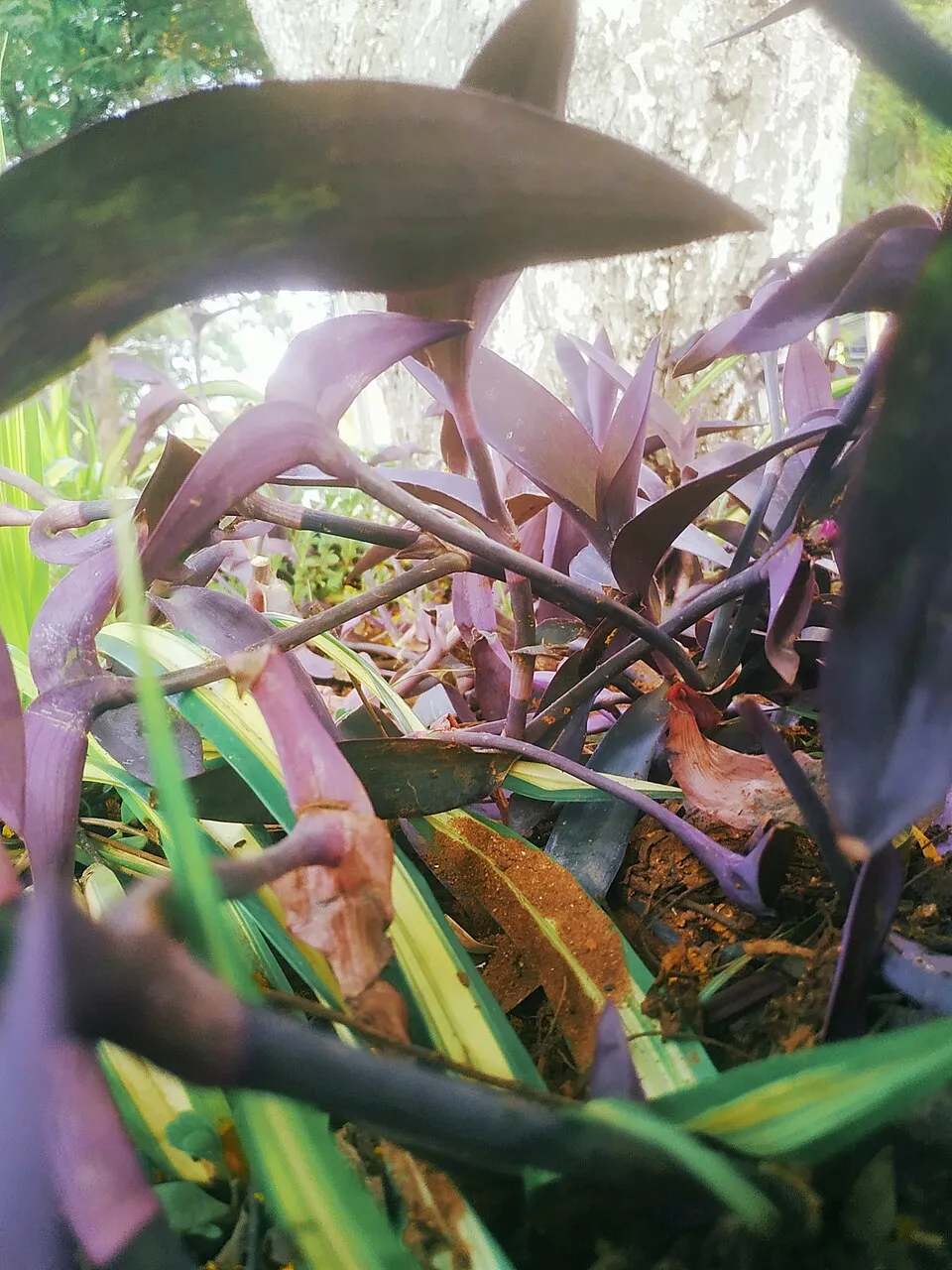
Tradescantia pallida, widely recognized as the Purple Heart Plant or Purple Queen, is a captivating perennial herbaceous species celebrated for its striking violet-purple foliage and trailing growth habit. Typically reaching heights of 12 to 18 inches but spreading considerably wider, its succulent-like stems exhibit a range from green to deep purplish hues. The leaves are elongated, lanceolate to ovate, measuring approximately 3 to 7 inches long, and form a sheath around the fleshy stems.
Their vibrant, glossy purple coloration provides a dramatic visual appeal, making the plant a popular ornamental choice. Small, three-petaled flowers, usually pink or white, emerge inconspicuously at the stem ends, primarily from mid-summer through fall, opening briefly in the morning.
Native to the tropical regions of Mexico, this species thrives in shaded forest undergrowth in its natural habitat. It belongs to the Commelinaceae family, which includes numerous other ornamental plants. Tradescantia pallida is highly adaptable, flourishing in well-draining soil and tolerating lower light conditions, which contributes to its widespread cultivation as an indoor plant.
Beyond its aesthetic value, it is particularly noted for its phytoremediative capabilities, actively contributing to healthier indoor environments by purifying the air from common pollutants. It is often utilized as ground cover in warmer climates or as a distinctive hanging plant.
Trusted Scientific References
1. Authoritative external sources for Tradescantia pallida Purpurea
1.1 Wikipedia — Tradescantia pallida Purpurea
1.2 Kew POWO (Plants of the World Online)
1.3 PubMed — peer-reviewed research
1.4 NCBI Taxonomy Browser
1.5 GBIF — Global Biodiversity
1.6Purple Heart Plant should be interpreted through verified botanical identity, practical care, and responsible safety language. This recovery note adds the missing context needed for a complete profile: match light to the plant's habit, use well-drained soil, water according to season, and avoid unsupported medicinal or edible claims. For publishing, the plant can be presented as a source-backed indoor plant with clear care guidance, common problem diagnosis, and conservative safety wording.
1.1.Purple Heart Plant — Key Features
- ✓ <strong>Vibrant Purple Foliage</strong> — Vibrant Purple Foliage
- ✓ <strong>Trailing Perennial Herb</strong> — Trailing Perennial Herb
- ✓ <strong>Excellent Indoor Air</strong> — Excellent Indoor Air Purifier
- ✓ <strong>Succulent</strong> — like Stems
- ✓ <strong>Easy Propagation via</strong> — Easy Propagation via Cuttings
- ✓ <strong>Low Maintenance Indoor</strong> — Low Maintenance Indoor Plant
- ✓ <strong>Native to Mexico</strong> — Native to Mexico
- ✓ <strong>Rich in Anthocyanin</strong> — Rich in Anthocyanin Pigments
- ✓ <strong>Demonstrated Antioxidant Capacity</strong> — Demonstrated Antioxidant Capacity
- ✓ <strong>Potential Bioindicator for</strong> — Potential Bioindicator for Pollution
1.2.Purple Heart Plant — Quick Summary
- ✓ Striking purple foliage and a trailing habit make it a popular ornamental plant.
- ✓ Highly recognized for its significant indoor air-purifying capabilities, effectively removing VOCs.
- ✓ Phytochemical profile includes anthocyanins, flavonoids, tannins, lectins, and sesquiterpenes.
- ✓ Research indicates potent antioxidant, antibacterial, analgesic, and potential cytotoxic activities.
- ✓ Traditionally used for soothing sore eyes and improving circulation in some cultural practices.
- ✓ Generally considered non-toxic but can cause mild skin irritation upon direct contact.
2.Purple Heart Plant — Scientific Identity
3.Purple Heart Plant — Quick Facts
4.Purple Heart Plant — Appearance & Identification
5.Purple Heart Plant — Native Habitat
6.Purple Heart Plant — Water Requirements
- ✓ Light — Prefers bright, indirect light; direct sunlight can scorch its vibrant purple leaves, while insufficient light may cause the foliage to fade.
- ✓ Soil — Thrives in well-draining, fertile potting mix; an ideal blend often includes peat, perlite, and pine bark to ensure proper aeration.
- ✓ Watering — Water thoroughly when the top inch of soil feels dry to the touch; allow the soil to dry out between waterings to prevent root rot.
- ✓ Humidity — Tolerates average indoor humidity levels but benefits from higher humidity, especially in dry environments; occasional misting can be beneficial.
- ✓ Temperature — Prefers warm temperatures between 60-80°F (15-27°C); protect the plant from cold drafts and frost, as it is not cold-hardy.
- ✓ Propagation — Easily propagated from stem cuttings; simply snip a section below a node and place it in water or moist soil, where roots will readily form.
- ✓ Fertilization — Feed monthly during the active growing season (spring and summer) with a balanced liquid fertilizer diluted to half strength.
- ✓ Pruning — Pinch back leggy stems regularly to encourage bushier growth, maintain a compact shape, and promote a more vibrant appearance.
Reviewed by the Flora Medical Global Botanical Review Panel
Multi-disciplinary editorial group · Botany · Ethnobotany · Herbal-medicine literature
Who reviewed this: This page was checked by the Flora Medical Global Botanical Review Panel — an in-house editorial group of botany graduates, ethnobotany researchers, and horticulture practitioners who collectively maintain our 7,000+ plant encyclopedia. Meet the team.
Our 4-step verification process
1. Taxonomic verification
Scientific names and synonyms cross-checked against Kew POWO, World Flora Online, and The Plant List.
2. Phytochemical & medicinal cross-reference
Active compounds, traditional uses, and reported activities are cross-referenced with PubMed, USDA Dr. Duke's database, and peer-reviewed ethnobotanical literature.
3. Conservation & distribution check
Distribution, ecology, and conservation status confirmed against GBIF occurrence records and the IUCN Red List.
4. Editorial & safety review
Every entry passes an editorial pass for clarity, originality, and safety notices (toxicity, contraindications, dosage caveats) before publication.
Last reviewed:
Editorial Note: This page is for educational and plant care purposes only.
Written by: Flora Medical Global Editorial Team
Reviewed by: Flora Medical Global Botanical Review Panel
Last Updated: June 15, 2026







Purple Heart Plant — Comments & Community Reviews
Rate this plant