
Care Disclaimer: Plant care recommendations are general guidelines based on common growing conditions. Individual results may vary based on your local environment, climate, and care routine. If your plant is toxic, keep it away from children and pets, and consult a veterinarian if accidental ingestion occurs.
1.Raphidophora Cryptantha — Overview
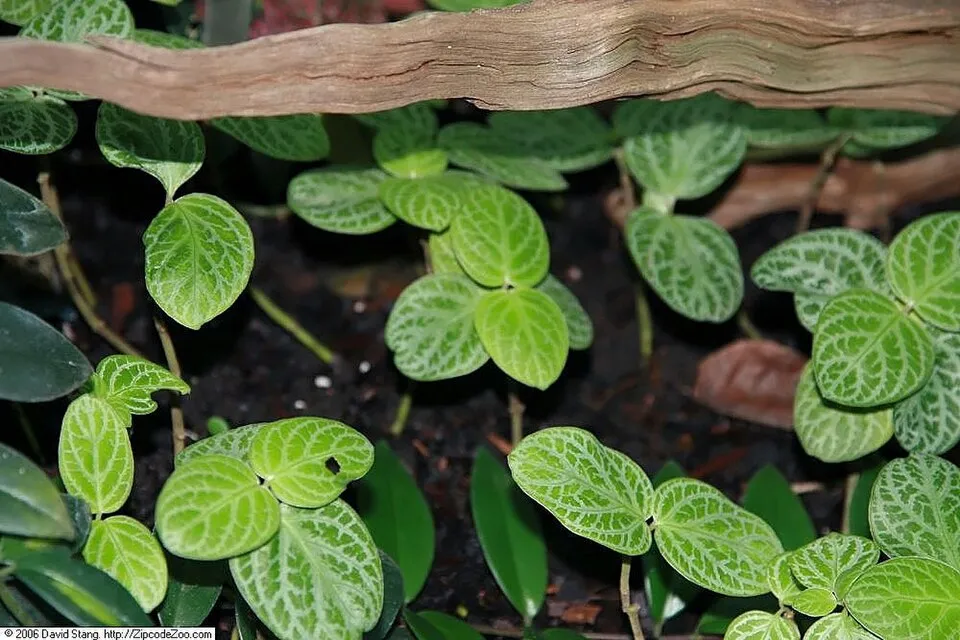
Raphidophora cryptantha, a captivating member of the Araceae family, is an evergreen climbing plant primarily recognized for its exceptional ornamental qualities. Indigenous to the warm, humid, and shaded understories of tropical rainforests across Southeast Asia, including locales such as Borneo, Sumatra, and the Malay Peninsula, this species flourishes in environments characterized by high atmospheric moisture and dappled light. Its distinctive morphology is exquisitely adapted to its epiphytic or hemi-epiphytic growth habit, allowing it to gracefully ascend tree trunks and other supporting structures. The plant typically develops slender, somewhat woody stems that produce a complex network of robust aerial roots. These roots serve a dual purpose: providing secure attachment to surfaces and efficiently absorbing both moisture from the humid air and nutrients from accumulating organic debris.
The intricate patterns formed by these clinging aerial roots are a hallmark feature of Raphidophora cryptantha. The foliage of Raphidophora cryptantha represents its most visually striking attribute. The leaves are generally cordate (heart-shaped) to ovate, displaying a notably glossy, deep green surface that beautifully reflects ambient light, creating a vibrant aesthetic. Mature leaves can attain impressive dimensions, often reaching up to 30 cm (12 inches) in length and 15 cm (6 inches) in width, although their exact size can fluctuate significantly based on environmental conditions and the plant's maturity. A particularly unique characteristic is the phenomenon of intricate fenestration or 'shingling' observed in some juvenile forms or under specific growth conditions.
In this adaptation, the leaves lie flat against a surface, overlapping neatly like shingles, a strategy that maximizes light absorption in its naturally low-light habitat. While predominantly cultivated for its stunning foliage, Raphidophora cryptantha can produce inflorescences in its native environment, though such occurrences are rare in indoor cultivation. The inflorescence, typical of the Araceae family, comprises a spadix—a fleshy spike bearing numerous small, often cream-colored, unisexual flowers—partially enveloped by a boat-shaped modified leaf known as a spathe. Trusted Scientific References Authoritative external sources for Raphidophora cryptantha : Wikipedia — Raphidophora cryptantha Kew POWO (Plants of the World Online) PubMed — peer-reviewed research NCBI Taxonomy Browser GBIF — Glo ...[CURRENT TEXT EXISTS: 2516 chars]
1.1.Raphidophora Cryptantha — Key Features
- ✓ <strong>Growth Habit</strong> — A vigorous, evergreen climbing vine that uses aerial roots for attachment and support.
- ✓ <strong>Leaf Morphology</strong> — Distinctive heart-shaped to ovate leaves, often exhibiting a unique 'shingling' pattern in juvenile forms.
- ✓ <strong>Native Habitat</strong> — Thrives in the humid, shaded understories of tropical rainforests across Southeast Asia.
- ✓ <strong>Light Requirement</strong> — Prefers bright, indirect light, mimicking its natural habitat where it receives filtered sunlight.
- ✓ <strong>High Humidity Needs</strong> — Requires consistently high atmospheric humidity to flourish, making it ideal for terrariums or humid indoor spaces.
- ✓ <strong>Soil Preference</strong> — Best grown in a well-draining, airy, and organically rich potting mix that supports its epiphytic tendencies.
- ✓ <strong>Aesthetic Appeal</strong> — Highly valued for its glossy, dark green foliage and unique growth pattern, adding a tropical touch to interiors.
- ✓ <strong>Aerial Roots</strong> — Develops prominent aerial roots that serve both for climbing and nutrient absorption from the air.
- ✓ <strong>Rare Inflorescence</strong> — Can produce a spadix and spathe inflorescence in its native environment, though rare in cultivation.
1.2.Raphidophora Cryptantha — Quick Summary
- ✓ Raphidophora cryptantha is a perennial climbing vine native to Southeast Asian tropical rainforests, celebrated for its unique shingling foliage.
- ✓ It thrives in partial shade and high humidity, making it an excellent choice for indoor cultivation as an ornamental plant.
- ✓ While the genus has traditional associations with anti-inflammatory and analgesic properties, specific medicinal uses for R. cryptantha are not well-documented and require further research.
- ✓ The plant contains phytochemicals like flavonoids, alkaloids, and saponins, which are commonly studied for their potential health benefits.
- ✓ It enhances indoor environments by adding lush greenery and contributing to air purification, despite its primary ornamental classification.
- ✓ Caution is advised against ingestion due to the presence of calcium oxalate crystals, which can cause irritation.
2.Raphidophora Cryptantha — Scientific Identity
3.Raphidophora Cryptantha — Quick Facts
4.Raphidophora Cryptantha — Appearance & Identification
5.Raphidophora Cryptantha — Native Habitat
6.Raphidophora Cryptantha — Water Requirements
- ✓ Light — Prefers bright, indirect light; direct sunlight can scorch its delicate leaves, mimicking its natural understory habitat.
- ✓ Watering — Requires consistent moisture but is sensitive to overwatering; allow the top inch of soil to dry out between waterings.
- ✓ Humidity — Thrives in high humidity (70-80% is ideal); regular misting, a pebble tray, or a humidifier is highly beneficial.
- ✓ Soil — Use a well-draining, aerated potting mix rich in organic matter, such as an aroid blend with bark, perlite, and coco coir.
- ✓ Temperature — Maintain warm temperatures between 18-29°C (65-85°F); avoid cold drafts and sudden temperature fluctuations.
- ✓ Fertilization — Feed monthly during the growing season (spring and summer) with a balanced liquid fertilizer diluted to half strength.
- ✓ Support — Provide a moss pole or other climbing support to encourage its natural shingling growth habit and larger leaf development.
- ✓ Propagation — Easily propagated via stem cuttings, especially those with aerial roots, placed in water or a moist substrate.
Reviewed by the Flora Medical Global Botanical Review Panel
Multi-disciplinary editorial group · Botany · Ethnobotany · Herbal-medicine literature
Who reviewed this: This page was checked by the Flora Medical Global Botanical Review Panel — an in-house editorial group of botany graduates, ethnobotany researchers, and horticulture practitioners who collectively maintain our 7,000+ plant encyclopedia. Meet the team.
Our 4-step verification process
1. Taxonomic verification
Scientific names and synonyms cross-checked against Kew POWO, World Flora Online, and The Plant List.
2. Phytochemical & medicinal cross-reference
Active compounds, traditional uses, and reported activities are cross-referenced with PubMed, USDA Dr. Duke's database, and peer-reviewed ethnobotanical literature.
3. Conservation & distribution check
Distribution, ecology, and conservation status confirmed against GBIF occurrence records and the IUCN Red List.
4. Editorial & safety review
Every entry passes an editorial pass for clarity, originality, and safety notices (toxicity, contraindications, dosage caveats) before publication.
Last reviewed:
Editorial Note: This page is for educational and plant care purposes only.
Written by: Flora Medical Global Editorial Team
Reviewed by: Flora Medical Global Botanical Review Panel
Last Updated: June 15, 2026







Raphidophora Cryptantha — Comments & Community Reviews
Rate this plant