
Care Disclaimer: Plant care recommendations are general guidelines based on common growing conditions. Individual results may vary based on your local environment, climate, and care routine. If your plant is toxic, keep it away from children and pets, and consult a veterinarian if accidental ingestion occurs.
1.Rebutia — Overview
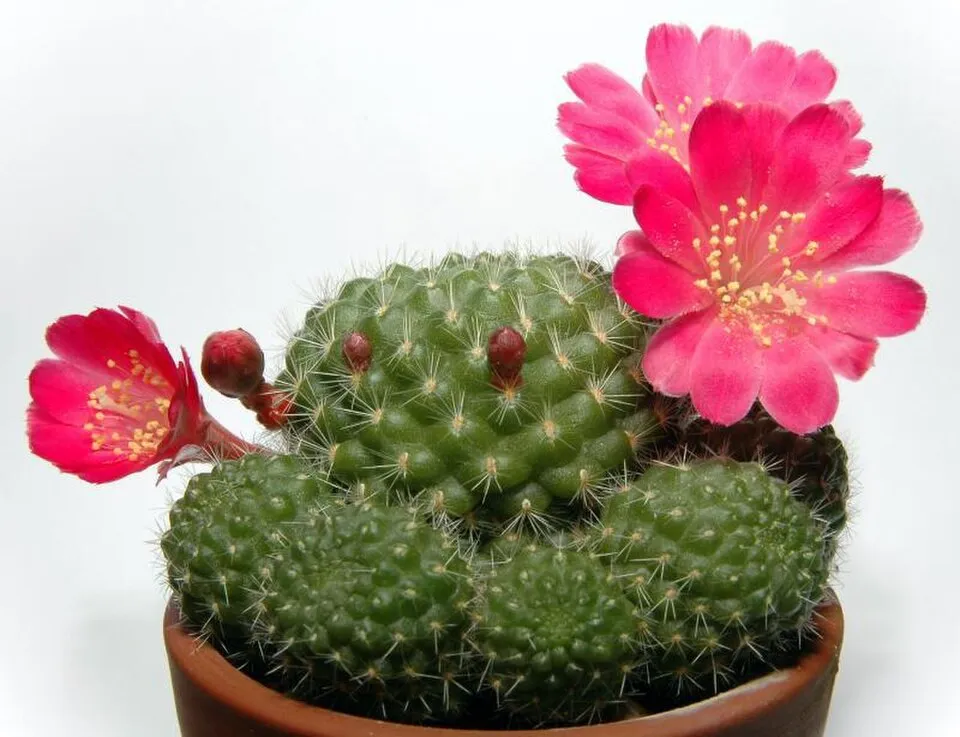
Rebutia minuscula, commonly known as the Red Crown Cactus, is a captivating and diminutive perennial succulent belonging to the Cactaceae family. Indigenous to the high-altitude regions of Bolivia, this species thrives in rocky, well-drained soils, often nestled among other resilient desert flora. Morphologically, it presents as a small, globular cactus, typically reaching a height of 5 to 10 cm (2 to 4 inches) and spreading up to about 15 cm (6 inches) in diameter.
Its surface is characterized by a vibrant green epidermis, densely adorned with numerous soft, fine spines that contribute to its distinctive texture and aesthetic charm. A highlight of Rebutia minuscula is its prolific flowering, with beautiful blooms emerging prominently from the apex of the plant. These striking flowers, which can measure up to 5 cm (2 inches) across, display a stunning array of colors, including vivid reds, oranges, and pinks, typically gracing the plant during the spring and early summer months.
These blossoms are not only visually appealing but also serve to attract various pollinators, such as bees, with their bright hues and nectar. The plant's compact nature and inherent ability to store water within its succulent tissues make it exceptionally drought-tolerant and an ideal candidate for indoor cultivation in pots with adequate drainage, where it adds a touch of unique botanical beauty.
Trusted Scientific References
1. Authoritative external sources for Rebutia minuscula
1.1 Wikipedia — Rebutia minuscula
1.2 Kew POWO (Plants of the World Online)
1.3 PubMed — peer-reviewed research
1.4 NCBI Taxonomy Browser
1.5 GBIF — Global Biodiversity
1.6Rebutia should be interpreted through verified botanical identity, practical care, and responsible safety language. This recovery note adds the missing context needed for a complete profile: match light to the plant's habit, use well-drained soil, water according to season, and avoid unsupported medicinal or edible claims. For publishing, the plant can be presented as a source-backed indoor plant with clear care guidance, common problem diagnosis, and conservative safety wording.
1.1.Rebutia — Key Features
- ✓ <strong>Compact Globular Form</strong> — Ideal for small spaces, windowsills, and indoor cultivation.
- ✓ <strong>Vibrant Apical Flowers</strong> — Produces striking red, orange, or pink blooms from the apex in spring/early summer.
- ✓ <strong>Drought Tolerant</strong> — Possesses excellent water storage capabilities, adapting well to arid conditions.
- ✓ <strong>Low Maintenance</strong> — Requires minimal care once established, making it suitable for beginners.
- ✓ <strong>Soft Spines</strong> — Densely covered in fine, relatively harmless spines, adding to its unique texture.
- ✓ <strong>High Altitude Native</strong> — Naturally adapted to the specific environmental challenges of the Bolivian Andes.
- ✓ <strong>High Ornamental Value</strong> — Highly prized for its charming appearance and beautiful seasonal flowering.
- ✓ <strong>Symbol of Resilience</strong> — Represents strength, perseverance, and adaptation in challenging environments.
- ✓ <strong>Therapeutic Gardening Potential</strong> — Fosters relaxation, mindfulness, and a connection with nature.
- ✓ <strong>Pollinator Attractor</strong> — Its bright flowers effectively attract bees and other beneficial pollinators.
1.2.Rebutia — Quick Summary
- ✓ Resilient ornamental cactus native to Bolivian high altitudes.
- ✓ Known for compact globular form and vibrant red, orange, or pink flowers.
- ✓ Primarily cultivated for aesthetic appeal and therapeutic gardening benefits.
- ✓ Lacks established direct medicinal uses for human consumption or specific ailments.
- ✓ Requires well-draining soil, bright indirect light, and infrequent watering.
- ✓ Symbolizes endurance, promotes mental wellness, and offers aesthetic pleasure.
2.Rebutia — Scientific Identity
3.Rebutia — Quick Facts
4.Rebutia — Appearance & Identification
5.Rebutia — Native Habitat
6.Rebutia — Water Requirements
- ✓ Soil Requirements — Use a highly porous, well-draining substrate such as a specialized cactus or succulent mix, ideally incorporating pumice, perlite, and coarse sand to prevent waterlogging.
- ✓ Light Exposure — Provide ample bright, indirect sunlight for a minimum of six hours daily; a south-facing window is excellent, but protect from intense, scorching afternoon sun, especially in summer.
- ✓ Watering Schedule — Water thoroughly only when the soil has completely dried out, typically every 2-4 weeks during the active growing season (spring through summer), and significantly reduce or cease watering during winter dormancy.
- ✓ Temperature & Humidity — Thrives in warm temperatures (20-30°C) during growth and benefits from a cooler, dry rest period (5-10°C) in winter; tolerates low humidity well.
- ✓ Fertilization — Apply a diluted, low-nitrogen cactus-specific fertilizer sparingly once a month during the spring and summer growing periods, completely abstaining in fall and winter.
- ✓ Potting & Repotting — Select pots with excellent drainage holes; repot every 2-3 years in the spring to refresh the potting medium and accommodate growth, handling carefully to avoid spine irritation.
- ✓ Propagation — Easily propagated from offsets (pups) that form around the base of the parent plant; allow cuttings to callus for several days before planting them in dry, well-draining soil.
Reviewed by the Flora Medical Global Botanical Review Panel
Multi-disciplinary editorial group · Botany · Ethnobotany · Herbal-medicine literature
Who reviewed this: This page was checked by the Flora Medical Global Botanical Review Panel — an in-house editorial group of botany graduates, ethnobotany researchers, and horticulture practitioners who collectively maintain our 7,000+ plant encyclopedia. Meet the team.
Our 4-step verification process
1. Taxonomic verification
Scientific names and synonyms cross-checked against Kew POWO, World Flora Online, and The Plant List.
2. Phytochemical & medicinal cross-reference
Active compounds, traditional uses, and reported activities are cross-referenced with PubMed, USDA Dr. Duke's database, and peer-reviewed ethnobotanical literature.
3. Conservation & distribution check
Distribution, ecology, and conservation status confirmed against GBIF occurrence records and the IUCN Red List.
4. Editorial & safety review
Every entry passes an editorial pass for clarity, originality, and safety notices (toxicity, contraindications, dosage caveats) before publication.
Last reviewed:
Editorial Note: This page is for educational and plant care purposes only.
Written by: Flora Medical Global Editorial Team
Reviewed by: Flora Medical Global Botanical Review Panel
Last Updated: June 15, 2026







Rebutia — Comments & Community Reviews
Rate this plant