
Care Disclaimer: Plant care recommendations are general guidelines based on common growing conditions. Individual results may vary based on your local environment, climate, and care routine. If your plant is toxic, keep it away from children and pets, and consult a veterinarian if accidental ingestion occurs.
1.Rhapis Excelsa — Overview
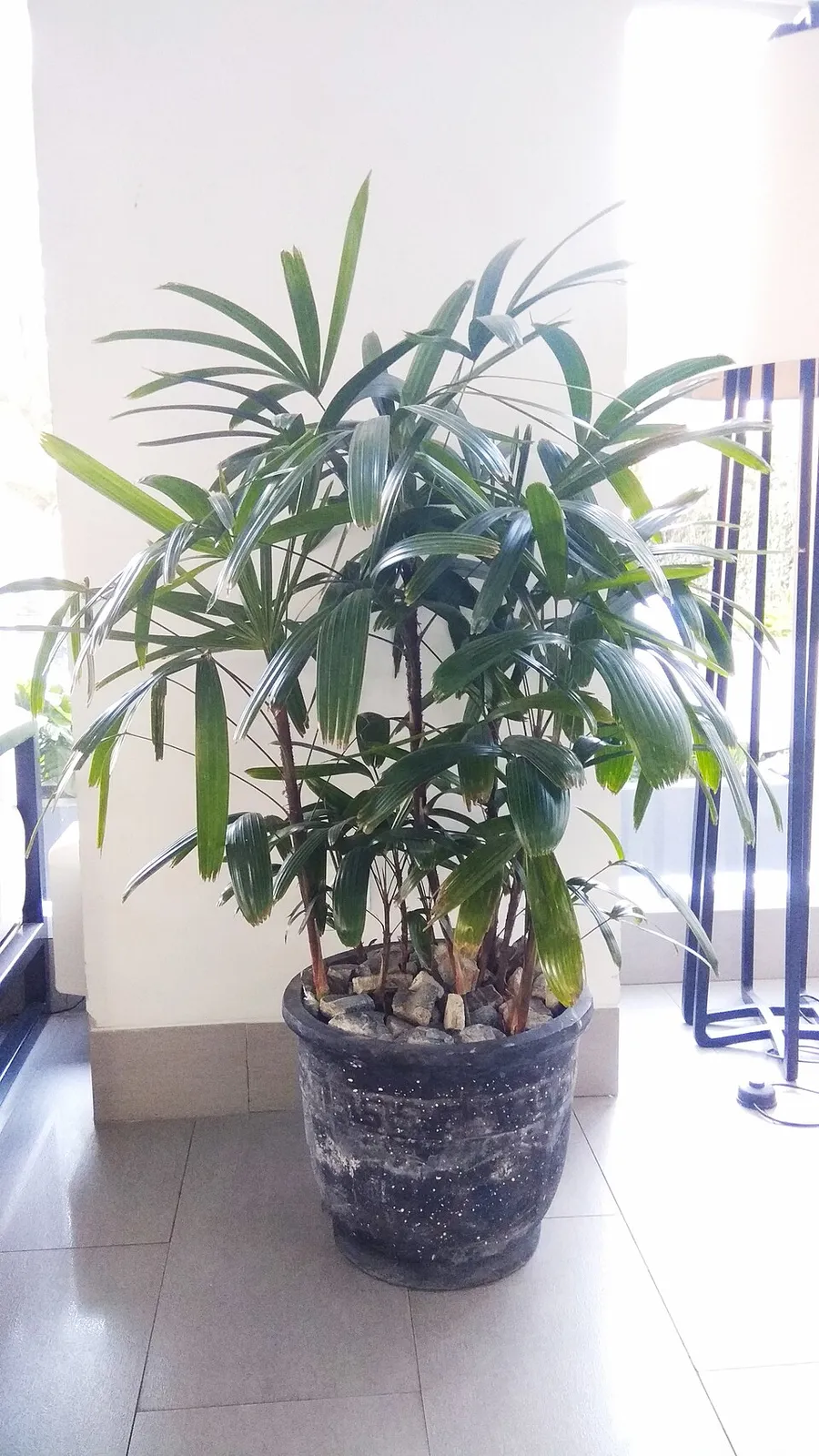
Rhapis excelsa, universally known as the Lady Palm, is a distinguished member of the Arecaceae family, celebrated for its elegant aesthetic and robust nature. This clumping palm typically attains heights of 1.5 to 3 meters (5-10 feet) indoors, though under optimal conditions in its native subtropical habitats, it can reach up to 4 meters (13 feet).
Its defining feature is the lush, fan-shaped foliage, composed of dark green, glossy leaves that are deeply divided into multiple narrow segments, each up to 30 cm (12 inches) long. These segments radiate from slender, yet sturdy, cane-like stems which are characteristically covered by fibrous, dark brown sheaths from persistent leaf bases, creating a textured appearance.
Native to the subtropical forests of southern China (including Fujian, Guangdong, Hainan, and Zhejiang provinces) and Taiwan, the Lady Palm has also been naturalized and cultivated across regions like Japan and Vietnam. In its natural environment, it thrives in shaded understories, accounting for its remarkable adaptability to low-light indoor conditions. While small, creamy-white flowers can emerge on short, branched inflorescences, they are a rare sight on indoor specimens.
Belonging to the genus Rhapis, which comprises approximately 10 recognized species, Rhapis excelsa is not only favored for its ornamental value but also for its exceptional longevity, often flourishing for decades when properly cared for. Its capacity to naturally filter indoor air pollutants further enhances its desirability, making it a functional and beautiful addition to any interior space.
Trusted Scientific References
1. Authoritative external sources for Rhapis excelsa
1.1 Wikipedia — Rhapis excelsa
1.2 Kew POWO (Plants of the World Online)
1.3 PubMed — peer-reviewed research
1.4 NCBI Taxonomy Browser
1.5 GBIF — Global Biodiversity
1.6Rhapis Excelsa should be interpreted through verified botanical identity, practical care, and responsible safety language. This recovery note adds the missing context needed for a complete profile: match light to the plant's habit, use well-drained soil, water according to season, and avoid unsupported medicinal or edible claims. For publishing, the plant can be presented as a source-backed indoor plant with clear care guidance, common problem diagnosis, and conservative safety wording.
1.1.Rhapis Excelsa — Key Features
- ✓ <strong>Growth Habit</strong> — Clumping, multi-stemmed palm with a moderate growth rate, forming dense clusters of upright canes.
- ✓ <strong>Leaf Structure</strong> — Dark green, glossy, palmate leaves deeply divided into 5-10 narrow, ribbed segments.
- ✓ <strong>Mature Height</strong> — Typically reaches 1.5-3 meters (5-10 feet) indoors, capable of growing up to 4 meters (13 feet) in ideal conditions.
- ✓ <strong>Light Requirement</strong> — Thrives in partial shade to medium indirect light, demonstrating excellent tolerance for lower light environments.
- ✓ <strong>Air Purification</strong> — Scientifically recognized for its ability to filter indoor air pollutants such as formaldehyde, xylene, and ammonia.
- ✓ <strong>Toxicity</strong> — Classified as non-toxic to humans and common household pets, making it a safe addition to family homes.
- ✓ <strong>Water Needs</strong> — Requires moderate watering, allowing the soil to dry out slightly between applications to prevent root issues.
- ✓ <strong>Humidity Preference</strong> — Prefers medium to high humidity levels (50-70%), contributing to a tropical ambiance.
- ✓ <strong>Longevity</strong> — Known for its remarkable lifespan, often thriving for several decades with consistent and proper care.
- ✓ <strong>Ornamental Value</strong> — Highly prized for its elegant form, tropical aesthetic, and ability to enhance indoor decor.
1.2.Rhapis Excelsa — Quick Summary
- ✓ Rhapis excelsa, or the Lady Palm, is an elegant, multi-stemmed indoor palm cherished for its lush, fan-shaped foliage.
- ✓ It is highly valued for its exceptional air-purifying capabilities, effectively removing common indoor toxins like formaldehyde and xylene.
- ✓ This resilient plant is remarkably adaptable to various indoor light conditions, thriving in partial shade to medium indirect light.
- ✓ Considered non-toxic, the Lady Palm is a safe and pet-friendly choice for any household with children or animals.
- ✓ Beyond its aesthetic appeal, it contributes to mental well-being, improved indoor air quality, and acts as a natural humidifier.
2.Rhapis Excelsa — Scientific Identity
3.Rhapis Excelsa — Quick Facts
4.Rhapis Excelsa — Appearance & Identification
5.Rhapis Excelsa — Native Habitat
6.Rhapis Excelsa — Water Requirements
- ✓ Light Requirement — Thrives best in partial shade to medium indirect light; direct sun can scorch leaves, while very low light might slow growth.
- ✓ Watering Needs — Water moderately, allowing the top inch or two of soil to dry out completely between waterings to prevent root rot.
- ✓ Soil Preference — Requires a well-draining, peat-based potting mix, ideally with added perlite or sand to enhance drainage and aeration.
- ✓ Humidity & Temperature — Prefers medium to high humidity (50-70%) and consistent temperatures between 15-30°C (60-85°F); avoid cold drafts.
- ✓ Fertilization — Feed monthly during the active growing season (spring and summer) with a balanced liquid fertilizer (e.g., 10-10-10 NPK) diluted to half strength.
- ✓ Pruning & Maintenance — Regularly remove any yellowing, brown, or dead leaves by cutting them close to the stem to maintain plant health and appearance.
- ✓ Potting — Repot every 2-3 years or when root-bound, choosing a pot only slightly larger than the previous one, ensuring adequate drainage holes.
- ✓ Pest Management — Inspect regularly for common pests like spider mites and mealybugs; treat promptly with horticultural oil or insecticidal soap.
Reviewed by the Flora Medical Global Botanical Review Panel
Multi-disciplinary editorial group · Botany · Ethnobotany · Herbal-medicine literature
Who reviewed this: This page was checked by the Flora Medical Global Botanical Review Panel — an in-house editorial group of botany graduates, ethnobotany researchers, and horticulture practitioners who collectively maintain our 7,000+ plant encyclopedia. Meet the team.
Our 4-step verification process
1. Taxonomic verification
Scientific names and synonyms cross-checked against Kew POWO, World Flora Online, and The Plant List.
2. Phytochemical & medicinal cross-reference
Active compounds, traditional uses, and reported activities are cross-referenced with PubMed, USDA Dr. Duke's database, and peer-reviewed ethnobotanical literature.
3. Conservation & distribution check
Distribution, ecology, and conservation status confirmed against GBIF occurrence records and the IUCN Red List.
4. Editorial & safety review
Every entry passes an editorial pass for clarity, originality, and safety notices (toxicity, contraindications, dosage caveats) before publication.
Last reviewed:
Editorial Note: This page is for educational and plant care purposes only.
Written by: Flora Medical Global Editorial Team
Reviewed by: Flora Medical Global Botanical Review Panel
Last Updated: June 15, 2026







Rhapis Excelsa — Comments & Community Reviews
Rate this plant