
Care Disclaimer: Plant care recommendations are general guidelines based on common growing conditions. Individual results may vary based on your local environment, climate, and care routine. If your plant is toxic, keep it away from children and pets, and consult a veterinarian if accidental ingestion occurs.
1.Rhipsalis Cereuscula — Overview
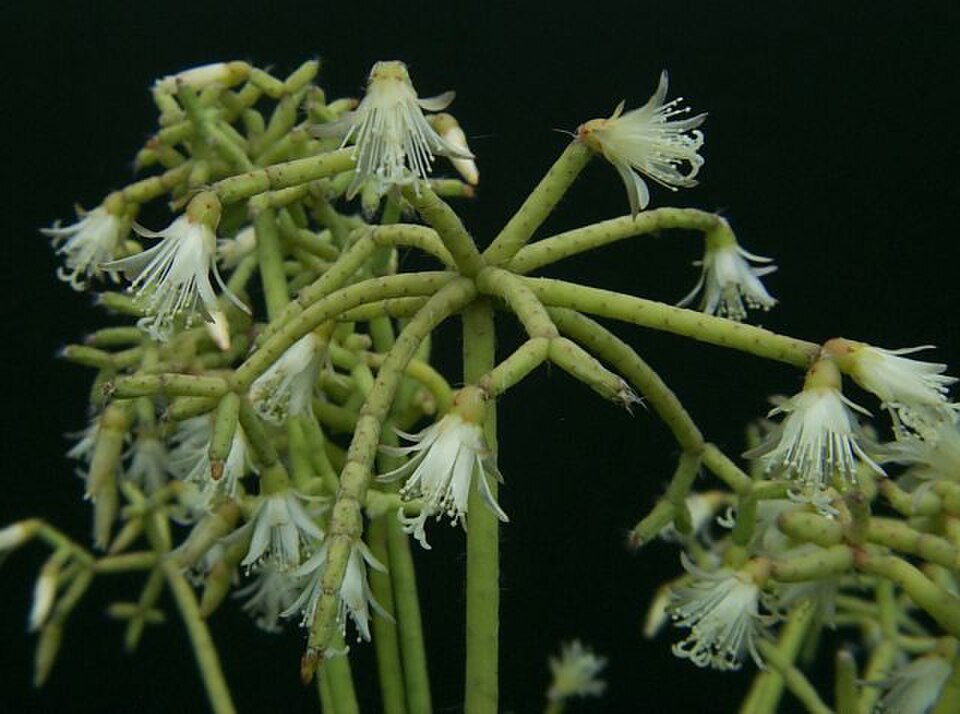
Rhipsalis cereuscula, often recognized by its evocative common names 'Rice Cactus' or 'Coral Cactus,' is a captivating epiphytic cactus species belonging to the extensive Cactaceae family. This unique plant is indigenous to the tropical and subtropical rainforests of South America, with its natural range spanning across Brazil, Argentina, and Paraguay. Unlike terrestrial cacti, it thrives in humid, shaded environments, typically anchoring itself to tree branches or nestled within rock crevices, deriving its moisture and nutrients from the air and accumulating organic debris rather than soil. Its distinctive morphology features a profusion of slender, cylindrical, and highly segmented stems. These vibrant bright green stems are often subtly ribbed and branch extensively, forming dense, attractive cascading clumps that can gracefully extend up to a meter in length.
The individual segments are notably small, frequently measuring less than an inch, bearing a striking resemblance to grains of rice, which gives the plant one of its popular monikers. A key characteristic distinguishing Rhipsalis cereuscula from many other cacti is its lack of prominent spines, possessing instead only tiny, inconspicuous bristles located within its areoles. During the late spring to early summer, the plant produces numerous delicate, star-shaped flowers that emerge from these areoles along the stems. These charming blooms are typically white or pale yellow, measuring under a centimeter in diameter, and significantly enhance the plant's ornamental appeal. Following successful pollination, the flowers develop into small, fleshy, pea-sized berries, which mature to an appealing red or purple hue.
These berries are not only visually attractive but also serve as a vital food source for various bird and insect species within its native ecosystem, contributing to local biodiversity. Taxonomically, while historically recognized as Rhipsalis cereuscula, it is now often considered synonymous with or a variant of the widely distributed Rhipsalis baccifera, commonly known as the 'Mistletoe Cactus.' Its adaptability to lower light conditions and striking pendulous growth habit have cemented its popularity as an indoor cultivated plant, particularly prized in hanging baskets where its trailing stems can be fully admired. Trusted Scientific References Authoritative external sources for Rhipsalis cereuscula : Wikipedia — Rhipsalis cereuscula Kew POWO (Plants of the World Online) PubMed — peer-revi ...[CURRENT TEXT EXISTS: 2562 chars]
1.1.Rhipsalis Cereuscula — Key Features
- ✓ <strong>Epiphytic Growth Habit</strong> — Naturally grows on trees or rocks, not in soil, deriving nutrients from air and debris.
- ✓ <strong>Segmented Stems</strong> — Distinctive slender, cylindrical stems composed of small, rice-grain-like segments.
- ✓ <strong>Absence of Prominent Spines</strong> — Unlike many cacti, it possesses only tiny, inconspicuous bristles.
- ✓ <strong>Cascading Form</strong> — Forms dense, pendulous clumps, making it ideal for hanging displays.
- ✓ <strong>Small White Flowers</strong> — Produces delicate, star-shaped white or pale yellow flowers in late spring/early summer.
- ✓ <strong>Edible Red/Purple Berries</strong> — Develops small, fleshy berries that ripen to attractive red or purple hues.
- ✓ <strong>Shade</strong> — Tolerant — Adapted to lower light conditions typical of its rainforest understory habitat.
- ✓ <strong>Low Maintenance Ornamental</strong> — Popular and relatively easy to care for as an indoor plant.
- ✓ <strong>South American Native</strong> — Indigenous to humid tropical regions of Brazil, Argentina, and Paraguay.
- ✓ <strong>Cactaceae Family Member</strong> — Belongs to the cactus family, but with a unique, spineless, epiphytic morphology.
1.2.Rhipsalis Cereuscula — Quick Summary
- ✓ Rhipsalis cereuscula, the 'Rice Cactus,' is an epiphytic cactus native to South American rainforests.
- ✓ Characterized by slender, segmented stems resembling rice grains and small white flowers.
- ✓ Its berries are edible and provide potential antioxidant benefits from betalains.
- ✓ Traditionally used as a food and a general medicine, though specific research is limited.
- ✓ A popular ornamental plant, thriving in humid, shaded indoor environments.
- ✓ Generally considered safe with no known severe hazards, but caution is advised for specific populations.
2.Rhipsalis Cereuscula — Scientific Identity
3.Rhipsalis Cereuscula — Quick Facts
4.Rhipsalis Cereuscula — Appearance & Identification
5.Rhipsalis Cereuscula — Native Habitat
6.Rhipsalis Cereuscula — Water Requirements
- ✓ Light — Prefers bright, indirect light; avoid direct, harsh sunlight which can scorch its delicate stems. Moderate shade conditions mimic its natural epiphytic habitat.
- ✓ Soil — Requires a well-draining, airy potting mix, such as an orchid mix or a blend of peat, perlite, and bark, to prevent root rot.
- ✓ Watering — Water thoroughly when the top inch of soil feels dry, then allow excess water to drain completely. Reduce watering significantly in winter months.
- ✓ Humidity — Thrives in high humidity environments; misting regularly or placing near a humidifier can be beneficial, especially in dry indoor conditions.
- ✓ Temperature — Maintain warm temperatures between 18-24°C (65-75°F); it is not frost tolerant and should be protected from cold drafts.
- ✓ Feeding — Fertilize sparingly during the growing season (spring and summer) with a balanced liquid fertilizer diluted to half strength.
- ✓ Propagation — Easily propagated from stem cuttings; allow cut ends to callus for a few days before planting in moist, well-draining medium.
- ✓ Support — Best grown in hanging baskets or on elevated surfaces where its trailing stems can cascade naturally, mimicking its epiphytic growth habit.
Reviewed by the Flora Medical Global Botanical Review Panel
Multi-disciplinary editorial group · Botany · Ethnobotany · Herbal-medicine literature
Who reviewed this: This page was checked by the Flora Medical Global Botanical Review Panel — an in-house editorial group of botany graduates, ethnobotany researchers, and horticulture practitioners who collectively maintain our 7,000+ plant encyclopedia. Meet the team.
Our 4-step verification process
1. Taxonomic verification
Scientific names and synonyms cross-checked against Kew POWO, World Flora Online, and The Plant List.
2. Phytochemical & medicinal cross-reference
Active compounds, traditional uses, and reported activities are cross-referenced with PubMed, USDA Dr. Duke's database, and peer-reviewed ethnobotanical literature.
3. Conservation & distribution check
Distribution, ecology, and conservation status confirmed against GBIF occurrence records and the IUCN Red List.
4. Editorial & safety review
Every entry passes an editorial pass for clarity, originality, and safety notices (toxicity, contraindications, dosage caveats) before publication.
Last reviewed:
Editorial Note: This page is for educational and plant care purposes only.
Written by: Flora Medical Global Editorial Team
Reviewed by: Flora Medical Global Botanical Review Panel
Last Updated: June 15, 2026







Rhipsalis Cereuscula — Comments & Community Reviews
Rate this plant