


Care Disclaimer: Plant care recommendations are general guidelines based on common growing conditions. Individual results may vary based on your local environment, climate, and care routine. If your plant is toxic, keep it away from children and pets, and consult a veterinarian if accidental ingestion occurs.
1.Rubber Plant — Overview
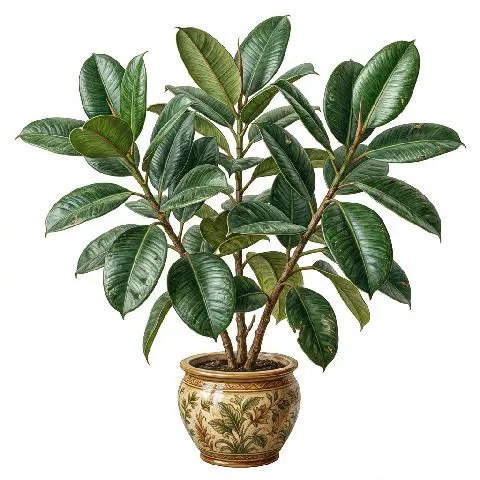
The Rubber Plant, scientifically known as Ficus elastica, is a majestic evergreen tree belonging to the Moraceae family. Native to tropical East Asia, specifically regions like India, Bhutan, Nepal, Myanmar, Malaysia, and Indonesia, it thrives in hill forests, often establishing itself on cliffs and limestone formations. In its natural habitat, Ficus elastica can reach impressive heights of up to 55 meters, characterized by its robust trunk and an extensive network of aerial roots that descend from its branches.
These aerial roots are a hallmark of its 'strangler fig' growth habit, often starting as an epiphyte on a host tree, then sending roots to the ground which thicken and eventually encircle and outcompete the host. The plant is easily recognized by its large, glossy, dark green, ovate leaves, which can grow quite substantial in size. While a giant in the wild, it is globally celebrated as a popular indoor ornamental plant, cherished for its aesthetic appeal and adaptability to various indoor conditions.
Its taxonomy includes several synonyms such as Ficus clusiifolia and Urostigma elasticum, highlighting its diverse historical classifications within the botanical community.
Trusted Scientific References
1. Authoritative external sources for Ficus elastica
1.1 Wikipedia — Ficus elastica
1.2 Kew POWO (Plants of the World Online)
1.3 PubMed — peer-reviewed research
1.4 NCBI Taxonomy Browser
1.5 GBIF — Global Biodiversity
1.6Rubber Plant should be interpreted through verified botanical identity, practical care, and responsible safety language. This recovery note adds the missing context needed for a complete profile: match light to the plant's habit, use well-drained soil, water according to season, and avoid unsupported medicinal or edible claims. For publishing, the plant can be presented as a source-backed indoor plant with clear care guidance, common problem diagnosis, and conservative safety wording.
1.7Rubber Plant (Ficus elastica) is maintained in this recovery file as a complete indoor profile with practical care, safety, and identification context. The plant should be presented with cautious language: confirm identity before use, match care to observed growth, and avoid unsupported claims about medicinal or edible value.
1.1.Rubber Plant — Key Features
- ✓ <strong>Large, glossy, dark green leaves</strong> — Its most distinctive ornamental feature.
- ✓ <strong>Milky white latex (sap)</strong> — Contains caoutchouc, resins, and other organic compounds.
- ✓ <strong>Strangler fig growth habit</strong> — Starts as an epiphyte, develops aerial roots, eventually smothers host.
- ✓ <strong>Native to East Asia</strong> — Indigenous to tropical and subtropical regions of India, Myanmar, and Indonesia.
- ✓ <strong>Adaptable indoor plant</strong> — Tolerates a range of indoor conditions, making it a popular houseplant.
- ✓ <strong>Historical source of rubber</strong> — Preceded Hevea brasiliensis as a commercial source of natural rubber.
- ✓ <strong>Member of the Moraceae family</strong> — Related to other fig species like edible figs and banyan trees.
- ✓ <strong>Requires moderate care</strong> — Prefers bright indirect light, well-drained soil, and consistent watering.
- ✓ <strong>Can grow to massive sizes in the wild</strong> — Up to 55 meters tall with extensive aerial root systems.
- ✓ <strong>Low maintenance ornamental</strong> — Easy to care for, contributing to its widespread popularity.
1.2.Rubber Plant — Quick Summary
- ✓ Popular ornamental plant known for glossy leaves.
- ✓ Produces a milky white latex historically used for natural rubber.
- ✓ Traditional uses of latex include antiseptic and wound healing properties, applied externally.
- ✓ Latex is a known skin irritant and toxic if ingested.
- ✓ Not recommended for modern internal medicinal use.
- ✓ Requires minimal care as an indoor plant.
2.Rubber Plant — Scientific Identity
3.Rubber Plant — Quick Facts
4.Rubber Plant — Appearance & Identification
5.Rubber Plant — Native Habitat
6.Rubber Plant — Water Requirements
- ✓ Temperature Preference — Thrives in warm, tropical conditions, ideally between 20-30°C, tolerating extremes from 10-36°C but sensitive to frost below -1°C.
- ✓ Light Requirements — Prefers a sunny position with bright, indirect light; direct harsh sun can scorch leaves, while insufficient light can lead to leggy growth.
- ✓ Soil Composition — Grows best in well-drained, moderately fertile soil with a pH range of 5.5-7.5, though it can tolerate slightly acidic or alkaline conditions.
- ✓ Watering Schedule — Requires consistent moisture but detests waterlogging; allow the top few inches of soil to dry out between waterings, especially for indoor plants.
- ✓ Propagation Techniques — Easily propagated from stem cuttings, which should be taken from healthy, mature stems, or through air layering for larger specimens.
- ✓ Pruning for Shape — Regular pruning helps manage its size and encourages bushier growth, particularly important for maintaining its ornamental appeal indoors.
- ✓ Humidity Considerations — Benefits from high humidity, especially in drier indoor environments; misting or pebble trays can help maintain optimal conditions.
- ✓ Root System Management — In its natural environment, the extensive and shallow root system necessitates space; for potted plants, ensure adequate pot size to accommodate growth.
Reviewed by the Flora Medical Global Botanical Review Panel
Multi-disciplinary editorial group · Botany · Ethnobotany · Herbal-medicine literature
Who reviewed this: This page was checked by the Flora Medical Global Botanical Review Panel — an in-house editorial group of botany graduates, ethnobotany researchers, and horticulture practitioners who collectively maintain our 7,000+ plant encyclopedia. Meet the team.
Our 4-step verification process
1. Taxonomic verification
Scientific names and synonyms cross-checked against Kew POWO, World Flora Online, and The Plant List.
2. Phytochemical & medicinal cross-reference
Active compounds, traditional uses, and reported activities are cross-referenced with PubMed, USDA Dr. Duke's database, and peer-reviewed ethnobotanical literature.
3. Conservation & distribution check
Distribution, ecology, and conservation status confirmed against GBIF occurrence records and the IUCN Red List.
4. Editorial & safety review
Every entry passes an editorial pass for clarity, originality, and safety notices (toxicity, contraindications, dosage caveats) before publication.
Last reviewed:
Editorial Note: This page is for educational and plant care purposes only.
Written by: Flora Medical Global Editorial Team
Reviewed by: Flora Medical Global Botanical Review Panel
Last Updated: June 15, 2026







Rubber Plant — Comments & Community Reviews
Rate this plant