
Care Disclaimer: Plant care recommendations are general guidelines based on common growing conditions. Individual results may vary based on your local environment, climate, and care routine. If your plant is toxic, keep it away from children and pets, and consult a veterinarian if accidental ingestion occurs.
1.Saintpaulia Confusa — Overview
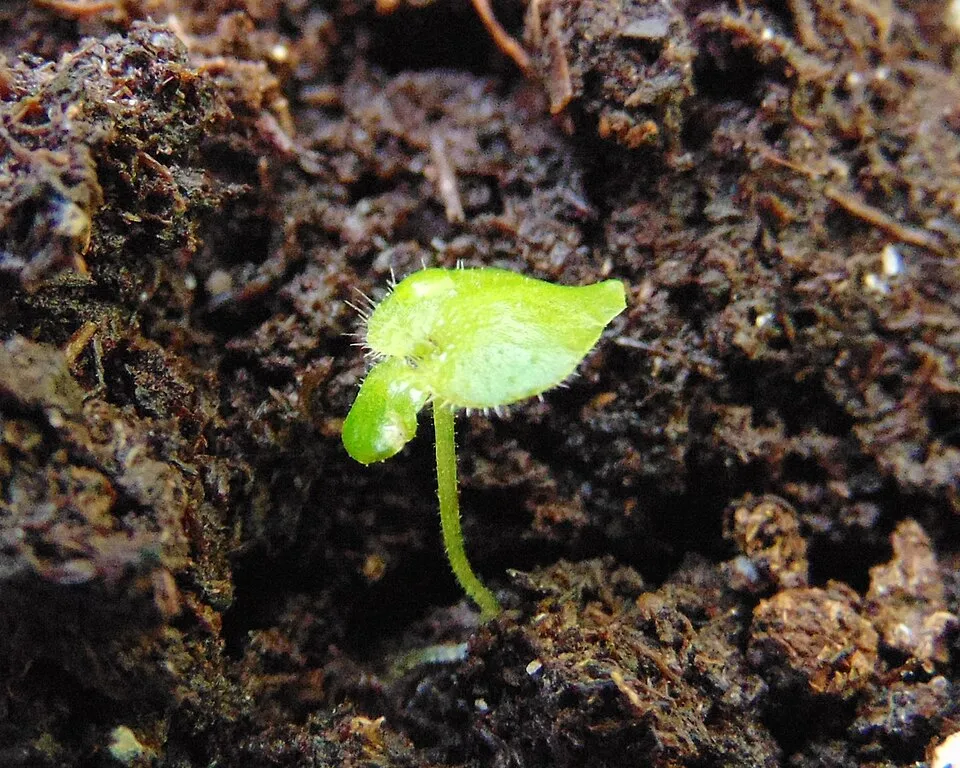
Saintpaulia confusa, commonly known as the African violet, is an enchanting perennial herb belonging to the diverse Gesneriaceae family, a group renowned for its ornamental members. Native to the humid, shaded understory of the East Usambara Mountains and Tanga region of Tanzania, this species thrives in the tropical rainforest environment. Morphologically, Saintpaulia confusa exhibits a compact, rosette growth habit, typically reaching a modest height of 10-15 cm.
Its leaves are a defining feature: oval to nearly orbicular, ranging from 3 to 10 cm in length, with a distinct velvety texture due to a dense covering of fine, soft trichomes. The adaxial (upper) surface is a deep, lustrous green, often with a slightly reddish or purplish tint on the abaxial (lower) side, contrasting beautifully with the prominent, lighter-colored veins. The fleshy petioles are typically reddish and contribute to the plant's robust appearance.
The root system is fibrous and shallow, adapted to efficiently absorb moisture and nutrients from the thin forest floor litter.
The flowers of Saintpaulia confusa are borne on slender pedicels, emerging from the leaf axils at the center of the rosette. They are typically five-petaled, though variations can occur, and present a captivating array of colors, predominantly various shades of violet-blue, but also white or pink forms are observed, often with a striking yellow or orange throat that serves as a nectar guide for pollinators. The delicate petals are often slightly ruffled or fringed.
Flowering occurs primarily during the warmer, wetter months of spring and summer, providing continuous blooms under ideal conditions. The fruit is a small, dry capsule containing numerous minute seeds. Taxonomically, Saintpaulia confusa is one of the original species discovered by Baron Walter von Saint Paul-Illaire in the late 19th century, leading to the genus name.
While often colloquially referred to as an 'African violet,' it is crucial to note that this species is botanically distinct from the true violets of the genus Viola (family Violaceae), which possess different morphology and phytochemical profiles.
Trusted Scientific References
1. Authoritative external sources for Saintpaulia confusa
1.1 Wikipedia — Saintpaulia confusa
1.2 Kew POWO (Plants of the World Online)
1.3 PubMed — peer-reviewed research
1.4 NCBI Taxonomy Browser
1.5 GBIF — Global Biodiversity
1.1.Saintpaulia Confusa — Key Features
- ✓ <strong>Velvety Leaves</strong> — Distinctive, soft-textured foliage with fine trichomes.
- ✓ <strong>Rosette Growth Habit</strong> — Compact, basal arrangement of leaves.
- ✓ <strong>Vibrant Flowers</strong> — Five-petaled blooms in shades of violet, blue, pink, or white.
- ✓ <strong>Yellow/Orange Throat</strong> — Often present in flowers, acting as a nectar guide.
- ✓ <strong>Perennial Herb</strong> — Lives for multiple years under suitable conditions.
- ✓ <strong>Tropical Origin</strong> — Native to East African rainforests, requiring warm, humid environments.
- ✓ <strong>Extensive Cultivar Development</strong> — Basis for thousands of ornamental African violet hybrids.
- ✓ <strong>Shallow, Fibrous Root System</strong> — Adapted for efficient nutrient uptake from surface litter.
- ✓ <strong>Long Flowering Period</strong> — Can bloom continuously under optimal indoor conditions.
- ✓ <strong>Non</strong> — Medicinal Status — Valued exclusively for its ornamental and horticultural attributes.
1.2.Saintpaulia Confusa — Quick Summary
- ✓ Ornamental Houseplant — Primarily cultivated for its aesthetic appeal.
- ✓ Native to Tanzania — Thrives in humid, shaded tropical rainforests.
- ✓ Distinct from True Violets — Not related to the Viola genus, which has medicinal uses.
- ✓ No Documented Medicinal Uses — Lacks traditional or scientific evidence for therapeutic benefits.
- ✓ Easy Indoor Care — Requires specific conditions like indirect light and high humidity.
- ✓ Non-Toxic (Generally) — Considered safe for homes with children and pets.
2.Saintpaulia Confusa — Scientific Identity
3.Saintpaulia Confusa — Quick Facts
4.Saintpaulia Confusa — Appearance & Identification
5.Saintpaulia Confusa — Native Habitat
6.Saintpaulia Confusa — Water Requirements
- Cultivating Saintpaulia confusa, the African violet, requires specific conditions to thrive indoors, mimicking its native tropical rainforest understory:
- ✓ Light — Prefers bright, indirect light; direct sunlight can scorch leaves. An east-facing window or filtered south/west light is ideal.
- ✓ Watering — Water thoroughly when the top inch of soil feels dry, using room-temperature water. Avoid getting water on the leaves to prevent spots and fungal issues.
- ✓ Humidity — Thrives in high humidity (60-80%). Use a pebble tray or humidifier, especially in dry indoor environments.
- ✓ Soil — Requires a well-draining, aerated potting mix specifically formulated for African violets, typically peat-based with perlite or vermiculite.
- ✓ Temperature — Maintain consistent temperatures between 18-24°C (65-75°F). Avoid sudden temperature fluctuations and cold drafts.
- ✓ Fertilization — Feed with a balanced liquid fertilizer formulated for African violets every 2-4 weeks during active growth, reducing frequency in winter.
- ✓ Propagation — Easily propagated from leaf cuttings placed in water or moist potting mix, or by division of suckers.
- ✓ Potting — Repot annually into a slightly larger pot, ensuring good drainage. Use shallow pots as they have a compact root system.
Reviewed by the Flora Medical Global Botanical Review Panel
Multi-disciplinary editorial group · Botany · Ethnobotany · Herbal-medicine literature
Who reviewed this: This page was checked by the Flora Medical Global Botanical Review Panel — an in-house editorial group of botany graduates, ethnobotany researchers, and horticulture practitioners who collectively maintain our 7,000+ plant encyclopedia. Meet the team.
Our 4-step verification process
1. Taxonomic verification
Scientific names and synonyms cross-checked against Kew POWO, World Flora Online, and The Plant List.
2. Phytochemical & medicinal cross-reference
Active compounds, traditional uses, and reported activities are cross-referenced with PubMed, USDA Dr. Duke's database, and peer-reviewed ethnobotanical literature.
3. Conservation & distribution check
Distribution, ecology, and conservation status confirmed against GBIF occurrence records and the IUCN Red List.
4. Editorial & safety review
Every entry passes an editorial pass for clarity, originality, and safety notices (toxicity, contraindications, dosage caveats) before publication.
Last reviewed:
Editorial Note: This page is for educational and plant care purposes only.
Written by: Flora Medical Global Editorial Team
Reviewed by: Flora Medical Global Botanical Review Panel
Last Updated: June 15, 2026







Saintpaulia Confusa — Comments & Community Reviews
Rate this plant