
Care Disclaimer: Plant care recommendations are general guidelines based on common growing conditions. Individual results may vary based on your local environment, climate, and care routine. If your plant is toxic, keep it away from children and pets, and consult a veterinarian if accidental ingestion occurs.
1.Sansevieria Samurai — Overview
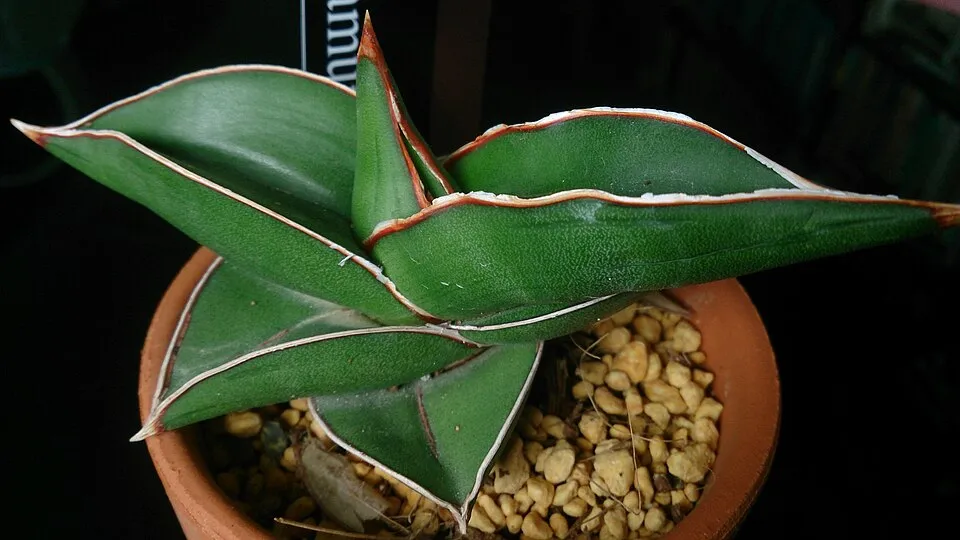
Sansevieria Samurai, now taxonomically recognized as Dracaena ehrenbergii samurai, is an exceptional cultivar within the Asparagaceae family, celebrated for its unique and robust architectural form. This striking succulent typically reaches a height of 60 to 90 cm (24 to 36 inches), with its distinctive sword-shaped leaves tapering to a sharp point. Individual leaves can extend up to 45 cm (18 inches) in length and approximately 5 cm (2 inches) in width. The foliage presents a captivating aesthetic: deep green blades are intricately patterned with prominent light green horizontal bands, creating a visually appealing contrast that makes it a focal point in any interior design.
While its primary appeal is its evergreen foliage, mature plants may occasionally produce small, tubular, and subtly fragrant flowers on an upright stalk, though this phenomenon is rare in typical indoor cultivation. The plant’s structure is characterized by sturdy, often textured stems that support its upright, fan-like growth habit, contributing to its sculptural quality. Indigenous to the arid regions of East Africa, where its wild counterpart, Dracaena ehrenbergii, thrives, Sansevieria Samurai is exceptionally well-adapted to environments with well-drained soils and can endure considerable periods of low light, making it remarkably forgiving for novice plant enthusiasts. This remarkable resilience, coupled with its inherent air-purifying capabilities, which contribute significantly to enhancing indoor air quality by absorbing common volatile organic compounds (VOCs) and converting carbon dioxide to oxygen at night, solidifies its status as a highly favored and low-maintenance houseplant.
Its inclusion in the Dracaena genus reflects a recent reclassification, aligning it with a diverse group of plants known for their ornamental value and hardiness across various climatic zones. This species is a testament to natural adaptability, thriving where many other plants would struggle.
Trusted Scientific References
1. Authoritative external sources for Dracaena ehrenbergii samurai
1.1 Wikipedia — Dracaena ehrenbergii samurai
1.2 Kew POWO (Plants of the World Online)
1.3 PubMed — peer-reviewed research
1.4 NCBI Taxonomy Browser
1.5 GBIF — Global Biodiversity
1.1.Sansevieria Samurai — Key Features
- ✓ <strong>Striking Architectural Form</strong> — Features stiff, upright, sword-shaped leaves with a distinctive silhouette.
- ✓ <strong>Unique Foliage Pattern</strong> — Dark green leaves adorned with prominent light green horizontal banding.
- ✓ <strong>Exceptional Air Purifier</strong> — Known for removing formaldehyde, benzene, xylene, and other VOCs.
- ✓ <strong>Nighttime Oxygen Release</strong> — Converts CO2 to O2 during the night, improving air quality for sleep.
- ✓ <strong>Drought Tolerant</strong> — Requires infrequent watering, making it forgiving for busy individuals.
- ✓ <strong>Low Light Tolerant</strong> — Thrives in various light conditions, including dimly lit indoor spaces.
- ✓ <strong>High Resilience</strong> — Endures neglect and a wide range of environmental stressors.
- ✓ <strong>Minimal Care Requirements</strong> — Ideal for beginners or those seeking low-maintenance houseplants.
- ✓ <strong>Natural Biophilic Element</strong> — Integrates natural aesthetics into interior design, promoting well-being.
- ✓ <strong>Pest Resistant</strong> — Generally robust against common indoor plant pests.
1.2.Sansevieria Samurai — Quick Summary
- ✓ Dracaena ehrenbergii samurai is a striking, low-maintenance ornamental plant.
- ✓ Highly effective in purifying indoor air by removing common VOCs.
- ✓ Unique ability to produce oxygen at night, ideal for bedrooms.
- ✓ Exceptionally resilient, tolerates low light and drought conditions.
- ✓ Mildly toxic if ingested, requiring caution around pets and children.
2.Sansevieria Samurai — Scientific Identity
3.Sansevieria Samurai — Quick Facts
4.Sansevieria Samurai — Appearance & Identification
5.Sansevieria Samurai — Native Habitat
6.Sansevieria Samurai — Water Requirements
- ✓ Light Requirements — Dracaena ehrenbergii samurai thrives in bright, indirect light but is remarkably tolerant of low light conditions, making it adaptable to various indoor settings; direct, intense sunlight can scorch its leaves.
- ✓ Soil & Drainage — Requires a well-draining potting mix, ideally a succulent or cactus blend, to prevent root rot; ensure pots have drainage holes.
- ✓ Watering Schedule — Water sparingly, allowing the soil to dry out completely between waterings, typically every 2-4 weeks depending on light and humidity; overwatering is the most common cause of plant demise.
- ✓ Temperature & Humidity — Prefers average room temperatures between 18-35°C (65-95°F) and tolerates typical household humidity levels; avoid extreme cold or sudden temperature drops.
- ✓ Fertilization — Feed lightly during the growing season (spring and summer) with a balanced liquid fertilizer diluted to half strength, once every 2-3 months; reduce or cease fertilization in fall and winter.
- ✓ Propagation — Easily propagated from leaf cuttings or by dividing rhizomes, allowing cut sections to callus for a few days before planting in moist soil.
- ✓ Repotting — Repot only when root-bound, typically every 2-3 years, in a pot slightly larger than the previous one, using fresh, well-draining potting mix.
- ✓ Pest & Disease Management — Generally pest-resistant, but occasionally susceptible to mealybugs or spider mites; treat with neem oil or insecticidal soap if infestations occur.
Reviewed by the Flora Medical Global Botanical Review Panel
Multi-disciplinary editorial group · Botany · Ethnobotany · Herbal-medicine literature
Who reviewed this: This page was checked by the Flora Medical Global Botanical Review Panel — an in-house editorial group of botany graduates, ethnobotany researchers, and horticulture practitioners who collectively maintain our 7,000+ plant encyclopedia. Meet the team.
Our 4-step verification process
1. Taxonomic verification
Scientific names and synonyms cross-checked against Kew POWO, World Flora Online, and The Plant List.
2. Phytochemical & medicinal cross-reference
Active compounds, traditional uses, and reported activities are cross-referenced with PubMed, USDA Dr. Duke's database, and peer-reviewed ethnobotanical literature.
3. Conservation & distribution check
Distribution, ecology, and conservation status confirmed against GBIF occurrence records and the IUCN Red List.
4. Editorial & safety review
Every entry passes an editorial pass for clarity, originality, and safety notices (toxicity, contraindications, dosage caveats) before publication.
Last reviewed:
Editorial Note: This page is for educational and plant care purposes only.
Written by: Flora Medical Global Editorial Team
Reviewed by: Flora Medical Global Botanical Review Panel
Last Updated: June 15, 2026







Sansevieria Samurai — Comments & Community Reviews
Rate this plant