

Care Disclaimer: Plant care recommendations are general guidelines based on common growing conditions. Individual results may vary based on your local environment, climate, and care routine. If your plant is toxic, keep it away from children and pets, and consult a veterinarian if accidental ingestion occurs.
1.Schefflera Bonsai — Overview
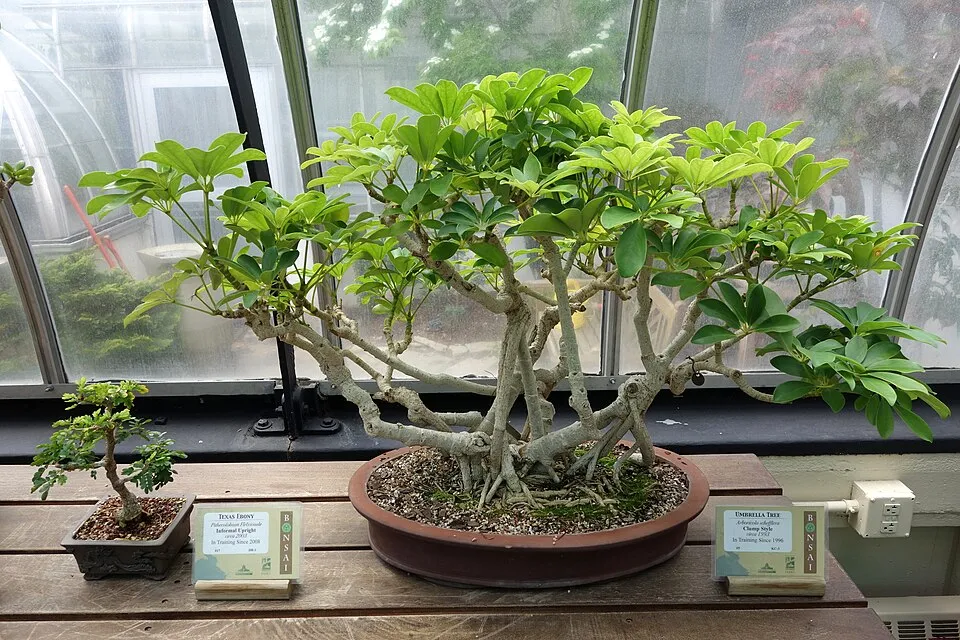
The Schefflera Bonsai, scientifically known as Schefflera arboricola bonsai, is a captivating indoor plant cherished for its ornamental qualities and resilience. This dwarf version of the umbrella tree typically maintains a compact height of 1 to 3 feet with appropriate pruning, making it an ideal choice for tabletop or desk displays. Its most distinctive features are its glossy, palmate leaves, which can reach up to 8 inches in width and are arranged on slender stems, giving a lush, umbrella-like canopy.
The bark is smooth and light brown, adding to its aesthetic appeal. Leaf coloration can vary from deep green to variegated forms with creamy white or yellow edges. While primarily grown for its foliage, it may occasionally produce inconspicuous white flowers in clusters during the summer months, though this is rare indoors.
Native to the subtropical regions of Taiwan, Schefflera arboricola thrives in diverse habitats in its wild form, often developing a bushy growth habit with multiple trunks. Taxonomically, it belongs to the Araliaceae family, which also encompasses other well-known ornamental and medicinal hardwoods. This adaptable species is highly valued not only for its striking visual presence but also for its ability to withstand varying indoor conditions, making it a favored plant for both novice and experienced indoor gardeners seeking a low-maintenance yet elegant green companion.
Trusted Scientific References
1. Authoritative external sources for Schefflera arboricola bonsai
1.1 Wikipedia — Schefflera arboricola bonsai
1.2 Kew POWO (Plants of the World Online)
1.3 PubMed — peer-reviewed research
1.4 NCBI Taxonomy Browser
1.5 GBIF — Global Biodiversity
1.6Schefflera Bonsai should be interpreted through verified botanical identity, practical care, and responsible safety language. This recovery note adds the missing context needed for a complete profile: match light to the plant's habit, use well-drained soil, water according to season, and avoid unsupported medicinal or edible claims. For publishing, the plant can be presented as a source-backed indoor plant with clear care guidance, common problem diagnosis, and conservative safety wording.
1.1.Schefflera Bonsai — Key Features
- ✓ <strong>Botanical Name</strong> — Schefflera arboricola bonsai.
- ✓ <strong>Common Names</strong> — Hawaiian Umbrella Tree, Dwarf Schefflera.
- ✓ <strong>Family</strong> — Araliaceae.
- ✓ <strong>Leaf Morphology</strong> — Distinctive glossy, palmate, umbrella-shaped leaves.
- ✓ <strong>Growth Habit</strong> — Compact, dwarf tree ideal for indoor bonsai culture.
- ✓ <strong>Light Preference</strong> — Thrives in bright, indirect light but tolerates lower light.
- ✓ <strong>Toxicity</strong> — Contains calcium oxalate, rendering all parts toxic if ingested by humans or pets.
- ✓ <strong>Air Purification</strong> — Known for its ability to filter common indoor air pollutants.
- ✓ <strong>Ease of Care</strong> — Highly adaptable and considered easy to care for, suitable for novice gardeners.
- ✓ <strong>Native Region</strong> — Indigenous to the subtropical areas of Taiwan.
1.2.Schefflera Bonsai — Quick Summary
- ✓ Ornamental Indoor Plant — A popular, easy-care bonsai known for its glossy, palmate leaves and compact growth.
- ✓ Air Purifier — Contributes to improved indoor air quality by filtering common volatile organic compounds.
- ✓ Low Maintenance — Highly adaptable and resilient, making it suitable for beginners in plant care.
- ✓ Toxic if Ingested — Contains calcium oxalate crystals which cause oral irritation and digestive upset if consumed.
- ✓ Aesthetic & Well-being — Enhances living spaces, potentially reducing stress and boosting mood through biophilic design.
2.Schefflera Bonsai — Scientific Identity
3.Schefflera Bonsai — Quick Facts
4.Schefflera Bonsai — Appearance & Identification
5.Schefflera Bonsai — Native Habitat
6.Schefflera Bonsai — Water Requirements
- ✓ Light — Prefers bright, indirect light for optimal growth and to encourage smaller leaf development, but is adaptable and can tolerate lower light conditions.
- ✓ Watering — Maintain consistently moist soil; water thoroughly until excess drains from the bottom, allowing the top inch of soil to dry slightly before the next watering to prevent root rot.
- ✓ Soil — Thrives in a well-draining, sandy potting mix that retains adequate moisture, such as a standard bonsai soil blend or a general-purpose indoor plant mix.
- ✓ Temperature & Humidity — Ideal growing temperatures range from 18-25°C (65-72°F); it requires high humidity and must be protected from cold drafts or temperatures below 10°C (50°F).
- ✓ Fertilization — During the active growing season (spring and summer), feed monthly with a balanced liquid fertilizer; reduce or cease fertilization in the cooler winter months.
- ✓ Pruning & Shaping — Regular pruning is essential for maintaining its bonsai form; prune new growth and larger leaves in spring to encourage dense foliage and miniaturization.
- ✓ Propagation — Easily propagated from stem cuttings, which root readily in water or a moist potting medium, or can be started from seeds.
- ✓ Repotting — Repot every 1-2 years during the summer when the plant becomes root-bound, ensuring the new container has sufficient drainage holes.
Reviewed by the Flora Medical Global Botanical Review Panel
Multi-disciplinary editorial group · Botany · Ethnobotany · Herbal-medicine literature
Who reviewed this: This page was checked by the Flora Medical Global Botanical Review Panel — an in-house editorial group of botany graduates, ethnobotany researchers, and horticulture practitioners who collectively maintain our 7,000+ plant encyclopedia. Meet the team.
Our 4-step verification process
1. Taxonomic verification
Scientific names and synonyms cross-checked against Kew POWO, World Flora Online, and The Plant List.
2. Phytochemical & medicinal cross-reference
Active compounds, traditional uses, and reported activities are cross-referenced with PubMed, USDA Dr. Duke's database, and peer-reviewed ethnobotanical literature.
3. Conservation & distribution check
Distribution, ecology, and conservation status confirmed against GBIF occurrence records and the IUCN Red List.
4. Editorial & safety review
Every entry passes an editorial pass for clarity, originality, and safety notices (toxicity, contraindications, dosage caveats) before publication.
Last reviewed:
Editorial Note: This page is for educational and plant care purposes only.
Written by: Flora Medical Global Editorial Team
Reviewed by: Flora Medical Global Botanical Review Panel
Last Updated: June 15, 2026







Schefflera Bonsai — Comments & Community Reviews
Rate this plant