
Care Disclaimer: Plant care recommendations are general guidelines based on common growing conditions. Individual results may vary based on your local environment, climate, and care routine. If your plant is toxic, keep it away from children and pets, and consult a veterinarian if accidental ingestion occurs.
1.Sedum Rubrotinctum — Overview
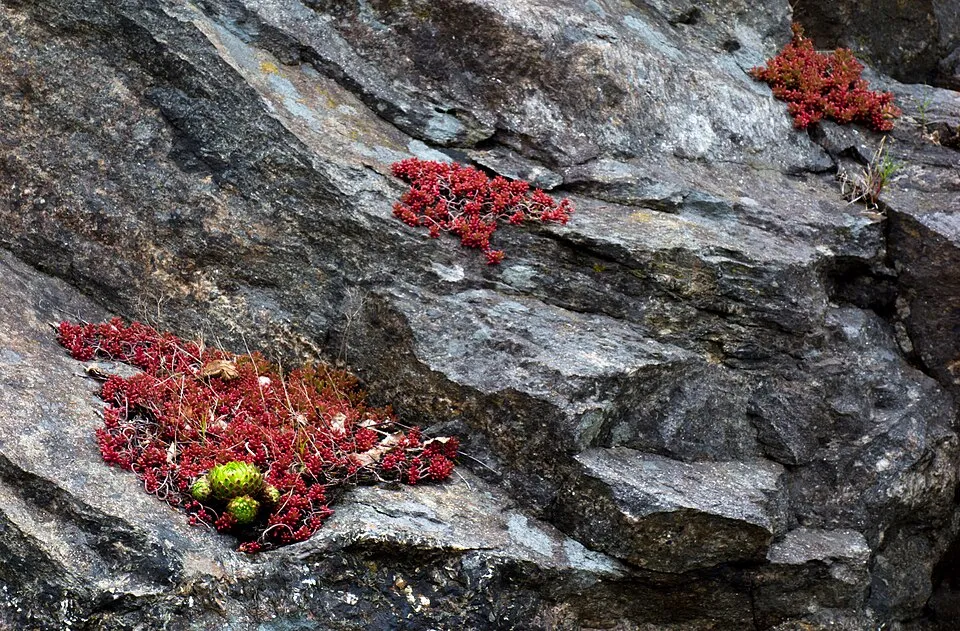
Sedum rubrotinctum, widely recognized as the jelly bean plant or pork and beans, is an herbaceous perennial succulent thriving within the diverse Crassulaceae family, a group well-known for its remarkable drought-resistant species. This visually striking plant is native to Mexico, where it naturally flourishes in arid to semi-arid landscapes, typically anchoring itself to rocky outcrops, steep slopes, and well-draining, often nutrient-poor soils. Its inherent ability to adapt to harsh environmental conditions is a testament to its specialized succulent morphology and efficient water storage mechanisms. The plant typically forms low-growing, dense mats or clumps, featuring numerous slender, brittle stems that can gracefully cascade up to 20-30 cm in length, making it an excellent choice for hanging baskets and as an attractive groundcover. The most distinguishing characteristic of Sedum rubrotinctum lies in its turgid, fleshy leaves, which indeed bear a striking resemblance to miniature jelly beans or rounded sausages.
These leaves are arranged spirally along the stems and undergo a captivating color transformation. While maintaining a vibrant green hue in shaded areas or under less intense light, exposure to bright, direct sunlight or cooler temperatures triggers a dramatic blush, causing the leaves, particularly their tips, to develop rich shades of red, bronze, or copper. This chromatic shift is a vital protective adaptation, involving the biosynthesis of anthocyanins and carotenoids, which effectively shield the plant from excessive ultraviolet radiation. The root system of Sedum rubrotinctum is fibrous and shallow, optimally designed to rapidly absorb intermittent rainfall from the upper soil layers, a common adaptation among many succulent species. During the late spring to early summer months, the plant produces delicate, star-shaped flowers, typically a cheerful bright yellow, arranged in terminal cymes.
These small, aesthetically pleasing blossoms, though less prominent than the leaves, significantly contribute to the plant’s overall ornamental appeal and are often pollinated by various small insects. Taxonomically, Sedum rubrotinctum is sometimes considered a natural hybrid, possibly resulting from a cross between Sedum pachyphyllum and Sedum stahlii, which explains some of its unique characteristics. Trusted Scientific References Authoritative external sources for Sedum rubrotinctum : Wikipedia — Sedum rubrotinctum Kew POWO (Plants of the World O ...[CURRENT TEXT EXISTS: 2587 chars]
1.1.Sedum Rubrotinctum — Key Features
- ✓ <strong>Unique Succulent Leaves</strong> — Characterized by its fleshy, turgid leaves that uniquely resemble miniature jelly beans or rounded sausages.
- ✓ <strong>Dynamic Color Transformation</strong> — Leaves transition from vibrant green to striking red, bronze, or copper under strong sunlight or cool temperatures.
- ✓ <strong>Exceptional Drought Tolerance</strong> — Highly adapted to arid conditions, efficiently storing water within its specialized succulent leaves and stems.
- ✓ <strong>Crassulacean Acid Metabolism (CAM)</strong> — Employs a unique photosynthetic pathway to conserve water, especially beneficial in hot, dry climates.
- ✓ <strong>Low Maintenance Requirements</strong> — An ideal plant for beginners, demanding minimal watering and generally easy to care for.
- ✓ <strong>High Ornamental Value</strong> — Widely cultivated for its distinctive and attractive appearance in containers, rock gardens, and as groundcover.
- ✓ <strong>Native Mexican Origin</strong> — Naturally found thriving in the rocky, dry regions of its native habitat in Mexico.
- ✓ <strong>Delicate Yellow Flowers</strong> — Produces small, star-shaped yellow blossoms in terminal cymes during the late spring to early summer months.
- ✓ <strong>Graceful Cascading Habit</strong> — Its stems can grow up to 30 cm, creating an elegant, trailing effect suitable for hanging displays.
- ✓ <strong>Air Quality Contributor</strong> — As an indoor plant, it helps purify indoor air by absorbing certain toxins and releasing oxygen, contributing to a healthier environment.
1.2.Sedum Rubrotinctum — Quick Summary
- ✓ Ornamental & Topical Use — Primarily valued for its aesthetic appeal and potential soothing topical applications for minor skin irritations.
- ✓ Phytochemical Rich — Contains flavonoids, terpenoids, phenolic acids, and mucilaginous polysaccharides, contributing to its antioxidant and anti-inflammatory properties.
- ✓ No Widespread Traditional Internal Use — Lacks documented extensive traditional internal medicinal applications; benefits are largely extrapolated from general succulent properties.
- ✓ Distinctive 'Jelly Bean' Leaves — Recognized by its fleshy, cylindrical leaves that display a vibrant red hue under bright sunlight.
- ✓ Easy-Care Succulent — A highly drought-tolerant plant requiring minimal watering and bright light, making it ideal for novice plant enthusiasts.
- ✓ External Application Only — Internal consumption is not advised due to limited safety data; always perform patch tests for topical use.
2.Sedum Rubrotinctum — Scientific Identity
3.Sedum Rubrotinctum — Quick Facts
4.Sedum Rubrotinctum — Appearance & Identification
5.Sedum Rubrotinctum — Native Habitat
6.Sedum Rubrotinctum — Water Requirements
- ✓ Light — Requires bright, direct sunlight for at least 6 hours daily to maintain its vibrant red and bronze coloration; tolerates partial shade but may revert to green.
- ✓ Soil — Thrives in extremely well-draining succulent or cactus potting mix; a blend of coarse sand, perlite, pumice, and minimal organic matter is ideal to prevent root rot.
- ✓ Watering — Water thoroughly only when the soil is completely dry to the touch; highly drought-tolerant, overwatering is the most common cause of plant demise.
- ✓ Temperature & Humidity — Prefers average room temperatures (18-24°C / 65-75°F) and low to moderate humidity; protect from frost as it is not cold hardy.
- ✓ Fertilization — Feed sparingly during the active growing season (spring and summer) with a diluted, balanced liquid fertilizer; avoid fertilizing during dormant winter months.
- ✓ Propagation — Easily propagated from stem or individual leaf cuttings; allow cuttings to callus for several days before planting in dry, well-draining soil to encourage rooting.
- ✓ Pests & Diseases — Generally quite pest-resistant, but occasionally susceptible to mealybugs or aphids; root rot is the primary disease concern, exclusively caused by excessive moisture.
- ✓ Potting — Always use pots with adequate drainage holes to facilitate water escape; unglazed terracotta pots are often preferred as they promote evaporation and airflow.
Reviewed by the Flora Medical Global Botanical Review Panel
Multi-disciplinary editorial group · Botany · Ethnobotany · Herbal-medicine literature
Who reviewed this: This page was checked by the Flora Medical Global Botanical Review Panel — an in-house editorial group of botany graduates, ethnobotany researchers, and horticulture practitioners who collectively maintain our 7,000+ plant encyclopedia. Meet the team.
Our 4-step verification process
1. Taxonomic verification
Scientific names and synonyms cross-checked against Kew POWO, World Flora Online, and The Plant List.
2. Phytochemical & medicinal cross-reference
Active compounds, traditional uses, and reported activities are cross-referenced with PubMed, USDA Dr. Duke's database, and peer-reviewed ethnobotanical literature.
3. Conservation & distribution check
Distribution, ecology, and conservation status confirmed against GBIF occurrence records and the IUCN Red List.
4. Editorial & safety review
Every entry passes an editorial pass for clarity, originality, and safety notices (toxicity, contraindications, dosage caveats) before publication.
Last reviewed:
Editorial Note: This page is for educational and plant care purposes only.
Written by: Flora Medical Global Editorial Team
Reviewed by: Flora Medical Global Botanical Review Panel
Last Updated: June 15, 2026







Sedum Rubrotinctum — Comments & Community Reviews
Rate this plant