

Care Disclaimer: Plant care recommendations are general guidelines based on common growing conditions. Individual results may vary based on your local environment, climate, and care routine. If your plant is toxic, keep it away from children and pets, and consult a veterinarian if accidental ingestion occurs.
1.Selaginella Rainbow — Overview
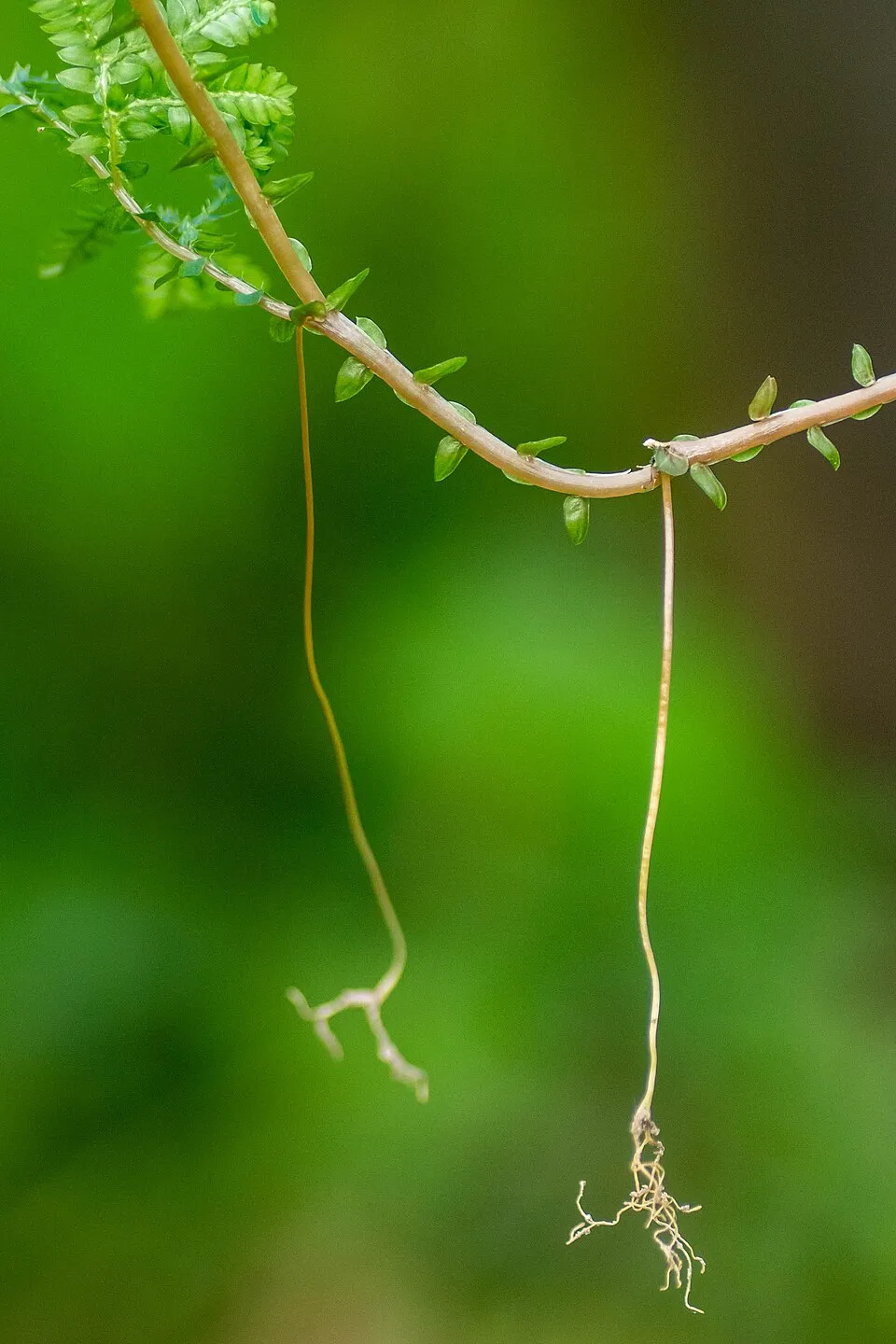
Selaginella uncinata, commonly known as Rainbow Selaginella or Peacock Moss, is a captivating species belonging to the ancient Selaginellaceae family, an evolutionary lineage distinct from flowering plants, reproducing via spores. Native to the subtropical regions of China, particularly thriving in humid, shaded forest understories, this plant is renowned for its iridescent foliage. When cultivated, it typically reaches a height of 8 to 12 inches, forming a dense, creeping mat of emerald-green leaves.
Under optimal lighting conditions, the plant's delicate, scale-like leaves, measuring approximately 1 to 2 inches in length, exhibit a striking variegation, shimmering with shades of blue, pink, yellow, and cream, giving rise to its 'Rainbow' moniker. The leaves are arranged in a unique spiral pattern along its slender, often reddish-green stems, contributing significantly to its ornamental appeal. As a spore-bearing plant, Selaginella uncinata does not produce traditional flowers or seeds; instead, it reproduces through sporophylls aggregated into cone-like strobili.
Its preference for moist, well-drained soil and high humidity makes it an ideal candidate for terrariums, paludariums, or as a ground cover in shaded, tropical garden settings, where it can truly display its vibrant, ever-changing hues.
Trusted Scientific References
1. Authoritative external sources for Selaginella uncinata
1.1 Wikipedia — Selaginella uncinata
1.2 Kew POWO (Plants of the World Online)
1.3 PubMed — peer-reviewed research
1.4 NCBI Taxonomy Browser
1.5 GBIF — Global Biodiversity
1.6Selaginella Rainbow should be interpreted through verified botanical identity, practical care, and responsible safety language. This recovery note adds the missing context needed for a complete profile: match light to the plant's habit, use well-drained soil, water according to season, and avoid unsupported medicinal or edible claims. For publishing, the plant can be presented as a source-backed indoor plant with clear care guidance, common problem diagnosis, and conservative safety wording.
1.1.Selaginella Rainbow — Key Features
- ✓ <strong>Iridescent Rainbow Foliage</strong> — Displays stunning blue, pink, yellow, and cream hues under optimal light.
- ✓ <strong>Spore</strong> — Bearing Plant — Reproduces via spores, not flowers or seeds, characteristic of ancient plant lineages.
- ✓ <strong>Native to China</strong> — Thrives in subtropical, humid forest understories of its native habitat.
- ✓ <strong>Traditional Chinese Medicine (TCM) Herb</strong> — Historically used for respiratory support and other ailments.
- ✓ <strong>Rich Phytochemistry</strong> — Contains diverse compounds including flavonoids, chromones, and steroidal saponins.
- ✓ <strong>Potential Pharmacological Actions</strong> — Demonstrated anti-inflammatory, antioxidant, antiasthmatic, and antitumor effects in studies.
- ✓ <strong>High Humidity Requirement</strong> — Ideal for terrariums and indoor environments with controlled moisture.
- ✓ <strong>Delicate, Scale</strong> — Like Leaves — Unique leaf morphology arranged in a distinctive spiral pattern.
- ✓ <strong>Low</strong> — Maintenance Ornamental — Relatively easy to care for as an indoor plant once humidity needs are met.
- ✓ <strong>Evergreen Groundcover</strong> — Forms a dense, creeping mat, suitable for shaded landscape areas in tropical zones.
1.2.Selaginella Rainbow — Quick Summary
- ✓ Selaginella uncinata, or Rainbow Selaginella, is an ornamental spore-bearing plant from China.
- ✓ Known for its iridescent, changing foliage, ideal for humid environments.
- ✓ Traditionally used in TCM for respiratory issues and overall lung health.
- ✓ Rich in bioactive compounds like flavonoids, saponins, and polysaccharides.
- ✓ Exhibits potential anti-inflammatory, antioxidant, antiasthmatic, and antitumor activities.
- ✓ Requires careful cultivation in high humidity and indirect light; medicinal use needs professional guidance due to limited human safety data.
2.Selaginella Rainbow — Scientific Identity
3.Selaginella Rainbow — Quick Facts
4.Selaginella Rainbow — Appearance & Identification
5.Selaginella Rainbow — Native Habitat
6.Selaginella Rainbow — Water Requirements
- ✓ Humidity — Requires consistently high humidity, ideally above 70%, making it excellent for terrariums or humidifiers.
- ✓ Light — Prefers bright, indirect light or partial shade; direct sunlight can scorch its delicate foliage and diminish its vibrant coloration.
- ✓ Soil — Thrives in moist, well-draining, acidic to neutral soil rich in organic matter, such as a peat-based potting mix.
- ✓ Watering — Keep the soil consistently moist but not waterlogged; never allow it to dry out completely, as this can lead to rapid decline.
- ✓ Temperature — Prefers warm temperatures between 65-80°F (18-27°C) and should be protected from cold drafts.
- ✓ Propagation — Easily propagated by stem cuttings or division; stem nodes readily root when in contact with moist substrate.
- ✓ Fertilization — Feed sparingly during the growing season (spring/summer) with a diluted liquid fertilizer to avoid nutrient burn.
- ✓ Air Circulation — Good air circulation is important to prevent fungal issues, especially in high-humidity environments.
Reviewed by the Flora Medical Global Botanical Review Panel
Multi-disciplinary editorial group · Botany · Ethnobotany · Herbal-medicine literature
Who reviewed this: This page was checked by the Flora Medical Global Botanical Review Panel — an in-house editorial group of botany graduates, ethnobotany researchers, and horticulture practitioners who collectively maintain our 7,000+ plant encyclopedia. Meet the team.
Our 4-step verification process
1. Taxonomic verification
Scientific names and synonyms cross-checked against Kew POWO, World Flora Online, and The Plant List.
2. Phytochemical & medicinal cross-reference
Active compounds, traditional uses, and reported activities are cross-referenced with PubMed, USDA Dr. Duke's database, and peer-reviewed ethnobotanical literature.
3. Conservation & distribution check
Distribution, ecology, and conservation status confirmed against GBIF occurrence records and the IUCN Red List.
4. Editorial & safety review
Every entry passes an editorial pass for clarity, originality, and safety notices (toxicity, contraindications, dosage caveats) before publication.
Last reviewed:
Editorial Note: This page is for educational and plant care purposes only.
Written by: Flora Medical Global Editorial Team
Reviewed by: Flora Medical Global Botanical Review Panel
Last Updated: June 15, 2026







Selaginella Rainbow — Comments & Community Reviews
Rate this plant