
Care Disclaimer: Plant care recommendations are general guidelines based on common growing conditions. Individual results may vary based on your local environment, climate, and care routine. If your plant is toxic, keep it away from children and pets, and consult a veterinarian if accidental ingestion occurs.
1.Senecio Stapeliiformis — Overview
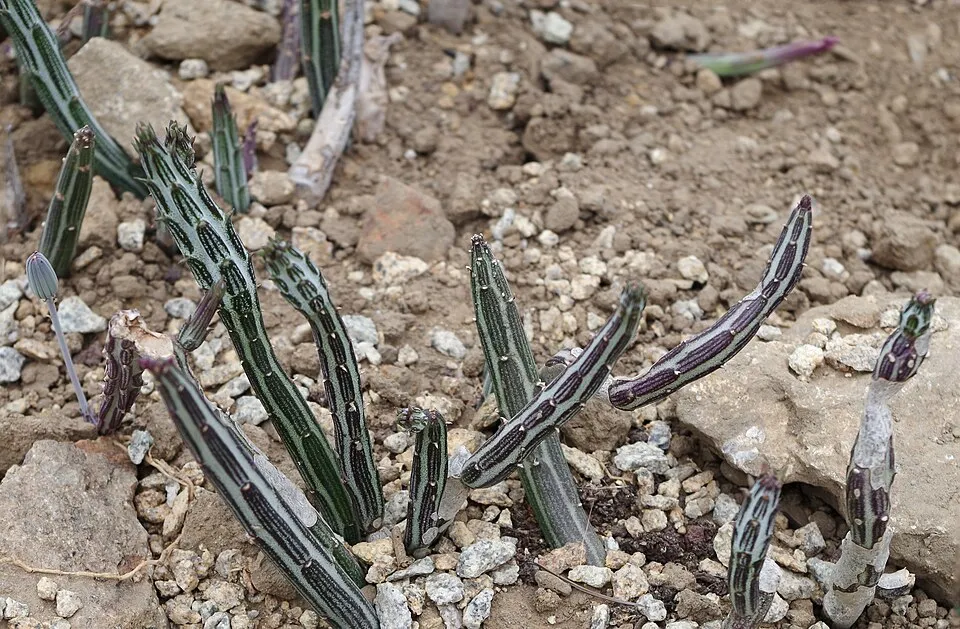
Senecio stapeliiformis, widely recognized as the Pickle Plant or Stapelia Stemmed Senecio, is a distinctive perennial succulent within the Asteraceae family. Though historically classified under the genus Senecio, it is now often recognized as Kleinia stapeliiformis, reflecting ongoing botanical reclassification within the tribe Senecioneae. This captivating species is indigenous to the arid regions of South Africa, particularly abundant in the Eastern Cape, where it thrives in dry, rocky, and well-drained environments.
Its unique morphology, which includes fleshy, cylindrical stems that remarkably mimic those of Stapelia species, is a key adaptation to its xeric habitat. The stems, typically reaching up to 25 cm in length and 2 cm in diameter, are a striking green adorned with distinctive white patterns and often exhibit a subtle pinkish tinge. They are smooth, pencil-like, and feature 4 to 6 prominent grooves, with inconspicuous scale-like leaves arranged along these ribs.
This growth habit contributes to its common name "Pickle Plant" due to its resemblance to gherkins. During its flowering season, Senecio stapeliiformis produces large, hawkweed-like flowers that present in vibrant hues ranging from red to orange, providing a striking contrast against its patterned stems. Its drought-resistant nature and minimal care requirements make it a favored choice for succulent enthusiasts and indoor cultivation.
Trusted Scientific References
1. Authoritative external sources for Senecio stapeliiformis
1.1 Wikipedia — Senecio stapeliiformis
1.2 Kew POWO (Plants of the World Online)
1.3 PubMed — peer-reviewed research
1.4 NCBI Taxonomy Browser
1.5 GBIF — Global Biodiversity
1.6Senecio Stapeliiformis should be interpreted through verified botanical identity, practical care, and responsible safety language. This recovery note adds the missing context needed for a complete profile: match light to the plant's habit, use well-drained soil, water according to season, and avoid unsupported medicinal or edible claims. For publishing, the plant can be presented as a source-backed indoor plant with clear care guidance, common problem diagnosis, and conservative safety wording.
1.1.Senecio Stapeliiformis — Key Features
- ✓ <strong>Succulent Perennial</strong> — A resilient, long-lived plant adapted to arid conditions, retaining water in its specialized stems.
- ✓ <strong>Distinctive Pencil Stems</strong> — Features unique green, cylindrical stems with white patterns and a pinkish tinge, resembling pickles or stapelia.
- ✓ <strong>Native to South Africa</strong> — Originates from the Eastern Cape, thriving in dry, rocky habitats.
- ✓ <strong>Drought</strong> — Tolerant — Highly adapted to minimal water, making it a low-maintenance plant for arid climates or infrequent watering.
- ✓ <strong>Ornamental Value</strong> — Prized by succulent collectors and gardeners for its striking appearance and ease of care.
- ✓ <strong>Hawkweed</strong> — like Flowers — Produces vibrant red to orange, star-shaped flowers that add a splash of color.
- ✓ <strong>Pyrrolizidine Alkaloid Content</strong> — Contains or is closely related to species containing PAs, which are significant hepatotoxic compounds.
- ✓ <strong>Traditional Medicinal Uses</strong> — Historically employed for anti-inflammatory, analgesic, and digestive support, though modern internal use is unsafe.
- ✓ <strong>Reclassified Genus</strong> — Formerly Senecio stapeliiformis, now taxonomically recognized as Kleinia stapeliiformis.
- ✓ <strong>Easy Propagation</strong> — Readily grows from stem cuttings, making it simple to multiply.
1.2.Senecio Stapeliiformis — Quick Summary
- ✓ Senecio stapeliiformis (Pickle Plant) is a unique succulent from South Africa, known for its pencil-like, patterned stems and distinctive flowers.
- ✓ Traditionally used for anti-inflammatory, analgesic, and digestive purposes, though such uses are now viewed with extreme caution.
- ✓ Contains various secondary metabolites, notably hepatotoxic pyrrolizidine alkaloids (PAs) in the Senecio genus, which are a major safety concern.
- ✓ Cultivation is straightforward for succulent enthusiasts, requiring bright light and well-draining soil with minimal watering.
- ✓ Internal consumption is strongly contraindicated due to the severe risk of liver damage from PAs.
- ✓ It is primarily valued as an ornamental plant in modern contexts, with medicinal applications requiring rigorous scientific validation and safety assessments.
2.Senecio Stapeliiformis — Scientific Identity
3.Senecio Stapeliiformis — Quick Facts
4.Senecio Stapeliiformis — Appearance & Identification
5.Senecio Stapeliiformis — Native Habitat
6.Senecio Stapeliiformis — Water Requirements
- ✓ Light Requirements — Provide bright, indirect light indoors; outdoors, it thrives in full sun to partial shade, ensuring protection from intense, scorching afternoon sun.
- ✓ Soil Preference — Requires exceedingly well-draining soil, ideally a succulent or cactus mix, to prevent root rot; sandy, gritty substrates are highly recommended.
- ✓ Watering Schedule — As a drought-tolerant succulent, water thoroughly but infrequently, allowing the soil to dry out completely between waterings, especially reducing frequency in winter.
- ✓ Temperature and Hardiness — Best suited for USDA hardiness zones 9b to 11b, tolerating temperatures between 25°F (-3.9°C) and 50°F (10°C); protect from frost.
- ✓ Fertilization — Fertilize sparingly, once annually in the spring with a diluted succulent-specific fertilizer, as excessive feeding can lead to leggy, weak growth.
- ✓ Pruning and Maintenance — Prune back any leggy or floppy stems in early spring to encourage bushier growth; cuttings can be rooted to propagate new plants.
- ✓ Propagation — Easily propagated from stem cuttings during the growing season (spring to fall) by allowing cuttings to callus before planting in sandy soil; seeds require warm, moist conditions.
- ✓ Repotting — Repot in early spring every two to three years or when the plant outgrows its container, always using fresh, well-draining succulent potting mix.
Reviewed by the Flora Medical Global Botanical Review Panel
Multi-disciplinary editorial group · Botany · Ethnobotany · Herbal-medicine literature
Who reviewed this: This page was checked by the Flora Medical Global Botanical Review Panel — an in-house editorial group of botany graduates, ethnobotany researchers, and horticulture practitioners who collectively maintain our 7,000+ plant encyclopedia. Meet the team.
Our 4-step verification process
1. Taxonomic verification
Scientific names and synonyms cross-checked against Kew POWO, World Flora Online, and The Plant List.
2. Phytochemical & medicinal cross-reference
Active compounds, traditional uses, and reported activities are cross-referenced with PubMed, USDA Dr. Duke's database, and peer-reviewed ethnobotanical literature.
3. Conservation & distribution check
Distribution, ecology, and conservation status confirmed against GBIF occurrence records and the IUCN Red List.
4. Editorial & safety review
Every entry passes an editorial pass for clarity, originality, and safety notices (toxicity, contraindications, dosage caveats) before publication.
Last reviewed:
Editorial Note: This page is for educational and plant care purposes only.
Written by: Flora Medical Global Editorial Team
Reviewed by: Flora Medical Global Botanical Review Panel
Last Updated: June 15, 2026







Senecio Stapeliiformis — Comments & Community Reviews
Rate this plant