
Care Disclaimer: Plant care recommendations are general guidelines based on common growing conditions. Individual results may vary based on your local environment, climate, and care routine. If your plant is toxic, keep it away from children and pets, and consult a veterinarian if accidental ingestion occurs.
1.Silver Lace Fern — Overview
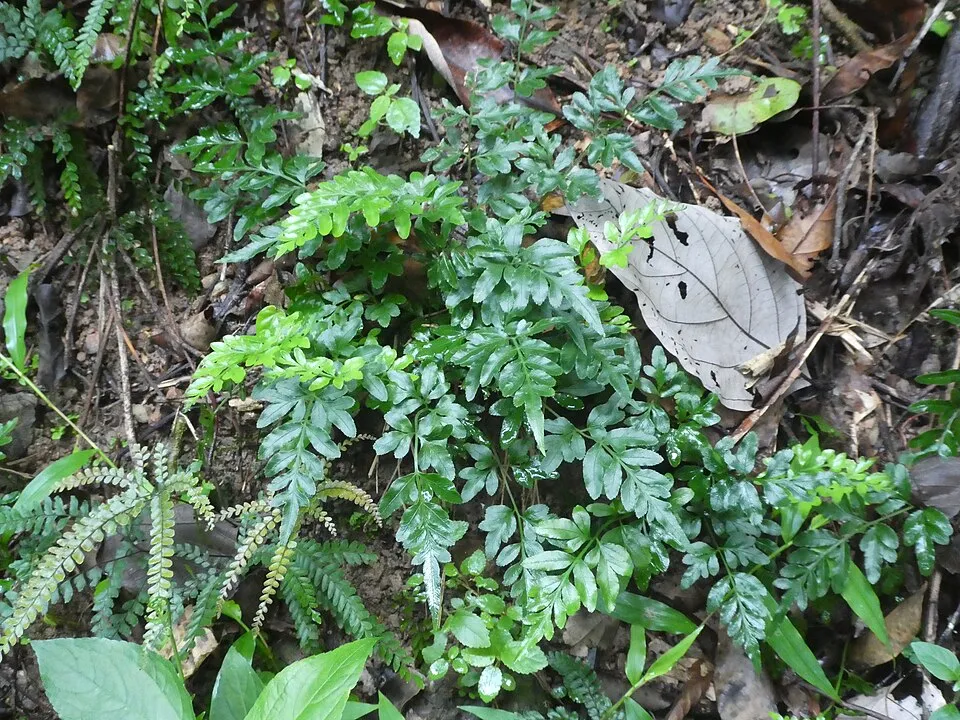
The Silver Lace Fern, scientifically designated as Pteris ensiformis, is an exquisitely delicate fern species that typically attains a height of 30 to 60 centimeters (approximately 12 to 24 inches). Its fronds are distinctively shaped like long, slender swords, presenting a vibrant green hue accentuated by striking silver-white markings that evoke the intricate patterns of lace, hence its evocative common name. Each frond can extend up to 30 centimeters (12 inches) in length and 5 centimeters (2 inches) in width, emerging gracefully from a central rosette, which imparts a lush, bushy aesthetic to the plant.
The stems of Pteris ensiformis are notably slender and lack bark, instead being covered in a soft, fine fuzz that contributes to their delicate texture. Native to the tropical and subtropical belts of Eastern Asia, encompassing regions from China and Japan to India, Sri Lanka, and throughout Southeast Asia, extending into New Guinea and Australia, this fern thrives in moist, acidic soils rich in organic matter, often found along forest margins and stream banks at elevations between 100 and 1,000 meters. Classified within the Pteridaceae family, renowned for its diverse array of ferns, the Silver Lace Fern is not only prized for its ornamental beauty but also for its notable air purification capabilities, making it a favored choice for enhancing indoor environments.
It flourishes under bright, filtered light conditions, which are crucial for maintaining its distinctive silver variegation without scorching, though it can adapt to quite deep shade. Moderate and consistent moisture is essential, ensuring the soil remains damp but never waterlogged, which is vital for its overall vitality and striking appearance.
Trusted Scientific References
1. Authoritative external sources for Pteris ensiformis
1.1 Wikipedia — Pteris ensiformis
1.2 Kew POWO (Plants of the World Online)
1.3 PubMed — peer-reviewed research
1.4 NCBI Taxonomy Browser
1.5 GBIF — Global Biodiversity
1.6Silver Lace Fern should be interpreted through verified botanical identity, practical care, and responsible safety language. This recovery note adds the missing context needed for a complete profile: match light to the plant's habit, use well-drained soil, water according to season, and avoid unsupported medicinal or edible claims. For publishing, the plant can be presented as a source-backed indoor plant with clear care guidance, common problem diagnosis, and conservative safety wording.
1.1.Silver Lace Fern — Key Features
- ✓ <strong>Striking Silver</strong> — White Variegation — Features unique, lace-like silver patterns on its dark green fronds.
- ✓ <strong>Air Purification Efficacy</strong> — Proven ability to remove indoor air pollutants such as formaldehyde and xylene.
- ✓ <strong>Tropical/Subtropical Origin</strong> — Native to warm, humid regions of Eastern Asia, adapting well to similar indoor conditions.
- ✓ <strong>Delicate Morphology</strong> — Characterized by slender, sword-shaped fronds that give it a graceful appearance.
- ✓ <strong>Edible When Cooked</strong> — Young fronds are consumed as a vegetable in traditional cuisines after proper preparation.
- ✓ <strong>Traditional Medicinal Uses</strong> — Historically applied for astringent effects, dysentery, and glandular swellings.
- ✓ <strong>Low Light Tolerance</strong> — Capable of thriving in filtered indirect light and even tolerating deeper shade.
- ✓ <strong>Indicator of Acidic Soils</strong> — Naturally found in soils with a pH range of 4.5-5.0.
- ✓ <strong>Propagated by Spores and Division</strong> — Relatively accessible propagation methods for enthusiasts.
- ✓ <strong>Aesthetic Indoor Plant</strong> — Enhances interior spaces with its natural beauty and unique foliage.
1.2.Silver Lace Fern — Quick Summary
- ✓ Elegant ornamental fern known for its distinctive silver-laced fronds.
- ✓ Valued for its indoor air-purifying capabilities, effectively removing common toxins.
- ✓ Traditionally used in some cultures for dysentery, glandular swellings, and as a cooked vegetable.
- ✓ Contains thiaminase and potential carcinogens; requires thorough cooking if consumed.
- ✓ Prefers moist, acidic soils and filtered light, making it suitable for indoor cultivation.
- ✓ Important to understand safety precautions, especially regarding raw consumption and for vulnerable populations.
2.Silver Lace Fern — Scientific Identity
3.Silver Lace Fern — Quick Facts
4.Silver Lace Fern — Appearance & Identification
5.Silver Lace Fern — Native Habitat
6.Silver Lace Fern — Water Requirements
- ✓ Light Requirements — Prefers bright, indirect sunlight to maintain vibrant variegation; tolerates partial to deep shade but may lose some silver markings.
- ✓ Soil Composition — Thrives in well-draining, humus-rich, acidic soil with a pH between 4.5 and 5.0, mimicking its native forest floor habitat.
- ✓ Watering Schedule — Requires consistent moisture; keep the soil evenly damp but never waterlogged. Allow the top inch of soil to dry slightly between waterings.
- ✓ Humidity Levels — Benefits significantly from high humidity. Regular misting, a pebble tray with water, or placement near a humidifier is recommended for indoor cultivation.
- ✓ Temperature Range — Best grown in warm, stable conditions, ideally between 18-27°C (65-80°F). Protect from cold drafts and extreme temperature fluctuations.
- ✓ Propagation Techniques — Can be propagated effectively by spores, with plants reaching maturity within a year. Division of the rhizome is also possible but plants may be slow to re-establish.
- ✓ Fertilization — Feed with a balanced liquid fertilizer diluted to half strength every 2-4 weeks during the active growing season (spring and summer).
- ✓ Pruning — Remove any yellowed, damaged, or dead fronds at the base to encourage new growth and maintain the plant's aesthetic appeal.
Reviewed by the Flora Medical Global Botanical Review Panel
Multi-disciplinary editorial group · Botany · Ethnobotany · Herbal-medicine literature
Who reviewed this: This page was checked by the Flora Medical Global Botanical Review Panel — an in-house editorial group of botany graduates, ethnobotany researchers, and horticulture practitioners who collectively maintain our 7,000+ plant encyclopedia. Meet the team.
Our 4-step verification process
1. Taxonomic verification
Scientific names and synonyms cross-checked against Kew POWO, World Flora Online, and The Plant List.
2. Phytochemical & medicinal cross-reference
Active compounds, traditional uses, and reported activities are cross-referenced with PubMed, USDA Dr. Duke's database, and peer-reviewed ethnobotanical literature.
3. Conservation & distribution check
Distribution, ecology, and conservation status confirmed against GBIF occurrence records and the IUCN Red List.
4. Editorial & safety review
Every entry passes an editorial pass for clarity, originality, and safety notices (toxicity, contraindications, dosage caveats) before publication.
Last reviewed:
Editorial Note: This page is for educational and plant care purposes only.
Written by: Flora Medical Global Editorial Team
Reviewed by: Flora Medical Global Botanical Review Panel
Last Updated: June 15, 2026







Silver Lace Fern — Comments & Community Reviews
Rate this plant