


Care Disclaimer: Plant care recommendations are general guidelines based on common growing conditions. Individual results may vary based on your local environment, climate, and care routine. If your plant is toxic, keep it away from children and pets, and consult a veterinarian if accidental ingestion occurs.
1.Snake Plant — Overview
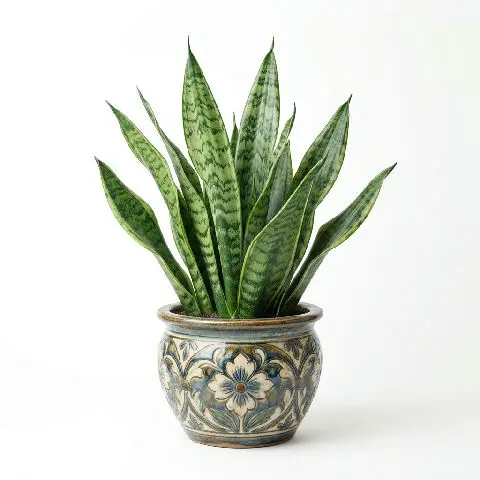
Dracaena trifasciata, widely recognized as the snake plant or mother-in-law's tongue, is a distinctive species of evergreen perennial belonging to the Asparagaceae family. Native to the tropical regions of West Africa, specifically stretching from Nigeria eastward into the Congo, this plant thrives in arid, rocky environments. Its striking morphology is characterized by stiff, erect, sword-like leaves that can reach impressive lengths of 70–90 cm (2.3–3.0 ft) and widths of 5–6 cm (2.0–2.4 in).
These succulent leaves are typically a dark green, intricately cross-banded with lighter grey-green patterns, giving them a unique ornamental appeal. The plant propagates effectively through a creeping rhizome system, which can be either subterranean or partially exposed, allowing it to form dense, self-sustaining stands. While it does produce small, fragrant, greenish-white flowers on a slender spike, its primary horticultural value lies in its resilient foliage and low-maintenance nature.
Its recent reclassification from the genus Sansevieria to Dracaena reflects advanced phylogenetic understanding, affirming its place as a robust and adaptable botanical specimen cultivated globally for its aesthetic and environmental benefits.
Trusted Scientific References
1. Authoritative external sources for Dracaena trifasciata
1.1 Wikipedia — Dracaena trifasciata
1.2 Kew POWO (Plants of the World Online)
1.3 PubMed — peer-reviewed research
1.4 NCBI Taxonomy Browser
1.5 GBIF — Global Biodiversity
1.6Snake Plant should be interpreted through verified botanical identity, practical care, and responsible safety language. This recovery note adds the missing context needed for a complete profile: match light to the plant's habit, use well-drained soil, water according to season, and avoid unsupported medicinal or edible claims. For publishing, the plant can be presented as a source-backed indoor plant with clear care guidance, common problem diagnosis, and conservative safety wording.
1.1.Snake Plant — Key Features
- ✓ <strong>Exceptional Air Purification</strong> — Effectively removes common indoor pollutants like formaldehyde, benzene, xylene, and trichloroethylene.
- ✓ <strong>Nighttime Oxygen Production</strong> — Unique Crassulacean Acid Metabolism (CAM) allows it to release oxygen at night, improving bedroom air quality.
- ✓ <strong>Remarkable Drought Tolerance</strong> — Requires infrequent watering, making it highly resilient and forgiving of neglect.
- ✓ <strong>Adaptable to Low Light</strong> — Thrives in a wide range of light conditions, from low to bright indirect, making it versatile for various indoor settings.
- ✓ <strong>Striking Architectural Foliage</strong> — Features stiff, erect, sword-like leaves with distinctive cross-banding patterns, offering a modern aesthetic.
- ✓ <strong>Evergreen Perennial</strong> — Maintains its vibrant foliage year-round, providing continuous greenery and visual interest.
- ✓ <strong>Rhizomatous Spreader</strong> — Forms dense stands by spreading via its creeping rhizomes, which can be either above or below ground.
- ✓ <strong>Low Maintenance Plant</strong> — Ideal for beginners or those seeking easy-care houseplants that require minimal attention.
- ✓ <strong>Pet Toxicity Warning</strong> — Contains saponins, which are harmful if ingested by cats, dogs, and other household pets.
1.2.Snake Plant — Quick Summary
- ✓ Dracaena trifasciata, or snake plant, is a highly popular and resilient ornamental houseplant.
- ✓ Renowned for its exceptional ability to purify indoor air by removing common toxins and uniquely producing oxygen at night.
- ✓ Extremely low maintenance, thriving in a wide range of light conditions and requiring infrequent watering.
- ✓ Contains saponins, making it mildly toxic if ingested by pets and unsuitable for human consumption.
- ✓ Valued for its biophilic benefits, enhancing both the aesthetic appeal and overall well-being in indoor spaces.
2.Snake Plant — Scientific Identity
3.Snake Plant — Quick Facts
4.Snake Plant — Appearance & Identification
5.Snake Plant — Native Habitat
6.Snake Plant — Water Requirements
- ✓ Light — Thrives in bright, indirect light but is remarkably tolerant of low-light conditions; avoid direct, intense sunlight which can scorch leaves.
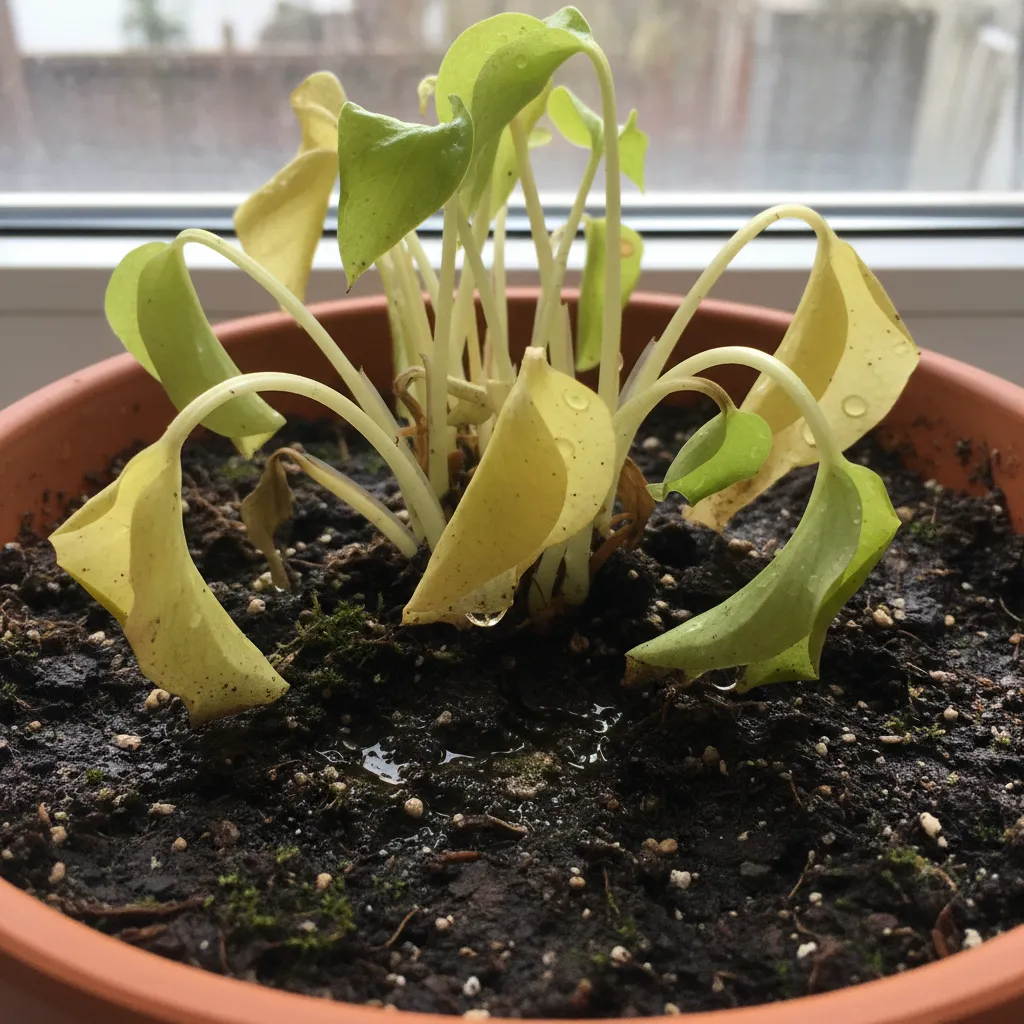
- ✓ Watering — Water sparingly, allowing the soil to dry out completely between waterings to prevent root rot, especially during cooler months.
- ✓ Soil — Prefers a well-draining potting mix, ideally a cactus and succulent blend or a standard potting mix amended with perlite or sand.
- ✓ Temperature — Best grown in warm temperatures ranging from 18-35°C (65-95°F); protect from cold drafts and temperatures below 10°C (50°F).
- ✓ Humidity — Adapts well to average household humidity levels and does not require high humidity, making it suitable for most indoor environments.
- ✓ Propagation — Easily propagated by rhizome division or by leaf cuttings, which can be rooted in water or directly in well-draining soil.
- ✓ Fertilization — Fertilize sparingly with a balanced liquid houseplant fertilizer once or twice during the growing season (spring and summer).
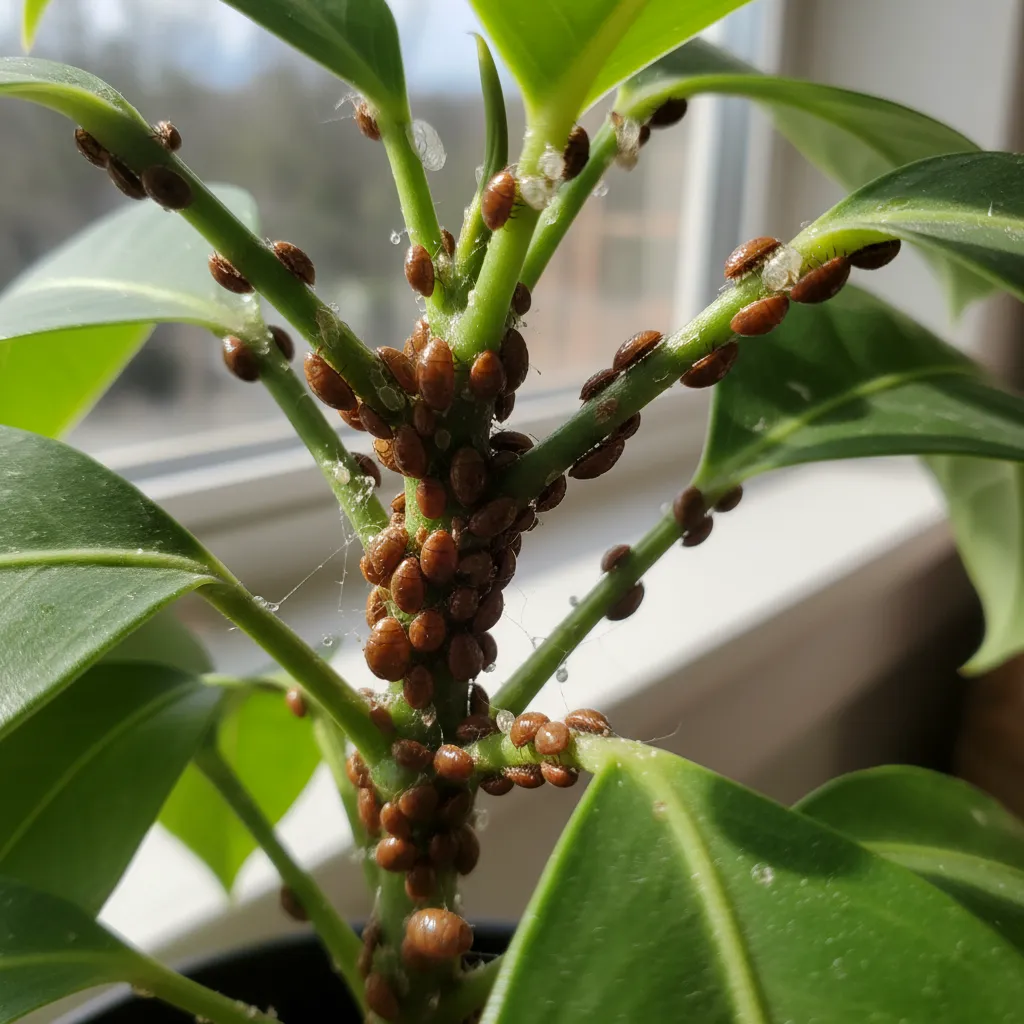
- ✓ Pests and Diseases — Generally pest-resistant; watch for common houseplant pests like mealybugs or spider mites, and ensure proper watering to prevent fungal issues.
Reviewed by the Flora Medical Global Botanical Review Panel
Multi-disciplinary editorial group · Botany · Ethnobotany · Herbal-medicine literature
Who reviewed this: This page was checked by the Flora Medical Global Botanical Review Panel — an in-house editorial group of botany graduates, ethnobotany researchers, and horticulture practitioners who collectively maintain our 7,000+ plant encyclopedia. Meet the team.
Our 4-step verification process
1. Taxonomic verification
Scientific names and synonyms cross-checked against Kew POWO, World Flora Online, and The Plant List.
2. Phytochemical & medicinal cross-reference
Active compounds, traditional uses, and reported activities are cross-referenced with PubMed, USDA Dr. Duke's database, and peer-reviewed ethnobotanical literature.
3. Conservation & distribution check
Distribution, ecology, and conservation status confirmed against GBIF occurrence records and the IUCN Red List.
4. Editorial & safety review
Every entry passes an editorial pass for clarity, originality, and safety notices (toxicity, contraindications, dosage caveats) before publication.
Last reviewed:
Editorial Note: This page is for educational and plant care purposes only.
Written by: Flora Medical Global Editorial Team
Reviewed by: Flora Medical Global Botanical Review Panel
Last Updated: June 15, 2026







Snake Plant — Comments & Community Reviews
Rate this plant