

Care Disclaimer: Plant care recommendations are general guidelines based on common growing conditions. Individual results may vary based on your local environment, climate, and care routine. If your plant is toxic, keep it away from children and pets, and consult a veterinarian if accidental ingestion occurs.
1.Song of Jamaica — Overview
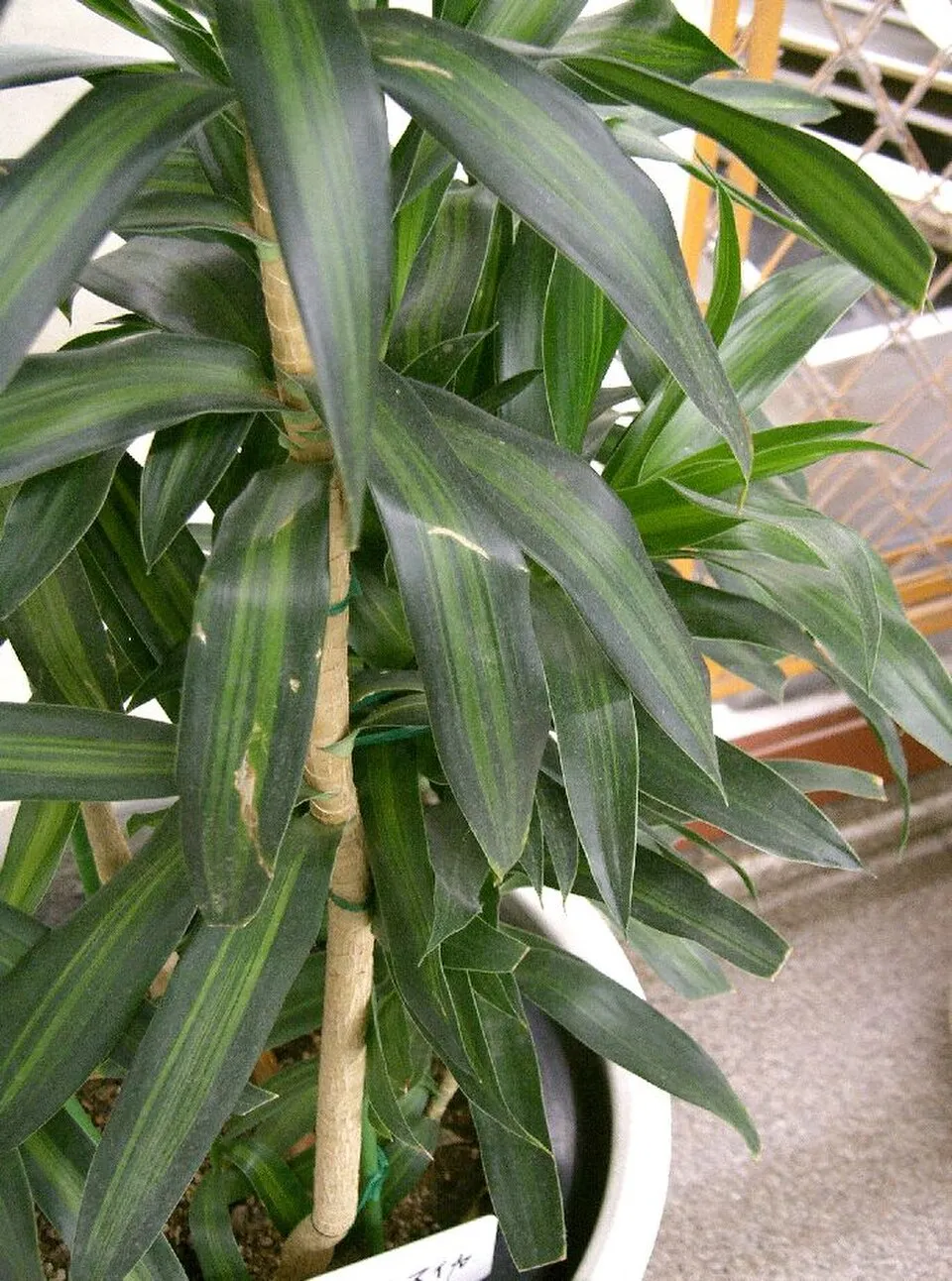
Dracaena reflexa Jamaica, commonly known as Song of Jamaica, is an elegant and popular ornamental houseplant within the Asparagaceae family. This specific cultivar is highly valued for its striking variegated foliage, which typically presents as rich green leaves adorned with creamy white or yellow margins, giving it a vibrant and distinctive appearance. The lanceolate leaves are spirally arranged in a rosette pattern, often reaching lengths of 30 to 60 centimeters and widths of 3 to 5 centimeters.
While cultivated indoors, the plant usually attains a height of 1 to 2 meters, but in its natural outdoor habitat, it can grow up to 4 to 6 meters tall, developing a slow, upright habit with an oval form and an open crown. The bark is smooth and greyish, adding to its aesthetic appeal. Native to the tropical regions of Madagascar, Dracaena reflexa Jamaica thrives best in warm, humid conditions, which makes it well-suited for indoor environments.
Although rare in indoor cultivation, mature plants can produce small, fragrant white flowers that bloom in clusters. Beyond its decorative qualities, this Dracaena species is renowned for its air-purifying capabilities, effectively filtering common indoor pollutants and contributing to a healthier living space.
Trusted Scientific References
1. Authoritative external sources for Dracaena reflexa Jamaica
1.1 Wikipedia — Dracaena reflexa Jamaica
1.2 Kew POWO (Plants of the World Online)
1.3 PubMed — peer-reviewed research
1.4 NCBI Taxonomy Browser
1.5 GBIF — Global Biodiversity
1.6Song of Jamaica should be interpreted through verified botanical identity, practical care, and responsible safety language. This recovery note adds the missing context needed for a complete profile: match light to the plant's habit, use well-drained soil, water according to season, and avoid unsupported medicinal or edible claims. For publishing, the plant can be presented as a source-backed indoor plant with clear care guidance, common problem diagnosis, and conservative safety wording.
1.1.Song of Jamaica — Key Features
- ✓ <strong>Striking Variegated Foliage</strong> — Features vibrant green leaves with creamy white or yellow margins, enhancing aesthetic appeal.
- ✓ <strong>Natural Air Purifier</strong> — Excellently filters common indoor air pollutants, contributing to a healthier environment.
- ✓ <strong>Rich in Antioxidants</strong> — High concentration of phenolic compounds and flavonoids provides strong antioxidant protection.
- ✓ <strong>Traditional Medicinal Plant</strong> — Valued in various cultural traditions for its healing and protective properties.
- ✓ <strong>Antimicrobial Activity</strong> — Exhibits significant antibacterial and antifungal properties, supporting immune health.
- ✓ <strong>Potential Cardioprotective Effects</strong> — Research suggests benefits for heart health by mitigating oxidative stress.
- ✓ <strong>Low</strong> — Maintenance Houseplant — Relatively easy to care for indoors, making it popular for homes and offices.
- ✓ <strong>Slow Growth Rate</strong> — An upright, bushy plant with an oval form, ideal for stable indoor decor.
- ✓ <strong>Native to Madagascar</strong> — Thrives in warm, humid tropical conditions, reflecting its origin.
- ✓ <strong>Mildly Toxic to Pets</strong> — Contains saponins that can cause gastrointestinal upset in cats and dogs.
1.2.Song of Jamaica — Quick Summary
- ✓ Ornamental and Medicinal — Dracaena reflexa Jamaica is cherished for its decorative foliage and diverse health benefits.
- ✓ Air Purification Power — Highly effective at removing indoor air toxins like formaldehyde and benzene.
- ✓ Rich Phytochemistry — Contains beneficial compounds including flavonoids, saponins, alkaloids, and tannins.
- ✓ Traditional Healing Uses — Historically employed for wound healing, fever reduction, and as an antiseptic.
- ✓ Modern Research Backed — Studies indicate antioxidant, anti-inflammatory, antimicrobial, and cardioprotective potential.
- ✓ Pet Safety Concern — Important to note its mild toxicity to cats and dogs if ingested.
2.Song of Jamaica — Scientific Identity
3.Song of Jamaica — Quick Facts
4.Song of Jamaica — Appearance & Identification
5.Song of Jamaica — Native Habitat
6.Song of Jamaica — Water Requirements
- ✓ Light — Provide bright, indirect sunlight; while it tolerates low light, optimal growth and variegation require more ambient brightness, avoiding direct sun.
- ✓ Temperature — Maintain indoor temperatures between 18°C and 25°C (64°F to 77°F) for ideal growth.
- ✓ Humidity — This tropical plant thrives in high humidity; consider placing it on a pebble tray with water or using a humidifier.
- ✓ Watering — Keep the soil consistently moist during the growing season, allowing the top inch to dry out between waterings. Reduce frequency in winter.
- ✓ Soil — Use a well-draining potting mix that retains some moisture but prevents waterlogging, crucial for root health.
- ✓ Fertilization — Feed with a balanced liquid fertilizer every two weeks during the active growing season (spring and summer).
- ✓ Propagation — Easily propagated from 3-5 inch stem cuttings, which should be placed in moist soil or water until roots develop.
- ✓ Avoid Over-watering — Excessive watering is a common issue, leading to root rot; ensure proper drainage and allow soil to dry partially.
Reviewed by the Flora Medical Global Botanical Review Panel
Multi-disciplinary editorial group · Botany · Ethnobotany · Herbal-medicine literature
Who reviewed this: This page was checked by the Flora Medical Global Botanical Review Panel — an in-house editorial group of botany graduates, ethnobotany researchers, and horticulture practitioners who collectively maintain our 7,000+ plant encyclopedia. Meet the team.
Our 4-step verification process
1. Taxonomic verification
Scientific names and synonyms cross-checked against Kew POWO, World Flora Online, and The Plant List.
2. Phytochemical & medicinal cross-reference
Active compounds, traditional uses, and reported activities are cross-referenced with PubMed, USDA Dr. Duke's database, and peer-reviewed ethnobotanical literature.
3. Conservation & distribution check
Distribution, ecology, and conservation status confirmed against GBIF occurrence records and the IUCN Red List.
4. Editorial & safety review
Every entry passes an editorial pass for clarity, originality, and safety notices (toxicity, contraindications, dosage caveats) before publication.
Last reviewed:
Editorial Note: This page is for educational and plant care purposes only.
Written by: Flora Medical Global Editorial Team
Reviewed by: Flora Medical Global Botanical Review Panel
Last Updated: June 15, 2026







Song of Jamaica — Comments & Community Reviews
Rate this plant