
Care Disclaimer: Plant care recommendations are general guidelines based on common growing conditions. Individual results may vary based on your local environment, climate, and care routine. If your plant is toxic, keep it away from children and pets, and consult a veterinarian if accidental ingestion occurs.
1.Tephrocactus Articulatus — Overview
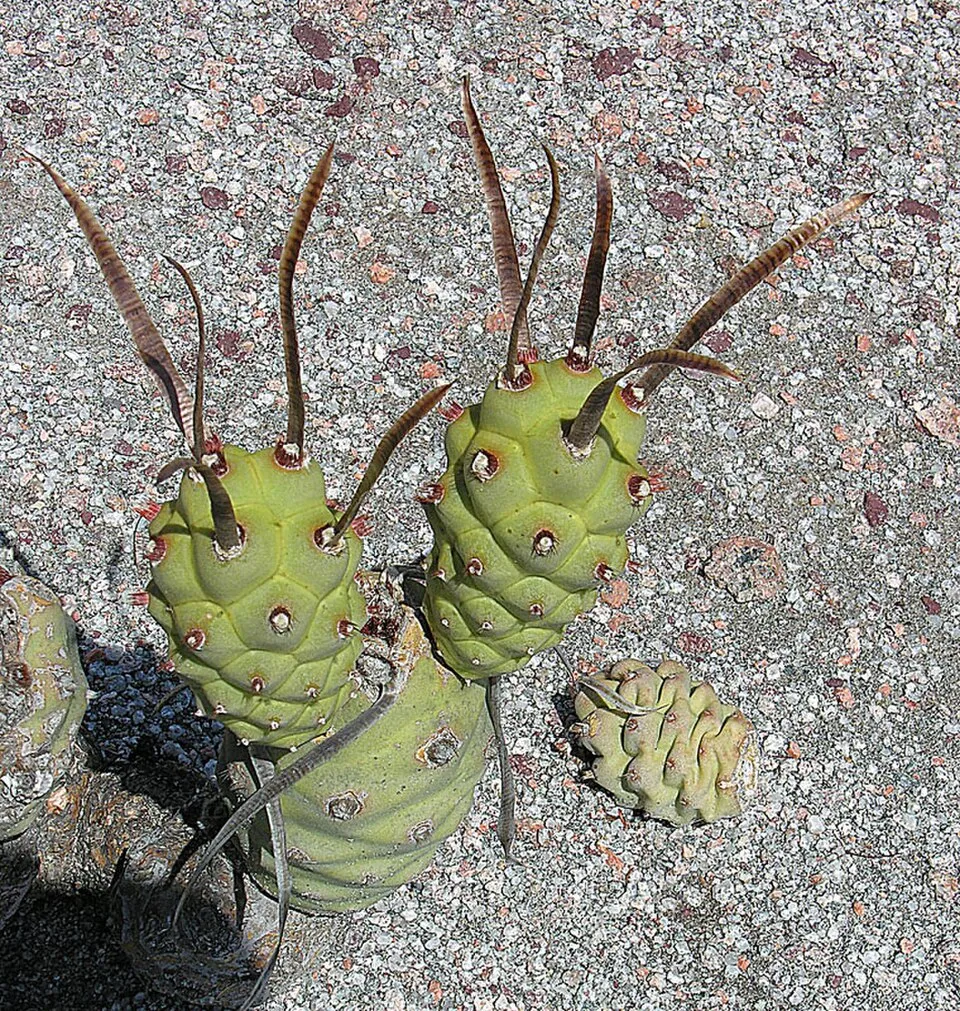
Tephrocactus articulatus, commonly known as the Paper-Spined Cactus, Articulated Cactus, or sometimes misidentified as 'Pineapple Cactus,' is a distinctive succulent within the Cactaceae family. This fascinating species is indigenous to the arid, high-altitude regions of Argentina, particularly flourishing in provinces such as Mendoza, San Juan, La Rioja, Catamarca, and Salta, where it thrives in rocky, well-draining soils. Its botanical identity is marked by its unique segmented stems, which are often club-shaped or cylindrical and articulate, meaning they easily detach. This characteristic serves as a natural and efficient propagation mechanism.
A defining feature, from which it derives its common name, is its armament of papery spines. These spines are flat, flexible, and can range in color from white to yellowish-brown, sometimes growing several centimeters long. Biologically, these spines are modified leaves, providing defense against herbivores and aiding in the condensation of atmospheric moisture in its parched native environment. The plant typically forms low-growing, sprawling clumps, reaching up to 60 cm in height and often spreading wider.
While individual segments are smaller, their collective growth creates a striking sculptural form. Flowers, generally white to pale yellow and funnel-shaped, emerge from the areoles at the segment tips, with flowering periods influenced by local environmental conditions. Although Tephrocactus articulatus lacks extensive historical documentation in traditional pharmacopoeias like Ayurveda or Traditional Chinese Medicine, its membership in the Cactaceae family, known for species rich in mucilage, suggests potential for contemporary pharmacological inquiry into properties such as wound healing or anti-inflammatory effects. Its primary relevance today is horticultural, prized by succulent collectors for its unusual morphology, ease of propagation, and adaptability to xeriscaping and indoor cultivation, reflecting the remarkable diversity and resilience of desert flora.
Trusted Scientific References
1. Authoritative external sources for Tephrocactus articulatus
1.1 Wikipedia — Tephrocactus articulatus
1.2 Kew POWO (Plants of the World Online)
1.3 PubMed — peer-reviewed research
1.4 NCBI Taxonomy Browser
1.5 GBIF — Global Biodiversity
1.1.Tephrocactus Articulatus — Key Features
- ✓ <strong>Distinctive segmented, articulated</strong> — Distinctive segmented, articulated stems that readily detach for propagation.
- ✓ <strong>Prominent, flexible, papery</strong> — Prominent, flexible, papery spines (glochids also present but less noticeable).
- ✓ <strong>Mucilage, triterpenes, and</strong> — Mucilage, triterpenes, and flavonoids are likely primary active compounds.
- ✓ <strong>Not traditionally classified</strong> — Not traditionally classified in major historical pharmacopoeias like Ayurveda or TCM.
- ✓ <strong>Potential for modern</strong> — Potential for modern pharmacological investigation into wound healing or anti-inflammatory effects.
- ✓ <strong>Native to high</strong> — altitude, arid regions of Argentina, adapted to extreme conditions.
- ✓ <strong>Thrives in well</strong> — draining, gritty soil with minimal water requirements.
- ✓ <strong>Primarily an ornamental</strong> — Primarily an ornamental plant, highly prized by succulent collectors.
- ✓ <strong>Flowers are typically</strong> — Flowers are typically white to pale yellow, emerging from areoles.
- ✓ <strong>Low</strong> — growing, sprawling shrub habit, forming clumps up to 60 cm tall.
1.2.Tephrocactus Articulatus — Quick Summary
- ✓ Tephrocactus articulatus is a unique segmented cactus with distinctive papery spines.
- ✓ Native to arid regions of Argentina, it thrives in well-draining soil and bright light.
- ✓ While not traditionally medicinal, its Cactaceae family membership suggests potential for mucilage-derived properties.
- ✓ Primarily valued as an ornamental plant for its striking appearance and ease of propagation.
- ✓ Contains mucilage, triterpenes, and flavonoids, typical of the Cactaceae family.
- ✓ Handling requires caution due to its spines; ingestion is not recommended.
2.Tephrocactus Articulatus — Scientific Identity
3.Tephrocactus Articulatus — Quick Facts
4.Tephrocactus Articulatus — Appearance & Identification
5.Tephrocactus Articulatus — Native Habitat
6.Tephrocactus Articulatus — Water Requirements
- ✓ Soil — Requires extremely well-draining, gritty cactus mix, typically sand, perlite, and a small amount of potting soil.
- ✓ Light — Thrives in full sun to partial shade; needs bright light to prevent etiolation and promote dense spine growth.
- ✓ Water — Water sparingly; allow soil to dry out completely between waterings, especially in winter. Overwatering is the most common cause of rot.
- ✓ Temperature — Prefers warm temperatures (20-30°C) during growing season but can tolerate cooler, frost-free conditions in winter.
- ✓ Fertilizer — Fertilize lightly with a balanced, low-nitrogen cactus fertilizer during the active growing season (spring/summer).
- ✓ Propagation — Easily propagated from detached stem segments; simply allow cut ends to callus for a few days before planting in dry cactus mix.
- ✓ Potting — Use terracotta pots with drainage holes to facilitate aeration and prevent waterlogging.
- ✓ Pruning — Minimal pruning required; remove any damaged or diseased segments to maintain plant health.
Reviewed by the Flora Medical Global Botanical Review Panel
Multi-disciplinary editorial group · Botany · Ethnobotany · Herbal-medicine literature
Who reviewed this: This page was checked by the Flora Medical Global Botanical Review Panel — an in-house editorial group of botany graduates, ethnobotany researchers, and horticulture practitioners who collectively maintain our 7,000+ plant encyclopedia. Meet the team.
Our 4-step verification process
1. Taxonomic verification
Scientific names and synonyms cross-checked against Kew POWO, World Flora Online, and The Plant List.
2. Phytochemical & medicinal cross-reference
Active compounds, traditional uses, and reported activities are cross-referenced with PubMed, USDA Dr. Duke's database, and peer-reviewed ethnobotanical literature.
3. Conservation & distribution check
Distribution, ecology, and conservation status confirmed against GBIF occurrence records and the IUCN Red List.
4. Editorial & safety review
Every entry passes an editorial pass for clarity, originality, and safety notices (toxicity, contraindications, dosage caveats) before publication.
Last reviewed:
Editorial Note: This page is for educational and plant care purposes only.
Written by: Flora Medical Global Editorial Team
Reviewed by: Flora Medical Global Botanical Review Panel
Last Updated: June 15, 2026







Tephrocactus Articulatus — Comments & Community Reviews
Rate this plant