
Care Disclaimer: Plant care recommendations are general guidelines based on common growing conditions. Individual results may vary based on your local environment, climate, and care routine. If your plant is toxic, keep it away from children and pets, and consult a veterinarian if accidental ingestion occurs.
1.Tetrastigma Voinierianum — Overview
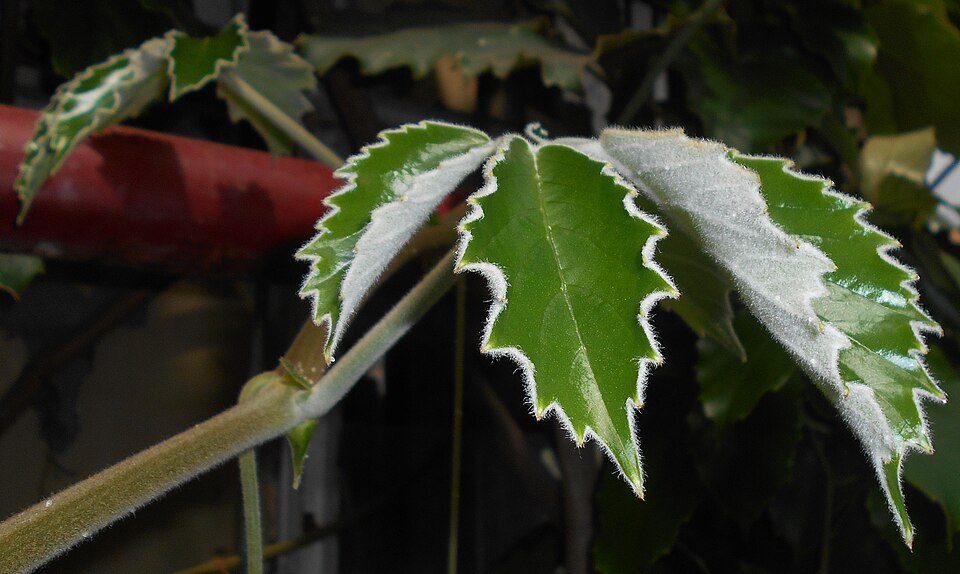
Tetrastigma voinierianum, commonly known as Chestnut Vine or Lizard Plant, is a robust, evergreen woody liana belonging to the Vitaceae family, which notably includes cultivated grapes. Native to the tropical and subtropical rainforests of Laos and Vietnam, this vigorous climber was botanically described by Jean Baptiste Louis Pierre in 1904. In its natural habitat, it demonstrates an impressive ability to ascend and sprawl over large trees and rock formations, forming dense canopies.
The plant is characterized by its dramatic, palmately compound leaves, typically comprising three to five deeply lobed leaflets, each often reaching lengths of up to 30 cm. These leaflets exhibit prominent venation and serrated margins, with the undersides frequently covered in fine, reddish-brown hairs, contributing to its distinctive appearance. While it produces small, inconspicuous greenish-yellow flowers arranged in cymes in its native environment, followed by grape-like fruits, these reproductive structures are seldom observed in cultivated settings.
As an ornamental, Tetrastigma voinierianum is highly valued for its rapid growth and striking foliage, making it a popular choice for large indoor spaces, conservatories, and 'living wall' installations where its robust nature and relatively low maintenance are appreciated. Its ecological role includes providing habitat and food sources for various forest organisms, while its botanical classification within Vitaceae suggests potential shared phytochemical profiles with other members of the family.
Trusted Scientific References
1. Authoritative external sources for Tetrastigma voinierianum
1.1 Wikipedia — Tetrastigma voinierianum
1.2 Kew POWO (Plants of the World Online)
1.3 PubMed — peer-reviewed research
1.4 NCBI Taxonomy Browser
1.5 GBIF — Global Biodiversity
1.6Tetrastigma Voinierianum should be interpreted through verified botanical identity, practical care, and responsible safety language. This recovery note adds the missing context needed for a complete profile: match light to the plant's habit, use well-drained soil, water according to season, and avoid unsupported medicinal or edible claims. For publishing, the plant can be presented as a source-backed indoor plant with clear care guidance, common problem diagnosis, and conservative safety wording.
1.1.Tetrastigma Voinierianum — Key Features
- ✓ <strong>Common Names</strong> — Chestnut Vine, Lizard Plant, Tetrastigma voinierianum.
- ✓ <strong>Botanical Family</strong> — Vitaceae (Grape Family).
- ✓ <strong>Native Range</strong> — Laos, Vietnam.
- ✓ <strong>Growth Habit</strong> — Robust, woody, evergreen liana.
- ✓ <strong>Leaf Morphology</strong> — Large, palmately compound, 3-5 deeply lobed leaflets, serrated margins.
- ✓ <strong>Medicinal Uses</strong> — Traditional anti-inflammatory, analgesic, and hepatoprotective properties.
- ✓ <strong>Phytochemicals</strong> — Rich in flavonoids, terpenoids, tannins, and phenolic acids.
- ✓ <strong>Ornamental Value</strong> — Highly prized for dramatic foliage and rapid growth in large indoor spaces.
- ✓ <strong>Environmental Role</strong> — Provides habitat and forms dense canopies in tropical forests.
- ✓ <strong>Distinctive Feature</strong> — Reddish-brown hairs on leaf undersides and prominent venation.
1.2.Tetrastigma Voinierianum — Quick Summary
- ✓ Tetrastigma voinierianum is a vigorous woody vine from Southeast Asia, known for its large, dramatic foliage.
- ✓ Traditionally used in folk medicine for anti-inflammatory, analgesic, and other therapeutic purposes.
- ✓ Rich in phytochemicals like flavonoids, terpenoids, and tannins with significant bioactivities.
- ✓ Primarily valued as an ornamental plant for its rapid growth and striking appearance in large spaces.
- ✓ Requires warm, humid conditions and support for optimal growth.
- ✓ Potential applications in pain relief, inflammation reduction, and antioxidant support.
2.Tetrastigma Voinierianum — Scientific Identity
3.Tetrastigma Voinierianum — Quick Facts
4.Tetrastigma Voinierianum — Appearance & Identification
5.Tetrastigma Voinierianum — Native Habitat
6.Tetrastigma Voinierianum — Water Requirements
- ✓ Climate — Thrives in tropical to subtropical climates, requiring warm temperatures and high humidity.
- ✓ Light — Prefers bright, indirect light; direct intense sun can scorch leaves.
- ✓ Soil — Requires well-draining, fertile soil rich in organic matter.
- ✓ Watering — Keep soil consistently moist but not waterlogged; reduce watering in cooler months.
- ✓ Support — As a vigorous vine, it needs a strong support structure like a trellis, moss pole, or nearby trees.
- ✓ Pruning — Regular pruning is necessary to manage its rapid growth and maintain desired shape.
- ✓ Propagation — Easily propagated from stem cuttings in water or moist soil with rooting hormone.
- ✓ Fertilization — Feed with a balanced liquid fertilizer every 2-4 weeks during the growing season.
Reviewed by the Flora Medical Global Botanical Review Panel
Multi-disciplinary editorial group · Botany · Ethnobotany · Herbal-medicine literature
Who reviewed this: This page was checked by the Flora Medical Global Botanical Review Panel — an in-house editorial group of botany graduates, ethnobotany researchers, and horticulture practitioners who collectively maintain our 7,000+ plant encyclopedia. Meet the team.
Our 4-step verification process
1. Taxonomic verification
Scientific names and synonyms cross-checked against Kew POWO, World Flora Online, and The Plant List.
2. Phytochemical & medicinal cross-reference
Active compounds, traditional uses, and reported activities are cross-referenced with PubMed, USDA Dr. Duke's database, and peer-reviewed ethnobotanical literature.
3. Conservation & distribution check
Distribution, ecology, and conservation status confirmed against GBIF occurrence records and the IUCN Red List.
4. Editorial & safety review
Every entry passes an editorial pass for clarity, originality, and safety notices (toxicity, contraindications, dosage caveats) before publication.
Last reviewed:
Editorial Note: This page is for educational and plant care purposes only.
Written by: Flora Medical Global Editorial Team
Reviewed by: Flora Medical Global Botanical Review Panel
Last Updated: June 15, 2026







Tetrastigma Voinierianum — Comments & Community Reviews
Rate this plant