
Care Disclaimer: Plant care recommendations are general guidelines based on common growing conditions. Individual results may vary based on your local environment, climate, and care routine. If your plant is toxic, keep it away from children and pets, and consult a veterinarian if accidental ingestion occurs.
1.Tillandsia Brachycaulos — Overview
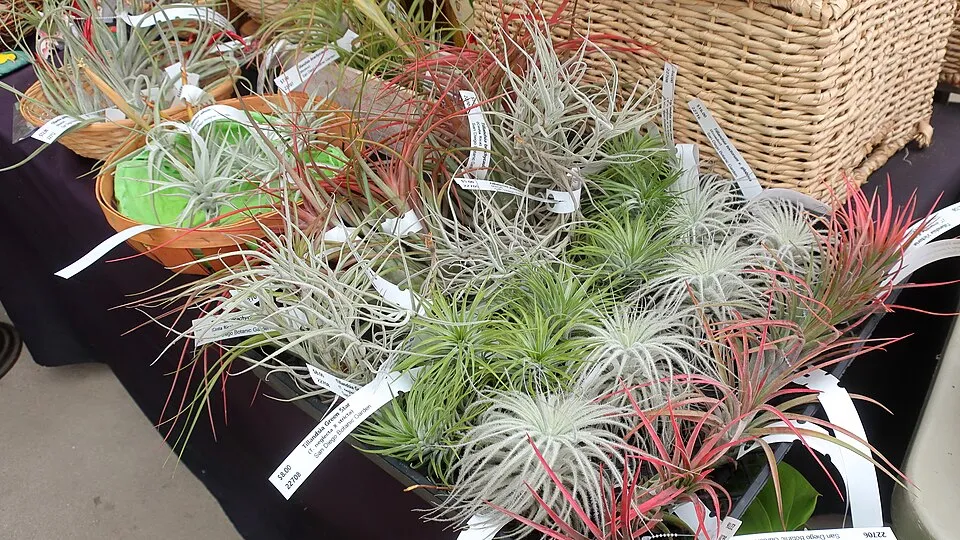
Tillandsia brachycaulos, often referred to as the 'Air Plant', is a captivating species of epiphytic bromeliad indigenous to the humid tropical forests of Central America, spanning regions from Mexico down to Honduras and Guatemala. This elegant plant is characterized by its elongated, narrow leaves, typically presenting a spectrum of green to grayish-green hues, and can gracefully extend to lengths of 15 to 25 cm (6 to 10 inches). The leaves are meticulously arranged in a dense, sculptural rosette, exhibiting a subtly scaly texture due to specialized trichomes that are crucial for efficient atmospheric moisture and nutrient absorption.
A defining feature of T. brachycaulos is its spectacular pre-bloom coloration change, where the central foliage blushes with vibrant pinks, reds, or purples, culminating in a striking inflorescence of delicate purple tubular flowers nestled within these vivid bracts. These plants naturally inhabit the upper canopy of trees, rocks, and various other arboreal structures, thriving in conditions of bright, indirect light and high humidity, drawing sustenance entirely from the ambient air and rainfall without requiring soil.
As an epiphyte, Tillandsia brachycaulos exemplifies a remarkable adaptation to its arboreal habitat, utilizing its specialized foliar structures to absorb all necessary water and minerals. This growth habit distinguishes it from parasitic plants, as it uses host trees purely for physical support. The plant's lifecycle includes a dramatic transformation during its reproductive phase, where its foliage intensifies in color to attract pollinators such as hummingbirds and various insect species.
After flowering, the parent plant typically produces 'pups' or offsets before gradually senescing. Its unique aesthetic appeal, coupled with its relatively low maintenance requirements in cultivation, has made T. brachycaulos a popular choice for indoor plantscaping and terrarium design, allowing enthusiasts to bring a piece of tropical biodiversity into their homes.
Its ability to thrive without soil makes it highly versatile for creative displays.
Trusted Scientific References
1. Authoritative external sources for Tillandsia brachycaulos
1.1 Wikipedia — Tillandsia brachycaulos
1.2 Kew POWO (Plants of the World Online)
1.3 PubMed — peer-reviewed research
1.4 NCBI Taxonomy Browser
1.5 GBIF — Global Biodiversity
1.1.Tillandsia Brachycaulos — Key Features
- ✓ <strong>Epiphytic Growth</strong> — Thrives without soil, attaching to surfaces.
- ✓ <strong>Striking Color Change</strong> — Foliage blushes pink/red/purple before blooming.
- ✓ <strong>Air Purification</strong> — Filters airborne toxins like formaldehyde.
- ✓ <strong>Low Maintenance</strong> — Requires minimal care compared to potted plants.
- ✓ <strong>Unique Rosette Form</strong> — Sculptural arrangement of elongated leaves.
- ✓ <strong>Atmospheric Water Absorption</strong> — Utilizes specialized trichomes for hydration.
- ✓ <strong>Hummingbird Pollinated</strong> — Attracts pollinators in its natural habitat.
- ✓ <strong>Non</strong> — Toxic — Safe for households with children and pets.
- ✓ <strong>Drought Tolerant</strong> — Resilient to short periods of dryness.
- ✓ <strong>Versatile Display</strong> — Can be mounted, hung, or placed in various arrangements.
1.2.Tillandsia Brachycaulos — Quick Summary
- ✓ Tillandsia brachycaulos is an epiphytic air plant native to Central America.
- ✓ Known for its vibrant pre-bloom coloration and delicate purple flowers.
- ✓ Absorbs water and nutrients from the air via specialized leaf trichomes.
- ✓ Offers aesthetic, air-purifying, and stress-reducing benefits for indoor environments.
- ✓ Requires bright, indirect light, regular soaking/misting, and good air circulation.
- ✓ Generally considered non-toxic and safe for homes with pets and children.
2.Tillandsia Brachycaulos — Scientific Identity
3.Tillandsia Brachycaulos — Quick Facts
4.Tillandsia Brachycaulos — Appearance & Identification
5.Tillandsia Brachycaulos — Native Habitat
6.Tillandsia Brachycaulos — Water Requirements
- ✓ Light — Provide bright, indirect light; avoid direct, intense sunlight which can scorch leaves.
- ✓ Water — Submerge plant in room-temperature water for 20-30 minutes once a week, or mist thoroughly 2-3 times a week.
- ✓ Air Circulation — Ensure good air flow around the plant to prevent rot, especially after watering.
- ✓ Humidity — Prefers moderate to high humidity; consider a humidifier in dry environments.
- ✓ Temperature — Maintain temperatures between 15-30°C (60-85°F); protect from frost.
- ✓ Fertilization — Use a Tillandsia-specific fertilizer (low nitrogen, no urea) diluted to 1/4 strength, once a month during growing season.
- ✓ Mounting — Can be mounted on wood, cork, or placed in decorative containers without soil.
- ✓ Propagation — Propagates via 'pups' (offsets) that emerge from the base of the mother plant after flowering.
Reviewed by the Flora Medical Global Botanical Review Panel
Multi-disciplinary editorial group · Botany · Ethnobotany · Herbal-medicine literature
Who reviewed this: This page was checked by the Flora Medical Global Botanical Review Panel — an in-house editorial group of botany graduates, ethnobotany researchers, and horticulture practitioners who collectively maintain our 7,000+ plant encyclopedia. Meet the team.
Our 4-step verification process
1. Taxonomic verification
Scientific names and synonyms cross-checked against Kew POWO, World Flora Online, and The Plant List.
2. Phytochemical & medicinal cross-reference
Active compounds, traditional uses, and reported activities are cross-referenced with PubMed, USDA Dr. Duke's database, and peer-reviewed ethnobotanical literature.
3. Conservation & distribution check
Distribution, ecology, and conservation status confirmed against GBIF occurrence records and the IUCN Red List.
4. Editorial & safety review
Every entry passes an editorial pass for clarity, originality, and safety notices (toxicity, contraindications, dosage caveats) before publication.
Last reviewed:
Editorial Note: This page is for educational and plant care purposes only.
Written by: Flora Medical Global Editorial Team
Reviewed by: Flora Medical Global Botanical Review Panel
Last Updated: June 15, 2026







Tillandsia Brachycaulos — Comments & Community Reviews
Rate this plant