
Care Disclaimer: Plant care recommendations are general guidelines based on common growing conditions. Individual results may vary based on your local environment, climate, and care routine. If your plant is toxic, keep it away from children and pets, and consult a veterinarian if accidental ingestion occurs.
1.Tillandsia Tectorum — Overview
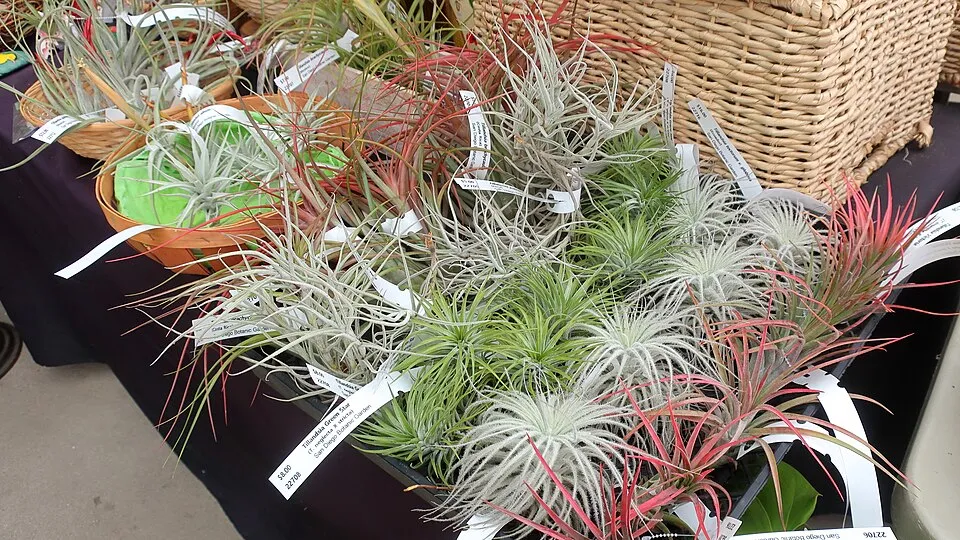
Tillandsia tectorum, commonly known as the Ecuadorian air plant, is an exquisite epiphytic member of the Bromeliaceae family, native to the high-altitude cloud forests of Peru and Ecuador. This captivating species distinguishes itself with a compact rosette structure, typically reaching heights of 15-30 cm (6-12 inches), with individual leaves growing up to 20 cm (8 inches) long. Its most striking feature is the dense covering of fine, silvery-white trichomes that give the leaves a soft, fuzzy, and almost snow-like appearance, which is crucial for its survival as it absorbs water and nutrients directly from the air.
Unlike conventional plants, Tillandsia tectorum does not require soil; its specialized roots serve primarily for attachment to trees or rocks, providing stability rather than nutrient uptake. When mature and under optimal care, usually after 2-3 years, it can produce a stunning inflorescence. This manifests as a vibrant purple flower, emerging on a slender stalk that rises gracefully above the silvery foliage, adding a splash of contrasting color.
Its whimsical and unique aesthetic makes it a highly favored choice for indoor decor, terrariums, and various hanging displays. Adapted to semi-arid climates at high elevations, it thrives in environments with bright, indirect light, cooler temperatures, and moderate humidity, showcasing remarkable resilience and adaptability to indoor settings. Taxonomically, it belongs to the diverse Tillandsia genus, encompassing over 650 species, highlighting its unique evolutionary path within the plant kingdom.
Trusted Scientific References
1. Authoritative external sources for Tillandsia tectorum
1.1 Wikipedia — Tillandsia tectorum
1.2 Kew POWO (Plants of the World Online)
1.3 PubMed — peer-reviewed research
1.4 NCBI Taxonomy Browser
1.5 GBIF — Global Biodiversity
1.6Tillandsia Tectorum should be interpreted through verified botanical identity, practical care, and responsible safety language. This recovery note adds the missing context needed for a complete profile: match light to the plant's habit, use well-drained soil, water according to season, and avoid unsupported medicinal or edible claims. For publishing, the plant can be presented as a source-backed indoor plant with clear care guidance, common problem diagnosis, and conservative safety wording.
1.1.Tillandsia Tectorum — Key Features
- ✓ <strong>Epiphytic Growth</strong> — Thrives without soil, absorbing moisture and nutrients from the air.
- ✓ <strong>Silvery Trichomes</strong> — Dense, fuzzy covering on leaves for efficient water and nutrient absorption.
- ✓ <strong>Rosette Form</strong> — Compact, sculptural structure enhances its ornamental value.
- ✓ <strong>CAM Photosynthesis</strong> — Absorbs CO2 at night, releasing O2, improving indoor air quality.
- ✓ <strong>Air Purification</strong> — Effectively filters airborne pollutants and volatile organic compounds.
- ✓ <strong>Natural Humidifier</strong> — Contributes to ambient humidity, beneficial in dry environments.
- ✓ <strong>Low Maintenance</strong> — Requires infrequent watering and minimal care, ideal for busy lifestyles.
- ✓ <strong>Non</strong> — Toxic — Safe for households with children and pets.
- ✓ <strong>Vibrant Inflorescence</strong> — Produces a stunning purple flower when mature.
- ✓ <strong>Versatile Decor</strong> — Perfect for terrariums, wall mounts, and various indoor arrangements.
1.2.Tillandsia Tectorum — Quick Summary
- ✓ Tillandsia tectorum is a unique epiphytic air plant from the Bromeliaceae family.
- ✓ Features striking silvery-gray, fuzzy leaves and requires no soil.
- ✓ Acts as a natural air purifier, absorbing VOCs and increasing humidity.
- ✓ Releases oxygen at night via CAM photosynthesis, improving indoor air quality.
- ✓ Low-maintenance, pet-safe, and highly versatile for home decor.
- ✓ Prized for its aesthetic appeal and indirect well-being benefits, not direct medicinal use.
2.Tillandsia Tectorum — Scientific Identity
3.Tillandsia Tectorum — Quick Facts
4.Tillandsia Tectorum — Appearance & Identification
5.Tillandsia Tectorum — Native Habitat
6.Tillandsia Tectorum — Water Requirements
- ✓ Mounting — Tillandsia tectorum thrives when mounted on cork bark, driftwood, or other non-porous materials using a plant-safe adhesive or wire.
- ✓ Watering — Submerge the entire plant in room-temperature, filtered water for 20-30 minutes every 1-2 weeks; misting alone is often insufficient.
- ✓ Light Requirements — Provide bright, indirect light for at least 6-8 hours daily; avoid direct, intense sunlight which can scorch its delicate trichomes.
- ✓ Air Circulation — Good air movement is crucial to prevent rot; ensure the plant dries completely within 4 hours after watering.
- ✓ Temperature and Humidity — Maintain temperatures between 15-27°C (60-80°F) and moderate to high humidity, mimicking its natural cloud forest habitat.
- ✓ Fertilization — Lightly fertilize once a month during growing seasons (spring/summer) with a bromeliad-specific or orchid fertilizer diluted to ¼ strength.
- ✓ Display Options — Utilize terrariums, wall mounts, or open-air arrangements to showcase its unique aesthetic while providing necessary environmental conditions.
- ✓ Post-Watering Care — After soaking, gently shake off excess water and place the plant upside down in a well-ventilated area to dry completely before returning to its display.
Reviewed by the Flora Medical Global Botanical Review Panel
Multi-disciplinary editorial group · Botany · Ethnobotany · Herbal-medicine literature
Who reviewed this: This page was checked by the Flora Medical Global Botanical Review Panel — an in-house editorial group of botany graduates, ethnobotany researchers, and horticulture practitioners who collectively maintain our 7,000+ plant encyclopedia. Meet the team.
Our 4-step verification process
1. Taxonomic verification
Scientific names and synonyms cross-checked against Kew POWO, World Flora Online, and The Plant List.
2. Phytochemical & medicinal cross-reference
Active compounds, traditional uses, and reported activities are cross-referenced with PubMed, USDA Dr. Duke's database, and peer-reviewed ethnobotanical literature.
3. Conservation & distribution check
Distribution, ecology, and conservation status confirmed against GBIF occurrence records and the IUCN Red List.
4. Editorial & safety review
Every entry passes an editorial pass for clarity, originality, and safety notices (toxicity, contraindications, dosage caveats) before publication.
Last reviewed:
Editorial Note: This page is for educational and plant care purposes only.
Written by: Flora Medical Global Editorial Team
Reviewed by: Flora Medical Global Botanical Review Panel
Last Updated: June 15, 2026







Tillandsia Tectorum — Comments & Community Reviews
Rate this plant