
Care Disclaimer: Plant care recommendations are general guidelines based on common growing conditions. Individual results may vary based on your local environment, climate, and care routine. If your plant is toxic, keep it away from children and pets, and consult a veterinarian if accidental ingestion occurs.
1.Tillandsia Usneoides — Overview
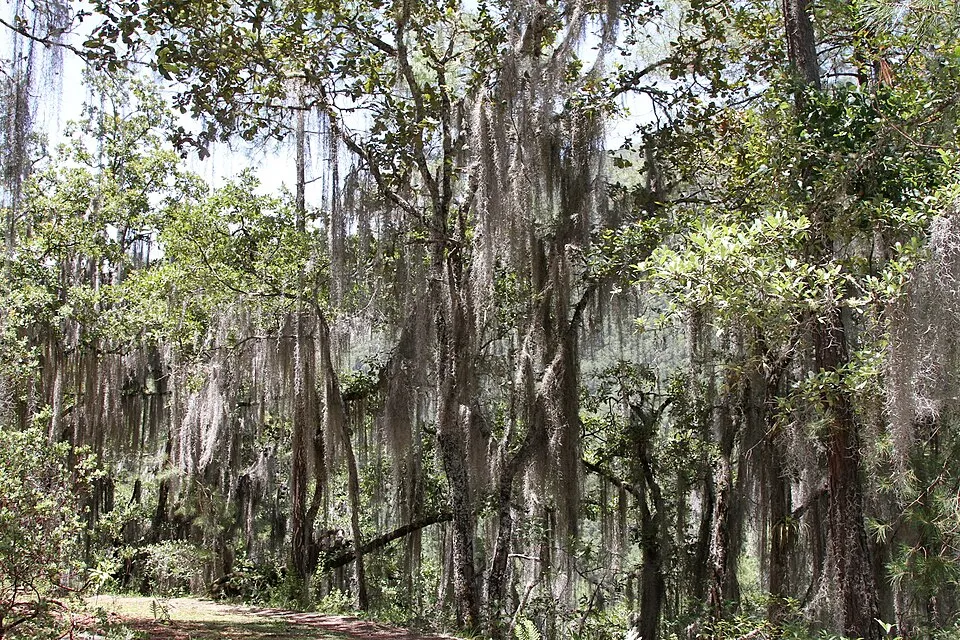
Tillandsia usneoides, commonly known as Spanish Moss, is a distinctive epiphytic bromeliad that creates an iconic visual in its native habitats. This unique plant does not root in soil but rather drapes gracefully from tree branches, forming long, silvery-gray, hair-like filaments that can extend over 20 feet. Its specialized peltate trichomes, which cover its entire surface, are crucial for absorbing moisture and nutrients directly from the air and rain.
The plant's structure consists of tightly overlapping, scale-like leaves. Spanish Moss thrives in warm, humid, subtropical to tropical environments, particularly prevalent across the southeastern United States, Mexico, Central, and South America, Bermuda, the Bahamas, and the West Indies. It is often found in lowlands along rivers and bodies of water, preferring the canopy of host trees like oaks and cypress.
Interestingly, its presence is often indicative of good air quality, as it is sensitive to atmospheric pollution. Beyond its aesthetic appeal, Tillandsia usneoides plays a vital ecological role, providing shelter and nesting material for various wildlife, including birds, bats, snakes, and even a species of jumping spider, Pelegrina tillandsiae. Historically, it has also been utilized by humans for non-medicinal purposes such as mattress stuffing, insulation, crafting, and as packing material, showcasing its versatility.
Trusted Scientific References
1. Authoritative external sources for Tillandsia usneoides
1.1 Wikipedia — Tillandsia usneoides
1.2 Kew POWO (Plants of the World Online)
1.3 PubMed — peer-reviewed research
1.4 NCBI Taxonomy Browser
1.5 GBIF — Global Biodiversity
1.6Tillandsia Usneoides should be interpreted through verified botanical identity, practical care, and responsible safety language. This recovery note adds the missing context needed for a complete profile: match light to the plant's habit, use well-drained soil, water according to season, and avoid unsupported medicinal or edible claims. For publishing, the plant can be presented as a source-backed indoor plant with clear care guidance, common problem diagnosis, and conservative safety wording.
1.1.Tillandsia Usneoides — Key Features
- ✓ <strong>Epiphytic Growth Habit</strong> — Tillandsia usneoides is an 'air plant' that does not root in soil, deriving nutrients from air and rain.
- ✓ <strong>Distinctive Morphology</strong> — Features long, draping, silvery-gray, hair-like filaments that form curtain-like masses.
- ✓ <strong>Specialized Trichomes</strong> — Covered in unique peltate scales essential for efficient water and nutrient absorption.
- ✓ <strong>Wide Distribution</strong> — Native to subtropical and tropical regions across the Americas.
- ✓ <strong>Ecological Importance</strong> — Provides habitat and nesting material for various wildlife species.
- ✓ <strong>Presence of HMG</strong> — Contains 3-hydroxy-3-methylglutaric acid, a compound linked to blood glucose regulation.
- ✓ <strong>Traditional Medicinal Uses</strong> — Utilized in Indigenous practices for ailments like respiratory issues, skin conditions, and fevers.
- ✓ <strong>Ornamental Value</strong> — Popular for its unique aesthetic in gardening and decorative applications.
- ✓ <strong>Bromeliad Family Member</strong> — Belongs to the Bromeliaceae family, known for its diverse and adaptable species.
- ✓ <strong>Air Quality Indicator</strong> — Generally sensitive to pollution, often thriving in areas with clean air.
1.2.Tillandsia Usneoides — Quick Summary
- ✓ Spanish Moss (Tillandsia usneoides) is an epiphytic bromeliad, absorbing nutrients from air.
- ✓ Traditionally used by Indigenous peoples for respiratory issues, skin conditions, and fevers.
- ✓ Contains HMG (3-hydroxy-3-methylglutaric acid), showing potential for blood glucose reduction.
- ✓ Rich in flavonoids and terpenoids, contributing to its anti-inflammatory and antioxidant properties.
- ✓ Requires warm, humid, well-ventilated conditions and indirect light for cultivation.
- ✓ Consult a healthcare professional before use due to limited human safety data and potential drug interactions.
2.Tillandsia Usneoides — Scientific Identity
3.Tillandsia Usneoides — Quick Facts
4.Tillandsia Usneoides — Appearance & Identification
5.Tillandsia Usneoides — Native Habitat
6.Tillandsia Usneoides — Water Requirements
- ✓ Provide a warm, humid environment, ideally above 60°F (15°C) and with high ambient humidity.
- ✓ Ensure indirect, bright light; direct harsh sunlight can scorch the delicate filaments of Tillandsia usneoides.
- ✓ Offer excellent air circulation, as stagnant air can lead to fungal issues and is detrimental to epiphytes.
- ✓ Mount the plant on non-toxic branches, cork bark, or hang it where its filaments can drape freely.
- ✓ Mist regularly, typically daily or every other day, to supply essential moisture and nutrients, especially in drier indoor environments.
- ✓ Apply a diluted, balanced bromeliad-specific fertilizer sparingly during its active growing season, usually once a month.
- ✓ Protect from frost and cold temperatures, as Tillandsia usneoides is highly sensitive to freezing conditions.
- ✓ Avoid submerging the plant for extended periods, as this can lead to rot; quick dips or thorough misting are preferred.
Reviewed by the Flora Medical Global Botanical Review Panel
Multi-disciplinary editorial group · Botany · Ethnobotany · Herbal-medicine literature
Who reviewed this: This page was checked by the Flora Medical Global Botanical Review Panel — an in-house editorial group of botany graduates, ethnobotany researchers, and horticulture practitioners who collectively maintain our 7,000+ plant encyclopedia. Meet the team.
Our 4-step verification process
1. Taxonomic verification
Scientific names and synonyms cross-checked against Kew POWO, World Flora Online, and The Plant List.
2. Phytochemical & medicinal cross-reference
Active compounds, traditional uses, and reported activities are cross-referenced with PubMed, USDA Dr. Duke's database, and peer-reviewed ethnobotanical literature.
3. Conservation & distribution check
Distribution, ecology, and conservation status confirmed against GBIF occurrence records and the IUCN Red List.
4. Editorial & safety review
Every entry passes an editorial pass for clarity, originality, and safety notices (toxicity, contraindications, dosage caveats) before publication.
Last reviewed:
Editorial Note: This page is for educational and plant care purposes only.
Written by: Flora Medical Global Editorial Team
Reviewed by: Flora Medical Global Botanical Review Panel
Last Updated: June 15, 2026







Tillandsia Usneoides — Comments & Community Reviews
Rate this plant