
Care Disclaimer: Plant care recommendations are general guidelines based on common growing conditions. Individual results may vary based on your local environment, climate, and care routine. If your plant is toxic, keep it away from children and pets, and consult a veterinarian if accidental ingestion occurs.
1.Tolmiea Menziesii — Overview
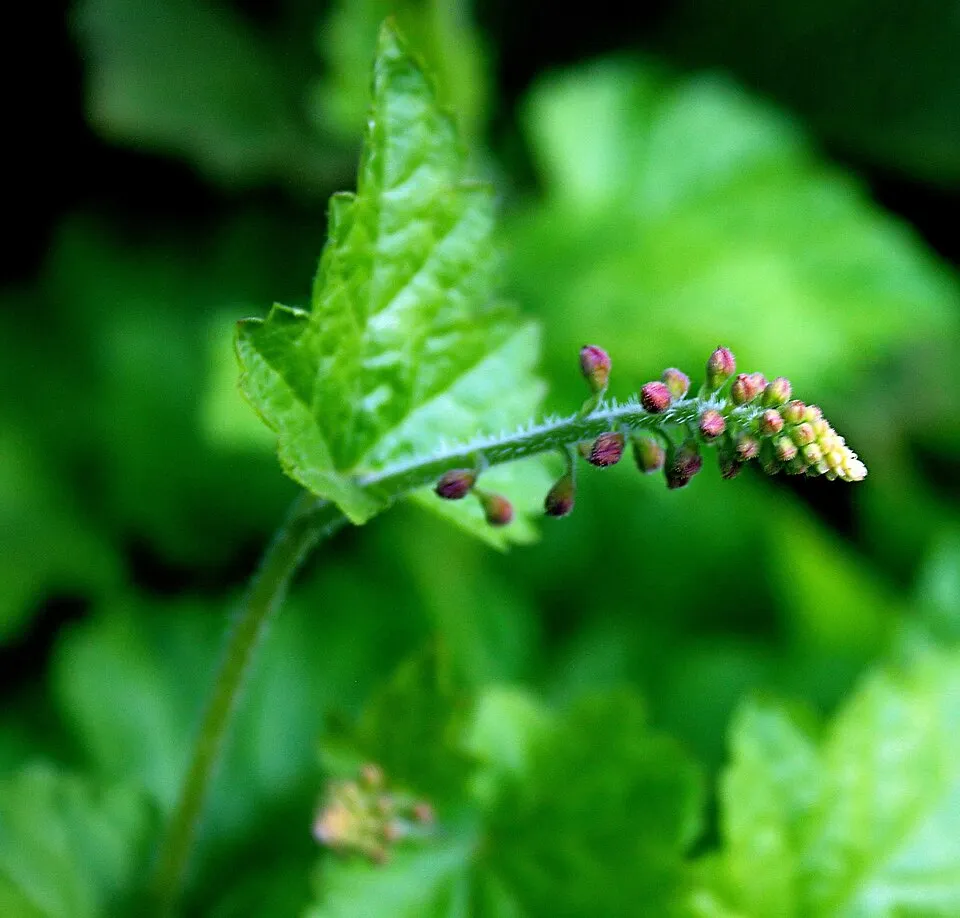
Tolmiea menziesii, commonly known as the Piggyback Plant or Youth-on-Age, is a distinctive evergreen perennial herbaceous plant native to the moist, shaded forest floors and rocky areas of Western North America, particularly abundant along streams and below 1800 meters. This member of the Saxifragaceae family forms dense clumps, characterized by its striking heart-shaped leaves, which can reach up to 10 cm in length. These dark green leaves possess a glossy, somewhat leathery texture and a uniquely wrinkled surface, making them visually appealing.
A hallmark feature of the Piggyback Plant is its viviparous reproduction: new plantlets emerge directly from the base of mature leaves, often while still attached to the parent plant, giving rise to its common name. In spring, slender stems ascend above the foliage, bearing small, star-shaped greenish-yellow flowers, typically less than a centimeter wide, clustered to attract pollinators. While it thrives in partial shade, where it receives indirect light without excessive stress, Tolmiea menziesii demonstrates remarkable adaptability, capable of surviving in full shade and even tolerating temperatures down to approximately -17°C, making it a robust choice for woodland gardens or as a low-maintenance houseplant.
Trusted Scientific References
1. Authoritative external sources for Tolmiea menziesii
1.1 Wikipedia — Tolmiea menziesii
1.2 Kew POWO (Plants of the World Online)
1.3 PubMed — peer-reviewed research
1.4 NCBI Taxonomy Browser
1.5 GBIF — Global Biodiversity
1.6Tolmiea Menziesii should be interpreted through verified botanical identity, practical care, and responsible safety language. This recovery note adds the missing context needed for a complete profile: match light to the plant's habit, use well-drained soil, water according to season, and avoid unsupported medicinal or edible claims. For publishing, the plant can be presented as a source-backed indoor plant with clear care guidance, common problem diagnosis, and conservative safety wording.
1.1.Tolmiea Menziesii — Key Features
- ✓ <strong>Unique Viviparous Reproduction</strong> — Produces new plantlets directly from the base of its mature leaves.
- ✓ <strong>Evergreen Perennial</strong> — Maintains foliage year-round, offering consistent greenery.
- ✓ <strong>Native to Western North America</strong> — Thrives in cool, moist, shaded woodland environments.
- ✓ <strong>Traditional Wound Healer</strong> — Historically used by Indigenous peoples for skin ailments and injuries.
- ✓ <strong>Ornamental Appeal</strong> — Attractive heart-shaped, glossy, wrinkled leaves make it a popular houseplant.
- ✓ <strong>Low Maintenance</strong> — Easy to grow and propagate, requiring minimal care once established.
- ✓ <strong>Shade Tolerant</strong> — Flourishes in low-light conditions, ideal for shaded garden spots or indoor settings.
- ✓ <strong>Adaptable</strong> — Can survive in a range of conditions, from deep shade to partial sun, and is quite cold hardy.
- ✓ <strong>Clump</strong> — Forming Growth — Grows in dense clumps, providing good ground cover in suitable environments.
- ✓ <strong>Attracts Pollinators</strong> — Small greenish-yellow flowers attract bees and other beneficial insects.
1.2.Tolmiea Menziesii — Quick Summary
- ✓ Tolmiea menziesii is an evergreen perennial from Western North America, known as Piggyback Plant.
- ✓ Features unique viviparous reproduction, with plantlets growing on parent leaves.
- ✓ Traditionally used by Indigenous peoples for wound healing, skin inflammation, and boils.
- ✓ Contains potential astringent, anti-inflammatory, and antimicrobial compounds like tannins and flavonoids.
- ✓ Easy to cultivate in partial shade and moist soil, suitable for both gardens and as a houseplant.
- ✓ Primarily used topically as a poultice or compress; general safety precautions for skin application are advised.
2.Tolmiea Menziesii — Scientific Identity
3.Tolmiea Menziesii — Quick Facts
4.Tolmiea Menziesii — Appearance & Identification
5.Tolmiea Menziesii — Native Habitat
6.Tolmiea Menziesii — Water Requirements
- ✓ Soil Preference — Thrives in any good, sweet garden soil that retains moisture but is not waterlogged; prefers a fairly rich and not too heavy substrate.
- ✓ Light Requirements — Prefers partial shade to prevent leaf-scorch, though it can tolerate full shade; indirect light is ideal for optimal growth and leaf color.
- ✓ Watering — Requires consistent moisture, especially in spring and summer; ensure the soil does not dry out completely.
- ✓ Temperature Tolerance — Hardy in temperate climates, tolerating temperatures down to approximately -17°C, making it suitable for outdoor planting in many regions.
- ✓ Propagation by Seed — Sow seeds in spring in a cold frame, lightly covering them; prick out seedlings into individual pots and grow on before planting out after the last frosts.
- ✓ Propagation by Division — Divide young plants in spring; larger divisions can be planted directly, while smaller ones benefit from potting up and growing on in light shade.
- ✓ Spacing — When used as a ground cover, plants are best spaced about 60 cm apart to allow for spread and healthy growth.
- ✓ Indoor Cultivation — Often grown as a houseplant due to its unique reproductive habit and attractive foliage; ensure adequate humidity and indirect light.
Reviewed by the Flora Medical Global Botanical Review Panel
Multi-disciplinary editorial group · Botany · Ethnobotany · Herbal-medicine literature
Who reviewed this: This page was checked by the Flora Medical Global Botanical Review Panel — an in-house editorial group of botany graduates, ethnobotany researchers, and horticulture practitioners who collectively maintain our 7,000+ plant encyclopedia. Meet the team.
Our 4-step verification process
1. Taxonomic verification
Scientific names and synonyms cross-checked against Kew POWO, World Flora Online, and The Plant List.
2. Phytochemical & medicinal cross-reference
Active compounds, traditional uses, and reported activities are cross-referenced with PubMed, USDA Dr. Duke's database, and peer-reviewed ethnobotanical literature.
3. Conservation & distribution check
Distribution, ecology, and conservation status confirmed against GBIF occurrence records and the IUCN Red List.
4. Editorial & safety review
Every entry passes an editorial pass for clarity, originality, and safety notices (toxicity, contraindications, dosage caveats) before publication.
Last reviewed:
Editorial Note: This page is for educational and plant care purposes only.
Written by: Flora Medical Global Editorial Team
Reviewed by: Flora Medical Global Botanical Review Panel
Last Updated: June 15, 2026







Tolmiea Menziesii — Comments & Community Reviews
Rate this plant