
Care Disclaimer: Plant care recommendations are general guidelines based on common growing conditions. Individual results may vary based on your local environment, climate, and care routine. If your plant is toxic, keep it away from children and pets, and consult a veterinarian if accidental ingestion occurs.
1.Yucca Elephantipes — Overview
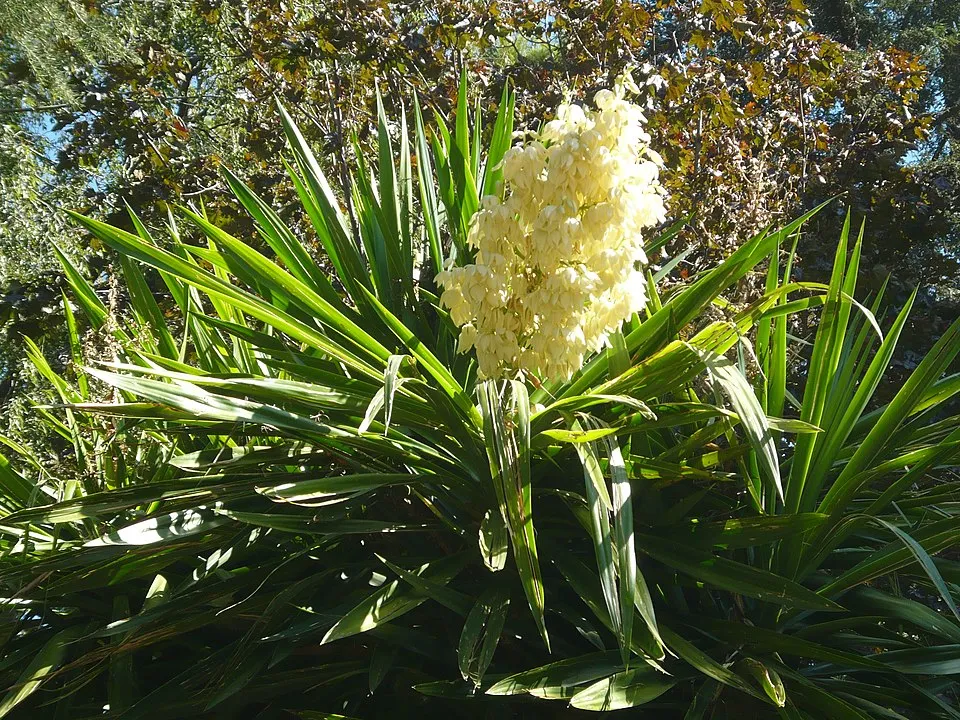
Yucca gigantea, commonly known as Yucca Elephantipes or Spineless Yucca, is a captivating arborescent succulent native to Central America, particularly regions of Mexico, Guatemala, and El Salvador. Indoors, this striking plant typically achieves heights of 5 to 8 feet, though in its natural habitat, it can mature into a small tree reaching up to 20 feet. Its distinctive appearance is characterized by a thick, often grayish-brown, rough-textured trunk that broadens at the base, resembling an elephant's foot, hence its common name.
Crowning the robust stem are rosettes of long, narrow, sword-shaped leaves, which can extend up to 3 feet in length. These evergreen blades are smooth, leathery, and vibrant deep green, terminating in a soft, non-spiny tip, differentiating it from other sharp-tipped Yucca species. While primarily grown for its ornamental appeal, Yucca gigantea occasionally produces impressive, tall, arching flower spikes adorned with creamy white, bell-shaped blooms, though this phenomenon is rare in indoor cultivation.
This resilient species thrives in dry, arid conditions, preferring bright, sunny spots and well-draining soil, yet it demonstrates remarkable adaptability to lower light environments, making it a versatile choice for various landscapes and interior designs. Taxonomically, Yucca gigantea belongs to the Asparagaceae family, which encompasses a diverse array of monocotyledonous flowering plants.
Trusted Scientific References
1. Authoritative external sources for Yucca gigantea
1.1 Wikipedia — Yucca gigantea
1.2 Kew POWO (Plants of the World Online)
1.3 PubMed — peer-reviewed research
1.4 NCBI Taxonomy Browser
1.5 GBIF — Global Biodiversity
1.6Yucca Elephantipes should be interpreted through verified botanical identity, practical care, and responsible safety language. This recovery note adds the missing context needed for a complete profile: match light to the plant's habit, use well-drained soil, water according to season, and avoid unsupported medicinal or edible claims. For publishing, the plant can be presented as a source-backed indoor plant with clear care guidance, common problem diagnosis, and conservative safety wording.
1.1.Yucca Elephantipes — Key Features
- ✓ <strong>Robust, tree</strong> — like succulent with a distinctive trunk resembling an elephant's foot.
- ✓ <strong>Features long, sword</strong> — shaped, deep green, spineless leaves arranged in rosettes.
- ✓ <strong>Contains significant concentrations</strong> — Contains significant concentrations of steroidal saponins and diverse phenolic compounds.
- ✓ <strong>Exhibits potent antioxidant, anti</strong> — inflammatory, and antimicrobial properties in vitro.
- ✓ <strong>Historically valued for</strong> — Historically valued for various medicinal applications in indigenous cultures.
- ✓ <strong>Exceptional ornamental plant,</strong> — Exceptional ornamental plant, adaptable to both indoor and outdoor cultivation.
- ✓ <strong>Highly drought</strong> — tolerant, thriving in arid conditions with well-draining soil.
- ✓ <strong>Potential to support</strong> — Potential to support joint health, digestion, and cardiovascular well-being.
- ✓ <strong>Used traditionally as</strong> — Used traditionally as a natural foaming agent for soaps and shampoos.
- ✓ <strong>Requires minimal maintenance</strong> — Requires minimal maintenance once established, favoring bright, indirect light.
1.2.Yucca Elephantipes — Quick Summary
- ✓ Yucca gigantea is a striking ornamental succulent with historical traditional uses.
- ✓ Rich in steroidal saponins, phenolic compounds, and potent antioxidants like resveratrol.
- ✓ Traditionally utilized for anti-inflammatory support, digestive health, and as a natural cleansing agent.
- ✓ Preclinical research suggests potential benefits for joint health, cardiovascular function, and metabolic balance.
- ✓ Limited clinical trials specifically on Yucca gigantea, with most research focusing on other Yucca species.
- ✓ Generally considered safe for some applications, but contraindicated in pregnancy and lactation.
2.Yucca Elephantipes — Scientific Identity
3.Yucca Elephantipes — Quick Facts
4.Yucca Elephantipes — Appearance & Identification
5.Yucca Elephantipes — Native Habitat
6.Yucca Elephantipes — Water Requirements
- ✓ Soil Requirements — Thrives in very well-draining, sandy or loamy soil with a slightly acidic to neutral pH (6.0-7.0); ensure excellent drainage to prevent root rot.
- ✓ Light Exposure — Prefers bright, indirect light to full sun outdoors, but exhibits good tolerance for lower light conditions indoors, making it highly adaptable.
- ✓ Watering Regimen — Water thoroughly when the top 2-3 inches of soil are completely dry, then allow the soil to dry out fully before the next watering cycle; avoid overwatering.
- ✓ Temperature and Humidity — Best grown in warm temperatures ranging from 65-80°F (18-27°C) and average indoor humidity; protect from frost and cold drafts.
- ✓ Fertilization Needs — Fertilize sparingly during the active growing season (spring and summer) with a balanced liquid fertilizer diluted to half strength, typically once every 2-4 weeks.
- ✓ Propagation Techniques — Easily propagated from stem cuttings, which should be allowed to callus for several days before planting, or by separating pups (offsets) from the base of the mature plant.
- ✓ Pest and Disease Management — Generally pest-resistant, but watch for common indoor pests like spider mites or mealybugs; ensure proper air circulation to deter fungal issues, especially in humid conditions.
Reviewed by the Flora Medical Global Botanical Review Panel
Multi-disciplinary editorial group · Botany · Ethnobotany · Herbal-medicine literature
Who reviewed this: This page was checked by the Flora Medical Global Botanical Review Panel — an in-house editorial group of botany graduates, ethnobotany researchers, and horticulture practitioners who collectively maintain our 7,000+ plant encyclopedia. Meet the team.
Our 4-step verification process
1. Taxonomic verification
Scientific names and synonyms cross-checked against Kew POWO, World Flora Online, and The Plant List.
2. Phytochemical & medicinal cross-reference
Active compounds, traditional uses, and reported activities are cross-referenced with PubMed, USDA Dr. Duke's database, and peer-reviewed ethnobotanical literature.
3. Conservation & distribution check
Distribution, ecology, and conservation status confirmed against GBIF occurrence records and the IUCN Red List.
4. Editorial & safety review
Every entry passes an editorial pass for clarity, originality, and safety notices (toxicity, contraindications, dosage caveats) before publication.
Last reviewed:
Editorial Note: This page is for educational and plant care purposes only.
Written by: Flora Medical Global Editorial Team
Reviewed by: Flora Medical Global Botanical Review Panel
Last Updated: June 15, 2026







Yucca Elephantipes — Comments & Community Reviews
Rate this plant