
Medical Disclaimer: This content is for educational purposes only. It is not medical advice. Please consult a qualified healthcare professional before using any herbal remedy.
Safety Overview
1.Aegle Marmelos — Overview
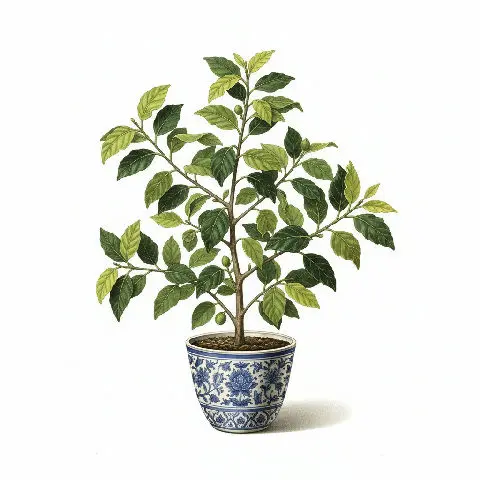
Aegle marmelos, widely recognized as Bael or Wood Apple, is a revered medium-sized deciduous tree indigenous to the Indian subcontinent and Southeast Asia, flourishing in tropical and subtropical environments. This robust species typically attains heights of 15 to 20 meters, characterized by a sturdy trunk and often thorny branches that contribute to its rugged yet distinguished appearance. Its distinctive leaves are trifoliate, composed of three glossy, ovate, and highly aromatic leaflets, which are traditionally offered in religious ceremonies.
The Bael tree produces small, inconspicuous greenish-white flowers, arranged in clusters, that release a subtly sweet fragrance. However, the most iconic feature of Aegle marmelos is its fruit: a hard, globose to pear-shaped woody sphere, transitioning from green to a vibrant yellow upon ripening. The fruit's interior reveals a sticky, mucilaginous, orange-hued pulp, intensely aromatic and sweet, encasing numerous seeds.
Beyond its botanical attributes, the Bael tree holds profound cultural and spiritual significance, particularly in Hinduism, where its leaves are considered sacred and essential for rituals dedicated to Lord Shiva. Its remarkable adaptability to diverse soil types and challenging climatic conditions underscores its importance not only in horticulture and agroforestry but also as a cornerstone in traditional medicinal systems such as Ayurveda, Unani, and Siddha, where nearly every part of the tree has been historically utilized for its therapeutic properties.
Trusted Scientific References
1. Authoritative external sources for Aegle marmelos med
1.1 Wikipedia — Aegle marmelos med
1.2 Kew POWO (Plants of the World Online)
1.3 PubMed — peer-reviewed research
1.4 NCBI Taxonomy Browser
1.5 GBIF — Global Biodiversity
1.6Aegle Marmelos Med should be interpreted through verified botanical identity, practical care, and responsible safety language. This recovery note adds the missing context needed for a complete profile: match light to the plant's habit, use well-drained soil, water according to season, and avoid unsupported medicinal or edible claims. For publishing, the plant can be presented as a source-backed medicinal plant with clear care guidance, common problem diagnosis, and conservative safety wording.
1.1.Aegle Marmelos — Standout Qualities
- ✓Sacred Significance — Deeply revered in Hinduism, symbolizing purity and auspiciousness.
- ✓Hard — Shelled Fruit — Unique globose to pear-shaped fruit with a woody exterior and aromatic pulp.
- ✓Medicinal Versatility — Nearly all parts (fruit, leaves, bark, roots) are used therapeutically.
- ✓Rich Phytochemistry — Abundant in coumarins, alkaloids, tannins, and phenolic compounds.
- ✓Digestive Aid — Highly effective for treating diarrhea and dysentery, as well as promoting gut health.
- ✓Adaptable Tree — Resilient to diverse climates and soil conditions, thriving in tropical regions.
- ✓Aromatic Qualities — Leaves and fruit possess a distinct, pleasant aroma.
- ✓Antioxidant Powerhouse — Contains numerous compounds that combat oxidative stress.
- ✓Traditional Cornerstone — A fundamental herb in Ayurvedic, Unani, and Siddha medicine.
- ✓Anti — inflammatory Properties — Helps mitigate inflammatory responses throughout the body.
1.2.Aegle Marmelos — In Brief
- ✓Aegle marmelos, or Bael, is a sacred and medicinally potent tree native to the Indian subcontinent.
- ✓Revered in traditional medicine systems for its diverse therapeutic properties, especially for digestive health.
- ✓Rich in a spectrum of phytochemicals including coumarins, alkaloids, phenolics, and tannins.
- ✓Every part of the tree, from fruit to roots, offers unique health benefits, from antidiarrheal to anti-inflammatory.
- ✓Cultivated for its nutritious fruit and widespread traditional uses, it is a cornerstone of herbal remedies.
- ✓Requires careful consideration of dosage and potential interactions, particularly for pregnant individuals or those on medication.
2.Aegle Marmelos — Scientific Profile
3.Aegle Marmelos — Reference Facts
4.Aegle Marmelos — Plant Morphology
5.Aegle Marmelos — Habitat & Distribution
6.Aegle Marmelos — Historical Applications
Highly sacred in Hinduism, its leaves are offered to Lord Shiva. Symbolizes fertility and prosperity. Mentioned in ancient Indian scriptures and Ayurvedic texts.
7.Aegle Marmelos — Secondary Metabolites
- ✓Coumarins — Key compounds include marmenol, marmin, marmelosin, imperatorin, alloimperatorin, and psoralen, known for their diverse pharmacological activities including anti-inflammatory, antimicrobial, and photoprotective effects.
- ✓Alkaloids — Aegeline, marmeline, and fagarine are prominent alkaloids found in Bael, contributing to its analgesic and spasmolytic properties.
- ✓Phenolic Acids — Important acids such as gallic acid (873.6 µg/g), chlorogenic acid (136.8 µg/g), ellagic acid (248.5 µg/g), and ferulic acid (98.3 µg/g) are present, imparting strong antioxidant and anti-inflammatory benefits.
- ✓Flavonoids — Quercetin (56.9 µg/g) is a notable flavonoid, contributing to the plant's antioxidant and immunomodulatory activities.
- ✓Terpenoids — Limonene, beta-phellandrene, alpha-humulene, and beta-caryophyllene are among the terpenoids responsible for the plant's characteristic aroma and antimicrobial properties.
- ✓Fatty Acids — The seed oil contains palmitic, stearic, oleic, linoleic, linolenic, and an unusual fatty acid, ricinoleic acid (12.5%), offering nutritional and emollient qualities.
- ✓Volatile Compounds — Hexanal, isoamyl acetate, p-cymene, linalool oxide, and carvone contribute to the fruit's unique fragrance and also possess antimicrobial actions.
- ✓Tannins — Present at approximately 0.985%, tannins contribute to the astringent and antidiarrheal properties of the unripe fruit.
- ✓Vitamins — Riboflavin (0.005%) and ascorbic acid are present, adding to the nutritional value and antioxidant capacity.
- ✓Organic Acids — Oxalic, tartaric, and malic acids are found in the fruit, contributing to its flavor profile and metabolic benefits.
8.Aegle Marmelos — Modern Studies
- ✓Antidiarrheal — The unripe fruit and root extracts of Aegle marmelos effectively reduce diarrhea by inhibiting bacterial colonization in the gut and modulating enterotoxin action, attributed to its high tannin content.
- ✓Antimicrobial — Essential oils and extracts from the leaves and fruit exhibit broad-spectrum activity against various bacteria, fungi, and protozoa, providing natural defense against infections.
- ✓Antiviral — Certain compounds within Bael show promise in inhibiting viral replication, contributing to its traditional use in managing fevers and infectious diseases.
- ✓Radioprotective — Studies indicate that Aegle marmelos extracts may protect cells from radiation-induced damage, suggesting potential in supportive therapies.
- ✓Anticancer — Phytochemicals like marmelosin and various phenolics found in Bael have demonstrated antiproliferative effects against several cancer cell lines in preclinical studies.
- ✓Chemopreventive — The plant's rich antioxidant profile helps neutralize free radicals, potentially preventing cellular damage that can lead to carcinogenesis.
- ✓Antipyretic — Traditional medicine utilizes Bael preparations to reduce fever, likely due to its anti-inflammatory and immune-modulating properties.
- ✓Ulcer Healing — The mucilaginous pulp and anti-inflammatory compounds contribute to the healing of gastric and duodenal ulcers by protecting the mucosal lining.
- ✓Antigenotoxic — Extracts have shown the ability to protect genetic material from damage by various genotoxic agents, supporting cellular integrity.
- ✓Diuretic — Bael has mild diuretic properties, aiding in the removal of excess fluid from the body and supporting kidney function.
- ✓Anti-inflammatory — Flavonoids and coumarins present in Aegle marmelos help to mitigate inflammatory responses, offering relief from various inflammatory conditions.
- ✓Antifertility — Some traditional texts and experimental studies suggest antifertility effects, which should be considered when using Bael.
8.1.Aegle Marmelos — Conditions Traditionally Used For
9.Aegle Marmelos — Adverse Effects
9.1.Aegle Marmelos — Possible Adverse Reactions
- ✓Constipation — Excessive consumption of ripe Bael fruit due to its high fiber content may lead to constipation in some individuals.
- ✓Hypoglycemia — Individuals on antidiabetic medication should use Bael with caution as it may lower blood sugar levels, potentially causing hypoglycemia.
- ✓Antifertility Effects — Some studies suggest antifertility activity; therefore, it should be avoided by individuals attempting conception or during pregnancy.
- ✓Drug Interactions — May interact with blood-thinning medications or drugs affecting blood sugar due to its own medicinal properties.
- ✓Allergic Reactions — Rare instances of allergic reactions, such as skin rashes or digestive upset, have been reported in sensitive individuals.
- ✓Digestive Discomfort — Overconsumption of unripe fruit may cause stomach upset due to its astringent nature.
- ✓Pregnancy and Lactation — Due to insufficient safety data, it is generally advised to avoid Bael during pregnancy and lactation.
9.2.Aegle Marmelos — Toxicity Assessment
- ✓Pregnancy and Lactation — Avoid use due to lack of comprehensive safety studies and potential antifertility effects.
- ✓Diabetes Management — Monitor blood glucose closely if consuming Bael alongside antidiabetic medication, as it may potentiate hypoglycemic effects.
- ✓Blood Thinners — Exercise caution if on anticoagulant therapy, as Bael may have mild antiplatelet effects.
- ✓Children — Generally considered safe in moderate amounts for older children, but dosage should be reduced and supervised by a healthcare professional.
- ✓Dosage — Adhere to recommended dosages; excessive intake of any plant part can lead to adverse effects.
- ✓Quality Sourcing — Ensure Bael products are sourced from reputable suppliers to avoid contamination or adulteration.
- ✓Consultation — Always consult a healthcare professional or qualified herbalist before incorporating Bael into a therapeutic regimen, especially for pre-existing conditions.
10.Aegle Marmelos — Preparation & Dosage
- ✓Fruit Pulp (Ripe) — Consumed fresh, blended into refreshing juices, smoothies, or incorporated into desserts for its sweet, aromatic, and slightly laxative properties.
- ✓Fruit Pulp (Unripe) — Dried and powdered, it is traditionally used to prepare decoctions or infusions for treating acute and chronic diarrhea and dysentery.
- ✓Leaves — Fresh leaves can be chewed or steeped to make a tea, often used for managing diabetes, reducing fever, and as an anti-inflammatory agent.
- ✓Root Bark — Prepared as a decoction, it is utilized in traditional systems for its antipyretic, anti-inflammatory, and antidiarrheal effects.
- ✓Bark — Decoctions from the bark are traditionally used for their astringent properties and in managing digestive issues.
- ✓Oil from Seeds — Extracted seed oil can be used topically for skin conditions or internally for its nutritional fatty acids, though less common.
- ✓Flower Extract — Infusions from the flowers are sometimes used for their cooling properties and pleasant aroma, though medicinal use is less defined.
11.Aegle Marmelos — Growing Guide
- ✓Climate — Thrives in tropical and subtropical climates, tolerating a wide range of temperatures but sensitive to severe frost.
- ✓Soil — Adaptable to various soil types, from sandy to clayey, but prefers well-drained, fertile loamy soils with a pH range of 5-8.
- ✓Propagation — Primarily propagated by seeds, which germinate readily, or vegetatively through budding, grafting, or root cuttings for faster growth and consistent fruit quality.
- ✓Sunlight — Requires full sun exposure for optimal growth and fruit production, needing at least 6-8 hours of direct sunlight daily.
- ✓Watering — Young plants need regular watering; mature trees are drought-tolerant but benefit from irrigation during dry spells, especially during flowering and fruiting.
- ✓Pruning — Light pruning is recommended to remove dead or diseased branches and to shape the canopy, promoting better air circulation and fruit accessibility.
- ✓Fertilization — Benefits from organic fertilizers like compost or well-rotted manure, applied annually, especially before the growing season, to enrich soil nutrients.
Reviewed by the Flora Medical Global Botanical Review Panel
Multi-disciplinary editorial group · Botany · Ethnobotany · Herbal-medicine literature
Who reviewed this: This page was checked by the Flora Medical Global Botanical Review Panel — an in-house editorial group of botany graduates, ethnobotany researchers, and horticulture practitioners who collectively maintain our 7,000+ plant encyclopedia. Meet the team.
Our 4-step verification process
1. Taxonomic verification
Scientific names and synonyms cross-checked against Kew POWO, World Flora Online, and The Plant List.
2. Phytochemical & medicinal cross-reference
Active compounds, traditional uses, and reported activities are cross-referenced with PubMed, USDA Dr. Duke's database, and peer-reviewed ethnobotanical literature.
3. Conservation & distribution check
Distribution, ecology, and conservation status confirmed against GBIF occurrence records and the IUCN Red List.
4. Editorial & safety review
Every entry passes an editorial pass for clarity, originality, and safety notices (toxicity, contraindications, dosage caveats) before publication.
Last reviewed:
Important medical disclaimer: This content is for educational and research purposes only. It is not medical advice and is not a substitute for consultation with a licensed healthcare provider. Do not use any herb to self-treat a medical condition without professional guidance.
Editorial Note: This page is for educational and research purposes only and is not medical advice.
Written by: Flora Medical Global Editorial Team
Reviewed by: Flora Medical Global Botanical Review Panel
Last Updated: June 16, 2026





Aegle Marmelos — Comments & Community Reviews
Rate this plant