
Medical Disclaimer: This content is for educational purposes only. It is not medical advice. Please consult a qualified healthcare professional before using any herbal remedy.
Safety Overview
1.Agarwood — At a Glance
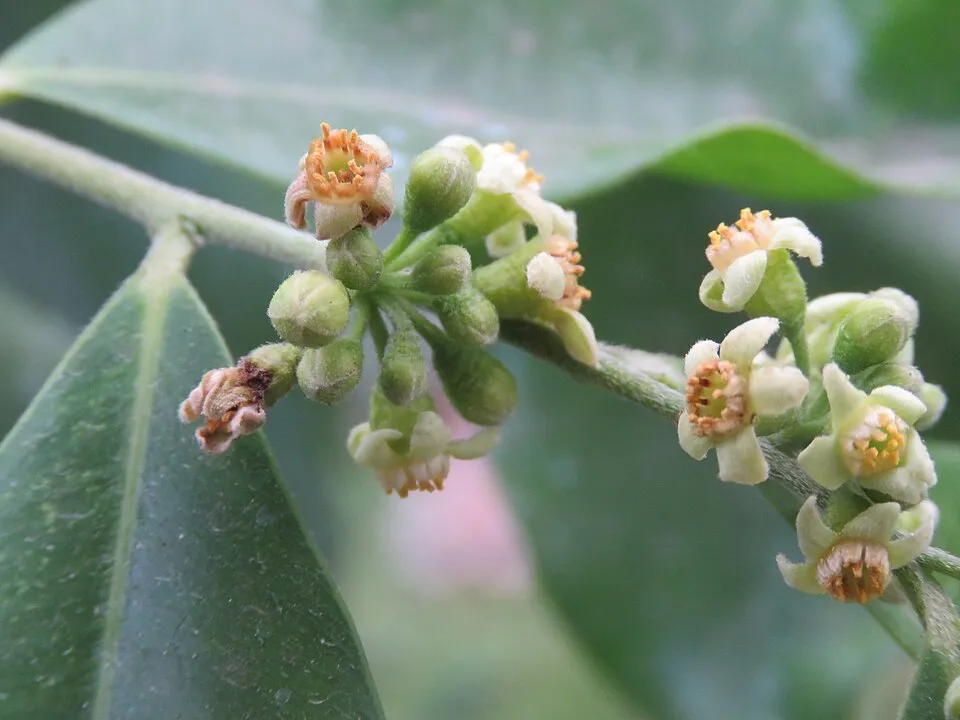
Agarwood, scientifically known as Aquilaria malaccensis, is a remarkable evergreen tree belonging to the Thymelaeaceae family, highly esteemed for its distinctive aromatic, resinous heartwood. This precious resin, often referred to as 'liquid gold' or 'wood of the gods,' forms as a natural defense mechanism when the tree is infected by specific fungi, transforming its typically pale wood into a dark, fragrant, and highly prized substance. The tree itself is a majestic specimen, capable of reaching impressive heights of 15 to 40 meters, characterized by a straight trunk adorned with smooth, light grey bark that matures into a darker hue.
Its foliage consists of glossy, elliptic leaves arranged in opposite pairs, creating a vivid contrast against the trunk. Small, creamy-white flowers bloom in loose clusters called umbels, eventually giving way to woody capsules, each containing a single seed. Aquilaria malaccensis thrives in the humid, tropical rainforests of Southeast Asia, with significant populations historically found in countries such as India, Vietnam, Thailand, and Malaysia, preferring moist, well-drained soils.
Its deep cultural and spiritual significance spans millennia, referenced in ancient Sanskrit texts, the Bible, and the Quran, underscoring its historical applications in religious ceremonies, incense production, and traditional medicinal systems like Ayurveda, Traditional Chinese Medicine (TCM), and Unani medicine. However, centuries of intense demand and unsustainable harvesting practices have driven Agarwood to be classified as critically endangered by the IUCN. In response, modern efforts focus on sustainable cultivation through artificial inoculation techniques, ensuring resin production without further depleting wild populations and preserving this invaluable botanical resource.
Trusted Scientific References
1. Authoritative external sources for Aquilaria malaccensis
1.1 Wikipedia — Aquilaria malaccensis
1.2 Kew POWO (Plants of the World Online)
1.3 PubMed — peer-reviewed research
1.4 NCBI Taxonomy Browser
1.5 GBIF — Global Biodiversity
1.1.Agarwood — Highlights
- ✓Aromatic Resin — Famous for its unique, complex, and highly prized fragrant resinous heartwood.
- ✓Medicinal Properties — Possesses significant anti-inflammatory, antioxidant, anxiolytic, and analgesic effects.
- ✓Cultural Significance — Deeply embedded in spiritual practices, traditional medicine, and perfumery across various cultures.
- ✓Critically Endangered Status — Classified by IUCN, driving efforts for sustainable cultivation and conservation.
- ✓Unique Chemical Profile — Characterized by novel sesquiterpenes and 2-(2-phenethyl)chromone derivatives.
- ✓High Economic Value — One of the world's most expensive natural raw materials, often called 'liquid gold'.
- ✓Southeast Asian Origin — Native to tropical rainforests across countries like India, Vietnam, and Thailand.
- ✓Artificial Inoculation — Modern technique used to induce resin formation in cultivated trees.
- ✓Versatile Applications — Used as incense, essential oil, in traditional remedies, and high-end fragrances.
- ✓Oral Health Potential — Recent research indicates potential in treating inflammatory conditions like periodontitis.
1.2.Agarwood — Quick Summary
- ✓'Wood of the Gods' — Agarwood is a highly prized aromatic resinous wood from Aquilaria malaccensis.
- ✓Fungal Origin — Its unique fragrance and medicinal properties develop from a fungal infection.
- ✓Traditional & Modern Uses — Valued in ancient cultures for spiritual and medicinal applications; modern research confirms anti-inflammatory, antioxidant, and anxiolytic benefits.
- ✓Critically Endangered — Wild populations are threatened due to overharvesting, leading to focus on sustainable cultivation.
- ✓Complex Chemistry — Rich in sesquiterpenes and chromones, responsible for its distinct aroma and therapeutic effects.
- ✓Periodontitis Potential — Emerging research highlights its relevance in treating inflammatory oral conditions like periodontitis.
2.Agarwood — Nomenclature & Classification
3.Agarwood — Vital Statistics
4.Agarwood — Botanical Description
5.Agarwood — Native Range & Habitat
6.Agarwood — Heritage Uses
7.Agarwood — Chemical Profile
- ✓Sesquiterpenes — Key compounds include agarofurans (e.g., jinkoh-eremol, agarospirol), valerane-type sesquiterpenes, and eudesmane derivatives, largely responsible for the characteristic aroma and anti-inflammatory properties.
- ✓2-(2-phenethyl)chromone Derivatives — A unique class of compounds like flindersine and aquilarone, contributing significantly to the distinctive fragrance and exhibiting anti-inflammatory and antioxidant activities.
- ✓Flavonoids — Present particularly in the leaves, these compounds such as quercetin and kaempferol derivatives offer strong antioxidant and anti-inflammatory benefits.
- ✓Aromatic Compounds — A diverse group including benzylacetone, p-methoxybenzylacetone, and various other volatile organic compounds that define the complex olfactory profile of Agarwood.
- ✓Fatty Acids — Essential fatty acids and their derivatives are found, playing roles in the plant's metabolism and contributing to the overall chemical matrix.
- ✓Triterpenes — Compounds like lupeol and β-sitosterol, known for their potential anti-inflammatory and cholesterol-lowering effects, are also present.
- ✓Alkaloids — While less prominent than other classes, trace amounts of nitrogen-containing compounds may contribute to its pharmacological profile.
- ✓Benzene Derivatives — Including compounds like caryophyllene oxide and guaiene, which add to the complex aromatic and potential therapeutic effects.
8.Agarwood — Evidence-Based Benefits
- ✓Anti-inflammatory Action — Agarwood compounds, particularly sesquiterpenes and chromones, exhibit potent anti-inflammatory effects by modulating inflammatory pathways, crucial for conditions like periodontitis.
- ✓Antioxidant Properties — Rich in phenolic compounds and flavonoids, Agarwood helps neutralize harmful free radicals, reducing oxidative stress and protecting cellular integrity.
- ✓Anxiolytic and Sedative Effects — Traditionally used to calm the mind, its aromatic compounds interact with neuroreceptors, promoting relaxation and alleviating anxiety and insomnia.
- ✓Analgesic Qualities — Applied topically or consumed, Agarwood has been recognized for its pain-relieving properties, particularly in traditional systems for rheumatic and arthritic pains.
- ✓Digestive Aid — In various traditional medicines, Agarwood is used to stimulate digestion, relieve abdominal pain, flatulence, and improve overall gut health.
- ✓Cardiotonic Activity — Some traditional uses and preliminary research suggest a beneficial effect on heart function, though specific mechanisms require further investigation.
- ✓Anti-asthmatic Support — Extracts have shown bronchodilatory effects, helping to alleviate symptoms of asthma and other respiratory conditions.
- ✓Immunomodulatory Effects — Bioactive constituents can help regulate the immune system, enhancing the body's defense mechanisms against pathogens.
- ✓Hypoglycemic Potential — Early studies indicate that certain Agarwood extracts may help in blood sugar regulation, offering potential benefits for metabolic health.
- ✓Antimicrobial Activity — Essential oils and extracts demonstrate inhibitory effects against various bacteria and fungi, contributing to its use in traditional wound care and oral hygiene.
8.1.Agarwood — Reported Uses
9.Agarwood — Cautions & Contraindications
9.1.Agarwood — Side Effects & Warnings
- ✓Allergic Reactions — Skin irritation or respiratory issues may occur in sensitive individuals, especially with direct contact or inhalation of smoke/vapor.
- ✓Gastrointestinal Upset — Oral consumption of large quantities or improperly prepared forms may lead to nausea, vomiting, or stomach discomfort.
- ✓Skin Sensitization — Undiluted essential oil can cause irritation, redness, or allergic dermatitis upon direct skin application.
- ✓Drug Interactions — Potential for interactions with sedatives, blood thinners, or hypoglycemic medications due to its own pharmacological activities.
- ✓Pregnancy and Lactation — Lack of sufficient safety data necessitates avoidance during pregnancy and breastfeeding.
- ✓Purity Concerns — Adulterated or low-quality products may contain harmful contaminants or synthetic fragrances, leading to unforeseen adverse effects.
- ✓Excessive Dosing — Overconsumption of Agarwood in any form may lead to undesirable effects, emphasizing the importance of appropriate dosage.
9.2.Agarwood — Safety Profile
- ✓Professional Consultation — Always consult a qualified healthcare practitioner or medical herbalist before using Agarwood, especially for therapeutic purposes.
- ✓Patch Testing — Perform a patch test with diluted essential oil on a small skin area to check for sensitivity or allergic reactions before widespread topical use.
- ✓Quality Assurance — Ensure sourcing from reputable suppliers to guarantee authenticity and purity, avoiding adulterated products.
- ✓Dosage Adherence — Strictly follow recommended dosages from qualified experts, as excessive intake can lead to adverse effects.
- ✓Avoidance in Pregnancy/Lactation — Due to insufficient safety data, pregnant and breastfeeding women should refrain from using Agarwood.
- ✓Children and Infants — Not recommended for use in children or infants without expert medical guidance.
- ✓Internal Use Caution — Internal consumption should only be under the supervision of a trained professional, given its potent compounds.
10.Agarwood — Usage Guide
- ✓Incense — The most traditional use, burning small chips of resinous wood releases its complex aroma for spiritual ceremonies, meditation, or simply to scent spaces.
- ✓Essential Oil — Extracted via hydrodistillation or steam distillation from the resinous wood, used in aromatherapy, perfumery, and topical applications.
- ✓Topical Application (Diluted Oil) — Agarwood essential oil, highly diluted in a carrier oil, can be massaged onto the skin for pain relief, relaxation, or skin conditions.
- ✓Decoctions and Teas — Small pieces of non-resinous wood or leaves are sometimes steeped in hot water to create a medicinal tea or decoction in traditional practices.
- ✓Traditional Medicine Formulations — Powdered Agarwood is incorporated into various herbal formulations, pills, or tinctures in Ayurvedic, TCM, and Unani systems.
- ✓Perfumery — A highly prized ingredient in high-end perfumes and colognes, providing a deep, woody, and complex base note.
- ✓Aromatic Diffusers — Essential oil is diffused into the air to promote relaxation, reduce stress, and purify the atmosphere.
- ✓Wood Chips for Brewing — Smaller, less resinous wood pieces can be used in traditional brewing processes to impart unique flavors and aromas.
11.Agarwood — Garden Cultivation
- ✓Seed Propagation — Seeds are collected from mature fruits and sown in well-drained, fertile soil, often in nurseries before transplanting.
- ✓Artificial Inoculation — The most critical step for resin production, involving controlled wounding and introduction of specific fungal strains (e.g., Fusarium spp.) into the tree.
- ✓Suitable Climate — Requires a tropical to subtropical climate with high humidity, ample rainfall, and temperatures typically between 20-35°C.
- ✓Soil Requirements — Thrives in moist, well-drained, slightly acidic to neutral soils rich in organic matter.
- ✓Spacing and Management — Saplings are planted with adequate spacing to allow for optimal growth, followed by regular weeding, fertilization, and irrigation.
- ✓Pest and Disease Control — Monitoring for common pests and diseases is essential, with eco-friendly methods preferred to maintain tree health.
- ✓Harvesting — Resin-infused wood is harvested several years after inoculation, often involving selective removal to preserve the tree.
- ✓Sustainable Practices — Focus on replanting and managed plantations to reduce pressure on wild populations and ensure long-term supply.
Reviewed by the Flora Medical Global Botanical Review Panel
Multi-disciplinary editorial group · Botany · Ethnobotany · Herbal-medicine literature
Who reviewed this: This page was checked by the Flora Medical Global Botanical Review Panel — an in-house editorial group of botany graduates, ethnobotany researchers, and horticulture practitioners who collectively maintain our 7,000+ plant encyclopedia. Meet the team.
Our 4-step verification process
1. Taxonomic verification
Scientific names and synonyms cross-checked against Kew POWO, World Flora Online, and The Plant List.
2. Phytochemical & medicinal cross-reference
Active compounds, traditional uses, and reported activities are cross-referenced with PubMed, USDA Dr. Duke's database, and peer-reviewed ethnobotanical literature.
3. Conservation & distribution check
Distribution, ecology, and conservation status confirmed against GBIF occurrence records and the IUCN Red List.
4. Editorial & safety review
Every entry passes an editorial pass for clarity, originality, and safety notices (toxicity, contraindications, dosage caveats) before publication.
Last reviewed:
Important medical disclaimer: This content is for educational and research purposes only. It is not medical advice and is not a substitute for consultation with a licensed healthcare provider. Do not use any herb to self-treat a medical condition without professional guidance.
Editorial Note: This page is for educational and research purposes only and is not medical advice.
Written by: Flora Medical Global Editorial Team
Reviewed by: Flora Medical Global Botanical Review Panel
Last Updated: June 16, 2026





Agarwood — Comments & Community Reviews
Rate this plant