
Medical Disclaimer: This content is for educational purposes only. It is not medical advice. Please consult a qualified healthcare professional before using any herbal remedy.
Safety Overview
1.Agave Medicinal — Overview
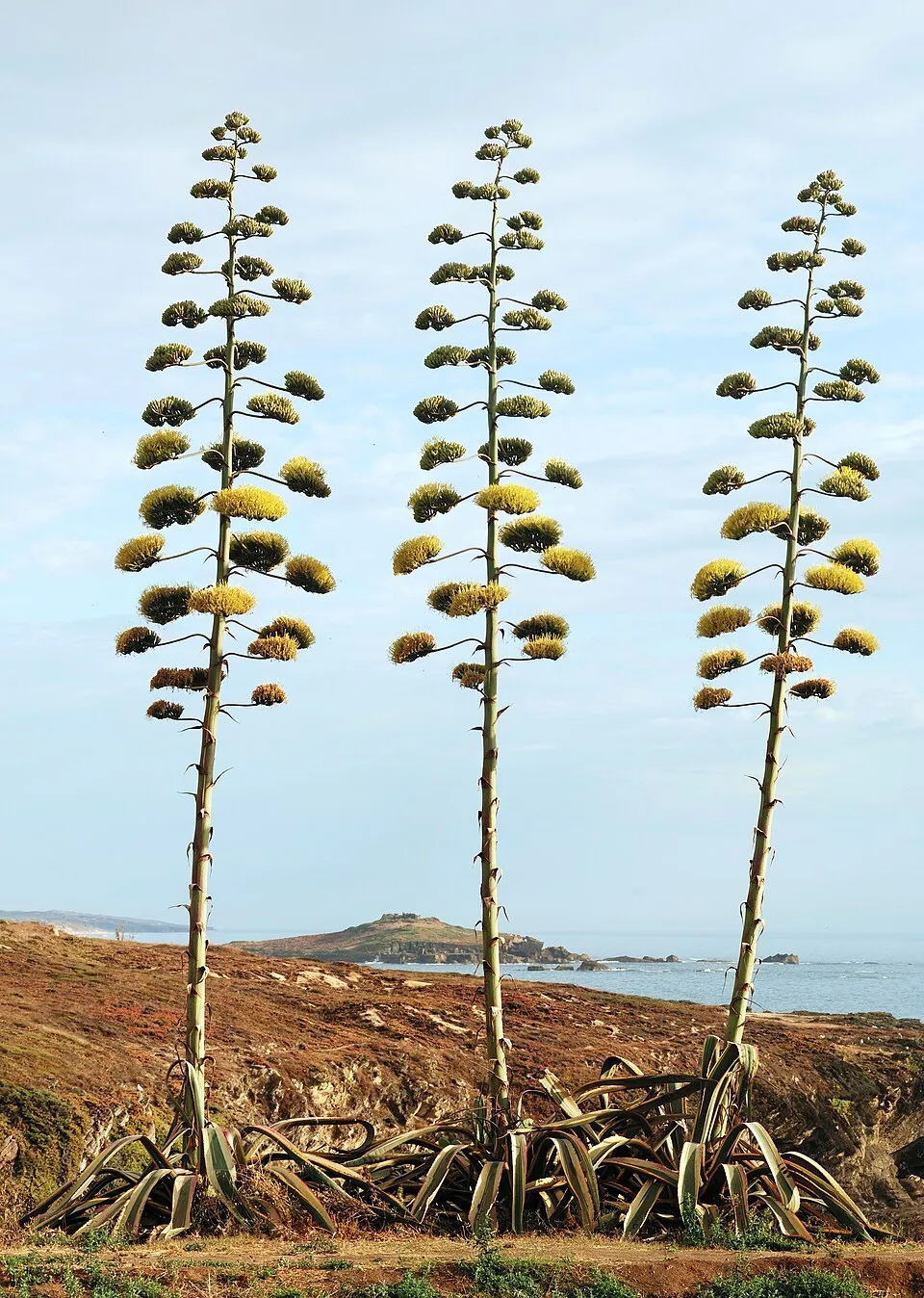
Agave americana, commonly known as the century plant or American agave, is a magnificent and robust succulent belonging to the Asparagaceae family, specifically the Agavoideae subfamily. Native to Mexico and extending into parts of the southwestern United States, this perennial thrives in arid and semi-arid regions, showcasing remarkable drought resilience. Its distinctive morphology includes a large, basal rosette of thick, fleshy, grayish-green leaves that can impressively extend up to 2 meters in length.
Each leaf is armed with formidable sharp spines along its margins and a potent terminal spine, serving as a natural defense mechanism. The plant is monocarpic, meaning it flowers only once in its lifetime, a spectacular event where it produces a colossal flower stalk, or 'quiote', that can soar up to 8 meters high, crowned with numerous greenish-yellow flowers. After this dramatic and energy-intensive bloom, the plant completes its life cycle and senesces.
Agave americana flourishes in well-drained, sandy, or rocky soils and demands full sun exposure, making it an ideal candidate for xeriscaping and sustainable agriculture in dry climates. Historically, this plant has been indispensable to indigenous cultures, providing a versatile array of resources. Its sap, known as 'aguamiel', was traditionally harvested as a sweetener and fermented into 'pulque', a significant alcoholic beverage.
The strong fibers extracted from its leaves were crucial for crafting textiles, ropes, and paper. From an ecological and cultural standpoint, Agave americana symbolizes endurance and self-sufficiency, deeply woven into the heritage of the regions where it naturally thrives.
Trusted Scientific References
1. Authoritative external sources for Agave americana
1.1 Wikipedia — Agave americana
1.2 Kew POWO (Plants of the World Online)
1.3 PubMed — peer-reviewed research
1.4 NCBI Taxonomy Browser
1.5 GBIF — Global Biodiversity
1.6Agave Medicinal should be interpreted through verified botanical identity, practical care, and responsible safety language. This recovery note adds the missing context needed for a complete profile: match light to the plant's habit, use well-drained soil, water according to season, and avoid unsupported medicinal or edible claims. For publishing, the plant can be presented as a source-backed medicinal plant with clear care guidance, common problem diagnosis, and conservative safety wording.
1.1.Agave Medicinal — Key Features
- ✓Drought — Tolerant Succulent — Highly adapted to arid environments, requiring minimal water.
- ✓Monocarpic Life Cycle — Flowers spectacularly once, producing a tall stalk, then dies.
- ✓Prebiotic Richness — High in inulin-type fructans, beneficial for gut health.
- ✓Traditional Sweetener Source — Sap (aguamiel) used as a natural sweetener and for fermented beverages.
- ✓Versatile Fiber Plant — Leaves yield strong fibers for textiles, ropes, and other crafts.
- ✓Steroidal Saponin Content — Contains compounds like hecogenin with recognized medicinal properties.
- ✓Historical Cultural Significance — Deeply embedded in the ethnobotany of indigenous Mesoamerican cultures.
- ✓Striking Ornamental Value — Prized for its dramatic architectural form in landscaping.
- ✓Traditional Medicinal Uses — Employed for digestive issues, inflammation, and topical skin ailments.
- ✓Cautionary Plant — Fresh sap can cause severe skin irritation; specific internal uses are contraindicated.
1.2.Agave Medicinal — Concise Overview
- ✓Agave americana is a resilient succulent valued for its historical roles in food, fiber, and traditional medicine.
- ✓Rich in inulin, it acts as a prebiotic, significantly supporting digestive health and gut flora.
- ✓Contains steroidal saponins with demonstrated anti-inflammatory and potential antimicrobial properties.
- ✓Fresh sap is a potent skin irritant; internal use is LIKELY UNSAFE during pregnancy due to uterine stimulant effects.
- ✓A monocarpic plant, it blooms once in its lifetime with a towering flower stalk before dying.
- ✓Culturally significant, it symbolizes endurance and versatility in arid regions, providing both sustenance and healing.
2.Agave Medicinal — Systematic Position
3.Agave Medicinal — Botanical Stats
4.Agave Medicinal — Plant Morphology
5.Agave Medicinal — Where It Grows
6.Agave Medicinal — Cultural & Traditional Roles
7.Agave Medicinal — Active Compounds
- ✓Fructans — Predominantly inulin and fructooligosaccharides (FOS), serving as significant prebiotics that support gut microbiota and improve digestion.
- ✓Steroidal Saponins — Key compounds include hecogenin, tigogenin, and sarsasapogenin, which are known for their anti-inflammatory, hemolytic, and potential immunomodulatory activities.
- ✓Flavonoids — Presence of various flavonoid glycosides and aglycones, such as quercetin and kaempferol derivatives, contributing to antioxidant and anti-inflammatory effects.
- ✓Polysaccharides — Gums and mucilage providing demulcent properties, which can soothe irritated mucous membranes.
- ✓Organic Acids — Malic acid, citric acid, and succinic acid are present, playing roles in plant metabolism and contributing to the plant's overall biochemical profile.
- ✓Vitamins — Contains trace amounts of B vitamins and Vitamin C, which are essential cofactors for various physiological processes.
- ✓Minerals — Rich in essential minerals such as calcium, potassium, magnesium, and iron, vital for human health.
- ✓Phytosterols — Compounds like beta-sitosterol and campesterol, known for their potential cholesterol-lowering and anti-inflammatory benefits.
- ✓Phenolic Acids — Derivatives of caffeic and ferulic acids, contributing to the plant's antioxidant defense system.
- ✓Volatile Compounds — Minor components that contribute to the plant's aroma and may possess subtle antimicrobial properties.
8.Agave Medicinal — Modern Studies
- ✓Digestive Health — Agave americana is a rich source of inulin-type fructans, which act as powerful prebiotics, fostering the growth of beneficial gut bacteria to enhance digestive function and alleviate constipation.
- ✓Anti-inflammatory Properties — Extracts containing steroidal sapogenins, such as hecogenin, have demonstrated anti-inflammatory activity, potentially reducing swelling and discomfort.
- ✓Antimicrobial Activity — Certain compounds within Agave americana have shown inhibitory effects against various pathogenic microorganisms in laboratory studies, suggesting potential as an antimicrobial agent.
- ✓Wound Healing Support — Traditionally, the sap or poultices from the leaves were applied topically to aid in the healing of bruises, minor cuts, and skin sores, promoting tissue regeneration.
- ✓Diuretic Effects — Historically, parts of the plant were used to promote urine production, assisting the body in expelling excess fluids and supporting kidney function.
- ✓Laxative Action — The high fiber content, particularly inulin, contributes to its natural laxative effect, aiding bowel regularity and preventing digestive sluggishness.
- ✓Antioxidant Potential — The presence of various phytochemicals, including flavonoids, contributes to its antioxidant capacity, helping to neutralize free radicals and protect cells from oxidative damage.
- ✓Immune System Modulation — By fostering a healthy gut microbiome through its prebiotic effects, Agave americana indirectly supports and modulates the body's immune responses.
- ✓Potential Anticarcinogenic Effects — Preliminary research indicates that some constituents may possess properties that inhibit the growth of certain cancer cells, warranting further investigation.
- ✓Galactagogue Properties (Traditional) — The fermented sap, pulque, was traditionally consumed by breastfeeding women to increase milk production, though caution is advised due to alcohol content.
- ✓Uterine Stimulant (Traditional) — Certain preparations were historically used to promote labor, highlighting its potent effects on uterine contractions, which is a significant safety concern for pregnant individuals.
- ✓Hepatoprotective Potential (Traditional) — In some traditional systems, Agave americana was used for conditions like jaundice, suggesting a historical belief in its liver-protective qualities.
8.1.Agave Medicinal — Reported Uses
9.Agave Medicinal — Precautions & Warnings
9.1.Agave Medicinal — Possible Adverse Reactions
- ✓Skin Irritation — Direct contact with the fresh sap can cause severe irritant contact dermatitis, leading to redness, swelling, blistering, and intense itching.
- ✓Uterine Contractions — Oral consumption of agave, particularly during pregnancy, may stimulate uterine contractions, posing a risk of premature labor or miscarriage.
- ✓Digestive Discomfort — High intake of inulin-rich agave products can lead to gastrointestinal issues such as gas, bloating, cramps, and diarrhea in sensitive individuals.
- ✓Allergic Reactions — Although rare, some individuals may experience allergic contact dermatitis or other hypersensitivity reactions to agave components.
- ✓Phytobezoar Formation — Ingesting large, fibrous pieces of the plant, especially the stem, can lead to the formation of a phytobezoar in the digestive tract, causing obstruction.
- ✓Photosensitivity — Some reports suggest that topical exposure to agave sap might increase skin sensitivity to sunlight, leading to phototoxic reactions.
- ✓Alcohol-Related Risks — Consumption of fermented agave products like pulque carries the risks associated with alcohol, including impaired judgment and potential harm during pregnancy and breastfeeding.
9.2.Agave Medicinal — Risk Assessment
- ✓Pregnancy and Lactation — Agave is LIKELY UNSAFE during pregnancy due to its potential to induce uterine contractions; it is POSSIBLY UNSAFE during breastfeeding, with concerns regarding infant growth from pulque consumption.
- ✓Topical Application — Fresh agave sap is a known irritant; avoid direct skin contact. If used topically for medicinal purposes, dilute and patch test extensively, or use processed extracts.
- ✓Oral Consumption — Insufficient reliable scientific evidence exists regarding the safety of oral agave supplements. Consult a healthcare professional before internal use.
- ✓Children — Avoid medicinal use in children due to a lack of comprehensive safety data and potential for adverse effects.
- ✓Alcohol-Containing Products — Fermented agave products like pulque contain alcohol and should be avoided by pregnant or breastfeeding individuals, children, and those sensitive to alcohol.
- ✓Drug Interactions — No well-documented drug interactions, but caution is advised, especially with medications affecting uterine contractions or blood sugar levels.
- ✓Physical Hazards — The sharp leaf spines pose a risk of injury; handle the plant with protective gloves and appropriate care.
10.Agave Medicinal — Preparation & Dosage
- ✓Sap Collection (Aguamiel) — The heart of the plant is cut before flowering, and the sweet sap is collected daily, consumed fresh or processed into syrup.
- ✓Fermented Beverage (Pulque) — Aguamiel is naturally fermented to produce pulque, a traditional alcoholic drink, consumed for its nutritional and cultural significance.
- ✓Leaf Fiber Extraction — Leaves are decorticated to obtain strong, durable fibers used for ropes, textiles, mats, and paper.
- ✓Topical Poultices — Fresh leaves or sap (with extreme caution due to irritation) were traditionally crushed and applied externally to bruises, wounds, and skin irritations.
- ✓Roasted Hearts (Piñas) — The central core, or 'piña', is traditionally roasted, yielding a sweet, fibrous food source.
- ✓Herbal Decoctions — Dried roots or leaf sections can be boiled in water to create a decoction for internal traditional remedies, such as for digestive complaints.
- ✓Commercial Nectar/Syrup — Industrially processed agave sap is filtered and heated to produce agave nectar, a popular natural sweetener.
- ✓Culinary Ingredient — Agave nectar is widely used as a sugar substitute in various food and beverage applications due to its lower glycemic index.
11.Agave Medicinal — Growing Guide
- ✓Climate Preference — Thrives in warm, arid to semi-arid climates, ideally with full sun exposure and minimal frost.
- ✓Soil Requirements — Prefers well-drained, sandy, or gravelly soils; susceptible to root rot in heavy, waterlogged conditions.
- ✓Propagation — Primarily propagated from offsets (pups) that emerge around the base of the mature plant, or from seeds.
- ✓Watering — Highly drought-tolerant once established; requires infrequent watering, typically once a month during dry periods, and less in winter.
- ✓Spacing — Allow ample space, typically 2-3 meters between plants, due to its large and sprawling rosette.
- ✓Fertilization — Generally low-nutrient requirements; a light application of balanced, slow-release fertilizer in spring can promote growth.
- ✓Pest and Disease Management — Relatively pest-free, though susceptible to agave snout weevil and fungal infections in overly wet environments.
- ✓Harvesting — Leaves can be harvested for fiber production, and the sap (aguamiel) is collected from the flower stalk before it fully emerges.
Reviewed by the Flora Medical Global Botanical Review Panel
Multi-disciplinary editorial group · Botany · Ethnobotany · Herbal-medicine literature
Who reviewed this: This page was checked by the Flora Medical Global Botanical Review Panel — an in-house editorial group of botany graduates, ethnobotany researchers, and horticulture practitioners who collectively maintain our 7,000+ plant encyclopedia. Meet the team.
Our 4-step verification process
1. Taxonomic verification
Scientific names and synonyms cross-checked against Kew POWO, World Flora Online, and The Plant List.
2. Phytochemical & medicinal cross-reference
Active compounds, traditional uses, and reported activities are cross-referenced with PubMed, USDA Dr. Duke's database, and peer-reviewed ethnobotanical literature.
3. Conservation & distribution check
Distribution, ecology, and conservation status confirmed against GBIF occurrence records and the IUCN Red List.
4. Editorial & safety review
Every entry passes an editorial pass for clarity, originality, and safety notices (toxicity, contraindications, dosage caveats) before publication.
Last reviewed:
Important medical disclaimer: This content is for educational and research purposes only. It is not medical advice and is not a substitute for consultation with a licensed healthcare provider. Do not use any herb to self-treat a medical condition without professional guidance.
Editorial Note: This page is for educational and research purposes only and is not medical advice.
Written by: Flora Medical Global Editorial Team
Reviewed by: Flora Medical Global Botanical Review Panel
Last Updated: June 16, 2026





Agave Medicinal — Comments & Community Reviews
Rate this plant