
Medical Disclaimer: This content is for educational purposes only. It is not medical advice. Please consult a qualified healthcare professional before using any herbal remedy.
Safety Overview
1.Akarkara — Essential Profile
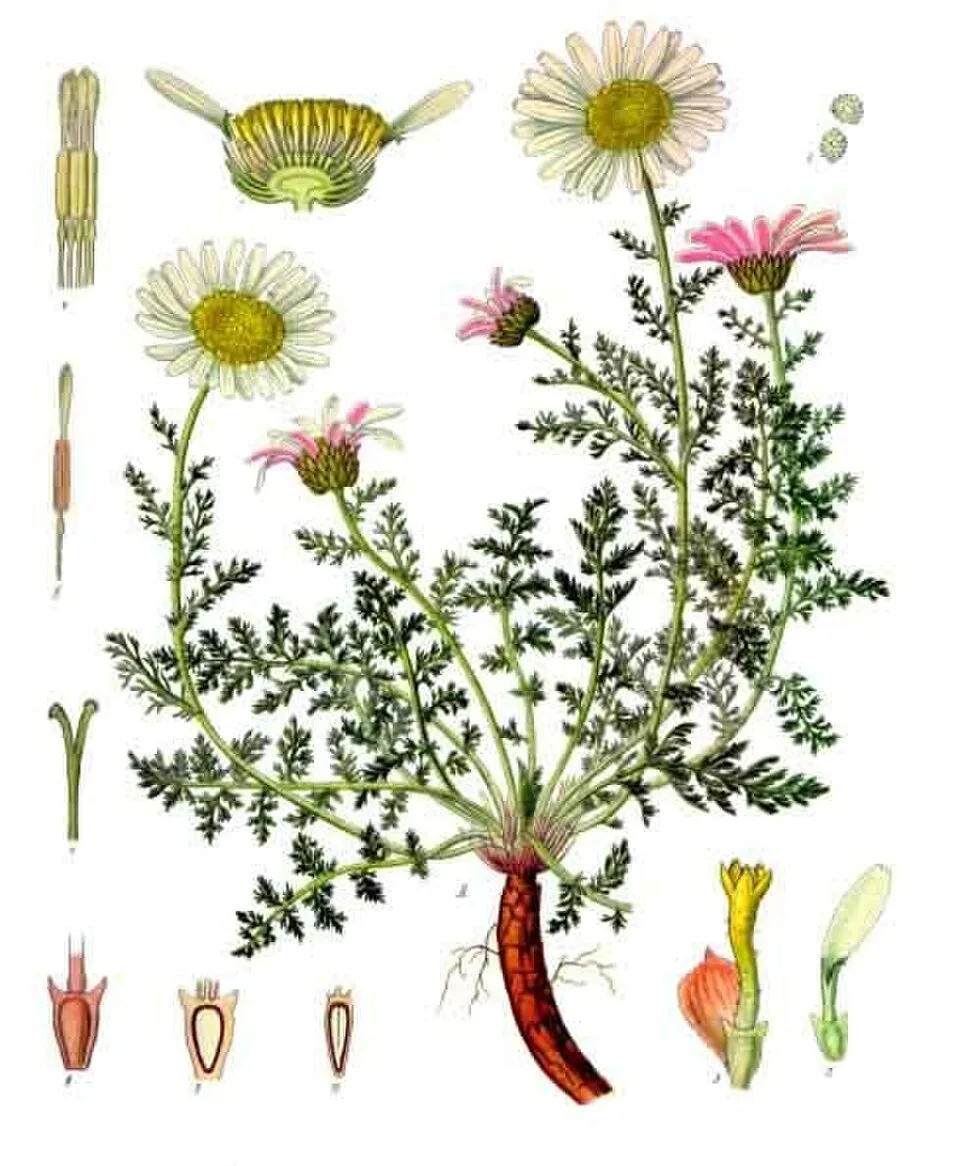
Akarkara, scientifically designated as Anacyclus pyrethrum, is a resilient perennial herbaceous plant belonging to the Asteraceae family. Commonly known as Pellitory root or Spanish Chamomile, this species is indigenous to the arid and semi-arid landscapes of North Africa, flourishing particularly in the Atlas Mountains of Morocco and Algeria, and extending its natural range to parts of the Mediterranean basin and India. Its morphology is characterized by a prostrate growth habit, forming dense, fern-like rosettes of pinnatisect leaves that exhibit a delicate, dark green texture.
The plant produces striking, daisy-like flowers during spring and summer, featuring bright yellow disc florets encircled by white or purplish-white ray florets, which are highly attractive to pollinators. The most medicinally valued part of Anacyclus pyrethrum is its root—a thick, conical to cylindrical structure known for its distinctive acrid and tingling taste. This sensation is directly linked to its unique phytochemical composition, notably N-isobutylamides.
Historical records underscore Akarkara's profound significance in ancient medicinal systems; Unani masters like Avicenna extensively documented its applications, while in Ayurveda, it is revered as a 'Rasayana,' a rejuvenative herb supporting nervous and reproductive health. Its ability to thrive in harsh environments, coupled with its rich ethnobotanical history, has embedded it deeply within traditional practices, not only for its therapeutic properties but also as a stimulant and spice. Modern scientific inquiry increasingly validates these traditional uses, identifying Akarkara's potential as an anti-inflammatory, analgesic, immunomodulatory, and aphrodisiac agent, with its primary bioactive compounds interacting with receptors such as TRPV1 to exert their pharmacological effects.
Trusted Scientific References
1. Authoritative external sources for Anacyclus pyrethrum
1.1 Wikipedia — Anacyclus pyrethrum
1.2 Kew POWO (Plants of the World Online)
1.3 PubMed — peer-reviewed research
1.4 NCBI Taxonomy Browser
1.5 GBIF — Global Biodiversity
1.1.Akarkara — Notable Characteristics
- ✓Potent Aphrodisiac Properties — Potent Aphrodisiac Properties
- ✓Natural Analgesic and — Natural Analgesic and Pain Reliever
- ✓Significant Anti — inflammatory Action
- ✓Traditional Sialagogue Effect — Traditional Sialagogue Effect for Oral Health
- ✓Supports Nervous System — Supports Nervous System Function
- ✓Immune System Modulating — Immune System Modulating Agent
- ✓Rich in Bioactive N — Isobutylamides
- ✓Key Herb in — Key Herb in Ayurveda and Unani Medicine
- ✓Adaptable to Arid — Adaptable to Arid Climates
- ✓Distinctive Acrid, Tingling — Distinctive Acrid, Tingling Root Taste
1.2.Akarkara — Concise Overview
- ✓Akarkara (Anacyclus pyrethrum) is a potent perennial herb from the Asteraceae family, valued for its root.
- ✓It is a cornerstone in traditional Unani and Ayurvedic medicine, known as Pellitory root.
- ✓Rich in N-isobutylamides like pellitorine, it causes a distinctive tingling sensation.
- ✓Benefits include aphrodisiac, analgesic, anti-inflammatory, and immunomodulatory effects.
- ✓Traditionally used for nerve support, dental health, and as a rejuvenative tonic.
- ✓Requires careful dosage and professional consultation due to its strong pharmacological actions.
2.Akarkara — Scientific Identity
3.Akarkara — Vital Statistics
4.Akarkara — Botanical Features
5.Akarkara — Ecological Habitat
6.Akarkara — Traditional Uses
7.Akarkara — Phytochemistry
- ✓Pyrethrin — A group of six naturally occurring insecticides with potent insecticidal activity, also contributing to some of the plant's medicinal effects.
- ✓Anacyclin — A bioactive compound believed to be responsible for the tingling and numbing sensation experienced when chewing the root, and contributing to its analgesic properties.
- ✓Heliangolide — A class of sesquiterpene lactones known for their anti-inflammatory and potential cytotoxic activities.
- ✓Chamazulene — A compound with known anti-inflammatory and antispasmodic properties, often found in medicinal plants.
- ✓Inulin — A type of soluble fiber that acts as a prebiotic, supporting gut health and digestion.
- ✓Triterpenes — A diverse group of organic compounds with various pharmacological activities, including anti-inflammatory and antioxidant effects.
- ✓Flavonoids — Plant pigments with strong antioxidant properties, contributing to cellular protection and overall health.
- ✓Essential Oils — Aromatic compounds that may possess antimicrobial, anti-inflammatory, and analgesic properties.
8.Akarkara — Scientific Evidence
- ✓Aphrodisiac Properties — Akarkara is traditionally renowned for its aphrodisiac qualities, believed to enhance libido and sexual performance in both men and women. It is thought to work by stimulating blood circulation to the reproductive organs and potentially influencing hormone levels, contributing to improved sexual vitality and desire.
- ✓Neurological Support — This herb has a long history of use in Ayurvedic medicine for supporting brain health and cognitive function. It is believed to possess neuroprotective properties, potentially aiding in conditions like memory loss, lack of concentration, and even offering support in managing neurological disorders by improving nerve signal transmission and reducing oxidative stress in the brain.
- ✓Pain Relief (Analgesic) — Akarkara exhibits significant analgesic properties, making it effective in alleviating various types of pain. It is commonly used to soothe toothaches, headaches, and rheumatic pains. The active compounds are thought to interact with pain pathways, providing a natural anesthetic effect and reducing inflammation associated with pain.
- ✓Anti-inflammatory Action — The plant contains compounds that exhibit potent anti-inflammatory effects. This makes it beneficial for reducing swelling and inflammation in conditions such as arthritis, joint pain, and other inflammatory disorders. By inhibiting inflammatory mediators, it helps to calm the body's inflammatory response.
- ✓Oral Health Improvement — Traditionally, Akarkara has been used to address various oral health issues. Chewing on the root is believed to stimulate saliva production, cleanse the mouth, and alleviate toothaches, gum inflammation, and bad breath. Its antimicrobial properties may also help in combating oral infections.
- ✓Digestive Aid — Akarkara can act as a digestive stimulant, helping to improve appetite and ease digestive discomfort. It is thought to enhance the secretion of digestive juices, promoting better nutrient absorption and alleviating symptoms like indigestion, bloating, and gas.
- ✓Immune System Modulation — Some research suggests that Akarkara may possess immunomodulatory effects, helping to regulate and strengthen the immune system. This can lead to improved resistance against infections and diseases, contributing to overall well-being.
- ✓Respiratory Health Support — In traditional practices, Akarkara has been used to address respiratory ailments like coughs and colds. Its properties are believed to help in clearing congestion, soothing sore throats, and promoting easier breathing, potentially due to its expectorant and anti-inflammatory actions.
- ✓Antioxidant Properties — The herb is rich in antioxidants, which help to combat free radical damage in the body. This protective action is crucial in preventing cellular damage, slowing down the aging process, and reducing the risk of chronic diseases associated with oxidative stress.
- ✓Skin Health Benefits — When applied topically or consumed, Akarkara may contribute to healthier skin. Its anti-inflammatory and antimicrobial properties can help in managing skin conditions like acne, minor wounds, and infections, promoting clearer and healthier skin.
- ✓Rheumatism and Arthritis Relief — Due to its potent anti-inflammatory and analgesic properties, Akarkara is a valuable remedy for managing the pain and inflammation associated with rheumatism and arthritis. It helps to reduce joint swelling and alleviate discomfort, improving mobility.
- ✓Stimulant and Tonic Effects — Akarkara is often considered a stimulant and tonic, providing a general boost to the body's vitality. It can help combat fatigue and weakness, promoting a sense of energy and well-being.
- ✓Antimicrobial Activity — Studies have indicated that Akarkara possesses antimicrobial and antifungal properties, making it effective against a range of pathogens. This can be beneficial in preventing and treating infections, both internally and externally.
- ✓Salivation Stimulation — A notable effect of Akarkara is its ability to stimulate salivation, which is beneficial for oral hygiene and can aid in the initial stages of digestion. This property is particularly utilized in traditional remedies for dry mouth and oral discomfort.
8.1.Akarkara — Health Applications
9.Akarkara — Safety & Side Effects
9.1.Akarkara — Caution Notes
- ✓Consuming Akarkara can lead to certain side effects, particularly if taken in excessive amounts or by sensitive individuals.
- ✓Common reactions include a tingling or burning sensation in the mouth and throat, excessive salivation, and potential gastrointestinal upset such as nausea or stomach discomfort.
- ✓Allergic reactions are also possible.
9.2.Akarkara — Clinical Safety Notes
- ✓Akarkara is generally considered safe when used in appropriate medicinal doses and for short durations.
- ✓However, pregnant or breastfeeding women, and individuals with known allergies to plants in the Asteraceae family should avoid its use.
- ✓It is always advisable to consult with a qualified healthcare professional before using Akarkara, especially if you have pre-existing medical conditions or are taking other medications.
10.Akarkara — Preparation Methods
- ✓Decoction — The dried Akarkara root is commonly prepared as a decoction by boiling it in water, which is then strained and consumed for systemic effects.
- ✓Powder Form — Dried roots are ground into a fine powder, often mixed with honey, ghee, or warm water, for internal use as a general tonic or specific remedy.
- ✓Tincture — An alcoholic extract of Akarkara root provides a concentrated form, allowing for precise dosing and extended shelf life.
- ✓Topical Paste — Powdered root can be mixed with water, oil, or honey to form a paste for external application, particularly for localized pain or inflammation.
- ✓Oral Rinse/Gargle — A diluted decoction or tincture can be used as a mouthwash or gargle to alleviate toothaches, gum inflammation, and other oral discomforts.
- ✓Infusion — While less common for roots, finely chopped Akarkara root can be steeped in hot water for a shorter period to make an infusion.
- ✓Modern Formulations — Standardized extracts are available in capsules or tablets, offering convenient and consistent dosing for medicinal purposes.
11.Akarkara — Garden Cultivation
- ✓Climate — Akarkara thrives in warm, arid to semi-arid climates, requiring ample sunlight and tolerating drought conditions once established.
- ✓Soil Requirements — Prefers well-drained, sandy-loam to loamy soils with a neutral to slightly alkaline pH range of 6.0 to 7.5.
- ✓Propagation — Primarily propagated by seeds, which can be sown directly, or via root cuttings for faster establishment and genetic consistency.
- ✓Sowing Time — Seeds are best sown in early spring after the last frost, or started indoors in late winter for transplanting.
- ✓Watering — Requires moderate watering during its initial growth phase; mature plants are drought-tolerant and prefer drier conditions.
- ✓Sunlight Exposure — Demands full sun exposure (at least 6-8 hours daily) for optimal growth and the development of potent active compounds.
- ✓Harvesting — Roots are typically harvested after one to two years of growth, usually in late autumn or early spring, when active compound concentration is highest.
- ✓Pest and Disease Management — Generally resistant to most pests and diseases; good air circulation and proper drainage help prevent fungal issues.
Reviewed by the Flora Medical Global Botanical Review Panel
Multi-disciplinary editorial group · Botany · Ethnobotany · Herbal-medicine literature
Who reviewed this: This page was checked by the Flora Medical Global Botanical Review Panel — an in-house editorial group of botany graduates, ethnobotany researchers, and horticulture practitioners who collectively maintain our 7,000+ plant encyclopedia. Meet the team.
Our 4-step verification process
1. Taxonomic verification
Scientific names and synonyms cross-checked against Kew POWO, World Flora Online, and The Plant List.
2. Phytochemical & medicinal cross-reference
Active compounds, traditional uses, and reported activities are cross-referenced with PubMed, USDA Dr. Duke's database, and peer-reviewed ethnobotanical literature.
3. Conservation & distribution check
Distribution, ecology, and conservation status confirmed against GBIF occurrence records and the IUCN Red List.
4. Editorial & safety review
Every entry passes an editorial pass for clarity, originality, and safety notices (toxicity, contraindications, dosage caveats) before publication.
Last reviewed:
Important medical disclaimer: This content is for educational and research purposes only. It is not medical advice and is not a substitute for consultation with a licensed healthcare provider. Do not use any herb to self-treat a medical condition without professional guidance.
Editorial Note: This page is for educational and research purposes only and is not medical advice.
Written by: Flora Medical Global Editorial Team
Reviewed by: Flora Medical Global Botanical Review Panel
Last Updated: June 16, 2026





Akarkara — Comments & Community Reviews
Rate this plant