
Medical Disclaimer: This content is for educational purposes only. It is not medical advice. Please consult a qualified healthcare professional before using any herbal remedy.
Safety Overview
1.Akebia Vine — Plant Snapshot
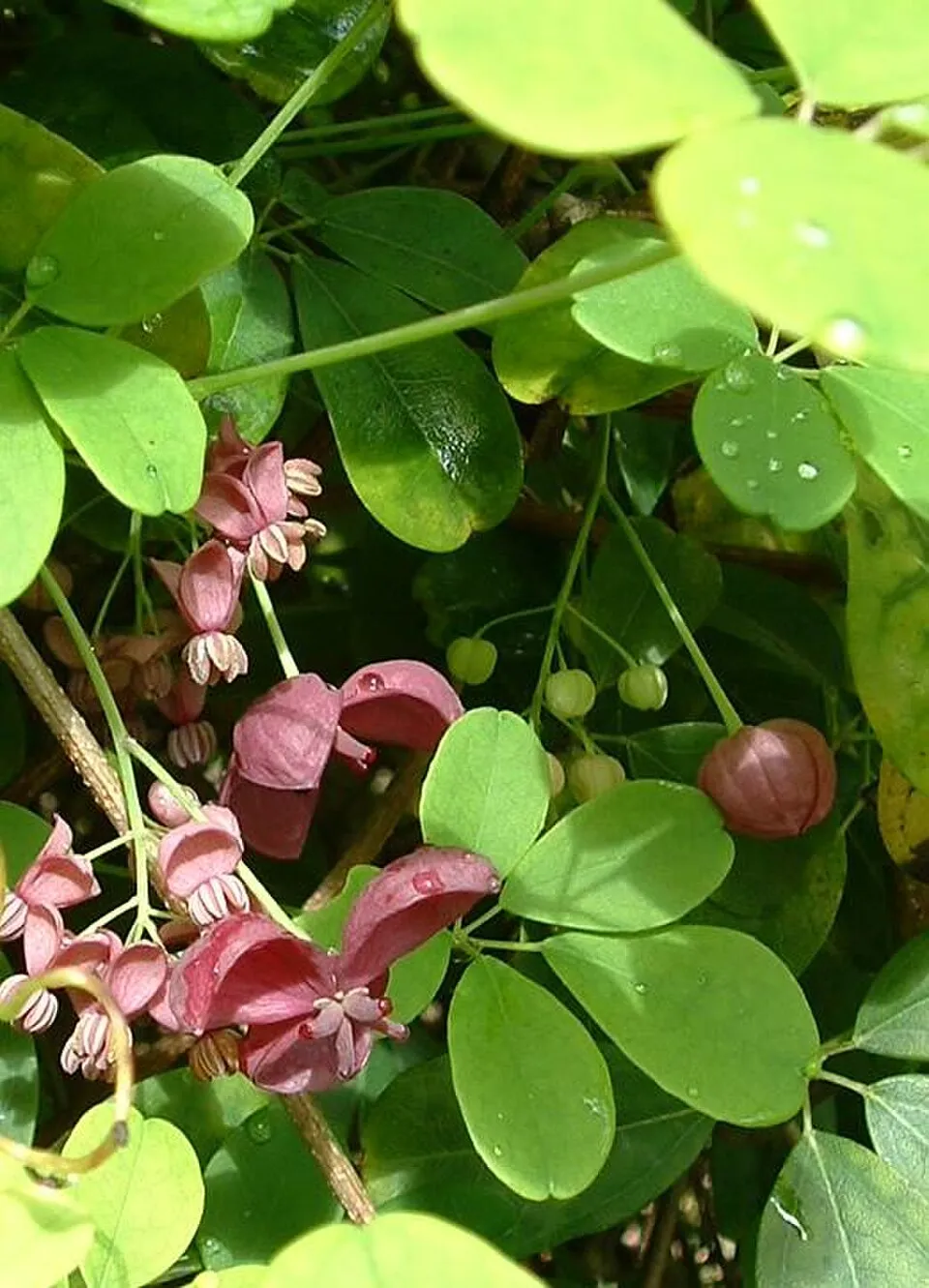
Akebia quinata, commonly recognized as Chocolate Vine or Five-leaf Akebia, is a captivating woody vine native to the temperate forests of East Asia, thriving across China, Korea, and Japan. This member of the Lardizabalaceae family presents as a deciduous to semi-evergreen climber, capable of ascending over 10 meters (33 feet). Its most distinctive feature is its palmate leaves, composed of five elliptical leaflets, which inspired its species epithet 'quinata', meaning 'divided into five'. The robust stems are typically greyish-brown and marked with lenticels, facilitating vital gas exchange.
In the spring, Akebia quinata adorns itself with clusters of fragrant, purplish-brown flowers, noted for their subtle, sweet aroma often likened to chocolate, hence one of its common names. These flowers are unisexual, with both male and female blooms present on the same vine. Successful fruiting is contingent upon cross-pollination between genetically distinct plants. Following pollination, the vine yields unique, elongated, sausage-shaped fruits, typically a striking purplish-violet, measuring approximately 5-10 cm (2-4 inches).
Upon ripening, these fruits naturally split open, revealing a translucent, jelly-like pulp embedded with numerous small black seeds. This sweet pulp is edible and a cherished seasonal delicacy in its native regions. Akebia quinata exhibits remarkable adaptability, flourishing in diverse habitats from forest edges and hillsides to stream banks, preferring well-drained soils ranging from sandy to clayey. Its tolerance for varying light conditions, from full sun to partial shade, makes it a favored ornamental plant for trellises, arbors, and as a ground cover, though its vigorous growth warrants careful management in non-native areas where it can become invasive.
Trusted Scientific References
1. Authoritative external sources for Akebia quinata
1.1 Wikipedia — Akebia quinata
1.2 Kew POWO (Plants of the World Online)
1.3 PubMed — peer-reviewed research
1.4 NCBI Taxonomy Browser
1.5 GBIF — Global Biodiversity
1.1.Akebia Vine — Key Features
- ✓Palmate Leaves — Distinctive leaves composed of five elliptical leaflets, giving it the 'quinata' epithet.
- ✓Chocolate — Scented Flowers — Fragrant, purplish-brown flowers emit a subtle, sweet aroma reminiscent of chocolate.
- ✓Edible Fruit — Produces unique, purplish-violet, sausage-shaped fruits with a sweet, translucent, jelly-like pulp.
- ✓Traditional Medicinal Use — Stems (Mu Tong) are highly valued in Traditional Chinese Medicine for diuretic and anti-inflammatory properties.
- ✓Climbing Growth Habit — A vigorous woody vine capable of reaching significant lengths, ideal for covering structures.
- ✓Cold Hardiness — Tolerant of cold temperatures, suitable for a wide range of temperate climates (USDA zones 4-9).
- ✓Adaptable to Habitats — Thrives in diverse conditions, from full sun to partial shade and various well-drained soil types.
- ✓Ornamental Value — Highly prized for its aesthetic appeal in gardens, providing attractive foliage and unique fruits.
- ✓Cross — Pollination Requirement — Requires two genetically distinct plants to produce fruit, essential for cultivators.
- ✓Invasive Potential — Can be an aggressive grower in non-native environments, necessitating careful management.
1.2.Akebia Vine — Snapshot Summary
- ✓Akebia quinata is an East Asian woody vine, known for its palmate leaves and chocolate-scented flowers.
- ✓Produces edible, sausage-shaped fruits with a sweet, jelly-like pulp.
- ✓Stems (Mu Tong) are traditionally used in TCM as a diuretic and anti-inflammatory agent.
- ✓Research suggests potential benefits for cholesterol regulation, kidney, liver, and cardiovascular health.
- ✓Cultivated ornamentally for its aesthetic appeal but can be invasive in some non-native environments.
- ✓Requires cross-pollination for fruit production and thrives in well-drained soils.
2.Akebia Vine — Systematic Position
3.Akebia Vine — Botanical Stats
4.Akebia Vine — Plant Morphology
5.Akebia Vine — Where It Grows
6.Akebia Vine — Historical Applications
7.Akebia Vine — Active Compounds
- ✓The fruit contains a sweet soft pulp resembling a white dragon fruit, eaten primarily in Japan as a seasonal delicacy.
- ✓The stem contains approximately 30% potassium salts "Salt (chemistry)") thus causing a diuretic action.[\[18\]](https://en.wikipedia.org/wiki/Akebiaquinata#citenote-18)\ [unreliable medical source? "Wikipedia:Identifying reliable sources (medicine)")\].
- ✓The fruits are sausage-shaped pods which contain edible pulp.[\[11\]](https://en.wikipedia.org/wiki/Akebiaquinata#citenote-Levy-Yamamori-11)[\[12\]](https://en.wikipedia.org/wiki/Akebiaquinata#citenote-12) The gelatinous placentation contains seeds surrounded with white pulp, that has a sweet flavor.\ [citation needed\]. Akebia quinata is a climbing evergreen vine that grows to 10m (30ft) or more in height and has palmately compound leaves with five elliptic or obovate leaflets that are notched at the tip.[\[10\]](https://en.wikipedia.org/wiki/Akebiaquinata#citenote-:0-10) The woody stems are greyish-brown with lenticels.[\[6\]](https://en.wikipedia.org/wiki/Akebiaquinata#citenote-:1-6).
8.Akebia Vine — Research Insights
- ✓Diuretic Action — The stems of Akebia quinata, known as Mu Tong in TCM, are traditionally used to promote urination, attributed to their high concentration of potassium salts.
- ✓Anti-inflammatory Effects — Akebia vine exhibits properties that help reduce inflammation, a traditional application supported by ongoing phytochemical research.
- ✓Cholesterol Regulation — Preliminary in-vitro studies suggest that compounds within Akebia quinata may contribute to lowering cholesterol levels.
- ✓Kidney Support — Historically utilized to regulate kidney function and address urinary tract discomforts, it is believed to help balance physiological chemicals.
- ✓Liver Health Enhancement — Components of Akebia quinata are thought to support liver function by assisting in the regulation of various metabolic processes.
- ✓Cardiovascular System Support — Regular consumption is linked to the regulation of chemicals vital for maintaining a healthy cardiovascular system.
- ✓Urinary Tract Infection Relief — Traditional Chinese Medicine employs Akebia stems for treating symptoms associated with urinary tract infections, promoting fluid clearance.
- ✓Lactation Promotion — In traditional practices, Akebia quinata has been used to address scanty lactation in nursing mothers, suggesting galactagogue properties.
- ✓Rheumatoid Arthritis Management — The fruit of Akebia is traditionally applied in TCM to alleviate symptoms of rheumatoid arthritis, focusing on reducing pain and inflammation.
- ✓Antioxidant Protection — Like many plant-based medicines, Akebia quinata likely contains compounds that offer antioxidant benefits, protecting cells from oxidative stress.
- ✓Antimicrobial Potential — Emerging research indicates possible antimicrobial activities, suggesting its utility in combating certain pathogenic microorganisms.
- ✓Immune System Modulation — Certain constituents may help modulate the immune response, contributing to overall health and resilience.
8.1.Akebia Vine — Conditions Traditionally Used For
9.Akebia Vine — Risk Profile
9.1.Akebia Vine — Reported Side Effects
- ✓Diuretic Overactivity — Excessive consumption of the stem (Mu Tong) can lead to significant fluid loss and electrolyte imbalance.
- ✓Gastrointestinal Upset — Some individuals may experience mild digestive disturbances, such as nausea or stomach discomfort.
- ✓Seed Irritation — Chewing the bitter seeds can cause throat irritation; it is generally advised to swallow them whole or discard them.
- ✓Allergic Reactions — As with any plant, sensitive individuals may develop allergic reactions, manifesting as skin rashes or respiratory issues.
- ✓Drug Interactions — May interact with diuretic medications, blood pressure drugs, or other medications due to its diuretic and cardiovascular effects.
- ✓Hypotension Risk — Due to its potential effect on blood pressure, individuals with low blood pressure should use it cautiously.
- ✓Invasive Tendencies — While not a direct health side effect, its invasive nature can disrupt local ecosystems and requires careful management.
9.2.Akebia Vine — Risk Assessment
- ✓Professional Consultation — Always consult a healthcare professional before using Akebia quinata, especially for medicinal purposes, to ensure safety and appropriate dosage.
- ✓Pregnancy and Lactation — Avoid use during pregnancy and lactation due to insufficient safety data and potential effects on fluid balance.
- ✓Kidney Conditions — Individuals with pre-existing kidney conditions, particularly severe renal impairment, should exercise extreme caution or avoid use due to its potent diuretic action.
- ✓Electrolyte Monitoring — Prolonged or high-dose use may require monitoring of electrolyte levels to prevent imbalances, especially potassium.
- ✓Children and Elderly — Use in children and the elderly should be approached with caution and under medical supervision due to their increased sensitivity.
- ✓Dosage Adherence — Strictly adhere to recommended dosages, particularly for traditional preparations of the stem, to minimize adverse effects.
- ✓Authenticity Verification — Ensure the authenticity of the plant material, as misidentification or adulteration can lead to unintended health consequences.
10.Akebia Vine — How to Use
- ✓Traditional Decoctions — Dried stems (Mu Tong) are commonly prepared as a decoction by boiling in water for traditional diuretic and anti-inflammatory uses.
- ✓Edible Fruit Pulp — The translucent, sweet pulp of the ripe fruit is eaten fresh as a seasonal delicacy, often after it naturally splits open.
- ✓Culinary Rind Preparation — The slightly bitter fruit rind can be cooked as a vegetable, often stir-fried or stuffed with meat or mushrooms.
- ✓Beverage Infusions — Dried leaves or small pieces of stem can be steeped to create a mild herbal tea, offering a subtle flavor and potential benefits.
- ✓Processed Fruit Products — The fruit pulp can be processed into jams, jellies, smoothies, or incorporated into desserts like ice cream.
- ✓Topical Applications — Extracts or poultices from the leaves or stems are occasionally used externally for minor skin irritations in traditional folk medicine.
- ✓Ornamental Landscaping — Widely planted as an ornamental vine to cover walls, fences, pergolas, or as an erosion-controlling ground cover.
- ✓Basketry Material — The flexible stems have been traditionally used in some cultures for weaving baskets and other craft items.
11.Akebia Vine — Propagation & Care
- ✓Soil Preference — Thrives in well-drained soils, adaptable to sandy, loamy, or clayey compositions, but dislikes overly wet conditions.
- ✓Light Requirements — Prefers full sun to partial shade; optimal flowering and fruiting occur with ample sunlight.
- ✓Watering Regimen — Requires regular watering, especially during dry spells, but demonstrates good drought resistance once established.
- ✓Hardiness Zones — Suitable for USDA hardiness zones 4-9, tolerating temperatures down to -20°C (-4°F).
- ✓Cross-Pollination — To ensure fruit production, at least two genetically distinct Akebia quinata plants are necessary for successful cross-pollination.
- ✓Support Structure — As a vigorous climber, it benefits greatly from sturdy support structures like trellises, arbors, fences, or as a ground cover.
- ✓Pruning Practice — Prune after flowering to manage growth, encourage branching, and prevent it from becoming overly dense or invasive.
- ✓Invasive Potential — Be aware of its invasive tendencies in certain regions (e.g., parts of North America) and manage its spread diligently.
Reviewed by the Flora Medical Global Botanical Review Panel
Multi-disciplinary editorial group · Botany · Ethnobotany · Herbal-medicine literature
Who reviewed this: This page was checked by the Flora Medical Global Botanical Review Panel — an in-house editorial group of botany graduates, ethnobotany researchers, and horticulture practitioners who collectively maintain our 7,000+ plant encyclopedia. Meet the team.
Our 4-step verification process
1. Taxonomic verification
Scientific names and synonyms cross-checked against Kew POWO, World Flora Online, and The Plant List.
2. Phytochemical & medicinal cross-reference
Active compounds, traditional uses, and reported activities are cross-referenced with PubMed, USDA Dr. Duke's database, and peer-reviewed ethnobotanical literature.
3. Conservation & distribution check
Distribution, ecology, and conservation status confirmed against GBIF occurrence records and the IUCN Red List.
4. Editorial & safety review
Every entry passes an editorial pass for clarity, originality, and safety notices (toxicity, contraindications, dosage caveats) before publication.
Last reviewed:
Important medical disclaimer: This content is for educational and research purposes only. It is not medical advice and is not a substitute for consultation with a licensed healthcare provider. Do not use any herb to self-treat a medical condition without professional guidance.
Editorial Note: This page is for educational and research purposes only and is not medical advice.
Written by: Flora Medical Global Editorial Team
Reviewed by: Flora Medical Global Botanical Review Panel
Last Updated: June 16, 2026





Akebia Vine — Comments & Community Reviews
Rate this plant