
Medical Disclaimer: This content is for educational purposes only. It is not medical advice. Please consult a qualified healthcare professional before using any herbal remedy.
Safety Overview
1.Albizia — Overview
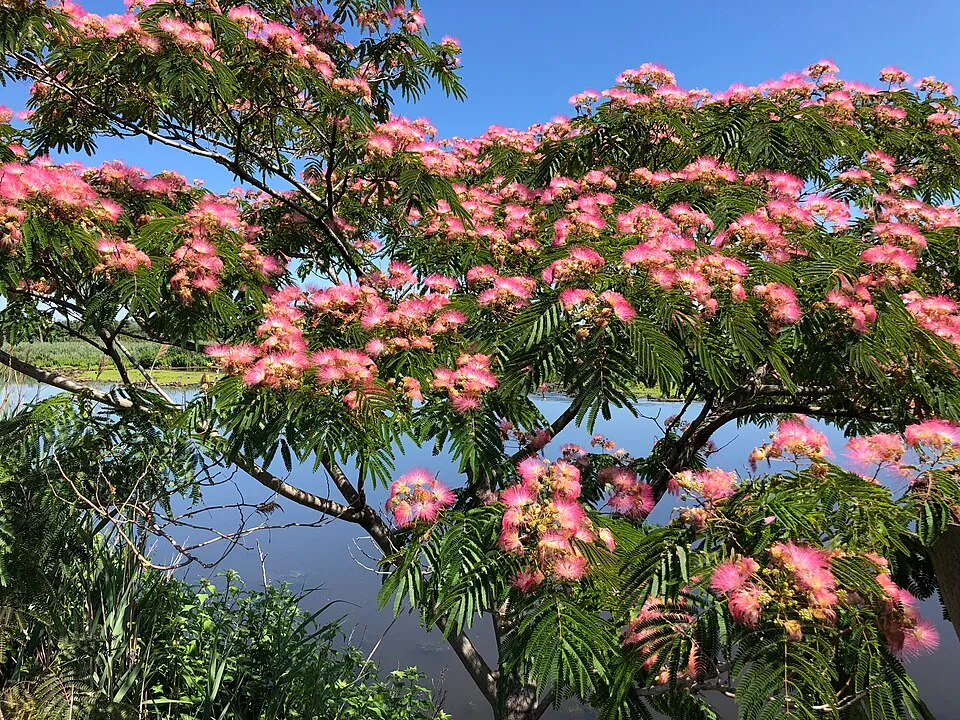
Albizia julibrissin, widely recognized as the Persian silk tree or mimosa tree, is an elegant deciduous tree belonging to the Fabaceae family, a diverse group of flowering plants. This species is indigenous to a vast geographical expanse across Asia, stretching from Iran in the west to Japan in the east, and has been extensively cultivated worldwide for its exceptional ornamental value and historical medicinal applications. Characteristically, the tree can attain impressive heights of up to 15 meters, developing a broad, umbrella-shaped canopy and a trunk that may reach up to 1 meter in diameter. The bark presents a smooth, grayish texture, while its distinctive leaves are delicate, bipinnately compound, and fern-like in appearance. These leaves exhibit a fascinating nyctinastic behavior, folding inward at dusk or in response to rainfall.
The tree's most captivating feature is undoubtedly its profusion of fluffy, pink, brush-like flowers, which bloom from late spring through late summer. These fragrant blossoms emit a sweet aroma, actively attracting a variety of pollinators. Following successful pollination, the flowers give way to flat, papery seed pods that encase numerous seeds. Albizia julibrissin demonstrates remarkable adaptability, thriving in diverse climates from temperate to subtropical regions. It is frequently encountered in open woodlands, along forest edges, and adorning roadsides.
While its rapid growth and aesthetic appeal make it a favored choice for landscaping globally, its prolific seed production and capacity to colonize disturbed areas have also led to its classification as an invasive species in certain regions. Historically, the tree holds significant importance in Traditional Chinese Medicine (TCM), where its bark, known as He Huan Pi, and flowers, He Huan Hua, are highly esteemed for their calming effects and their ability to alleviate symptoms of emotional distress and depression. The genus name 'Albizia' honors Filippo degli Albizzi, an 18th-century Italian naturalist who introduced the species to Europe, while its Persian name 'gul-i abrisham' beautifully translates to 'silk flower', a fitting tribute to its unique silky blossoms. Modern pharmacological investigations continue to explore the plant's rich phytochemistry, highlighting its triterpenoid saponins, flavonoids, and polysaccharides for their potential anxiolytic, antidepressant, and antioxidant properties. Trusted Scientific References Authoritative external sources f ...[CURRENT TEXT EXISTS: 2675 chars]
1.1.Albizia — Key Features
- ✓Deciduous ornamental tree with fern — like leaves.
- ✓Exhibits nyctinastic leaf — Exhibits nyctinastic leaf movement, folding at night.
- ✓Produces distinctive fluffy, pink, brush — like, fragrant flowers.
- ✓Native to a — Native to a wide range of regions across Asia.
- ✓Highly valued in — Highly valued in Traditional Chinese Medicine for emotional well-being.
- ✓Contains bioactive compounds — Contains bioactive compounds like saponins and flavonoids.
- ✓Known for its — Known for its anxiolytic, antidepressant, and sedative properties.
- ✓Also referred to — Also referred to as the "Persian Silk Tree" or "Mimosa Tree".
- ✓Fast — growing and adaptable, but can be considered invasive in some areas.
- ✓Used for both — Used for both internal calming effects and external wound healing.
1.2.Albizia — In Brief
- ✓Known as the "Happiness Herb" in TCM for mood and sleep.
- ✓Medicinal parts are the bark (He Huan Pi) and flowers (He Huan Hua).
- ✓Rich in triterpenoid saponins and flavonoids with anxiolytic potential.
- ✓Traditionally used for anxiety, depression, insomnia, and emotional distress.
- ✓Modern research explores its antidepressant, sedative, and antioxidant properties.
- ✓Contraindicated in pregnancy, breastfeeding, and caution advised with sedatives and before surgery.
2.Albizia — Scientific Profile
3.Albizia — Quick Facts
4.Albizia — Morphological Account
5.Albizia — Where It Grows
6.Albizia — Historical Applications
7.Albizia — Secondary Metabolites
- ✓Triterpenoid Saponins — Key compounds include Julibrosides (e.g., J1, J2, J28), Albiziagenin, and others, which are primarily responsible for the plant's sedative, anxiolytic, and some cytotoxic activities.
- ✓Flavonoids — Such as Quercetin, Kaempferol, and their various glycosides, contributing significantly to the plant's antioxidant, anti-inflammatory, and neuroprotective pharmacological profile.
- ✓Polysaccharides — Found in both bark and flowers, these complex carbohydrates are being investigated for their potential immunomodulatory and anti-tumor effects.
- ✓Phenolic Compounds — Including a range of phenolic acids and their glycosides, which contribute substantially to the plant's potent antioxidant and free radical scavenging capabilities.
- ✓Alkaloids — While not the most dominant class, some minor alkaloidal constituents may be present, potentially contributing to the overall therapeutic actions of the plant.
- ✓Tannins — These astringent compounds are responsible for some of the traditional topical uses for wound healing and tissue toning.
- ✓Glycosides — Various types, including specific flavonol glycosides, have been isolated from the flowers and bark, with some demonstrating notable sedative properties.
- ✓Steroids — Minor steroidal compounds are also found within Albizia julibrissin, potentially influencing its biological activities, though their precise roles are still under investigation.
8.Albizia — What Research Suggests
- ✓Anxiolytic Properties — Traditionally used to calm the spirit and alleviate anxiety, modern research suggests that compounds like saponins and flavonoids may interact with neurotransmitter systems to promote relaxation.
- ✓Antidepressant Effects — Revered in Traditional Chinese Medicine (TCM) as "the herb for collective happiness" (He Huan Hua), both the bark and flowers are utilized to uplift mood and mitigate symptoms of depression.
- ✓Insomnia Relief — The sedative properties inherent in Albizia julibrissin are traditionally employed to facilitate restful sleep and address various forms of sleep disturbances, promoting a sense of tranquility.
- ✓Anti-inflammatory Action — Specific constituents, including various flavonoids and triterpenoid saponins, exhibit anti-inflammatory effects that may be beneficial in managing inflammatory conditions throughout the body.
- ✓Antioxidant Support — Rich in a spectrum of antioxidant compounds, Albizia helps to neutralize harmful free radicals, thereby combating oxidative stress and protecting cellular integrity.
- ✓Cognitive Enhancement — Traditional practices suggest benefits for memory and mental clarity, potentially linked to its neuroprotective attributes and its overall mood-regulating and stress-reducing effects.
- ✓Wound Healing — Topically, the bark has been historically applied for its astringent and healing properties, aiding in the recovery of skin infections, boils, abscesses, and minor superficial injuries.
- ✓Bone and Joint Support — In some traditional medicinal systems, preparations from Albizia are applied externally for issues related to bone fractures and sprains, indicating potential for supporting tissue repair and recovery.
- ✓Stress Reduction — This plant is highly regarded for its ability to help individuals manage both the physiological and psychological impacts of stress, fostering a profound sense of inner calm and emotional well-being.
- ✓Cardiovascular Health — Preliminary scientific investigations suggest a potential role in supporting cardiovascular health, possibly through mechanisms involving improved circulation and reduction of systemic inflammation.
8.1.Albizia — Therapeutic Indications
9.Albizia — Adverse Effects
9.1.Albizia — Reported Side Effects
- ✓Drowsiness — Albizia julibrissin may induce significant sleepiness or drowsiness, particularly when taken in higher doses or in combination with other sedative substances.
- ✓Gastrointestinal Upset — Some individuals may experience mild adverse effects such as stomach discomfort, nausea, vomiting, or diarrhea upon oral consumption.
- ✓Allergic Reactions — Although uncommon, sensitive individuals may develop allergic responses, including skin rashes, itching, or other hypersensitivity reactions.
- ✓Central Nervous System Depression — There is a potential for Albizia to potentiate the effects of central nervous system depressants, including anesthesia and certain medications.
- ✓Insufficient Reliable Information — A lack of extensive human clinical trials means that the full spectrum of potential side effects and their frequencies is not yet comprehensively understood.
9.2.Albizia — Risk Assessment
- ✓Pregnancy and Breastfeeding — Use of Albizia julibrissin is strongly advised against during pregnancy and breastfeeding due to the absence of sufficient reliable safety data.
- ✓Pre-Surgery Discontinuation — It is critical to discontinue the use of Albizia at least two weeks prior to any scheduled surgical procedure, owing to its potential interactions with anesthesia and other medications affecting the central nervous system.
- ✓Sedative Interactions — Exercise extreme caution and seek medical supervision if combining Albizia with sedative medications, as it may significantly amplify their sedative effects, leading to excessive drowsiness.
- ✓Children and Elderly — Consultation with a qualified healthcare professional is imperative before administering Albizia to children or elderly individuals, given the limited specific safety data for these populations.
- ✓Liver or Kidney Conditions — Individuals with pre-existing liver or kidney impairments should approach the use of Albizia with caution and under the guidance of a medical practitioner.
- ✓Dosage Importance — Strict adherence to recommended dosages is crucial, as exceeding appropriate levels may increase the risk of adverse effects and diminish its therapeutic safety profile.
10.Albizia — Application Forms
- ✓Decoctions — The bark (He Huan Pi) is commonly prepared as a decoction, where it is simmered in water for an extended period to effectively extract its active medicinal compounds for internal consumption.
- ✓Infusions — The delicate flowers (He Huan Hua) are frequently steeped in hot water to create a calming and aromatic tea, widely used to alleviate anxiety, promote relaxation, and support restful sleep.
- ✓Tinctures — Concentrated alcoholic extracts of both the bark or flowers can be meticulously prepared, offering a potent and convenient form for internal dosing and extended shelf life.
- ✓Topical Compresses — Poultices or compresses made from the prepared bark can be applied externally to the skin to aid in the healing of various skin infections, boils, abscesses, or minor sprains.
- ✓Powdered Forms — Dried and finely powdered bark or flowers can be encapsulated for easy consumption or incorporated into various herbal formulations and blends.
- ✓Syrups and Elixirs — Sweetened liquid preparations can be crafted, particularly from the flowers, to enhance palatability, making them suitable for sensitive individuals or children when appropriate.
- ✓External Washes — Diluted decoctions of the bark can be used as external washes for skin conditions, leveraging its traditional astringent and antiseptic properties.
11.Albizia — Growth Requirements
- ✓Climate Preference — Albizia julibrissin flourishes in temperate to subtropical climates, demonstrating good tolerance to both heat and drought conditions once well-established.
- ✓Soil Requirements — It prefers well-drained soil and is adaptable to a wide range of soil types, including sandy, loamy, or clayey compositions, but it is intolerant of waterlogged conditions.
- ✓Light Exposure — For optimal growth, prolific flowering, and robust health, the Persian silk tree requires full sun exposure throughout the day.
- ✓Propagation — The primary method of propagation is via seeds, which typically benefit from a pre-treatment like scarification or stratification to enhance germination rates.
- ✓Watering — Young trees necessitate consistent, regular watering to establish a strong root system; mature trees are notably drought-tolerant but will benefit from occasional deep watering during extended dry periods.
- ✓Pruning — Minimal pruning is generally required, focusing mainly on shaping the canopy, removing any dead or damaged branches, or managing the overall size of the tree for aesthetic or space considerations.
- ✓Pest and Disease Management — While generally a resilient species, it can be susceptible to mimosa vascular wilt in certain regions; proper site selection, good air circulation, and attentive care are crucial for prevention.
Reviewed by the Flora Medical Global Botanical Review Panel
Multi-disciplinary editorial group · Botany · Ethnobotany · Herbal-medicine literature
Who reviewed this: This page was checked by the Flora Medical Global Botanical Review Panel — an in-house editorial group of botany graduates, ethnobotany researchers, and horticulture practitioners who collectively maintain our 7,000+ plant encyclopedia. Meet the team.
Our 4-step verification process
1. Taxonomic verification
Scientific names and synonyms cross-checked against Kew POWO, World Flora Online, and The Plant List.
2. Phytochemical & medicinal cross-reference
Active compounds, traditional uses, and reported activities are cross-referenced with PubMed, USDA Dr. Duke's database, and peer-reviewed ethnobotanical literature.
3. Conservation & distribution check
Distribution, ecology, and conservation status confirmed against GBIF occurrence records and the IUCN Red List.
4. Editorial & safety review
Every entry passes an editorial pass for clarity, originality, and safety notices (toxicity, contraindications, dosage caveats) before publication.
Last reviewed:
Important medical disclaimer: This content is for educational and research purposes only. It is not medical advice and is not a substitute for consultation with a licensed healthcare provider. Do not use any herb to self-treat a medical condition without professional guidance.
Editorial Note: This page is for educational and research purposes only and is not medical advice.
Written by: Flora Medical Global Editorial Team
Reviewed by: Flora Medical Global Botanical Review Panel
Last Updated: June 16, 2026





Albizia — Comments & Community Reviews
Rate this plant