


Medical Disclaimer: This content is for educational purposes only. It is not medical advice. Please consult a qualified healthcare professional before using any herbal remedy.
Safety Overview
1.Allium Garden — At a Glance
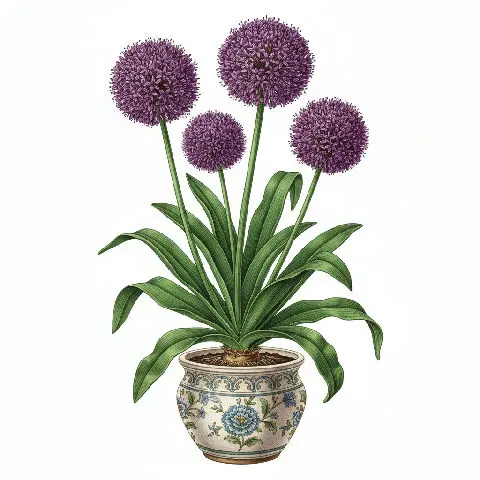
Allium giganteum, often referred to as Giant Allium or Giant Ornamental Onion, is a striking perennial bulbous plant belonging to the Amaryllidaceae family, renowned for its majestic stature and impressive spherical flower heads. Native to the mountainous regions of central and southwestern Asia, including Iran, Afghanistan, and the Himalayas, this species thrives in dry, rocky grasslands and open woodlands, typically found at elevations between 1,000 and 2,500 meters. Its historical significance primarily lies in its ornamental appeal, having been cultivated for centuries in its native habitat for its dramatic visual impact in gardens.
Botanically, Allium giganteum is characterized by a large, tunicated bulb, which produces basal, strap-like, gray-green leaves that often senesce (die back) before the plant flowers. The most distinctive feature is its towering, rigid, leafless scape, which can reach an impressive height of 1.2 to 1.8 meters (4 to 6 feet). This robust stem culminates in a dense, globose umbel, often 15-20 cm (6-8 inches) in diameter, composed of hundreds of tiny, star-shaped florets, typically vibrant purple or magenta.
These spectacular inflorescences emerge in late spring to early summer, attracting a variety of pollinators, particularly bees and butterflies. While not extensively documented in traditional medicinal systems like Ayurveda or TCM for specific applications, unlike its relatives Allium sativum (garlic) or Allium cepa (onion), Allium giganteum shares the genus's characteristic sulfur-containing compounds, flavonoids, and saponins, which warrant modern pharmacological investigation into its specific properties. The plant exhibits a distinct onion aroma when its leaves are crushed.
Trusted Scientific References
1. Authoritative external sources for Allium giganteum
1.1 Wikipedia — Allium giganteum
1.2 Kew POWO (Plants of the World Online)
1.3 PubMed — peer-reviewed research
1.4 NCBI Taxonomy Browser
1.5 GBIF — Global Biodiversity
1.6Allium Garden should be interpreted through verified botanical identity, practical care, and responsible safety language. This recovery note adds the missing context needed for a complete profile: match light to the plant's habit, use well-drained soil, water according to season, and avoid unsupported medicinal or edible claims. For publishing, the plant can be presented as a source-backed garden plant with clear care guidance, common problem diagnosis, and conservative safety wording.
1.1.Allium Garden — Distinguishing Points
- ✓Majestic Giant Ornamental — Majestic Giant Ornamental Onion with impressive stature.
- ✓Features large, dense, — Features large, dense, spherical purple flower heads (umbels).
- ✓Blooms in late — Blooms in late spring to early summer on tall, rigid scapes (4-6 feet).
- ✓Native to Central — Native to Central and Southwestern Asia, including the Himalayas.
- ✓Belongs to the — Belongs to the Amaryllidaceae family, sharing characteristics with garlic and onion.
- ✓Contains organosulfur compounds, — Contains organosulfur compounds, flavonoids, and saponins, indicative of potential bioactivity.
- ✓Leaves are basal, strap — like, and emit an onion aroma when crushed.
- ✓Primarily cultivated for — Primarily cultivated for its ornamental value in gardens and as a cut flower.
- ✓Considered drought tolerant — Considered drought tolerant once established and prefers full sun.
- ✓All parts of — All parts of the plant are considered mildly toxic if ingested.
1.2.Allium Garden — Concise Overview
- ✓Allium giganteum is a majestic ornamental bulbous perennial known for its towering purple flower globes.
- ✓Native to Central and Southwestern Asia, it thrives in full sun and well-drained soil.
- ✓While not traditionally medicinal, it belongs to the Allium genus, rich in organosulfur compounds, flavonoids, and saponins.
- ✓These compounds suggest potential antioxidant, anti-inflammatory, and antimicrobial properties, warranting scientific investigation.
- ✓All parts of the plant are considered to have low severity poisonous characteristics and should not be ingested.
- ✓Primarily valued for its dramatic aesthetic appeal in gardens and as a cut flower.
2.Allium Garden — Nomenclature & Classification
3.Allium Garden — Vital Statistics
4.Allium Garden — Physical Description
5.Allium Garden — Origin & Spread
6.Allium Garden — Traditional Uses
7.Allium Garden — Key Phytochemicals
- ✓Organosulfur Compounds — The defining characteristic of the Allium genus, including alliin and its derivatives like allicin precursors, which are responsible for the distinctive aroma and many potential biological activities such as antimicrobial and antioxidant effects.
- ✓Flavonoids — Polyphenolic compounds like quercetin and kaempferol, found in various plant parts, contributing to antioxidant, anti-inflammatory, and potentially anticarcinogenic activities.
- ✓Saponins — Triterpenoid glycosides that may exhibit hypocholesterolemic, immunomodulatory, and antimicrobial properties, although their specific role in Allium giganteum needs further investigation.
- ✓Phenolic Acids — Compounds such as gallic acid and caffeic acid, which are known for their antioxidant capabilities and contribute to the plant's overall protective mechanisms.
- ✓Volatile Oils — A complex mixture of sulfur-containing compounds that give the plant its characteristic onion-like scent and are often associated with antimicrobial and insecticidal properties.
- ✓Steroidal Glycosides — Compounds structurally similar to saponins, with potential for various biological activities, including anti-inflammatory and cardiovascular effects.
- ✓Polysaccharides — Complex carbohydrates that can contribute to immunomodulatory effects and overall plant structural integrity.
- ✓Vitamins and Minerals — While not primary active constituents, the bulbs and leaves contain trace amounts of essential vitamins (e.g., Vitamin C) and minerals (e.g., potassium, selenium) typical of the Allium family.
8.Allium Garden — Pharmacological Findings
- ✓Antioxidant Properties — The presence of flavonoids and organosulfur compounds in Allium giganteum may contribute to its antioxidant capacity, helping to neutralize free radicals and reduce oxidative stress in the body.
- ✓Anti-inflammatory Potential — Certain sulfur compounds and phenolic acids found in the Allium genus are known for their anti-inflammatory effects, which could potentially be observed in Allium giganteum.
- ✓Antimicrobial Activity — While not specifically studied for Allium giganteum, related Allium species exhibit broad-spectrum antimicrobial properties against bacteria, fungi, and viruses, suggesting a similar potential for its extracts.
- ✓Cardiovascular Support (Investigational) — Organosulfur compounds, characteristic of the Allium genus, have been linked to cardiovascular benefits, such as supporting healthy blood pressure and cholesterol levels, warranting research into Allium giganteum.
- ✓Immune System Modulation — Flavonoids and saponins present in Allium species can help modulate immune responses, potentially enhancing the body's defense mechanisms.
- ✓Digestive Health (General Allium Effect) — Though not for direct consumption of Allium giganteum, related species are known to support gut health and digestion, a general characteristic of the genus that may be explored.
- ✓Potential Anticancer Activity — Preliminary research on Allium compounds in general indicates potential antiproliferative effects against various cancer cell lines, suggesting an area for future study of Allium giganteum constituents.
- ✓Detoxification Support — Sulfur compounds are crucial for various detoxification pathways in the liver, and the presence of these compounds in Allium giganteum could theoretically contribute to systemic detoxification processes.
- ✓Aromatherapy and Aesthetic Well-being — While not a direct medicinal benefit, the impressive visual presence of Giant Allium in gardens can contribute to mental well-being and stress reduction through horticultural therapy.
8.1.Allium Garden — Indications & Uses
9.Allium Garden — Cautions & Contraindications
9.1.Allium Garden — Side Effects & Warnings
- ✓Gastrointestinal Upset — Ingestion, particularly of the bulb, may lead to mild digestive discomfort, nausea, or vomiting due to the presence of sulfur compounds.
- ✓Allergic Reactions — Individuals sensitive to other Allium species (like garlic or onions) may experience allergic reactions, including skin irritation or respiratory symptoms, upon contact or ingestion.
- ✓Skin Irritation — Direct contact with the sap or crushed plant material may cause mild skin irritation or dermatitis in sensitive individuals.
- ✓Oral Discomfort — Consumption can lead to a burning sensation in the mouth or throat, similar to other potent Allium varieties.
- ✓Odor — Handling or consuming parts of the plant may impart a strong, lingering onion-like odor to the breath or skin.
- ✓Toxicity to Pets — Allium species, including Allium giganteum, are known to be toxic to cats, dogs, and other animals, potentially causing hemolytic anemia if ingested.
9.2.Allium Garden — Clinical Safety Notes
- ✓Ingestion Caution — All parts of Allium giganteum are considered to have low severity poisonous characteristics; ingestion is not recommended for humans or animals.
- ✓Pet Safety — Keep bulbs and plant material away from pets, especially dogs and cats, as consumption can lead to serious health issues.
- ✓Allergic Sensitivity — Individuals with known allergies to other Allium species should exercise caution when handling Allium giganteum.
- ✓Topical Contact — Wear gloves when handling bulbs or fresh plant material if you have sensitive skin or a history of contact dermatitis.
- ✓Pregnancy and Lactation — Due to insufficient data on human consumption and potential toxicity, pregnant or lactating individuals should avoid any internal use.
- ✓Children — Ensure children do not ingest any part of the plant; supervise them in gardens where Allium giganteum is grown.
- ✓Medicinal Use Disclaimer — Allium giganteum is primarily an ornamental plant; its medicinal applications are not traditionally established and require extensive scientific validation before any internal use can be considered.
10.Allium Garden — Preparation Methods
- ✓Ornamental Garden Display — Primarily cultivated for its dramatic aesthetic appeal in borders, rock gardens, and as a focal point in landscape designs due to its towering height and unique flower.
- ✓Cut Flowers — The long-lasting, spherical flower heads are highly prized for fresh and dried floral arrangements, adding architectural interest.
- ✓Pollinator Attraction — Planted to attract beneficial pollinators like bees and butterflies to gardens, supporting local ecosystems.
- ✓Botanical Research Material — Used in scientific studies to investigate its specific phytochemical profile and compare it with other medicinally recognized Allium species.
- ✓Educational Specimen — Valued in botanical gardens and educational settings for demonstrating plant morphology and the diversity within the Amaryllidaceae family.
- ✓Landscape Design Element — Employed by landscape architects to create vertical interest and late spring/early summer color in mixed perennial beds.
11.Allium Garden — Cultivation & Care
- ✓Site Selection — Plant in a location that receives full sun exposure for at least 6-8 hours daily.
- ✓Soil Requirements — Requires well-drained, fertile soil, ideally amended with organic matter; avoid heavy, waterlogged conditions.
- ✓Planting Depth and Spacing — Plant bulbs in the fall, approximately 8 inches deep and 12 inches apart, or one bulb per square foot.
- ✓Watering — Keep the soil consistently moist during the active growing season, but tolerate summer drought once established.
- ✓Staking — The tall scapes may require staking in windy locations to prevent bending or breaking.
- ✓Pest and Disease Management — Monitor for bulb mites and fungal issues like black rot, especially in overly damp conditions; ensure good air circulation.
- ✓Winter Hardiness — Generally hardy in USDA zones 4-8, requiring minimal winter protection in suitable climates.
Reviewed by the Flora Medical Global Botanical Review Panel
Multi-disciplinary editorial group · Botany · Ethnobotany · Herbal-medicine literature
Who reviewed this: This page was checked by the Flora Medical Global Botanical Review Panel — an in-house editorial group of botany graduates, ethnobotany researchers, and horticulture practitioners who collectively maintain our 7,000+ plant encyclopedia. Meet the team.
Our 4-step verification process
1. Taxonomic verification
Scientific names and synonyms cross-checked against Kew POWO, World Flora Online, and The Plant List.
2. Phytochemical & medicinal cross-reference
Active compounds, traditional uses, and reported activities are cross-referenced with PubMed, USDA Dr. Duke's database, and peer-reviewed ethnobotanical literature.
3. Conservation & distribution check
Distribution, ecology, and conservation status confirmed against GBIF occurrence records and the IUCN Red List.
4. Editorial & safety review
Every entry passes an editorial pass for clarity, originality, and safety notices (toxicity, contraindications, dosage caveats) before publication.
Last reviewed:
Important medical disclaimer: This content is for educational and research purposes only. It is not medical advice and is not a substitute for consultation with a licensed healthcare provider. Do not use any herb to self-treat a medical condition without professional guidance.
Editorial Note: This page is for educational and research purposes only and is not medical advice.
Written by: Flora Medical Global Editorial Team
Reviewed by: Flora Medical Global Botanical Review Panel
Last Updated: June 15, 2026





Allium Garden — Comments & Community Reviews
Rate this plant