
Medical Disclaimer: This content is for educational purposes only. It is not medical advice. Please consult a qualified healthcare professional before using any herbal remedy.
Safety Overview
1.American Spikenard — Botanical Snapshot
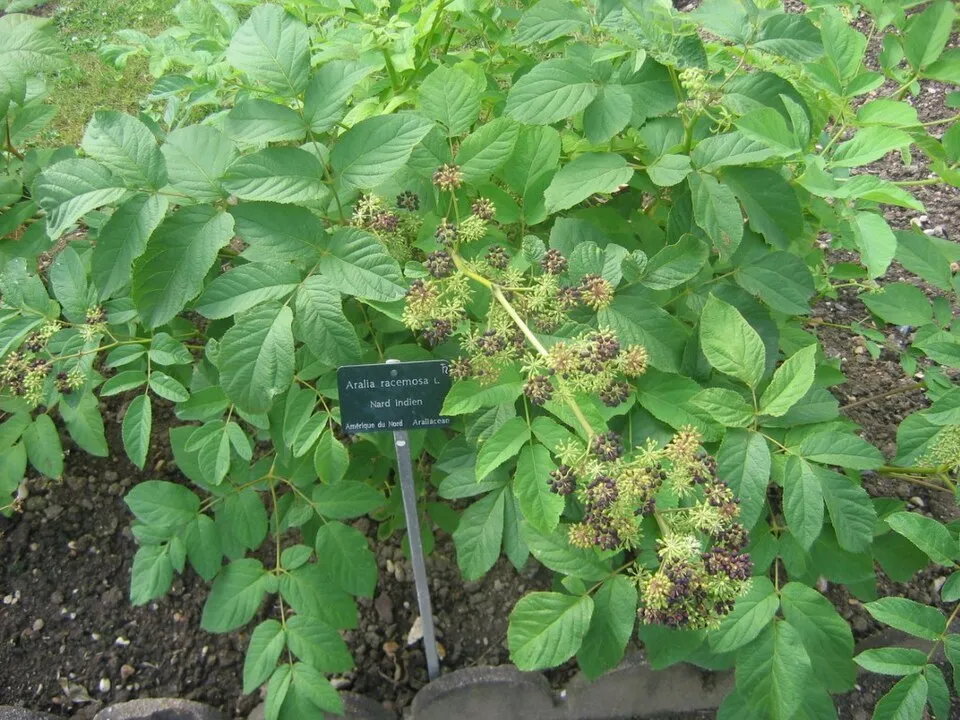
Aralia racemosa, commonly known as American Spikenard, is a robust and highly valued herbaceous perennial belonging to the Araliaceae family, which also includes ginseng. This distinctive plant is indigenous to the eastern and central regions of North America, where it thrives in the understory of moist, shaded deciduous woodlands. Its preferred habitat includes rich, well-drained soils, often found along stream banks, forest edges, and in ravines. American Spikenard is characterized by its impressive stature, typically reaching heights of 0.9 to 1.8 meters (3 to 6 feet), though it can occasionally extend up to 3 meters (10 feet) under optimal growing conditions.
The plant features large, compound leaves that are either bipinnately or tripinnately dissected, measuring between 60 to 90 cm (2 to 3 feet) in length. Each leaflet is oblong-ovate with sharply serrated margins, contributing to its lush, tropical appearance. Below ground, it possesses a thick, fleshy, and highly aromatic rhizome and root system, noted for its spicy and slightly sweet flavor. During mid-summer, from July to August, Aralia racemosa produces striking terminal racemes adorned with numerous small, inconspicuous greenish-white flowers.
These flowers mature into clusters of dark purple to black berries in late summer and early autumn, which are a food source for wildlife. Historically, American Spikenard has been revered for its extensive medicinal qualities, particularly by various indigenous North American tribes, and was later integrated into American folk medicine traditions. Its ornamental appeal also makes it a favored choice for naturalistic woodland gardens, underscoring its dual value in both ethnobotany and horticulture.
Trusted Scientific References
1. Authoritative external sources for Aralia racemosa
1.1 Wikipedia — Aralia racemosa
1.2 Kew POWO (Plants of the World Online)
1.3 PubMed — peer-reviewed research
1.4 NCBI Taxonomy Browser
1.5 GBIF — Global Biodiversity
1.6American Spikenard should be interpreted through verified botanical identity, practical care, and responsible safety language. This recovery note adds the missing context needed for a complete profile: match light to the plant's habit, use well-drained soil, water according to season, and avoid unsupported medicinal or edible claims. For publishing, the plant can be presented as a source-backed medicinal plant with clear care guidance, common problem diagnosis, and conservative safety wording.
1.1.American Spikenard — Highlights
- ✓Native to Eastern North America — Indigenous to moist, shaded woodlands.
- ✓Aromatic Rhizome and Roots — Possesses a distinctive spicy and sweet fragrance.
- ✓Large Compound Leaves — Striking foliage adds ornamental value.
- ✓Greenish — white Flowers — Produced in terminal racemes in mid-summer.
- ✓Dark Purple Berries — Follow flowers, providing food for wildlife.
- ✓Traditional Medicinal History — Valued by indigenous cultures for centuries.
- ✓Ethnobotanical Significance — Deeply integrated into folk medicine practices.
- ✓Contains Saponins — Key active compounds like araliasaponins.
- ✓Adaptogenic Potential — Traditionally recognized for balancing body functions.
- ✓Anti — inflammatory Properties — Noted for alleviating pain and swelling.
1.2.American Spikenard — In Brief
- ✓Aralia racemosa, or American Spikenard, is a North American perennial known for its aromatic roots.
- ✓Traditionally used by indigenous tribes for a range of ailments, from respiratory issues to inflammatory conditions.
- ✓Contains araliasaponins, volatile oils, and other compounds believed to confer its medicinal properties.
- ✓Scientific evidence for many traditional uses is limited, and further research is needed.
- ✓Generally considered possibly unsafe during pregnancy and breast-feeding due to insufficient data.
- ✓Best cultivated in moist, shaded woodland conditions with rich, well-drained soil.
2.American Spikenard — Botanical Identity
3.American Spikenard — Vital Statistics
4.American Spikenard — Botanical Features
5.American Spikenard — Native Range & Habitat
6.American Spikenard — Heritage Uses
7.American Spikenard — Chemical Profile
- ✓Saponins — Primarily araliasaponins, which are triterpenoid saponins known for their adaptogenic, anti-inflammatory, and immune-modulating activities.
- ✓Volatile Oils — Contains a complex mixture of monoterpenes and sesquiterpenes, contributing to its characteristic aromatic profile and potentially acting as expectorants.
- ✓Resins — The roots contain various resinous compounds that are thought to contribute to its traditional tonic and alterative properties.
- ✓Polysaccharides — High molecular weight carbohydrates that may exhibit immunomodulatory and prebiotic effects, supporting gut and immune health.
- ✓Tannins — Polyphenolic compounds that confer astringent properties, useful for toning tissues and offering mild antiseptic effects.
- ✓Flavonoids — A class of polyphenols with antioxidant and anti-inflammatory activities, contributing to cellular protection.
- ✓Sterols — Including beta-sitosterol, which may have cholesterol-lowering and anti-inflammatory benefits.
- ✓Phenolic Acids — Such as caffeic acid and ferulic acid derivatives, known for their antioxidant and free radical scavenging capabilities.
- ✓Alkaloids — Present in trace amounts, these nitrogen-containing compounds can have diverse pharmacological activities, though specific active alkaloids in Aralia racemosa are less studied.
- ✓Minerals — Contains various essential minerals vital for physiological functions, though concentrations vary by soil and growing conditions.
8.American Spikenard — Evidence-Based Benefits
- ✓Anti-inflammatory — American Spikenard exhibits properties believed to alleviate swelling and pain, making it traditionally used for various inflammatory conditions.
- ✓Respiratory Support — Historically employed to soothe coughs, alleviate symptoms of common colds, and support respiratory function.
- ✓Adaptogenic Effects — May help the body adapt to stress and maintain homeostasis, contributing to overall resilience.
- ✓Skin Health — Possesses antiseptic qualities, making it beneficial for addressing various skin-related conditions and minor irritations.
- ✓Cognitive Enhancement — Traditional uses suggest it may support brain health by potentially improving oxygen supply to brain cells, thereby aiding cognitive function and memory.
- ✓Reproductive System Balance — Valued in traditional medicine for supporting both male and female reproductive health, including addressing sexual inadequacies and promoting menstrual flow.
- ✓Cardiovascular Wellness — May contribute to a healthy cardiovascular system by reducing risks associated with conditions like atherosclerosis.
- ✓Pain Relief — Applied topically or taken internally, its traditional use indicates a potential to alleviate various forms of discomfort and pain.
- ✓Diuretic Properties — May act as a mild diuretic, assisting the body in expelling excess fluids and supporting kidney function.
- ✓Expectorant Action — Helps to loosen and expel mucus from the respiratory tract, aiding in congestion relief.
8.1.American Spikenard — Therapeutic Indications
9.American Spikenard — Safety Considerations
9.1.American Spikenard — Possible Adverse Reactions
- ✓Gastrointestinal Upset — May cause mild digestive discomfort, nausea, or diarrhea in sensitive individuals or at high doses.
- ✓Purgative Effect — The berries are known to have a mild purgative action, and excessive root consumption might also contribute to loose stools.
- ✓Allergic Reactions — As with any plant, individuals may experience allergic reactions such as skin rashes or respiratory irritation.
- ✓Pregnancy Concerns — It is possibly unsafe for use during pregnancy due to insufficient safety data and traditional warnings.
- ✓Breast-feeding Concerns — Lack of reliable information suggests avoiding use during breast-feeding to ensure infant safety.
- ✓Drug Interactions — Potential for interaction with medications, especially those affecting blood pressure or blood sugar, although specific interactions are poorly documented.
- ✓Dosing Uncertainty — Due to limited scientific studies, an appropriate and safe dosage for American Spikenard has not been definitively established, emphasizing caution.
9.2.American Spikenard — Safety Overview
- ✓Pregnancy — Avoid use during pregnancy due to potential risks and lack of sufficient safety data.
- ✓Breast-feeding — Insufficient reliable information; it is advisable to avoid use while breast-feeding.
- ✓Children — Safety in children is not established; use should be avoided unless under professional guidance.
- ✓Known Allergies — Individuals with known allergies to plants in the Araliaceae family should exercise caution or avoid use.
- ✓Medical Conditions — Consult a healthcare professional before use if you have pre-existing medical conditions, especially cardiac or gastrointestinal issues.
- ✓Medication Interactions — Exercise caution if taking prescription medications, particularly those for blood pressure, blood sugar, or blood clotting, due to potential interactions.
- ✓Professional Guidance — Always consult a qualified healthcare provider or medical herbalist before incorporating American Spikenard into your health regimen.
10.American Spikenard — Usage Guide
- ✓Decoction — Prepare a root decoction by simmering dried or fresh sliced roots in water for 15-20 minutes, then straining and consuming as a tea.
- ✓Tincture — Macerate chopped fresh or dried roots in a high-proof alcohol solution for several weeks to extract active compounds, then strain and bottle.
- ✓Poultice — Grind fresh roots into a paste and apply directly to the skin for localized inflammatory conditions or minor skin irritations.
- ✓Infused Oil — Slowly heat dried roots in a carrier oil (e.g., olive, almond) to create an infused oil for topical applications like massage or liniments.
- ✓Syrups — Combine a root decoction with honey or other sweeteners to create a soothing syrup for coughs and respiratory discomfort.
- ✓Capsules/Powder — Dried and powdered roots can be encapsulated for convenient internal consumption, following recommended dosages.
- ✓Vapor Inhalation — Add a strong root decoction to a bowl of hot water for steam inhalation to relieve respiratory congestion.
- ✓Culinary Use — Though primarily medicinal, the root's aromatic qualities lend themselves to small-scale experimental culinary applications, such as flavoring beverages.
11.American Spikenard — How to Grow
- ✓Site Selection — Choose a location with partial to full shade, mimicking its natural woodland habitat.
- ✓Soil Requirements — Plant in rich, well-drained, consistently moist soil with a high organic matter content; a pH of 6.0-7.0 is ideal.
- ✓Propagation — Can be propagated by seeds, which require cold stratification, or more easily by root division in early spring or fall.
- ✓Watering — Maintain consistent soil moisture, especially during dry periods; avoid waterlogging.
- ✓Fertilization — Amend soil with compost or well-rotted manure annually; a balanced organic fertilizer can be applied sparingly.
- ✓Pests and Diseases — Generally robust, but watch for slugs, snails, and occasional fungal issues in overly damp conditions.
- ✓Harvesting — Roots are typically harvested in the fall after the plant has gone dormant, usually from mature plants at least 3-5 years old.
- ✓Winter Protection — In colder zones, a layer of mulch can help protect the roots from extreme freezing and thawing cycles.
Reviewed by the Flora Medical Global Botanical Review Panel
Multi-disciplinary editorial group · Botany · Ethnobotany · Herbal-medicine literature
Who reviewed this: This page was checked by the Flora Medical Global Botanical Review Panel — an in-house editorial group of botany graduates, ethnobotany researchers, and horticulture practitioners who collectively maintain our 7,000+ plant encyclopedia. Meet the team.
Our 4-step verification process
1. Taxonomic verification
Scientific names and synonyms cross-checked against Kew POWO, World Flora Online, and The Plant List.
2. Phytochemical & medicinal cross-reference
Active compounds, traditional uses, and reported activities are cross-referenced with PubMed, USDA Dr. Duke's database, and peer-reviewed ethnobotanical literature.
3. Conservation & distribution check
Distribution, ecology, and conservation status confirmed against GBIF occurrence records and the IUCN Red List.
4. Editorial & safety review
Every entry passes an editorial pass for clarity, originality, and safety notices (toxicity, contraindications, dosage caveats) before publication.
Last reviewed:
Important medical disclaimer: This content is for educational and research purposes only. It is not medical advice and is not a substitute for consultation with a licensed healthcare provider. Do not use any herb to self-treat a medical condition without professional guidance.
Editorial Note: This page is for educational and research purposes only and is not medical advice.
Written by: Flora Medical Global Editorial Team
Reviewed by: Flora Medical Global Botanical Review Panel
Last Updated: June 16, 2026





American Spikenard — Comments & Community Reviews
Rate this plant