


Medical Disclaimer: This content is for educational purposes only. It is not medical advice. Please consult a qualified healthcare professional before using any herbal remedy.
Safety Overview
1.Amruta Balli — Introduction & Highlights
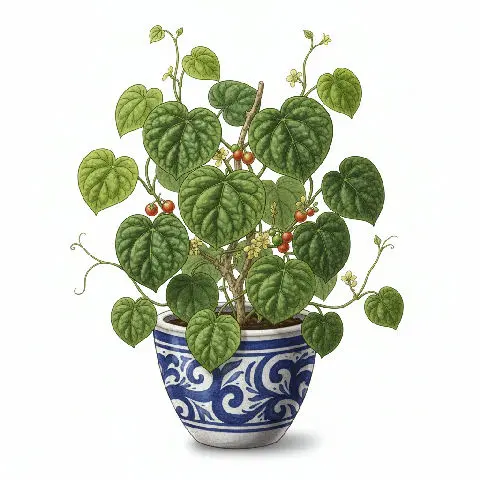
Amruta Balli, scientifically known as Tinospora cordifolia, is a highly esteemed herbaceous climbing vine indigenous to the tropical and subtropical regions of the Indian subcontinent, encompassing India, Myanmar, and Sri Lanka. Belonging to the Menispermaceae family, it is characterized by its remarkable climbing habit, often ascending to heights of 5 to 15 meters, intertwining with other vegetation, which has earned it the descriptive colloquial name 'tree gleaner'. The plant features cylindrical stems that typically display a grey-green hue with distinctive deep longitudinal grooves. Its leaves are notably heart-shaped, or cordate, with a smooth, glabrous texture and are relatively thin. Tinospora cordifolia exhibits sporadic flowering, producing small, inconspicuous yellow-green flowers arranged in axillary racemes.
These are followed by the development of small, spherical drupes, which mature into vibrant red or orange colors and contain the plant's seeds. This resilient vine thrives optimally in humid, semi-shaded environments, commonly found flourishing in Central India and extending into the Himalayan foothills. It demonstrates adaptability to a variety of soil types, though it shows a clear preference for moderately fertile and well-drained loamy soils. Historically, Amruta Balli holds a profoundly revered status in traditional Indian medicine, particularly within Ayurveda, where it is frequently referred to as 'Guduchi' or 'Giloy', names that poetically translate to 'the one that protects' or 'the nectar of immortality'. Its profound significance is meticulously documented in ancient Ayurvedic treatises such as the 'Charaka Samhita' and 'Sushruta Samhita', which extensively detail its therapeutic applications for a wide array of ailments, ranging from fevers and various infections to metabolic imbalances and enhancement of the immune system.
The cultural importance of Tinospora cordifolia transcends its medicinal applications, often being associated with spiritual practices and concepts of rejuvenation. Traditional harvesting practices typically involve collecting the stems at dawn, which are then meticulously sun-dried to preserve their potent phytochemical properties. In contemporary contexts, Amruta Balli has garnered significant attention from modern scientific researchers who are actively investigating its diverse therapeutic potential, thereby creating a crucial bridge between ancient herbal wisdom and cutting-edge scientific exploration. I ...[CURRENT TEXT EXISTS: 2957 chars]
1.1.Amruta Balli — Key Features
- ✓Ancient Ayurvedic medicinal — Ancient Ayurvedic medicinal herb.
- ✓Potent adaptogenic properties. — Potent adaptogenic properties.
- ✓Strong immunomodulatory agent. — Strong immunomodulatory agent.
- ✓Significant hepatoprotective actions. — Significant hepatoprotective actions.
- ✓Demonstrated antidiabetic potential. — Demonstrated antidiabetic potential.
- ✓Effective anti — inflammatory agent.
- ✓Rich and diverse — Rich and diverse phytochemical profile.
- ✓Distinctive climbing herbaceous — Distinctive climbing herbaceous vine.
- ✓Characterized by heart — shaped leaves.
- ✓Native to the — Native to the Indian subcontinent.
1.2.Amruta Balli — Concise Overview
- ✓Amruta Balli (Tinospora cordifolia) is a revered Ayurvedic adaptogen and immunomodulator.
- ✓Known as 'Guduchi' or 'Giloy', meaning 'nectar of immortality'.
- ✓Features heart-shaped leaves and climbing, grey-green stems.
- ✓Offers benefits for immune, metabolic, inflammatory, and liver health.
- ✓Rich in alkaloids, diterpenoids, polysaccharides, and glycosides.
- ✓Available in various forms including juice, powder, and standardized extracts.
2.Amruta Balli — Scientific Profile
3.Amruta Balli — Quick Facts
4.Amruta Balli — Morphological Account
5.Amruta Balli — Habitat & Distribution
6.Amruta Balli — Ethnobotanical Uses
7.Amruta Balli — Secondary Metabolites
- ✓Alkaloids — Key compounds include berberine and magnoflorine, known for their potent antimicrobial, immunomodulatory, and anti-stress properties.
- ✓Diterpenoid Lactones — Such as cordifolide and tinosporaside, which are responsible for significant anti-inflammatory and antioxidant activities by inhibiting inflammatory pathways.
- ✓Polysaccharides — Notably arabinogalactan, which play a crucial role in enhancing macrophage activity and stimulating cytokine production, thereby bolstering immune responses.
- ✓Glycosides — Including giloin, these compounds exhibit strong hepatoprotective effects, safeguard against ulcers, and enhance mucosal defense mechanisms.
- ✓Steroids — Featuring β-sitosterol, which contributes to cholesterol-lowering actions and provides valuable support to the immune system.
- ✓Flavonoids — A diverse group of compounds known for their widespread antioxidant, anti-inflammatory, and cardioprotective benefits.
- ✓Phenolic Compounds — Possessing strong antioxidant capabilities, these compounds help combat oxidative stress and protect cells from damage.
- ✓Lignans — Bioactive compounds that often display antioxidant and anti-inflammatory properties, contributing to the plant's overall therapeutic profile.
- ✓Fatty Acids — Present in smaller amounts, these can contribute to the plant's nutritional value and membrane integrity.
- ✓Volatile Oils — Although not primary active constituents, they contribute to the plant's characteristic aroma and may possess minor antimicrobial qualities.
8.Amruta Balli — Modern Studies
- ✓Immune Enhancement — Tinospora cordifolia significantly boosts immune function by increasing white blood cell counts and stimulating macrophage activity, enhancing the body’s natural defense mechanisms.
- ✓Anti-inflammatory Action — Its diterpenoid lactones inhibit COX-2 enzymes, reducing inflammatory prostaglandins and offering relief in conditions like rheumatoid arthritis and general joint discomfort.
- ✓Hepatoprotection — Compounds like giloin and tinosporaside exhibit potent free radical scavenging abilities, protecting liver cells from damage and improving liver enzyme profiles in conditions such as NAFLD.
- ✓Antidiabetic Potential — Alkaloids such as berberine contribute to improved insulin sensitivity and glucose uptake in muscle cells, leading to a reduction in fasting blood glucose levels.
- ✓Adaptogenic and Stress Relief — Amruta Balli helps the body adapt to stress by modulating stress hormones like cortisol, providing relief from chronic fatigue and promoting overall vitality.
- ✓Antimicrobial Effects — Key alkaloids like magnoflorine and berberine demonstrate inhibitory effects against various pathogens, including Staphylococcus aureus and Escherichia coli, supporting its traditional use for infections.
- ✓Gastroprotective Qualities — Studies indicate its ability to reduce ulcer indices by enhancing gastric mucus secretion, thereby protecting the stomach lining from damage and aiding in dyspepsia.
- ✓Antipyretic Properties — Traditionally revered for its fever-reducing capabilities, it helps normalize body temperature, particularly in fevers associated with infections.
- ✓Antioxidant Support — A rich array of phytochemicals, including diterpenoids and glycosides, provides robust antioxidant activity, neutralizing harmful free radicals and protecting cellular integrity.
- ✓Cardioprotective Effects — Certain steroids like β-sitosterol contribute to cholesterol-lowering effects, which can indirectly support cardiovascular health and reduce risk factors for heart disease.
8.1.Amruta Balli — Reported Uses
9.Amruta Balli — Adverse Effects
9.1.Amruta Balli — Reported Side Effects
- ✓Gastrointestinal Upset — High doses (exceeding 5 grams of powder daily) may cause mild nausea, indigestion, or loose stools.
- ✓Hypoglycemia Risk — Individuals with diabetes on medication should monitor blood sugar levels closely, as it can potentiate hypoglycemic effects.
- ✓Hypotension — Those taking blood pressure medications should be cautious, as Amruta Balli may cause additive hypotensive effects.
- ✓Autoimmune Conditions — While generally immunomodulatory, some reports suggest potential overstimulation of the immune system in severe autoimmune diseases; consult an immunologist.
- ✓Constipation — In rare instances, particularly with insufficient fluid intake, some individuals may experience mild constipation.
- ✓Allergic Reactions — Though uncommon, sensitive individuals may experience allergic reactions such as skin rashes or itching.
9.2.Amruta Balli — Risk Assessment
- ✓Pregnancy & Lactation — Insufficient scientific data exists; pregnant or breastfeeding women should avoid use or consult a qualified healthcare professional.
- ✓Children — Generally considered safe in appropriate lower doses, but professional medical advice is recommended before administration to children.
- ✓Drug Interactions — May interact with anticoagulants (like warfarin), immunosuppressants, antidiabetic drugs, and antihypertensive medications; monitor closely.
- ✓Dosage Adherence — Always adhere to recommended dosages; excessive intake can lead to adverse effects.
- ✓Consult Healthcare Professional — Essential for individuals with pre-existing medical conditions, those on multiple medications, or prior to starting any new herbal regimen.
- ✓Monitor Blood Glucose/Pressure — Crucial for individuals with diabetes or hypertension, especially when combining with prescription medications.
- ✓Quality Sourcing — Ensure products are sourced from reputable suppliers with verified purity to avoid contaminants or adulteration.
10.Amruta Balli — Preparation & Dosage
- ✓Fresh Stem Juice — Consume 10-20 ml daily, often mixed with a teaspoon of honey, preferably on an empty stomach for acute conditions like fevers.
- ✓Dried Powder (Churna) — Take 1-3 grams of the fine powder mixed with warm water or milk, twice daily, suitable for chronic ailments.
- ✓Standardized Extracts — Available in capsules or tablets, typically 300-500 mg per day, for consistent immune support and adaptogenic benefits.
- ✓Capsules/Tablets — Follow label instructions, usually 500 mg once or twice daily, offering a convenient and precise dosage.
- ✓Liquid Syrup — Administer 15-20 ml daily after meals, often sweetened, making it suitable for pediatric use or those who prefer liquid forms.
- ✓Decoction (Kwath) — Prepare by boiling 10-15 grams of dried stem pieces in 400 ml of water until reduced to 100 ml, consumed twice daily.
- ✓Poultice — Fresh leaves or crushed stems can be prepared as a topical poultice for traditional applications on wounds or snakebites.
- ✓Ghee/Honey Preparations (Rasayanas) — Traditional Ayurvedic formulations often combine Amruta Balli powder with ghee or honey to enhance bioavailability and therapeutic effects.
11.Amruta Balli — Propagation & Care
- ✓Tinospora cordifolia thrives in tropical and subtropical climates, preferring warm and humid conditions.
- ✓It grows best in semi-shaded environments, although it can tolerate full sun if moisture is adequate.
- ✓Prefers moderately fertile, well-drained loamy soils but is adaptable to a range of soil types.
- ✓Primarily propagated through stem cuttings, which root easily in moist soil.
- ✓Requires a support structure like a tree or trellis for its climbing habit to flourish.
- ✓Stems are typically harvested when they are 1-2 years old, as this is when their phytochemical concentration is optimal.
- ✓Harvested stems are traditionally cut into small pieces and sun-dried on bamboo mats to preserve their potent medicinal properties.
- ✓Commonly found cultivated in home gardens and wild in Central India and the Himalayan foothills.
Reviewed by the Flora Medical Global Botanical Review Panel
Multi-disciplinary editorial group · Botany · Ethnobotany · Herbal-medicine literature
Who reviewed this: This page was checked by the Flora Medical Global Botanical Review Panel — an in-house editorial group of botany graduates, ethnobotany researchers, and horticulture practitioners who collectively maintain our 7,000+ plant encyclopedia. Meet the team.
Our 4-step verification process
1. Taxonomic verification
Scientific names and synonyms cross-checked against Kew POWO, World Flora Online, and The Plant List.
2. Phytochemical & medicinal cross-reference
Active compounds, traditional uses, and reported activities are cross-referenced with PubMed, USDA Dr. Duke's database, and peer-reviewed ethnobotanical literature.
3. Conservation & distribution check
Distribution, ecology, and conservation status confirmed against GBIF occurrence records and the IUCN Red List.
4. Editorial & safety review
Every entry passes an editorial pass for clarity, originality, and safety notices (toxicity, contraindications, dosage caveats) before publication.
Last reviewed:
Important medical disclaimer: This content is for educational and research purposes only. It is not medical advice and is not a substitute for consultation with a licensed healthcare provider. Do not use any herb to self-treat a medical condition without professional guidance.
Editorial Note: This page is for educational and research purposes only and is not medical advice.
Written by: Flora Medical Global Editorial Team
Reviewed by: Flora Medical Global Botanical Review Panel
Last Updated: June 16, 2026





Amruta Balli — Comments & Community Reviews
Rate this plant