


Medical Disclaimer: This content is for educational purposes only. It is not medical advice. Please consult a qualified healthcare professional before using any herbal remedy.
Safety Overview
1.Anise Hyssop — Introduction & Highlights
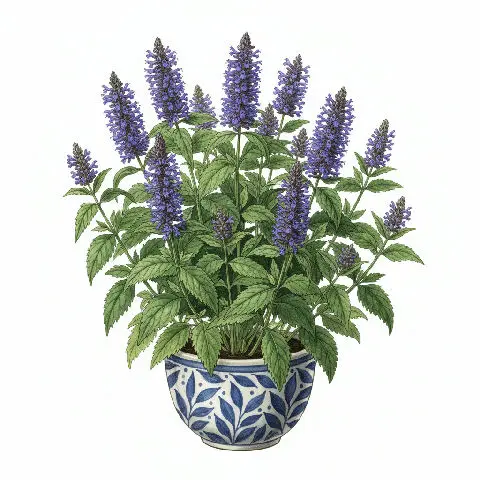
Anise Hyssop, scientifically known as Agastache foeniculum, is a captivating perennial herbaceous plant belonging to the Lamiaceae family, commonly recognized as the mint family. This robust species typically reaches heights of 1 to 3 feet, characterized by its square stems, a hallmark trait of its botanical lineage. The leaves are distinctively ovate to lanceolate in shape, measuring between 2 to 4 inches in length, featuring a serrated margin and emitting a pronounced anise or licorice aroma when gently crushed. Its vibrant purple to blue tubular flowers are densely arranged in terminal spikes, gracing the landscape from mid-summer through early autumn. Native to the north-central United States and Canada, Anise Hyssop thrives in diverse habitats, including sun-drenched prairies, open meadows, and the dappled shade of open woodlands.
While adaptable to various soil conditions, it exhibits a preference for well-drained, loamy soils that are rich in organic matter. The plant's extensive and fibrous root system efficiently anchors it while accessing essential nutrients and water. Historically, Agastache foeniculum holds significant cultural importance, particularly among numerous Native American tribes such as the Cheyenne, Cree, and Ojibwa. These indigenous peoples revered the plant for its multifaceted medicinal properties, traditionally brewing teas from its leaves to alleviate coughs, reduce fevers, and soothe various ailments. Additionally, powdered leaves were often prepared into poultices for topical application to treat wounds and burns.
Beyond its medicinal applications, the aromatic leaves of Anise Hyssop have been cherished in culinary traditions for flavoring a wide array of dishes. In contemporary horticulture, Anise Hyssop is highly valued for its striking ornamental appeal and profound ecological benefits, notably its ability to attract and sustain crucial pollinators like bees and butterflies. Its brilliant flowers not only enhance garden aesthetics but also play a vital role in promoting biodiversity, solidifying its status as a favored choice in sustainable gardening practices. Recent scientific investigations continue to unravel its potential pharmacological benefits, with studies indicating promising antioxidant, anti-inflammatory, and antimicrobial properties, all underpinned by its rich phytochemical profile of essential oils and flavonoids. Trusted Scientific References Authoritative external sources for Agastache foeniculum : Wikiped ...[CURRENT TEXT EXISTS: 2644 chars]
1.1.Anise Hyssop — Key Features
- ✓Botanical Name — Agastache foeniculum
- ✓Family — Lamiaceae (Mint Family)
- ✓Common Names — Anise Hyssop, Blue Giant Hyssop, Fragrant Giant Hyssop
- ✓Aroma — Distinctive anise or licorice scent
- ✓Flower Color — Purple to blue spikes
- ✓Traditional Uses — Respiratory, fever, wound healing, digestive aid
- ✓Key Actions — Antioxidant, anti-inflammatory, antimicrobial, carminative
- ✓Habitat — Prairies, meadows, open woodlands
- ✓Pollinator Magnet — Highly attractive to bees and butterflies
- ✓Culinary Use — Flavoring for foods and beverages
1.2.Anise Hyssop — Concise Overview
- ✓Agastache foeniculum, or Anise Hyssop, is an aromatic perennial herb in the mint family (Lamiaceae).
- ✓Known for its distinctive anise-licorice scent and attractive purple-blue flower spikes.
- ✓Traditionally used by Native Americans for respiratory ailments, fevers, and wound care.
- ✓Modern research highlights its antioxidant, anti-inflammatory, and potential anti-aging properties.
- ✓Valued in culinary applications, ornamental gardening, and for attracting pollinators.
- ✓Generally safe for use, but caution is advised for pregnant individuals and those with allergies.
2.Anise Hyssop — Taxonomic Classification
3.Anise Hyssop — Botanical Stats
4.Anise Hyssop — Morphological Account
5.Anise Hyssop — Geographic Distribution
6.Anise Hyssop — Ethnobotanical Uses
7.Anise Hyssop — Bioactive Constituents
- ✓Essential Oils — Predominantly composed of anethole, responsible for the characteristic anise or licorice aroma, along with estragole (methyl chavicol), limonene, and pulegone, contributing to its carminative, antimicrobial, and expectorant actions.
- ✓Flavonoids — Including compounds like acacetin, tilianin, and luteolin, these are potent antioxidants that scavenge free radicals and possess anti-inflammatory and antiviral properties.
- ✓Phenolic Acids — Such as rosmarinic acid, caffeic acid, and chlorogenic acid, which are known for their significant antioxidant, anti-inflammatory, and neuroprotective effects.
- ✓Terpenoids — A diverse group including monoterpenes and sesquiterpenes, contributing to the plant's aroma and exhibiting various biological activities like antimicrobial and anti-inflammatory effects.
- ✓Tannins — Astringent compounds that contribute to wound healing and anti-diarrheal properties, also acting as antioxidants.
- ✓Polysaccharides — Complex carbohydrates that can possess immunomodulatory effects, supporting the body's natural defenses.
- ✓Sterols — Plant sterols are present and can contribute to overall plant bioactivity, though their specific medicinal roles in Anise Hyssop are less studied.
- ✓Glycosides — Various glycosidic compounds may be present, influencing solubility and bioavailability of active constituents.
8.Anise Hyssop — What Research Suggests
- ✓Antioxidant Support — Rich in phenolic compounds and flavonoids, Anise Hyssop helps neutralize harmful free radicals, protecting cellular integrity and reducing oxidative stress throughout the body.
- ✓Anti-inflammatory Action — Its phytochemicals contribute to modulating inflammatory pathways, potentially alleviating discomfort associated with various inflammatory conditions.
- ✓Antimicrobial Properties — Extracts have demonstrated inhibitory effects against certain bacteria and fungi, suggesting utility in supporting the body's defenses against microbial invaders.
- ✓Respiratory Relief — Traditionally used as an expectorant and decongestant, teas from Anise Hyssop leaves can help soothe coughs, clear congested airways, and ease symptoms of colds and flu.
- ✓Fever Reduction — Native American tribes employed it to help reduce fevers, likely due to its diaphoretic properties that promote sweating and cooling.
- ✓Wound Healing — Applied topically as a poultice, the plant's compounds may aid in the healing process of minor wounds and burns, potentially through antiseptic and regenerative effects.
- ✓Digestive Aid — The carminative properties of Anise Hyssop, attributed to its anethole content, can help alleviate gas, bloating, and indigestion, promoting digestive comfort.
- ✓Stress Resistance Enhancement — Research in model organisms suggests it can improve an organism's resilience to various stressors, contributing to overall physiological robustness.
- ✓Metabolic Regulation — Studies indicate potential influence on metabolic pathways, including alterations in insulin signaling and energy storage, which could have broader health implications.
- ✓Longevity Potential — Preliminary research in model organisms points to an ability to extend lifespan, possibly by affecting free radical processes and enhancing stress resistance.
- ✓Mood Enhancement — The aromatic compounds, particularly those related to its aniselike scent, may exert mild calming effects, contributing to a sense of well-being.
- ✓Immune System Support — By reducing oxidative stress and inflammation, Anise Hyssop indirectly supports a healthy immune response, helping the body defend against illness.
8.1.Anise Hyssop — Therapeutic Indications
9.Anise Hyssop — Precautions & Warnings
9.1.Anise Hyssop — Warnings
- ✓Allergic Reactions — Individuals sensitive to plants in the Lamiaceae family may experience skin rashes, itching, or respiratory issues upon contact or ingestion.
- ✓Gastrointestinal Upset — High doses may occasionally lead to mild stomach discomfort, nausea, or diarrhea in sensitive individuals.
- ✓Photosensitivity — While rare, some constituents in certain Lamiaceae plants can increase sensitivity to sunlight, though this is not commonly reported for Anise Hyssop.
- ✓Uterine Stimulant (Theoretical) — Due to certain essential oil components, very high doses might theoretically stimulate uterine contractions; pregnant women should exercise caution.
- ✓Essential Oil Toxicity — Ingesting undiluted essential oil can be toxic; essential oils should always be diluted and used with extreme caution, preferably under expert guidance.
- ✓Interaction with Medications — No well-documented interactions, but caution is advised with medications metabolized by the liver or those affecting blood clotting, given its broad phytochemical profile.
9.2.Anise Hyssop — Toxicity Assessment
- ✓Pregnancy and Lactation — Due to insufficient safety data, pregnant and breastfeeding women should avoid medicinal doses of Anise Hyssop, especially concentrated extracts.
- ✓Children — Generally considered safe for children in culinary amounts; medicinal use should be approached with caution and under professional guidance.
- ✓Allergic Individuals — Those with known allergies to plants in the mint family (Lamiaceae) should avoid Anise Hyssop to prevent adverse reactions.
- ✓Dosage — Adhere to recommended dosages for herbal preparations; excessive consumption, particularly of concentrated forms, should be avoided.
- ✓Topical Use — Perform a patch test on a small skin area before widespread topical application, especially with essential oils, to check for sensitivity.
- ✓Consult a Healthcare Professional — Individuals with pre-existing medical conditions or those taking prescription medications should consult a doctor or qualified herbalist before using Anise Hyssop medicinally.
- ✓Quality Sourcing — Ensure Anise Hyssop products are sourced from reputable suppliers to guarantee purity and prevent contamination.
10.Anise Hyssop — Application Forms
- ✓Herbal Tea/Infusion — Steep 1-2 teaspoons of dried Anise Hyssop leaves and flowers in 8 ounces of hot water for 5-10 minutes; strain and drink to support respiratory health or as a general tonic.
- ✓Culinary Flavoring — Fresh or dried leaves can be used to impart an anise-licorice flavor to salads, desserts, fruit dishes, herbal vinegars, and beverages.
- ✓Tincture — Prepare a tincture by macerating fresh or dried plant material in alcohol for several weeks; a few drops can be taken orally for concentrated medicinal effects.
- ✓Poultice — Crush fresh leaves to create a paste and apply directly to minor cuts, scrapes, or insect bites to leverage its traditional antiseptic and soothing properties.
- ✓Essential Oil (External Use) — A diluted essential oil (obtained through distillation) can be used topically in massage blends for muscle aches or diffused for its calming aroma, always with a carrier oil.
- ✓Herbal Bath — Add a strong infusion of Anise Hyssop to bathwater for a relaxing and aromatic experience, potentially easing skin irritations.
- ✓Syrups and Elixirs — Combine a strong tea with honey or other sweeteners to create a soothing syrup for coughs and sore throats.
11.Anise Hyssop — Growth Requirements
- ✓Site Selection — Choose a location with full sun to partial shade, ensuring at least 6 hours of direct sunlight for optimal growth and flowering.
- ✓Soil Requirements — Prefers well-drained, loamy soils rich in organic matter, with a slightly acidic to neutral pH (6.0-7.0); tolerates a range of soil types once established.
- ✓Planting — Sow seeds directly after the last frost or start indoors 6-8 weeks prior; space plants 12-18 inches apart to allow for proper air circulation and growth.
- ✓Watering — Requires moderate watering, especially during dry spells and establishment; established plants are relatively drought-tolerant but benefit from consistent moisture.
- ✓Fertilization — Generally low-maintenance regarding nutrients; a light application of compost or balanced organic fertilizer in spring can promote vigorous growth.
- ✓Pruning — Deadhead spent flowers to encourage continuous blooming and prevent excessive self-seeding; prune back in late fall or early spring to maintain shape and vigor.
- ✓Pest and Disease Management — Highly resistant to most pests and diseases, making it an excellent choice for organic gardening; occasional issues may include powdery mildew in humid conditions.
- ✓Winter Hardiness — Perennial in USDA Hardiness Zones 4-9, often self-seeding to ensure continuation even if individual plants succumb to harsh winters.
Reviewed by the Flora Medical Global Botanical Review Panel
Multi-disciplinary editorial group · Botany · Ethnobotany · Herbal-medicine literature
Who reviewed this: This page was checked by the Flora Medical Global Botanical Review Panel — an in-house editorial group of botany graduates, ethnobotany researchers, and horticulture practitioners who collectively maintain our 7,000+ plant encyclopedia. Meet the team.
Our 4-step verification process
1. Taxonomic verification
Scientific names and synonyms cross-checked against Kew POWO, World Flora Online, and The Plant List.
2. Phytochemical & medicinal cross-reference
Active compounds, traditional uses, and reported activities are cross-referenced with PubMed, USDA Dr. Duke's database, and peer-reviewed ethnobotanical literature.
3. Conservation & distribution check
Distribution, ecology, and conservation status confirmed against GBIF occurrence records and the IUCN Red List.
4. Editorial & safety review
Every entry passes an editorial pass for clarity, originality, and safety notices (toxicity, contraindications, dosage caveats) before publication.
Last reviewed:
Important medical disclaimer: This content is for educational and research purposes only. It is not medical advice and is not a substitute for consultation with a licensed healthcare provider. Do not use any herb to self-treat a medical condition without professional guidance.
Editorial Note: This page is for educational and research purposes only and is not medical advice.
Written by: Flora Medical Global Editorial Team
Reviewed by: Flora Medical Global Botanical Review Panel
Last Updated: June 16, 2026





Anise Hyssop — Comments & Community Reviews
Rate this plant