


Medical Disclaimer: This content is for educational purposes only. It is not medical advice. Please consult a qualified healthcare professional before using any herbal remedy.
Safety Overview
1.Anthurium — Plant Snapshot
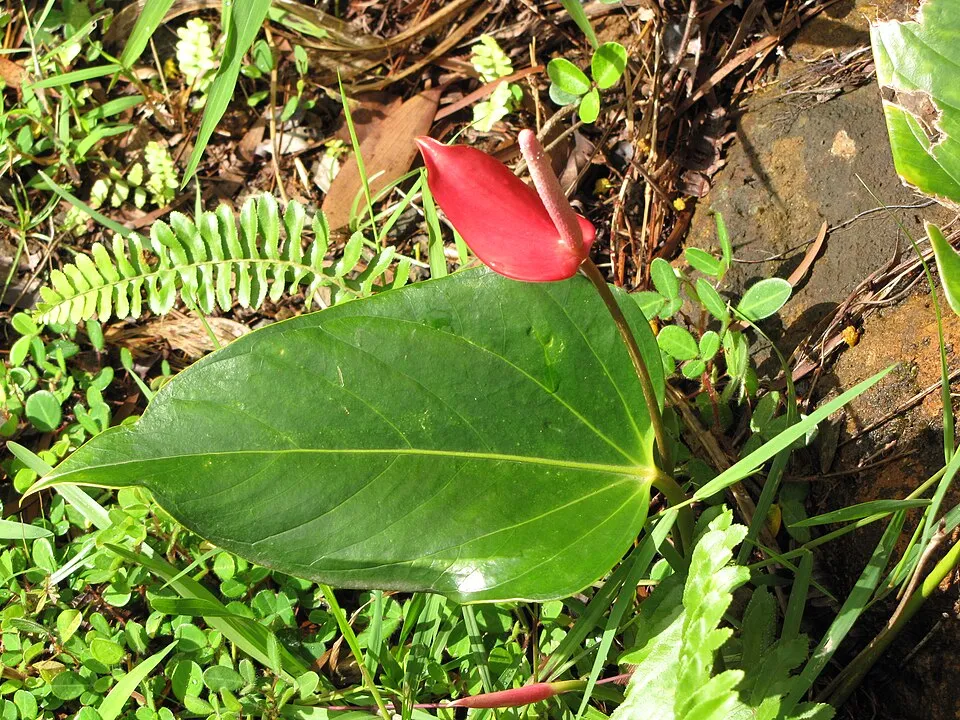
Anthurium andraeanum, commonly known as the Flamingo Flower, Laceleaf, or Painter's Palette, is a visually striking perennial herbaceous plant within the A. section Porphyrochitonium of the Araceae family. Indigenous to the lush, humid rainforests of Colombia and Ecuador, this species thrives as an epiphyte, attaching to host trees, or terrestrially in rich organic matter on the forest floor, preferring warm, consistently moist, and well-drained environments. First documented botanically by Jean Jules Linden in the late 19th century, Anthurium andraeanum has ascended to global prominence as a highly prized ornamental plant, celebrated for its uniquely long-lasting, vibrant 'flowers' and adaptability to indoor cultivation.
Its botanical structure is characterized by glossy, dark green, heart-shaped to ovate-lanceolate leaves, supported by slender petioles that can extend up to 30 cm. The plant's most distinctive feature is the spathe—a modified leaf—which is often mistaken for the actual flower. These spathes are typically brilliant, waxy, and heart-shaped, presenting in a spectrum of colors including vivid reds, pinks, oranges, and whites, serving primarily to attract pollinators such as beetles and flies. The true flowers are minute, perfect, and densely arranged along the prominent, often straight or curved spadix, which can vary in color from white to yellow, pink, or red.
While primarily valued for its aesthetic contribution to horticulture and its use in cut flower arrangements, Anthurium andraeanum has limited traditional medicinal applications, with some reports suggesting external use of its sap. Modern scientific inquiry has largely focused on its horticultural attributes, genetic diversity, and pest resistance rather than comprehensive phytochemical or pharmacological analysis.
Trusted Scientific References
1. Authoritative external sources for Anthurium andraeanum
1.1 Wikipedia — Anthurium andraeanum
1.2 Kew POWO (Plants of the World Online)
1.3 PubMed — peer-reviewed research
1.4 NCBI Taxonomy Browser
1.5 GBIF — Global Biodiversity
1.1.Anthurium — Key Features
- ✓Vibrant Heart — Shaped Spathes — The most distinguishing feature, often mistaken for flowers, in striking shades of red, pink, orange, or white.
- ✓Prominent Spadix — A central, often contrasting, rod-like structure bearing the true, minute flowers.
- ✓Glossy, Dark Green Foliage — Large, heart-shaped or ovate-lanceolate leaves add to its tropical appeal.
- ✓Epiphytic or Terrestrial Growth Habit — Naturally grows on trees or in soil in its native rainforest habitat.
- ✓Long — Lasting 'Blooms' — Spathes can persist for several weeks, making it popular for cut flowers.
- ✓Indoor Air Purifier — Effectively removes common household toxins like formaldehyde and ammonia.
- ✓Tropical Origin — Native to the humid rainforests of Colombia and Ecuador.
- ✓Low Severity Poisonous Characteristics — Contains calcium oxalate crystals, causing irritation if ingested or contacted.
- ✓Adaptable Houseplant — Thrives in appropriate indoor conditions with bright, indirect light and high humidity.
- ✓Horticultural Variety — Numerous cultivars bred for diverse spathe colors and plant forms.
1.2.Anthurium — Quick Summary
- ✓Anthurium andraeanum is a vibrant tropical ornamental plant.
- ✓Known for its heart-shaped spathes and air-purifying capabilities.
- ✓Contains toxic calcium oxalate crystals, causing irritation upon ingestion or contact.
- ✓Primarily valued for aesthetic appeal and indoor air quality improvement.
- ✓Requires warm, humid conditions and indirect light for optimal growth.
- ✓Not recommended for internal medicinal use due to toxicity.
2.Anthurium — Scientific Profile
3.Anthurium — Reference Facts
4.Anthurium — Plant Morphology
5.Anthurium — Where It Grows
6.Anthurium — Historical Applications
7.Anthurium — Secondary Metabolites
- ✓Calcium Oxalate Crystals — Primarily found as bundles of needle-like raphides, these insoluble crystals are responsible for the plant's irritant and toxic properties upon ingestion or contact, causing mechanical irritation to mucous membranes.
- ✓Flavonoids — While not extensively studied in Anthurium andraeanum, flavonoids are common plant secondary metabolites known for their antioxidant, anti-inflammatory, and protective cellular activities in many plant species.
- ✓Saponins — These glycosides, present in various Araceae family members, can exhibit surfactant properties and, in some cases, hemolytic activity; their specific roles in Anthurium andraeanum are not well-defined.
- ✓Alkaloids — A diverse group of nitrogen-containing compounds, alkaloids are often associated with pharmacological effects; specific alkaloids in Anthurium andraeanum require further identification and characterization.
- ✓Lectins — Proteins that bind to carbohydrates, lectins are present in many plants and can sometimes act as irritants or defense compounds, though their specific profile in this species is not fully elucidated.
- ✓Anthocyanins — These water-soluble pigments contribute to the vibrant red, pink, and purple hues of the spathes, known for their antioxidant properties in other plants.
- ✓Carotenoids — Responsible for yellow and orange coloration, carotenoids are fat-soluble pigments with antioxidant functions, though their specific presence and concentration in Anthurium andraeanum require dedicated research.
- ✓Volatile Organic Compounds (VOCs) — The plant itself may emit certain VOCs, though it is more notably known for absorbing specific airborne pollutants, indicating a complex interaction of organic compounds within its physiology.
8.Anthurium — Modern Studies
- ✓Indoor Air Purification — Anthurium andraeanum has been recognized for its capacity to naturally filter indoor air, effectively reducing levels of volatile organic compounds (VOCs) such such as formaldehyde, xylene, and ammonia, contributing to a healthier living environment.
- ✓Formaldehyde Reduction — Studies suggest that Anthurium andraeanum can absorb formaldehyde, a common indoor air pollutant released from various household products, thereby improving air quality.
- ✓Xylene and Toluene Absorption — This plant aids in mitigating airborne xylene and toluene, solvents often found in paints, varnishes, and adhesives, enhancing the purity of indoor spaces.
- ✓Ammonia Neutralization — Anthurium andraeanum contributes to the reduction of ammonia, a ubiquitous pollutant from cleaning products and other sources, promoting fresher air.
- ✓General Well-being Enhancement — As an ornamental plant, its presence in living and working spaces is associated with psychological benefits, including stress reduction, improved mood, and enhanced concentration, although this is a general benefit of indoor plants rather than a specific medicinal action of Anthurium.
- ✓Aesthetic and Therapeutic Value — The vibrant colors and unique form of the Flamingo Flower provide significant aesthetic appeal, which can indirectly contribute to a sense of calm and visual therapy in interior environments.
- ✓Potential Traditional Topical Soothing (Caution Advised) — Historically, some indigenous groups have sparingly used the sap for external applications, particularly for skin irritations, though this practice is not widely documented and requires extreme caution due to its known irritant properties.
- ✓Humidity Regulation — Like many tropical plants, Anthurium andraeanum releases moisture into the air through transpiration, which can help increase indoor humidity levels, potentially beneficial for respiratory comfort in dry climates.
- ✓Natural Decor for Mental Health — Integrating natural elements like Anthurium andraeanum into indoor settings has been linked to biophilic design principles, fostering a connection with nature that can positively impact mental health and reduce perceived stress.
8.1.Anthurium — Conditions Traditionally Used For
9.Anthurium — Precautions & Warnings
9.1.Anthurium — Warnings
- ✓Oral Irritation — Ingestion of any part of Anthurium andraeanum can cause immediate and intense burning pain in the mouth, throat, and digestive tract due to calcium oxalate crystals.
- ✓Gastrointestinal Distress — Swallowing plant material often leads to nausea, vomiting, abdominal pain, and diarrhea.
- ✓Swelling of Mucous Membranes — Contact with the plant's sap or ingestion can cause swelling of the lips, tongue, and throat, potentially leading to difficulty speaking or breathing.
- ✓Skin Irritation/Contact Dermatitis — Direct contact with the sap can cause skin redness, itching, burning sensations, and rash in sensitive individuals.
- ✓Eye Irritation — Accidental contact with plant sap in the eyes can result in severe pain, redness, swelling, and temporary vision impairment.
- ✓Pet Toxicity — Highly toxic to pets, including cats and dogs, causing similar oral irritation, excessive drooling, vomiting, and difficulty swallowing.
9.2.Anthurium — Clinical Safety Notes
- ✓Ingestion Hazard — All parts of Anthurium andraeanum are toxic if ingested due to the presence of insoluble calcium oxalate crystals, which cause immediate irritation.
- ✓Skin Contact Risk — Direct contact with the plant sap can cause contact dermatitis, characterized by skin irritation, redness, and itching.
- ✓Keep Out of Reach — It is crucial to keep Anthurium andraeanum away from small children and pets to prevent accidental ingestion or skin exposure.
- ✓Handling Precautions — When handling or pruning the plant, it is advisable to wear gloves to avoid skin irritation from the sap.
- ✓First Aid for Exposure — In case of ingestion, rinse the mouth thoroughly and seek immediate medical attention; for skin contact, wash the affected area with soap and water.
- ✓No Internal Use — Anthurium andraeanum is strictly for ornamental purposes and should never be used internally for any medicinal or dietary reason.
- ✓Consult Professionals — If considering any traditional topical use, always consult a qualified medical herbalist or healthcare professional due to the significant risk of irritation.
10.Anthurium — Preparation & Dosage
- ✓Ornamental Display — Primarily cultivated as an indoor ornamental plant, valued for its long-lasting, colorful spathes that brighten homes and offices.
- ✓Air Purification System — Position in indoor spaces to leverage its natural ability to absorb common airborne toxins like formaldehyde, xylene, and ammonia.
- ✓Cut Flower Arrangements — The durable and vibrant spathes are highly prized in floristry for their extended vase life, adding a tropical touch to bouquets and decorative displays.
- ✓Biophilic Design Integration — Incorporate into interior design schemes to enhance well-being and foster a connection with nature, contributing to a calming and productive atmosphere.
- ✓Topical Application (Extreme Caution) — In very limited traditional contexts, the sap was reportedly used externally for skin ailments, but due to severe irritant properties, this method is strongly discouraged without expert guidance.
- ✓Educational Specimen — Utilized in botanical gardens and educational settings to illustrate unique Araceae family morphology and tropical plant adaptations.
- ✓Indoor Humidity Boost — Strategically place among other plants to contribute to localized humidity, benefiting surrounding flora and potentially human comfort.
11.Anthurium — Propagation & Care
- ✓Light Requirement — Provide bright, indirect sunlight; direct sun can scorch the glossy leaves and reduce spathe vibrancy.
- ✓Watering — Keep soil consistently moist but not waterlogged; water when the top inch of soil feels dry to the touch, and ensure excellent drainage.
- ✓Humidity — Maintain high humidity levels, ideally between 60-80%, which can be achieved through misting, a pebble tray, or a humidifier.
- ✓Temperature — Thrives in warm conditions, with ideal temperatures ranging from 65-80°F (18-27°C); avoid cold drafts and sudden temperature fluctuations.
- ✓Soil — Use a well-draining, airy potting mix rich in organic matter, such as a blend suitable for orchids or aroid plants.
- ✓Fertilization — Feed with a balanced liquid fertilizer every 2-4 weeks during the active growing season (spring and summer), reducing frequency in fall and winter.
- ✓Repotting — Repot every 2-3 years, or when the plant becomes root-bound, preferably in the spring, to refresh the soil and provide space for growth.
- ✓Propagation — Can be propagated by division of the rhizome or by stem cuttings, ensuring each cutting has at least one node and a few leaves.
Reviewed by the Flora Medical Global Botanical Review Panel
Multi-disciplinary editorial group · Botany · Ethnobotany · Herbal-medicine literature
Who reviewed this: This page was checked by the Flora Medical Global Botanical Review Panel — an in-house editorial group of botany graduates, ethnobotany researchers, and horticulture practitioners who collectively maintain our 7,000+ plant encyclopedia. Meet the team.
Our 4-step verification process
1. Taxonomic verification
Scientific names and synonyms cross-checked against Kew POWO, World Flora Online, and The Plant List.
2. Phytochemical & medicinal cross-reference
Active compounds, traditional uses, and reported activities are cross-referenced with PubMed, USDA Dr. Duke's database, and peer-reviewed ethnobotanical literature.
3. Conservation & distribution check
Distribution, ecology, and conservation status confirmed against GBIF occurrence records and the IUCN Red List.
4. Editorial & safety review
Every entry passes an editorial pass for clarity, originality, and safety notices (toxicity, contraindications, dosage caveats) before publication.
Last reviewed:
Important medical disclaimer: This content is for educational and research purposes only. It is not medical advice and is not a substitute for consultation with a licensed healthcare provider. Do not use any herb to self-treat a medical condition without professional guidance.
Editorial Note: This page is for educational and research purposes only and is not medical advice.
Written by: Flora Medical Global Editorial Team
Reviewed by: Flora Medical Global Botanical Review Panel
Last Updated: June 15, 2026





Anthurium — Comments & Community Reviews
Rate this plant