


Medical Disclaimer: This content is for educational purposes only. It is not medical advice. Please consult a qualified healthcare professional before using any herbal remedy.
Safety Overview
1.Aparajita White — Botanical Snapshot
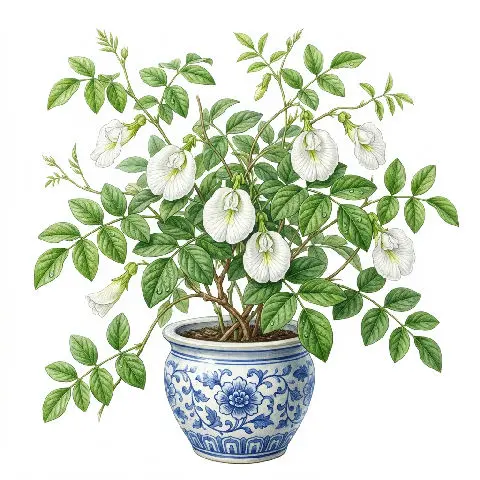
Clitoria ternatea alba, universally known as Aparajita White or White Butterfly Pea, is a captivating perennial herbaceous vine belonging to the extensive Fabaceae family. This resilient plant is distinguished by its solitary, delicate white blossoms, which emerge singly or in pairs from the leaf axils, offering a serene aesthetic. Its botanical architecture features pinnate leaves, typically composed of 5-9 ovate to elliptic leaflets, and slender, twining stems capable of extending several meters, making it an ideal candidate for vertical gardening or as a lush ground cover.
Indigenous to the humid tropical and subtropical zones of Southeast Asia, particularly thriving in regions like Thailand, Malaysia, and India, Aparajita White has been cultivated for centuries, not merely for its ornamental beauty but profoundly for its diverse therapeutic attributes. Its adaptability has facilitated its naturalization across numerous global territories. Historical Ayurvedic texts, including the revered Charaka Samhita and Sushruta Samhita, laud this plant for its capacity to enhance cognitive functions and foster mental clarity.
The white variant of Aparajita, in particular, is ascribed heightened 'Sattvic' qualities within Ayurvedic philosophy, symbolizing purity, peace, and spiritual growth. Beyond its significant aesthetic and medicinal value, Aparajita White holds deep cultural importance, frequently incorporated into religious ceremonies and offerings to deities associated with knowledge and wisdom. The plant's robust nature and ability to flourish in varied ecological conditions underscore its enduring popularity in both ornamental horticulture and traditional herbal medicine, reflecting a profound, ancient appreciation for its multifaceted contributions to human well-being and spiritual harmony.
Trusted Scientific References
1. Authoritative external sources for Clitoria ternatea alba
1.1 Wikipedia — Clitoria ternatea alba
1.2 Kew POWO (Plants of the World Online)
1.3 PubMed — peer-reviewed research
1.4 NCBI Taxonomy Browser
1.5 GBIF — Global Biodiversity
1.1.Aparajita White — Notable Characteristics
- ✓Botanical Name — Clitoria ternatea alba, a white-flowered variant of Butterfly Pea.
- ✓Family — Belongs to the Fabaceae (legume) family.
- ✓Growth Habit — Perennial herbaceous climbing vine.
- ✓Flowers — Solitary, delicate white flowers, blooming singly or in pairs.
- ✓Traditional Use — Extensively used in Ayurveda for cognitive enhancement (Medhya) and mental clarity.
- ✓Nootropic Properties — Renowned for improving memory, learning, and focus.
- ✓Anxiolytic Effects — Helps reduce anxiety and promote relaxation.
- ✓Cultural Significance — Symbolizes purity and is used in religious offerings in India.
- ✓Adaptability — Resilient plant, thriving in tropical and subtropical climates.
- ✓Parts Used — Root, root bark, seeds, and flowers are all utilized medicinally.
1.2.Aparajita White — In Brief
- ✓Aparajita White is a revered Ayurvedic herb known for its delicate white flowers.
- ✓Primarily recognized as a potent nootropic, enhancing memory and cognitive function.
- ✓Offers anxiolytic, anti-inflammatory, and detoxifying benefits.
- ✓Used traditionally for mental clarity, skin health, and respiratory support.
- ✓Culturally significant, symbolizing purity and wisdom.
- ✓Requires careful dosage and professional consultation, especially for specific conditions.
2.Aparajita White — Scientific Identity
3.Aparajita White — Fact Sheet
4.Aparajita White — Botanical Features
5.Aparajita White — Ecological Habitat
6.Aparajita White — Traditional Uses
7.Aparajita White — Phytochemistry
- ✓Flavonoids — Key compounds include kaempferol, quercetin, and myricetin glycosides, acting as potent antioxidants and anti-inflammatory agents.
- ✓Triterpenoids — Such as clitorin and various triterpene saponins, contributing to its adaptogenic, anti-inflammatory, and neuroprotective activities.
- ✓Cyclotides — A unique class of cyclic peptides found in Clitoria ternatea species, known for their insecticidal, antimicrobial, and potential anticancer properties.
- ✓Alkaloids — Including aparajitin, which may contribute to its neuropharmacological effects and traditional uses as a brain tonic.
- ✓Anthocyanins — While the white variant has significantly reduced or absent blue anthocyanins, it may still contain precursor compounds or related colorless flavonoids that contribute to its medicinal profile.
- ✓Steroids — Various phytosteroids are present, which can influence hormonal balance and exert anti-inflammatory effects.
- ✓Saponins — These compounds contribute to its expectorant, anti-inflammatory, and potentially cholesterol-lowering properties.
- ✓Phenolic Acids — Such as ferulic acid and p-coumaric acid, offering antioxidant and anti-inflammatory benefits.
- ✓Tannins — Astringent compounds that contribute to its wound-healing and detoxifying properties.
8.Aparajita White — Evidence-Based Benefits
- ✓Cognitive Enhancement — Aparajita White is highly valued for its nootropic properties, improving memory, learning, and overall cognitive function by modulating neurotransmitter activity, particularly acetylcholine and serotonin, crucial for synaptic plasticity and mental acuity.
- ✓Anxiolytic and Antidepressant Effects — Modern research supports traditional uses, demonstrating the plant's efficacy in reducing anxiety and depressive symptoms by influencing GABAergic pathways and promoting a calming effect on the central nervous system.
- ✓Anti-inflammatory Action — The plant exhibits significant anti-inflammatory properties, attributed to its flavonoid and triterpenoid content, which can help alleviate systemic inflammation and pain, particularly in conditions like arthritis and skin irritations.
- ✓Diuretic Properties — Traditionally used to support urinary health, Aparajita White acts as a mild diuretic, aiding in the cleansing of the bladder and kidneys by promoting increased urine output, which can help in detoxification.
- ✓Detoxifying Agent — Known in Ayurveda as 'Vishaapaha,' it possesses detoxifying qualities, assisting the body in eliminating toxins and supporting liver function, making it beneficial in cases of poisoning or general cleansing.
- ✓Anthelmintic Activity — Extracts from the plant, especially the roots, have shown anthelmintic effects, making it useful in expelling intestinal worms and parasites, a common traditional application.
- ✓Digestive Aid — It helps in relieving indigestion and malabsorption (Ama), promoting a healthy digestive fire and supporting the assimilation of nutrients.
- ✓Antipyretic Properties — Traditionally employed to reduce fever (Jvara), its cooling potency (Sheeta Veerya) helps in bringing down body temperature and alleviating associated discomfort.
- ✓Respiratory Support — Aparajita White is used in the management of respiratory conditions such as cough and asthma (Shwasakasahara), helping to clear congestion and soothe inflamed airways.
- ✓Skin Health — Its anti-inflammatory and detoxifying properties make it beneficial for various skin diseases (Kushta), promoting healing and reducing irritation.
8.1.Aparajita White — Reported Uses
9.Aparajita White — Safety & Side Effects
9.1.Aparajita White — Possible Adverse Reactions
- ✓Gastrointestinal Discomfort — High doses may lead to mild stomach upset, nausea, or diarrhea due to its laxative properties.
- ✓Allergic Reactions — Individuals sensitive to plants in the Fabaceae family may experience allergic reactions, such as skin rashes or itching.
- ✓Hypotension Risk — Preliminary studies suggest a potential for mild blood pressure lowering, so caution is advised for individuals on hypotensive medication.
- ✓Pregnancy and Lactation — Due to insufficient safety data, it is generally contraindicated for pregnant and breastfeeding women.
- ✓Drug Interactions — May interact with certain medications, particularly those for blood pressure, blood thinners, or sedatives; consult a healthcare professional.
- ✓Purgative Effect of Seeds — The seeds, if consumed in raw or unprocessed forms, can have strong purgative effects, leading to severe gastrointestinal distress.
- ✓Sedation — In some individuals, particularly at higher doses, its anxiolytic properties might lead to mild sedation or drowsiness.
9.2.Aparajita White — Risk Assessment
- ✓Professional Consultation — Always consult a qualified medical herbalist or healthcare provider before starting any new herbal regimen, especially if pregnant, nursing, or on medication.
- ✓Adherence to Dosage — Strict adherence to recommended dosages is crucial to avoid potential side effects, particularly for root and seed preparations.
- ✓Pregnancy and Lactation Warning — Contraindicated during pregnancy and lactation due to lack of comprehensive safety studies.
- ✓Children — Use in children should be under strict medical supervision due to limited pediatric safety data.
- ✓Pre-existing Conditions — Individuals with chronic health conditions, especially cardiovascular issues or those on blood-thinning medications, should exercise caution.
- ✓Allergic History — People with known allergies to legumes or other Fabaceae family plants should avoid use.
- ✓Quality Sourcing — Ensure purchasing from reputable sources to guarantee product purity and prevent contamination or misidentification.
10.Aparajita White — Preparations & Uses
- ✓Root Powder (Churna) — Dried and powdered root bark or root is consumed in doses of 1-3 grams, typically mixed with honey or warm water, for cognitive enhancement and general well-being.
- ✓Decoction — Roots or whole plant material can be boiled in water to create a decoction, used for internal consumption to address various ailments or as a gargle for throat issues.
- ✓Infusion (Flower Tea) — Although traditionally known for blue flowers, white flowers can also be infused in hot water to make a mild, calming tea, often consumed for relaxation and immunity.
- ✓Paste Application — Fresh leaves or roots can be ground into a paste and applied topically to skin conditions, wounds, or swollen joints for anti-inflammatory and healing effects.
- ✓Ayurvedic Formulations — Aparajita White is an ingredient in several classical Ayurvedic preparations like Garbhapal Ras and Vataraktantak Ras, used for specific therapeutic purposes.
- ✓External Oil Infusion — The plant material can be infused into carrier oils for external application, particularly for skin ailments or as a hair tonic to promote scalp health.
- ✓Seed Preparations — Seeds are sometimes used, though with caution due to their strong purgative action; typically processed or used in specific traditional remedies.
11.Aparajita White — Garden Cultivation
- ✓Climate Preference — Thrives in tropical and subtropical climates with ample warmth and humidity.
- ✓Soil Requirements — Prefers well-drained, fertile soil with a pH range of 6.0-7.0; tolerates a variety of soil types including sandy loams.
- ✓Light Exposure — Requires full sun to partial shade; full sun promotes more abundant flowering.
- ✓Propagation — Easily propagated from seeds, which can be scarified before planting to improve germination rates, or from stem cuttings.
- ✓Watering — Needs consistent moisture, especially during dry periods, but avoids waterlogging; drought-tolerant once established.
- ✓Support Structure — As a climbing vine, it benefits greatly from trellises, fences, or other support structures to grow vertically.
- ✓Pest and Disease Management — Generally robust, but watch for common garden pests like aphids and spider mites, and fungal issues in overly humid conditions.
- ✓Fertilization — Benefits from a balanced organic fertilizer during its active growing season to encourage lush growth and flowering.
Reviewed by the Flora Medical Global Botanical Review Panel
Multi-disciplinary editorial group · Botany · Ethnobotany · Herbal-medicine literature
Who reviewed this: This page was checked by the Flora Medical Global Botanical Review Panel — an in-house editorial group of botany graduates, ethnobotany researchers, and horticulture practitioners who collectively maintain our 7,000+ plant encyclopedia. Meet the team.
Our 4-step verification process
1. Taxonomic verification
Scientific names and synonyms cross-checked against Kew POWO, World Flora Online, and The Plant List.
2. Phytochemical & medicinal cross-reference
Active compounds, traditional uses, and reported activities are cross-referenced with PubMed, USDA Dr. Duke's database, and peer-reviewed ethnobotanical literature.
3. Conservation & distribution check
Distribution, ecology, and conservation status confirmed against GBIF occurrence records and the IUCN Red List.
4. Editorial & safety review
Every entry passes an editorial pass for clarity, originality, and safety notices (toxicity, contraindications, dosage caveats) before publication.
Last reviewed:
Important medical disclaimer: This content is for educational and research purposes only. It is not medical advice and is not a substitute for consultation with a licensed healthcare provider. Do not use any herb to self-treat a medical condition without professional guidance.
Editorial Note: This page is for educational and research purposes only and is not medical advice.
Written by: Flora Medical Global Editorial Team
Reviewed by: Flora Medical Global Botanical Review Panel
Last Updated: June 16, 2026





Aparajita White — Comments & Community Reviews
Rate this plant