


Medical Disclaimer: This content is for educational purposes only. It is not medical advice. Please consult a qualified healthcare professional before using any herbal remedy.
Safety Overview
1.Arandi Oil — At a Glance
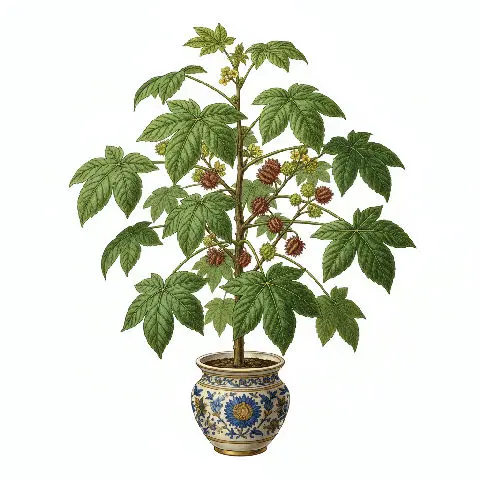
Arandi Oil, scientifically known as Ricinus communis, is derived from the seeds of the castor bean plant, a prominent member of the Euphorbiaceae family. This resilient botanical is indigenous to the Mediterranean Basin, Eastern Africa, and India, where its cultivation dates back over 6,000 years, with historical evidence of its use found in ancient Egyptian tombs and the Ebers Papyrus. Morphologically, Ricinus communis exhibits significant adaptability, growing as an annual in temperate climates or as a robust perennial shrub or small tree in tropical zones, capable of reaching heights of 2 to 5 meters, with some varieties exceeding 10 meters.
Its distinctive palmate leaves, often a striking purplish-red in certain cultivated varieties, and spiny, globular seed capsules make it easily identifiable. Each capsule encases the seeds from which Arandi Oil is extracted. It is crucial to emphasize that while the seeds themselves contain ricin, a highly toxic protein, the oil extraction process, typically through cold-pressing or solvent extraction, effectively separates the water-soluble ricin from the oil, rendering the final product virtually ricin-free and safe for medicinal and industrial applications.
The oil's primary active compound is ricinoleic acid, a unique monounsaturated fatty acid that constitutes an impressive 85-95% of its composition, underpinning its diverse therapeutic properties.
Trusted Scientific References
1. Authoritative external sources for Ricinus communis
1.1 Wikipedia — Ricinus communis
1.2 Kew POWO (Plants of the World Online)
1.3 PubMed — peer-reviewed research
1.4 NCBI Taxonomy Browser
1.5 GBIF — Global Biodiversity
1.6Arandi Oil should be interpreted through verified botanical identity, practical care, and responsible safety language. This recovery note adds the missing context needed for a complete profile: match light to the plant's habit, use well-drained soil, water according to season, and avoid unsupported medicinal or edible claims. For publishing, the plant can be presented as a source-backed medicinal plant with clear care guidance, common problem diagnosis, and conservative safety wording.
1.1.Arandi Oil — Distinguishing Points
- ✓Botanical Name — Ricinus communis.
- ✓Family — Euphorbiaceae.
- ✓Primary Constituent — Ricinoleic acid (85-95%).
- ✓FDA Status — Approved as a stimulant laxative.
- ✓Traditional Uses — Extensive history in Ayurvedic, TCM, and Unani medicine.
- ✓Ricin — Free Oil — Safe for use, distinct from toxic seeds.
- ✓Emollient Properties — Highly moisturizing for skin and hair.
- ✓Anti — inflammatory — Offers potential relief for pain and swelling.
- ✓Global Distribution — Native to Mediterranean, Africa, and India, now cultivated worldwide.
- ✓Versatile Application — Used orally for internal health and topically for external conditions.
1.2.Arandi Oil — Concise Overview
- ✓Arandi Oil, or Ricinus communis oil, is a powerful stimulant laxative.
- ✓Its primary active compound is ricinoleic acid.
- ✓Traditionally used in Ayurvedic and Unani medicine for diverse ailments.
- ✓The oil is ricin-free, unlike the toxic raw seeds.
- ✓Also valued for topical use in skin care and anti-inflammatory applications.
- ✓FDA-approved for temporary constipation relief but contraindicated in pregnancy.
2.Arandi Oil — Botanical Identity
3.Arandi Oil — Vital Statistics
4.Arandi Oil — Botanical Description
5.Arandi Oil — Native Range & Habitat
6.Arandi Oil — Folk Medicine Applications
7.Arandi Oil — Phytochemistry
- ✓Ricinoleic Acid — The predominant monounsaturated fatty acid (85-95%), responsible for most of Arandi Oil's pharmacological actions, including its laxative, anti-inflammatory, and antimicrobial effects.
- ✓Oleic Acid — A monounsaturated omega-9 fatty acid (2-6%) contributing to the oil's emollient properties and skin conditioning benefits.
- ✓Linoleic Acid — An essential polyunsaturated omega-6 fatty acid (1-5%) important for maintaining skin barrier function and offering anti-inflammatory support.
- ✓Stearic Acid — A saturated fatty acid (less than 1%) that acts as an emulsifier and provides emollient qualities to the oil.
- ✓Palmitic Acid — Another saturated fatty acid (less than 1%) that contributes to the oil's texture and moisturizing capabilities.
- ✓Tocopherols — Trace amounts of Vitamin E compounds, which act as natural antioxidants, helping to stabilize the oil and provide skin-protective benefits.
- ✓Phytosterols — Minor components that can contribute to the oil's anti-inflammatory and skin-soothing effects.
- ✓Ricin — A highly toxic protein found in the raw seeds of Ricinus communis, but notably absent from properly processed Arandi Oil due to its water solubility and non-miscibility with oil.
8.Arandi Oil — Evidence-Based Benefits
- ✓Stimulant Laxative — Ricinoleic acid, the primary component, is metabolized in the intestine to activate EP3 and EP4 prostanoid receptors, stimulating smooth muscle contractions and promoting bowel evacuation.
- ✓Bowel Preparation Aid — Used to facilitate thorough bowel cleansing prior to diagnostic procedures like colonoscopies, where it can improve preparation scores and patient satisfaction in specific protocols.
- ✓Anti-inflammatory Action — Ricinoleic acid possesses anti-inflammatory properties, potentially reducing swelling and pain when applied topically, a benefit explored in traditional medicine for joint and muscle discomfort.
- ✓Antimicrobial Properties — Studies suggest Arandi Oil exhibits activity against various microbes, including bacteria and fungi, contributing to its traditional use in managing minor skin infections.
- ✓Emollient and Moisturizer — Its rich fatty acid profile makes it an excellent emollient, deeply hydrating and softening the skin, useful for conditions characterized by dryness and flaking.
- ✓Analgesic Effects — Traditionally applied topically to alleviate localized pain, such as muscle aches and headaches, likely due to its anti-inflammatory actions.
- ✓Wound Healing Support — In traditional practices, Arandi Oil has been used to dress minor wounds, potentially aiding the healing process through its antimicrobial and anti-inflammatory attributes, though modern evidence is limited.
- ✓Hair and Scalp Health — Often incorporated into hair care routines to moisturize the scalp, strengthen hair strands, and promote a healthy environment for hair growth due to its nourishing fatty acids.
- ✓Labor Induction (Traditional) — Historically used to induce labor, though this application is not FDA-approved and requires extreme caution due to potential maternal and fetal risks.
- ✓Ocular Health Support (Traditional) — Explored in traditional medicine for conditions like blepharitis, dry eye disease, and meibomian gland dysfunction, primarily for its moisturizing and anti-inflammatory potential around the eyes.
8.1.Arandi Oil — Reported Uses
9.Arandi Oil — Safety Considerations
9.1.Arandi Oil — Warnings
- ✓Abdominal Cramping — Common due to its stimulant laxative action, causing intestinal contractions.
- ✓Diarrhea — A primary effect, especially with higher doses, leading to frequent, loose stools.
- ✓Nausea and Vomiting — May occur, particularly if the taste is unpleasant or dosage is excessive.
- ✓Electrolyte Imbalance — Prolonged or excessive use can lead to dehydration and depletion of essential electrolytes.
- ✓Allergic Reactions — Rare, but skin irritation, rash, or itching can occur with topical application.
- ✓Meconium Staining — A risk when used for labor induction during pregnancy, potentially impacting the fetus.
- ✓Dehydration — Significant fluid loss can result from severe or chronic diarrhea induced by castor oil.
9.2.Arandi Oil — Safety Profile
- ✓FDA-Approved — Recognized by the US FDA as a safe and effective stimulant laxative for temporary relief of occasional constipation.
- ✓Ricin-Free Oil — Properly processed Arandi Oil is virtually free of ricin, the toxic protein present in raw seeds, making the oil safe for ingestion and topical use.
- ✓Pregnancy Contraindication — Strongly contraindicated during pregnancy due to its potential to induce labor and cause uterine contractions, which can be harmful.
- ✓Breastfeeding Caution — Not recommended for use during breastfeeding due to a lack of data on its excretion into breast milk and potential risks to the infant.
- ✓Pediatric Use Avoidance — Should be avoided in infants and young children, especially without medical guidance, due to risks of dehydration and electrolyte imbalance.
- ✓Short-Term Use Only — Intended for short-term use for constipation; prolonged use can lead to dependency and electrolyte disturbances.
- ✓Medical Consultation — Always consult a healthcare professional before use, especially if pregnant, breastfeeding, or managing chronic health conditions.
10.Arandi Oil — Preparation Methods
- ✓Oral Laxative — Adult dosage typically ranges from 15 to 60 mL for temporary relief of occasional constipation, often mixed with juice to mask its distinct taste.
- ✓Topical Application for Skin — Applied directly to the skin to moisturize, soothe inflammation, or address conditions like dryness, eczema, and psoriasis.
- ✓Hair and Scalp Treatment — Massaged into the scalp and hair as an overnight treatment or pre-shampoo mask to nourish follicles and enhance hair strength.
- ✓Castor Oil Packs — Used externally as a compress applied over affected areas to alleviate muscle pain, joint discomfort, or abdominal issues, often with heat.
- ✓Bowel Preparation — Administered orally under medical supervision as part of a regimen to cleanse the colon before diagnostic procedures like colonoscopies.
- ✓Traditional Ayurvedic Use — Utilized in Ayurveda as a potent purgative (Virechana), for joint pain (external application), and to balance Vata dosha.
- ✓Traditional Chinese Medicine (TCM) — Employed externally for skin conditions and internally for detoxification, though less common than in Ayurvedic practices.
- ✓Eyelid and Lash Care (Off-label) — Applied sparingly to eyelids and eyelashes to moisturize and potentially support lash health, though caution is advised to avoid eye irritation.
11.Arandi Oil — Garden Cultivation
- ✓Climate Preference — Thrives in tropical and subtropical regions, requiring warm temperatures and a long growing season; can be grown as an annual in temperate zones.
- ✓Soil Requirements — Prefers well-drained, fertile loamy soils with a neutral to slightly acidic pH for optimal growth.
- ✓Propagation — Primarily propagated from seeds, which should be planted after the last frost in well-prepared seedbeds.
- ✓Watering Needs — Requires consistent moisture during germination and early growth stages, but established plants are relatively drought-tolerant.
- ✓Sunlight Exposure — Needs full sun exposure (at least 6-8 hours daily) to produce abundant seeds.
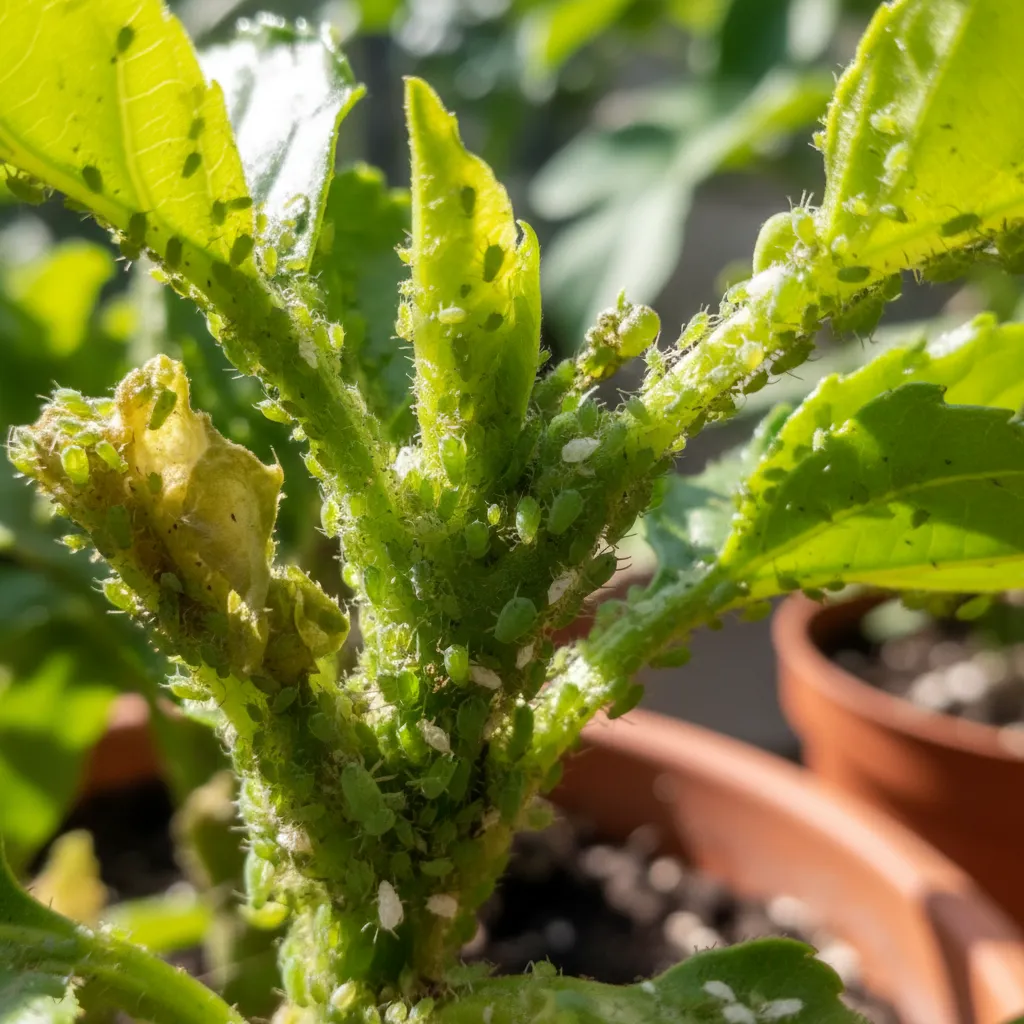
- ✓Pest and Disease Management — Generally robust, but can be susceptible to certain fungal diseases and pests like spider mites, requiring vigilant monitoring.
- ✓Harvesting — Seed capsules are typically harvested when they begin to dry and split, usually 4-6 months after planting, before they fully dehisce.
- ✓Post-Harvest Processing — Seeds are dried, dehulled, and then cold-pressed or solvent-extracted to obtain the oil, ensuring the removal of toxic ricin.
Reviewed by the Flora Medical Global Botanical Review Panel
Multi-disciplinary editorial group · Botany · Ethnobotany · Herbal-medicine literature
Who reviewed this: This page was checked by the Flora Medical Global Botanical Review Panel — an in-house editorial group of botany graduates, ethnobotany researchers, and horticulture practitioners who collectively maintain our 7,000+ plant encyclopedia. Meet the team.
Our 4-step verification process
1. Taxonomic verification
Scientific names and synonyms cross-checked against Kew POWO, World Flora Online, and The Plant List.
2. Phytochemical & medicinal cross-reference
Active compounds, traditional uses, and reported activities are cross-referenced with PubMed, USDA Dr. Duke's database, and peer-reviewed ethnobotanical literature.
3. Conservation & distribution check
Distribution, ecology, and conservation status confirmed against GBIF occurrence records and the IUCN Red List.
4. Editorial & safety review
Every entry passes an editorial pass for clarity, originality, and safety notices (toxicity, contraindications, dosage caveats) before publication.
Last reviewed:
Important medical disclaimer: This content is for educational and research purposes only. It is not medical advice and is not a substitute for consultation with a licensed healthcare provider. Do not use any herb to self-treat a medical condition without professional guidance.
Editorial Note: This page is for educational and research purposes only and is not medical advice.
Written by: Flora Medical Global Editorial Team
Reviewed by: Flora Medical Global Botanical Review Panel
Last Updated: June 16, 2026





Arandi Oil — Comments & Community Reviews
Rate this plant