
Medical Disclaimer: This content is for educational purposes only. It is not medical advice. Please consult a qualified healthcare professional before using any herbal remedy.
Safety Overview
1.Arnica Flower — At a Glance
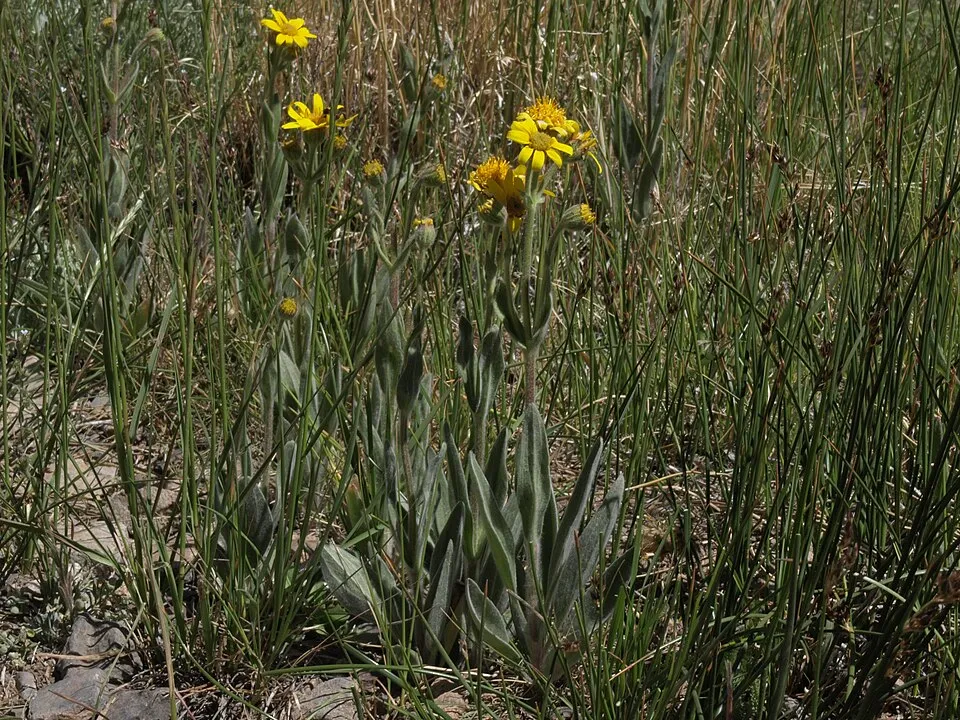
Arnica chamissonis, commonly known as Meadow Arnica or American Arnica, is a resilient perennial herb thriving in the cooler climes of North America. This member of the Asteraceae family typically grows to a height of 30 to 90 cm, presenting vibrant yellow, daisy-like flower heads that grace meadows from late spring through late summer. A key distinguishing feature from its European relative, Arnica montana, is its branching stems, which bear multiple flower heads, contrasting with the solitary blooms of A. montana. The plant's leaves are lanceolate to ovate, forming a basal rosette, and are generally thinner and larger than those of its European counterpart.
A robust fibrous root system anchors Arnica chamissonis in its preferred habitats: moist meadows, open woodlands, and subalpine regions with well-drained, acidic to neutral soils. Its natural range spans from the Alaskan Archipelago down to California and extends across the southern Rocky Mountains to New Mexico, highlighting its adaptability to diverse, high-altitude or northern environments. Historically, indigenous North American communities revered this plant for its traditional medicinal properties, particularly its efficacy in addressing inflammation and pain. Ecologically, A. chamissonis plays a vital role in maintaining biodiversity, serving as a food source and habitat for various pollinators within its native ecosystems.
Taxonomically, while part of the extensive Asteraceae family, A. chamissonis is increasingly recognized for its distinct phytochemical profile, often presenting a lower allergenic potential compared to A. montana, making it a preferred choice for many topical herbal applications.
Trusted Scientific References
1. Authoritative external sources for Arnica chamissonis
1.1 Wikipedia — Arnica chamissonis
1.2 Kew POWO (Plants of the World Online)
1.3 PubMed — peer-reviewed research
1.4 NCBI Taxonomy Browser
1.5 GBIF — Global Biodiversity
1.6Arnica Flower should be interpreted through verified botanical identity, practical care, and responsible safety language. This recovery note adds the missing context needed for a complete profile: match light to the plant's habit, use well-drained soil, water according to season, and avoid unsupported medicinal or edible claims. For publishing, the plant can be presented as a source-backed medicinal plant with clear care guidance, common problem diagnosis, and conservative safety wording.
1.1.Arnica Flower — Distinguishing Points
- ✓North American Native — Indigenous to cooler regions of North America, from Alaska to New Mexico.
- ✓Asteraceae Family Member — Belongs to the large daisy family, sharing characteristics with related plants.
- ✓Branching Stems — Distinctive multiple flower heads on branching stems, unlike A. montana.
- ✓Potent Anti — inflammatory — Contains sesquiterpene lactones like helenalin for inflammation reduction.
- ✓Natural Analgesic — Provides effective topical relief for muscle pain, sprains, and bruises.
- ✓Antioxidant Rich — Flavonoids and phenolic acids contribute to its protective antioxidant profile.
- ✓Topical Application — Primarily used externally in gels, creams, and oils for safety and efficacy.
- ✓Lower Allergenic Potential — Often preferred over A. montana for topical preparations due to reduced allergy risk.
- ✓Traditional Indigenous Use — Valued by native peoples for centuries in their herbal medicine practices.
- ✓Essential Oil Source — Flower heads yield a valuable essential oil with therapeutic components.
1.2.Arnica Flower — Concise Overview
- ✓Arnica chamissonis is a North American herb known for its bright yellow flowers.
- ✓Primarily used topically for anti-inflammatory and pain-relieving properties.
- ✓Effective for bruises, muscle soreness, sprains, and minor trauma.
- ✓Contains active compounds like sesquiterpene lactones and essential oils.
- ✓Crucially, it is for external use only, as internal consumption is toxic.
- ✓Offers a lower allergenic potential compared to its European cousin, A. montana.
2.Arnica Flower — Scientific Identity
3.Arnica Flower — Key Data
4.Arnica Flower — Botanical Description
5.Arnica Flower — Ecological Habitat
6.Arnica Flower — Heritage Uses
7.Arnica Flower — Chemical Profile
- ✓Sesquiterpene Lactones — Key compounds like helenalin and dihydrohelenalin are responsible for Arnica's potent anti-inflammatory and analgesic effects by inhibiting NF-κB and other inflammatory mediators.
- ✓Flavonoids — Quercetin, kaempferol, and their glycosides contribute to the plant's antioxidant activity, reducing oxidative stress and supporting capillary integrity.
- ✓Phenolic Acids — Caffeic acid and chlorogenic acid derivatives provide additional antioxidant and anti-inflammatory benefits, scavenging free radicals.
- ✓Essential Oils — Comprising monoterpenes (alpha-pinene, beta-pinene, p-cymene, cumene), sesquiterpenes (germacrene D, caryophyllene oxide), and aromatic compounds (decanal, benzene acetaldehyde), these oils contribute to the plant's characteristic aroma and therapeutic properties, including antiseptic and anti-inflammatory actions.
- ✓Coumarins — Simple coumarins like scopoletin may contribute to anti-inflammatory and antispasmodic effects, though typically in lower concentrations.
- ✓Triterpenes — Compounds such as arnidiol and faradiol esters are present, known for their anti-inflammatory properties, particularly in topical applications.
- ✓Polysaccharides — Contribute to the immunomodulatory effects and overall plant health, though their direct therapeutic role in topical Arnica is less studied.
- ✓Choline Derivatives — May play a role in neurotransmission and contribute to the overall physiological effects of the plant, though not a primary active constituent for pain relief.
8.Arnica Flower — Scientific Evidence
- ✓Anti-inflammatory — Arnica chamissonis contains sesquiterpene lactones and flavonoids that help reduce inflammation by inhibiting pro-inflammatory pathways, making it beneficial for muscle and joint discomfort.
- ✓Pain Relief (Analgesic) — Applied topically, Arnica flower extracts alleviate localized pain associated with bruises, sprains, and sore muscles by reducing swelling and nerve sensitivity.
- ✓Bruise Healing — It accelerates the reabsorption of blood from bruised tissues, minimizing discoloration and discomfort, a traditional use supported by its ability to improve microcirculation.
- ✓Swelling Reduction — The plant's compounds help to decrease fluid accumulation in tissues, effectively reducing edema and swelling post-injury or from physical exertion.
- ✓Muscle Soreness Management — Ideal for athletes, Arnica helps soothe post-exercise muscle aches and stiffness, facilitating faster recovery.
- ✓Antioxidant Support — Rich in phenolic acids and flavonoids, Arnica chamissonis offers antioxidant properties that combat free radical damage, contributing to cellular health and reducing oxidative stress.
- ✓Sprain and Strain Recovery — Its combined anti-inflammatory and pain-relieving actions make it a valuable aid in the recovery process for minor sprains and strains.
- ✓Joint Comfort — For individuals experiencing mild joint pain or stiffness, topical application of Arnica preparations can provide localized relief and improve mobility.
- ✓Minor Trauma Management — Beyond specific injuries, Arnica is traditionally used to address general discomfort and inflammation resulting from minor bumps and falls.
- ✓Skin Repair — While not for broken skin, its properties can support the healing of intact skin after trauma, promoting a healthy inflammatory response and tissue regeneration.
8.1.Arnica Flower — Health Applications
9.Arnica Flower — Safety & Side Effects
9.1.Arnica Flower — Possible Adverse Reactions
- ✓Skin Irritation — Can cause redness, itching, or dermatitis, especially in sensitive individuals or with prolonged use.
- ✓Allergic Reactions — Individuals allergic to plants in the Asteraceae family (e.g., ragweed, marigolds) may experience cross-reactivity.
- ✓Blistering — High concentrations or prolonged application, particularly on sensitive skin, may lead to blistering.
- ✓Open Wound Avoidance — Never apply Arnica to broken skin, open wounds, or mucous membranes, as it can cause severe irritation and absorption of toxic compounds.
- ✓Internal Toxicity — Ingesting non-homeopathic Arnica can lead to serious adverse effects including gastrointestinal upset, vomiting, diarrhea, rapid heartbeat, and even organ damage.
- ✓Photosensitivity — Some individuals may experience increased skin sensitivity to sunlight in treated areas, though this is less common.
9.2.Arnica Flower — Safety Profile
- ✓External Use Only — Strictly for topical application on intact skin; internal consumption of non-homeopathic forms is highly toxic and contraindicated.
- ✓Avoid Broken Skin — Do not apply to cuts, abrasions, open wounds, or mucous membranes to prevent systemic absorption and severe irritation.
- ✓Pregnancy and Lactation — Contraindicated during pregnancy and breastfeeding due to lack of safety data and potential for toxicity.
- ✓Children — Use with extreme caution in children, always under medical supervision, and preferably in highly diluted forms or homeopathic preparations.
- ✓Allergic Sensitivity — Advise caution for individuals with known allergies to plants in the Asteraceae family; perform a patch test before widespread use.
- ✓Drug Interactions — May theoretically interact with anticoagulant medications due to potential effects on blood clotting, although this is primarily a concern with internal use.
- ✓Professional Consultation — Always consult a healthcare professional before using Arnica, especially if you have pre-existing medical conditions or are taking other medications.
10.Arnica Flower — Usage Guide
- ✓Topical Gels and Creams — Apply a thin layer to the affected area (unbroken skin only) 2-3 times daily for bruises, muscle soreness, or joint pain.
- ✓Herbal Tinctures — Dilute the tincture in water or a carrier oil for external application as a compress or liniment, strictly avoiding internal consumption.
- ✓Infused Oils — Prepare by infusing dried Arnica flowers in a carrier oil (e.g., olive or almond oil) for massage into sore muscles or painful joints.
- ✓Homeopathic Preparations — Available in various potencies (e.g., Arnica montana 30C pellets) for internal use, following specific homeopathic guidelines and practitioner advice.
- ✓Compresses — Soak a cloth in a diluted Arnica infusion or tincture and apply to sprains or swellings, ensuring the skin is intact.
- ✓Balms and Salves — Formulate with beeswax and Arnica-infused oil for a more concentrated, localized application on areas of discomfort.
- ✓Poultices (External Only) — Traditionally, crushed fresh or dried flowers might be mixed with a binder and applied externally, but this requires caution due to potential skin irritation.
11.Arnica Flower — How to Grow
- ✓Soil Preference — Thrives in well-drained, acidic to neutral soils (pH 5.5-7.0), ideally enriched with organic matter to mimic its natural meadow habitat.
- ✓Sunlight Requirements — Prefers full sun to partial shade; adequate sunlight is crucial for robust flowering and optimal essential oil production.
- ✓Watering — Requires consistent moisture, especially during dry spells, but avoid waterlogging to prevent root rot.
- ✓Propagation — Can be propagated by seed (stratification often required), division of rhizomes in early spring, or cuttings.
- ✓Climate — Best suited for cooler climates, mimicking its native North American subalpine and temperate regions; intolerant of extreme heat.
- ✓Fertilization — Benefits from moderate fertilization, particularly nitrogen, which can influence essential oil content and yield, as demonstrated by research.
- ✓Pests and Diseases — Generally robust, but watch for common garden pests like aphids and fungal diseases in overly damp conditions.
- ✓Harvesting — Flower heads are typically harvested at full bloom, as this stage is characterized by the highest concentration of essential oils and active compounds.
Reviewed by the Flora Medical Global Botanical Review Panel
Multi-disciplinary editorial group · Botany · Ethnobotany · Herbal-medicine literature
Who reviewed this: This page was checked by the Flora Medical Global Botanical Review Panel — an in-house editorial group of botany graduates, ethnobotany researchers, and horticulture practitioners who collectively maintain our 7,000+ plant encyclopedia. Meet the team.
Our 4-step verification process
1. Taxonomic verification
Scientific names and synonyms cross-checked against Kew POWO, World Flora Online, and The Plant List.
2. Phytochemical & medicinal cross-reference
Active compounds, traditional uses, and reported activities are cross-referenced with PubMed, USDA Dr. Duke's database, and peer-reviewed ethnobotanical literature.
3. Conservation & distribution check
Distribution, ecology, and conservation status confirmed against GBIF occurrence records and the IUCN Red List.
4. Editorial & safety review
Every entry passes an editorial pass for clarity, originality, and safety notices (toxicity, contraindications, dosage caveats) before publication.
Last reviewed:
Important medical disclaimer: This content is for educational and research purposes only. It is not medical advice and is not a substitute for consultation with a licensed healthcare provider. Do not use any herb to self-treat a medical condition without professional guidance.
Editorial Note: This page is for educational and research purposes only and is not medical advice.
Written by: Flora Medical Global Editorial Team
Reviewed by: Flora Medical Global Botanical Review Panel
Last Updated: June 16, 2026





Arnica Flower — Comments & Community Reviews
Rate this plant