


Medical Disclaimer: This content is for educational purposes only. It is not medical advice. Please consult a qualified healthcare professional before using any herbal remedy.
Safety Overview
1.Artemisia — Overview
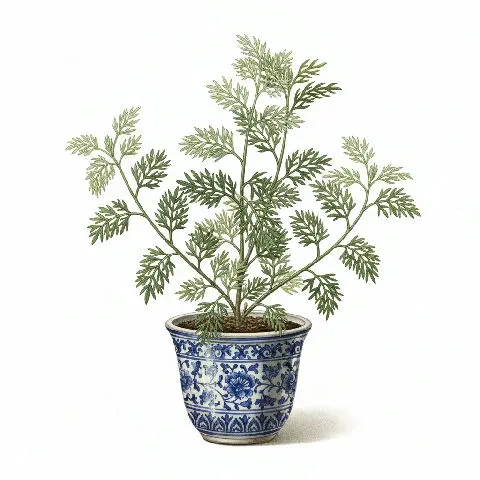
Artemisia capillaris, commonly known as Yin-Chen Hao in traditional Chinese medicine and Capillary Wormwood in English, is a herbaceous perennial belonging to the extensive Asteraceae family, a diverse group that also encompasses daisies and sunflowers. This resilient species is indigenous to the temperate regions of East Asia, with a wide natural distribution across China, Japan, and Korea. Artemisia capillaris demonstrates remarkable adaptability, thriving in a variety of environments, including dry, sandy riverbanks, coastal areas, disturbed lands, roadsides, and open slopes, indicating its preference for well-drained soils and ample sunlight. Morphologically, Artemisia capillaris typically presents as an erect, slender herb, capable of reaching heights of 30 to 100 centimeters.
Its stems are often characterized by a reddish-brown hue and branch profusely, particularly in the upper sections of the plant. A distinguishing feature is its finely dissected leaves, which are divided into numerous thread-like segments, imparting a delicate, feathery texture and appearance. These leaves are arranged alternately along the stem and can exhibit variations in size and dissection based on their position and the plant's developmental stage. The plant produces numerous small, inconspicuous yellowish-green to brownish flower heads, or capitula, which are arranged in a large, open paniculate inflorescence.
These flowers bloom in the late summer to early autumn, typically from August to October, and are primarily wind-pollinated. The root system comprises a robust taproot complemented by fibrous lateral roots, which securely anchor the plant and facilitate access to deeper soil moisture. Taxonomically, Artemisia capillaris is a member of the genus Artemisia, a genus highly regarded for its aromatic and medicinal species, many of which are rich in potent secondary metabolites.
Trusted Scientific References
1. Authoritative external sources for Artemisia capillaris
1.1 Wikipedia — Artemisia capillaris
1.2 Kew POWO (Plants of the World Online)
1.3 PubMed — peer-reviewed research
1.4 NCBI Taxonomy Browser
1.5 GBIF — Global Biodiversity
1.1.Artemisia — Standout Qualities
- ✓Traditional Chinese Medicine (TCM) Herb — Widely recognized as Yin-Chen Hao for centuries.
- ✓Hepatoprotective — Strong affinity for liver health and detoxification.
- ✓Anti — inflammatory — Contains compounds that reduce systemic inflammation.
- ✓Antioxidant Rich — Abundant in phenolic acids and flavonoids combating oxidative stress.
- ✓Antiviral Action — Demonstrated efficacy against certain viruses, notably hepatitis.
- ✓Feathery Foliage — Distinctive highly dissected, thread-like leaves.
- ✓Adaptable Growth — Thrives in diverse temperate East Asian environments.
- ✓Asteraceae Family — Member of the large daisy and sunflower family.
- ✓Bioactive Coumarins — Key compounds like scoparone and scopoletin are present.
- ✓Seasonal Potency — Bioactive compound levels vary with plant part and harvest time.
1.2.Artemisia — At-a-Glance Summary
- ✓Artemisia capillaris is a key herb in TCM, known as Yin-Chen Hao.
- ✓Primarily used for liver health, including conditions like jaundice and hepatitis.
- ✓Contains active compounds like scoparone, capillarisin, and chlorogenic acid.
- ✓Exhibits antioxidant, anti-inflammatory, antiviral, and antitumor properties.
- ✓Requires careful dosing and is contraindicated in pregnancy.
- ✓Harvest time significantly impacts the concentration of bioactive components.
2.Artemisia — Scientific Profile
3.Artemisia — Reference Facts
4.Artemisia — Structural Profile
5.Artemisia — Where It Grows
6.Artemisia — Cultural & Traditional Roles
7.Artemisia — Bioactive Constituents
- ✓Coumarins — Key compounds include scoparone (6,7-dimethylesculetin) and scopoletin, known for their hepatoprotective, anti-inflammatory, and choleretic activities.
- ✓Flavonoids — Capillarisin is a prominent flavonoid, exhibiting significant antioxidant, antiviral, and anti-inflammatory properties, particularly beneficial for liver health.
- ✓Phenolic Acids — Chlorogenic acid is abundant in Artemisia capillaris, contributing potent antioxidant, anti-inflammatory, and hepatoprotective effects.
- ✓Essential Oils — Aromatic volatile compounds impart the characteristic scent and contribute to its traditional uses as an antimicrobial and anti-inflammatory agent.
- ✓Terpenoids — Various monoterpenes and sesquiterpenes are present, which may contribute to its anti-inflammatory and antimicrobial actions.
- ✓Polysaccharides — These complex carbohydrates are often associated with immunomodulatory effects, enhancing the body's natural defenses.
- ✓Lignans — Compounds like arctigenin and matairesinol may be found, contributing to antioxidant and potential anticancer activities.
- ✓Sterols — Plant sterols are present, which can have anti-inflammatory and cholesterol-lowering properties.
- ✓Fatty Acids — Essential fatty acids contribute to overall plant health and may have some biological activity in human consumption.
8.Artemisia — What Research Suggests
- ✓Hepatoprotective Action — Artemisia capillaris is widely recognized for its ability to protect liver cells from damage, support liver regeneration, and improve overall liver function, making it a cornerstone in traditional treatments for various hepatic conditions.
- ✓Anti-inflammatory Properties — The plant contains bioactive compounds that help to modulate inflammatory pathways, reducing systemic inflammation and alleviating symptoms associated with inflammatory disorders like hepatitis.
- ✓Antioxidant Effects — Rich in phenolic compounds, Artemisia capillaris effectively scavenges free radicals, mitigating oxidative stress and protecting cellular structures from damage.
- ✓Antiviral Activity — Research indicates its efficacy against certain viral infections, particularly viral hepatitis, by inhibiting viral replication and enhancing the immune response.
- ✓Antitumor Potential — Studies suggest that some compounds in Artemisia capillaris exhibit antiproliferative effects, potentially inhibiting the growth of various cancer cells, including hepatocellular carcinoma.
- ✓Antisteatotic Properties — It aids in preventing and reducing fat accumulation in the liver, offering benefits in conditions like non-alcoholic fatty liver disease (NAFLD) and metabolic syndrome.
- ✓Cholagogic Effects — Traditionally used to promote bile flow, it assists in the digestion of fats and the elimination of toxins, crucial for treating jaundice and 'damp-heat' conditions.
- ✓Diuretic Action — Artemisia capillaris can promote urination, helping to clear excess fluid and toxins from the body, which contributes to its use in treating dysuria and edema.
- ✓Immunomodulatory Support — Components within the plant may help to balance and strengthen the immune system, enhancing the body's natural defense mechanisms.
- ✓Skin Health Benefits — Its anti-inflammatory and antioxidant properties make it beneficial for certain skin conditions, such as psoriasis, by reducing inflammation and promoting skin healing.
8.1.Artemisia — Health Applications
9.Artemisia — Risk Profile
9.1.Artemisia — Possible Adverse Reactions
- ✓Gastrointestinal Upset — High doses may cause mild nausea, stomach discomfort, or diarrhea in sensitive individuals.
- ✓Allergic Reactions — Individuals sensitive to the Asteraceae family may experience allergic contact dermatitis or respiratory symptoms.
- ✓Photosensitivity — Some coumarins can increase skin sensitivity to sunlight, potentially leading to sunburn.
- ✓Interaction with Anticoagulants — Due to potential effects on blood clotting, caution is advised when combined with blood-thinning medications.
- ✓Liver Enzyme Elevation — While generally hepatoprotective, very high or prolonged doses might paradoxically affect liver enzyme levels in some cases.
- ✓Hypotension — May cause a slight decrease in blood pressure, which could be relevant for individuals on hypotensive medication.
- ✓Uterine Stimulation — Traditionally contraindicated in pregnancy due to potential emmenagogic or uterine stimulant effects.
9.2.Artemisia — Toxicity Assessment
- ✓Pregnancy and Lactation — Contraindicated during pregnancy due to potential uterine stimulating effects; consult a healthcare professional during lactation.
- ✓Children — Use with caution and under professional guidance; dosage adjustments are necessary due to lower body weight.
- ✓Pre-existing Conditions — Individuals with liver disease, bleeding disorders, or autoimmune conditions should consult a doctor before use.
- ✓Drug Interactions — May interact with anticoagulants, antiplatelet drugs, and possibly medications metabolized by the liver; consult a pharmacist.
- ✓Dosage Adherence — Adhere strictly to recommended dosages to minimize side effects and maximize therapeutic benefits, especially with concentrated extracts.
- ✓Allergic Sensitivity — Exercise caution if allergic to other plants in the Asteraceae family, such as ragweed, chrysanthemums, or marigolds.
- ✓Long-term Use — Prolonged use should be monitored by a healthcare professional due to potential cumulative effects or interactions.
10.Artemisia — Preparation & Dosage
- ✓Decoction — Dried aerial parts are simmered in water for 15-30 minutes to extract water-soluble compounds, commonly used for liver support.
- ✓Infusion (Tea) — Fresh or dried leaves are steeped in hot water for 5-10 minutes, suitable for milder medicinal purposes or daily tonic use.
- ✓Tincture — Plant material is macerated in alcohol and water for several weeks, creating a concentrated extract for precise dosing.
- ✓Powdered Herb — Dried plant material is ground into a fine powder and encapsulated or mixed into beverages for convenient consumption.
- ✓Topical Compress — A strong decoction can be used as a compress for external application to soothe skin irritations or inflammatory conditions.
- ✓Essential Oil Distillation — Although less common for this specific species, essential oils can be extracted for aromatic or topical uses, with caution.
- ✓Herbal Formulas — Often combined with other herbs in traditional Chinese medicine prescriptions to enhance synergistic effects for specific conditions.
- ✓Standardized Extracts — Modern preparations may involve extracts standardized to specific active compounds like scoparone or capillarisin for consistent potency.
11.Artemisia — Growing Guide
- ✓Seed Propagation — Seeds can be sown in spring or autumn in well-drained soil, requiring light for germination.
- ✓Division — Mature plants can be divided in spring or fall to propagate new plants, ensuring each division has roots and shoots.
- ✓Soil Preference — Thrives in sandy, well-drained soils; avoid heavy, waterlogged conditions to prevent root rot.
- ✓Sun Exposure — Prefers full sun to partial shade, with full sun promoting more robust growth and higher active compound concentration.
- ✓Watering — Drought-tolerant once established, requiring minimal watering; water regularly during dry spells, especially for young plants.
- ✓Fertilization — Generally low maintenance, but a light application of balanced organic fertilizer in spring can enhance growth.
- ✓Pest and Disease Management — Relatively resistant to most pests and diseases; ensure good air circulation to prevent fungal issues.
- ✓Harvesting — Aerial parts are typically harvested in late summer to early autumn, just before or during flowering, when active compounds are at their peak.
Reviewed by the Flora Medical Global Botanical Review Panel
Multi-disciplinary editorial group · Botany · Ethnobotany · Herbal-medicine literature
Who reviewed this: This page was checked by the Flora Medical Global Botanical Review Panel — an in-house editorial group of botany graduates, ethnobotany researchers, and horticulture practitioners who collectively maintain our 7,000+ plant encyclopedia. Meet the team.
Our 4-step verification process
1. Taxonomic verification
Scientific names and synonyms cross-checked against Kew POWO, World Flora Online, and The Plant List.
2. Phytochemical & medicinal cross-reference
Active compounds, traditional uses, and reported activities are cross-referenced with PubMed, USDA Dr. Duke's database, and peer-reviewed ethnobotanical literature.
3. Conservation & distribution check
Distribution, ecology, and conservation status confirmed against GBIF occurrence records and the IUCN Red List.
4. Editorial & safety review
Every entry passes an editorial pass for clarity, originality, and safety notices (toxicity, contraindications, dosage caveats) before publication.
Last reviewed:
Important medical disclaimer: This content is for educational and research purposes only. It is not medical advice and is not a substitute for consultation with a licensed healthcare provider. Do not use any herb to self-treat a medical condition without professional guidance.
Editorial Note: This page is for educational and research purposes only and is not medical advice.
Written by: Flora Medical Global Editorial Team
Reviewed by: Flora Medical Global Botanical Review Panel
Last Updated: June 16, 2026





Artemisia — Comments & Community Reviews
Rate this plant