
Medical Disclaimer: This content is for educational purposes only. It is not medical advice. Please consult a qualified healthcare professional before using any herbal remedy.
Safety Overview
1.Asarum — Introduction & Highlights
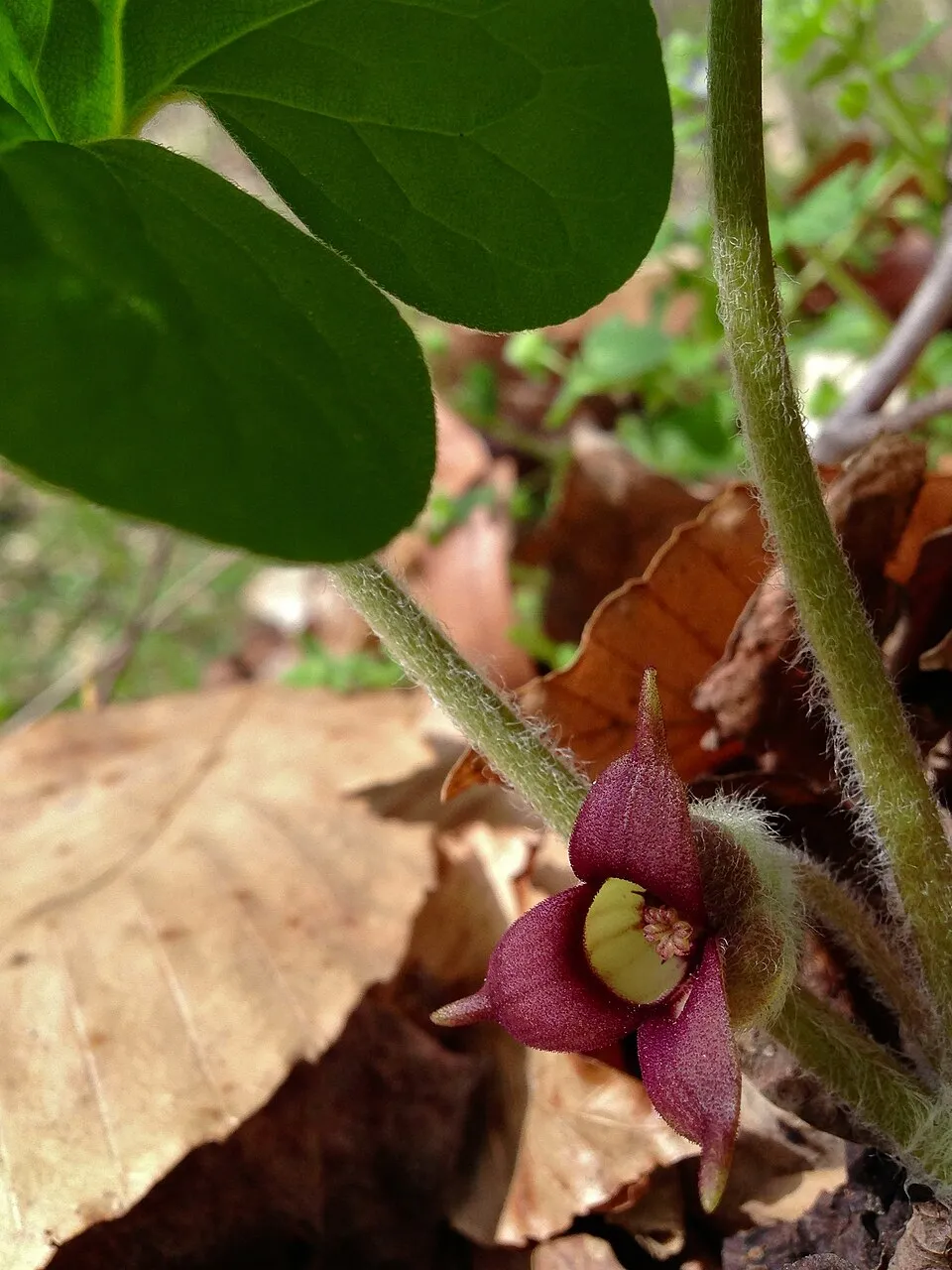
Asarum canadense, widely recognized as Wild Ginger or Canadian Snakeroot, is an enchanting herbaceous perennial indigenous to the rich, moist deciduous woodlands across eastern North America. This low-growing species typically forms extensive groundcover, seldom exceeding 15 cm in height, and is readily identified by its distinctive, velvety, kidney-shaped to broadly heart-shaped leaves, which are deciduous, dying back at the close of the growing season.
A notable botanical feature is its unique, jug-shaped flowers, often a subtle maroon-brown, which remain largely concealed at ground level beneath the dense foliage. These solitary, short-peduncled blooms, typically 2-4 cm in diameter, emerge between a pair of leaves, a specialized adaptation for pollination by small ground-dwelling insects like ants and other invertebrates.
The robust rhizomes of Asarum canadense are celebrated for their strong, pungent, and distinctly ginger-like aroma and flavor when bruised or crushed, a characteristic that aptly confers its common name, differentiating it from true ginger (Zingiber officinale). Following successful pollination, the plant produces a capsular fruit that opens irregularly to disperse its large, ovoid, and wrinkled seeds.
Taxonomically, Wild Ginger is classified within the Aristolochiaceae, commonly known as the Birthwort Family, a botanical group notorious for producing aristolochic acids. While Asarum canadense generally contains significantly lower or trace amounts of these compounds compared to some Asian Asarum or Aristolochia species, their inherent presence mandates extreme caution and discourages internal use due to their established toxicological profile.
Geographically, Canadian Wild Ginger flourishes across a broad expanse, from the Canadian provinces of New Brunswick and Quebec, westward through Ontario to Minnesota, and extending south throughout the eastern United States to states such as North Carolina, northern Alabama, and northern Louisiana. It serves as an important indicator species for healthy, undisturbed woodland ecosystems, playing a vital ecological role in stabilizing forest soil, preventing erosion, and providing crucial ground cover, thereby fostering regional biodiversity.
Trusted Scientific References
1. Authoritative external sources for Asarum canadense
1.1 Wikipedia — Asarum canadense
1.2 Kew POWO (Plants of the World Online)
1.3 PubMed — peer-reviewed research
1.4 NCBI Taxonomy Browser
1.5 GBIF — Global Biodiversity
1.1.Asarum — Key Features
- ✓Scientific Name — Asarum canadense
- ✓Common Names — Wild Ginger, Canadian Snakeroot
- ✓Family — Aristolochiaceae (Birthwort Family)
- ✓Native Range — Eastern North America
- ✓Growth Habit — Low-growing herbaceous perennial, forming groundcover
- ✓Leaves — Velvety, kidney-shaped to heart-shaped, deciduous
- ✓Flowers — Jug-shaped, maroon-brown, solitary, often hidden at ground level
- ✓Rhizome — Aromatic, pungent, ginger-like scent and flavor
- ✓Ecological Role — Woodland indicator species, soil stabilizer, ground cover
- ✓Key Concern — Presence of nephrotoxic and carcinogenic aristolochic acids
1.2.Asarum — Quick Summary
- ✓Native North American herbaceous perennial, often called Wild Ginger or Canadian Snakeroot.
- ✓Features distinctive kidney-shaped leaves and unique, hidden, jug-shaped maroon flowers.
- ✓Rhizomes emit a pungent, ginger-like aroma, but it is not true ginger.
- ✓Historically used by Indigenous tribes for colds, digestion, and as a flavoring agent.
- ✓Contains aristolochic acids, which are highly nephrotoxic and carcinogenic.
- ✓Internal use is strictly contraindicated due to severe health risks.
2.Asarum — Taxonomic Classification
3.Asarum — Quick Facts
4.Asarum — Structural Profile
5.Asarum — Where It Grows
6.Asarum — Ethnobotanical Uses
7.Asarum — Active Compounds
- ✓Phenylpropanoids — Key aromatic compounds like safrole and methyleugenol are responsible for Wild Ginger's distinctive ginger-like scent and flavor. Safrole, while contributing to the aroma, is known to have potential hepatotoxic and carcinogenic properties in higher concentrations.
- ✓Volatile Oils/Essential Oils — The rhizomes are rich in a complex mixture of volatile compounds, including various monoterpenes (e.g., alpha-pinene, beta-pinene, limonene) and sesquiterpenes, which contribute to its pungent aroma and traditional uses.
- ✓Aristolochic Acids — Asarum canadense contains trace to low levels of aristolochic acids (e.g., Aristolochic Acid I, Aristolochic Acid II). These compounds are potent nephrotoxins and carcinogens, making internal consumption highly hazardous.
- ✓Lignans — These plant compounds are known for their antioxidant and potential anti-inflammatory activities, though specific lignans in A. canadense and their effects are less studied.
- ✓Flavonoids — Present in many plants, flavonoids in Wild Ginger may contribute to general antioxidant and anti-inflammatory effects, supporting cellular health.
- ✓Tannins — These astringent compounds are typically found in various plant parts and may contribute to traditional uses related to tissue toning or minor irritation relief.
- ✓Resins — The plant contains various resinous substances, which are complex mixtures of organic compounds that can have diverse biological activities.
- ✓Alkaloids — While not a primary class, some minor alkaloids might be present, contributing to the plant's overall chemical profile, though specific types and activities are not well-documented for this species.
8.Asarum — Research Insights
- ✓Digestive Aid — Traditionally, Indigenous North American tribes like the Ojibwe and Menomini used the roots as a mild stomachic and appetite stimulant, incorporating it into food to improve digestion and make certain dishes more palatable.
- ✓Cold and Cough Relief — The Abnaki and Iroquois tribes historically prepared decoctions from Wild Ginger for treating symptoms associated with colds, coughs, and other respiratory ailments.
- ✓Headache Alleviation — The Iroquois utilized the roots of Asarum canadense as a traditional remedy for headaches, likely applied or consumed in specific preparations.
- ✓Urinary Disorder Support — Certain Indigenous practices, particularly among the Iroquois, noted the plant's use in addressing various urinary tract discomforts or irregularities.
- ✓Cardiovascular Support (Traditional) — The Cherokee people traditionally employed the plant in what they referred to as 'blood medicine' and for conditions related to 'heart trouble,' though modern scientific evidence is lacking and internal use is unsafe.
- ✓Earache Remedy — The Meskwaki tribe applied cooked root directly into the ear to alleviate pain and discomfort from earaches.
- ✓Relief from Cramps — The Micmac people traditionally used the root to soothe cramps, suggesting antispasmodic properties within their traditional medical system.
- ✓Flavoring Agent — Beyond medicinal uses, several tribes like the Ojibwe, Meskwaki, and Potawatomi incorporated the root to enhance the flavor of fish and meat, or to render otherwise undesirable foods palatable.
- ✓General Stomachic — The Menomini and Micmac tribes recognized its properties as a gentle stomach tonic, particularly for those with weak digestion or when consuming desired but potentially aggravating foods.
8.1.Asarum — Indications & Uses
9.Asarum — Risk Profile
9.1.Asarum — Warnings
- ✓Nephrotoxicity — The primary and most severe side effect is irreversible kidney damage, including renal failure, caused by aristolochic acids.
- ✓Carcinogenicity — Aristolochic acids are potent carcinogens, strongly linked to urinary tract cancers and other malignancies.
- ✓Gastrointestinal Upset — Ingesting the plant can lead to symptoms such as nausea, vomiting, diarrhea, and stomach pain, even in small amounts.
- ✓Liver Toxicity — Prolonged or high-dose exposure, particularly internally, may cause adverse effects on liver function.
- ✓Uterine Contractions — Wild Ginger is contraindicated in pregnancy as it may induce uterine contractions, posing a risk of miscarriage.
- ✓Allergic Reactions — Some individuals may experience contact dermatitis or other allergic responses upon skin contact or ingestion.
- ✓Drug Interactions — Potential for interactions with medications, especially those affecting kidney function, due to its toxic compounds.
9.2.Asarum — Safety Profile
- ✓Strictly External Use Only — Due to the presence of nephrotoxic and carcinogenic aristolochic acids, Asarum canadense should never be consumed internally.
- ✓Avoid During Pregnancy and Lactation — The plant is contraindicated for pregnant and breastfeeding individuals due to the risk of uterine stimulation and potential harm to the fetus or infant.
- ✓Contraindicated for Kidney Conditions — Individuals with pre-existing kidney disease or compromised renal function must avoid any form of internal or potentially systemic exposure.
- ✓Consult a Healthcare Professional — Always seek advice from a qualified medical herbalist or physician before considering any traditional or external use, particularly if you have underlying health conditions.
- ✓Distinguish from True Ginger — It is crucial to correctly identify Wild Ginger and not confuse it with culinary ginger (Zingiber officinale) to prevent accidental ingestion of toxic compounds.
- ✓Not for Prolonged Use — Even external applications should be limited in duration and frequency, and monitored for any adverse reactions.
- ✓Handle with Care — When harvesting or handling the plant, it is advisable to wear gloves to prevent potential skin irritation or absorption, especially for sensitive individuals.
10.Asarum — How to Use
- ✓Traditional Decoction — Historically, Indigenous tribes prepared a decoction by simmering the rhizomes in water for respiratory ailments like colds and coughs; however, internal use is strongly discouraged due to toxicity.
- ✓External Poultice — For traditional uses such as earaches, cooked or crushed root material was applied topically as a poultice. This method may carry fewer risks but still requires caution.
- ✓Culinary Flavoring (Historical) — Historically, the rhizome was used to impart a ginger-like flavor to foods, particularly fish and meats. Modern culinary use is not recommended due to safety concerns.
- ✓Infusion (Traditional) — Though less common for roots, some traditional practices may have involved steeping dried rhizomes in hot water to create an infusion for stomachic purposes, again, with inherent risks.
- ✓Tincture (Not Recommended) — While some herbalists might consider tinctures for other plants, due to the presence of aristolochic acids, creating or consuming a tincture of Asarum canadense is highly ill-advised.
- ✓Aromatic Inhalation — The crushed rhizomes can be safely enjoyed for their pleasant, ginger-like aroma without internal consumption, similar to aromatherapy.
- ✓Garden Specimen — The safest and most recommended modern 'use' is as an ornamental groundcover in shade gardens, appreciating its beauty and ecological role.
11.Asarum — Propagation & Care
- ✓Seed Propagation — Gather the mealy fruits when they first begin to split. Clean the seeds thoroughly, washing off all pulp, and sow them outdoors immediately in a shaded seedbed.
- ✓Cold Stratification for Seeds — If seeds are stored, they should be kept moist in sealed plastic bags at 40°F (4°C) in slightly moist vermiculite for several months to encourage germination the following spring.
- ✓Division of Rhizomes — The easiest propagation method is by dividing mature plants in early autumn as they enter dormancy. Cut through the rhizome at intervals of 6-8 inches (15-20 cm) or divide sections from the clump's edges.
- ✓Optimal Site Selection — Plant in rich, moist, well-draining soil, mimicking its native woodland habitat. It thrives in full to partial shade, sheltered from direct afternoon sun.
- ✓Consistent Moisture — Ensure the soil remains consistently moist, especially during establishment and dry periods, as Wild Ginger is not drought-tolerant.
- ✓Soil Requirements — Prefers humus-rich, slightly acidic to neutral soil, benefiting from added organic matter like leaf mold or compost to enhance fertility and moisture retention.
- ✓Spacing — When planting, allow adequate space for spreading, as it forms colonies and acts as an effective groundcover.
Reviewed by the Flora Medical Global Botanical Review Panel
Multi-disciplinary editorial group · Botany · Ethnobotany · Herbal-medicine literature
Who reviewed this: This page was checked by the Flora Medical Global Botanical Review Panel — an in-house editorial group of botany graduates, ethnobotany researchers, and horticulture practitioners who collectively maintain our 7,000+ plant encyclopedia. Meet the team.
Our 4-step verification process
1. Taxonomic verification
Scientific names and synonyms cross-checked against Kew POWO, World Flora Online, and The Plant List.
2. Phytochemical & medicinal cross-reference
Active compounds, traditional uses, and reported activities are cross-referenced with PubMed, USDA Dr. Duke's database, and peer-reviewed ethnobotanical literature.
3. Conservation & distribution check
Distribution, ecology, and conservation status confirmed against GBIF occurrence records and the IUCN Red List.
4. Editorial & safety review
Every entry passes an editorial pass for clarity, originality, and safety notices (toxicity, contraindications, dosage caveats) before publication.
Last reviewed:
Important medical disclaimer: This content is for educational and research purposes only. It is not medical advice and is not a substitute for consultation with a licensed healthcare provider. Do not use any herb to self-treat a medical condition without professional guidance.
Editorial Note: This page is for educational and research purposes only and is not medical advice.
Written by: Flora Medical Global Editorial Team
Reviewed by: Flora Medical Global Botanical Review Panel
Last Updated: June 16, 2026





Asarum — Comments & Community Reviews
Rate this plant