
Medical Disclaimer: This content is for educational purposes only. It is not medical advice. Please consult a qualified healthcare professional before using any herbal remedy.
Safety Overview
1.Babool — Plant Snapshot
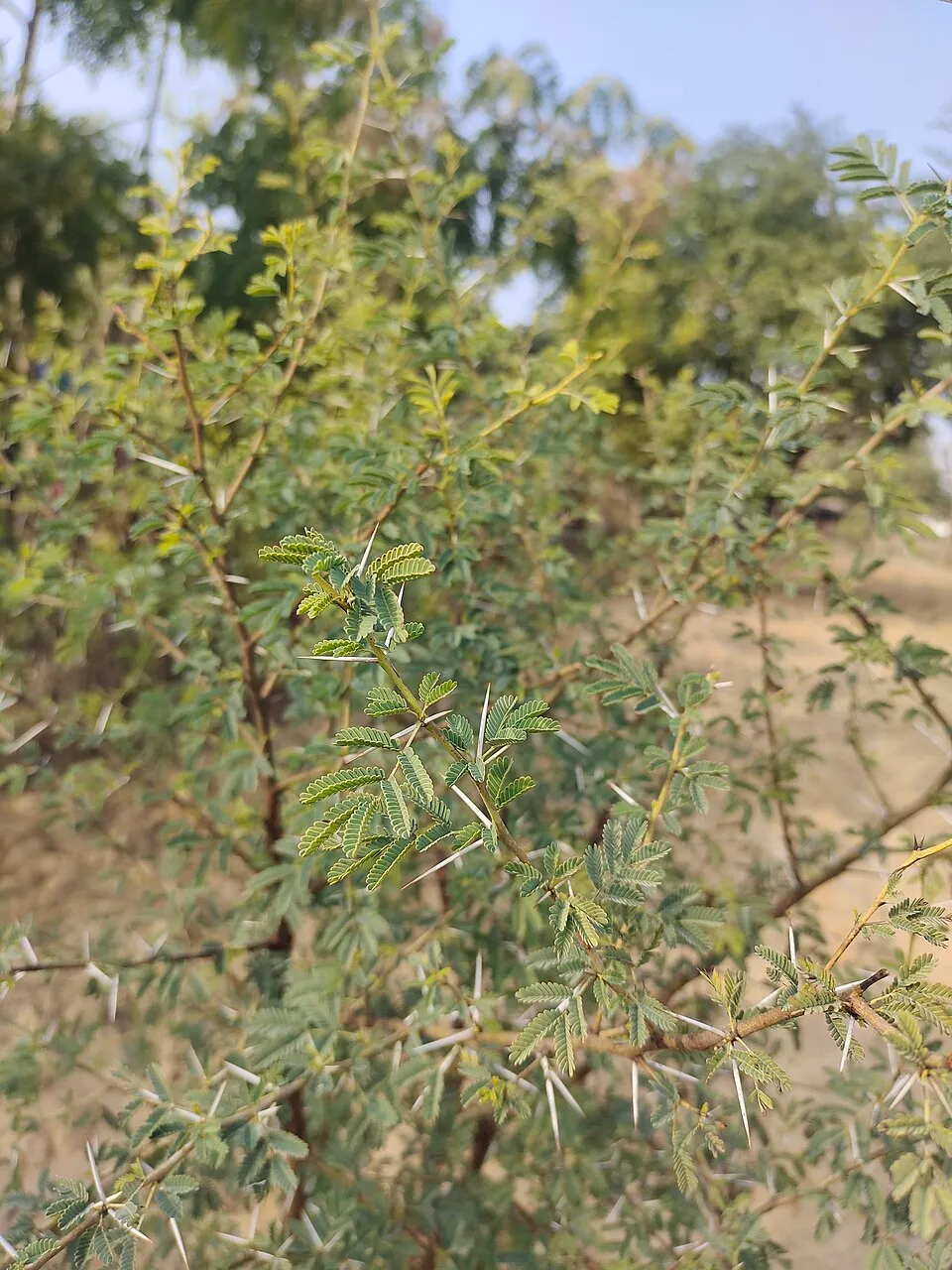
Vachellia nilotica, commonly known as Babool or the Indian gum arabic tree, is a resilient and ecologically significant species within the expansive Fabaceae family. Historically recognized as Acacia nilotica, its botanical name reflects its prevalence along the Nile River, though its indigenous range spans across Africa, the Middle East, and the Indian subcontinent, highlighting its remarkable adaptability to diverse climates. This tree typically grows to heights of 5 to 20 meters, characterized by a dense, often spreading crown that offers substantial shade. The bark, initially smooth in younger specimens, matures into a deeply fissured, dark brown, rough texture with age.
Its foliage is composed of delicate, bipinnately compound leaves, lending a fine, feathery appearance. A distinguishing feature of Babool is its formidable pair of sharp thorns found at the base of each leaf, serving as an effective defense mechanism against herbivores. The tree's vibrant flowering season occurs primarily during the monsoon and extends into early winter, producing numerous spherical, bright yellow, and highly fragrant flower heads. These blossoms are rich in nectar, attracting a multitude of pollinators, including bees.
Post-pollination, the flowers develop into characteristic flat, somewhat constricted, greyish-white pods, each typically containing 6 to 10 dark brown, glossy seeds crucial for species propagation. Babool's profound ecological role is particularly evident in arid and semi-arid regions, where it demonstrates an extraordinary capacity to thrive in challenging conditions, including nutrient-poor soils and prolonged droughts.
Trusted Scientific References
1. Authoritative external sources for Vachellia nilotica
1.1 Wikipedia — Vachellia nilotica
1.2 Kew POWO (Plants of the World Online)
1.3 PubMed — peer-reviewed research
1.4 NCBI Taxonomy Browser
1.5 GBIF — Global Biodiversity
1.6Babool should be interpreted through verified botanical identity, practical care, and responsible safety language. This recovery note adds the missing context needed for a complete profile: match light to the plant's habit, use well-drained soil, water according to season, and avoid unsupported medicinal or edible claims. For publishing, the plant can be presented as a source-backed medicinal plant with clear care guidance, common problem diagnosis, and conservative safety wording.
1.1.Babool — Key Features
- ✓Botanical Classification — Member of the Fabaceae family, formerly known as Acacia nilotica.
- ✓Thorns and Foliage — Distinctive paired thorns and delicate bipinnate leaves.
- ✓Fragrant Yellow Flowers — Spherical, bright yellow, nectar-rich flower heads.
- ✓Adaptable Growth — Thrives in arid and semi-arid regions, tolerating poor soils and drought.
- ✓Rich Phytochemistry — Contains over 150 compounds, including potent flavonoids and tannins.
- ✓Broad Medicinal Spectrum — Known for antimicrobial, anti-inflammatory, analgesic, and antidiarrheal actions.
- ✓Traditional Significance — Widely used in Ayurveda, Unani, and various folk medicine systems for centuries.
- ✓Ecological Role — Contributes to soil fertility through nitrogen fixation and provides fodder.
- ✓Economic Value — Source of gum arabic, timber, and traditional dyes.
- ✓Wound Healing Efficacy — Highly regarded for its ability to promote the healing of wounds and ulcers.
1.2.Babool — In Brief
- ✓Vachellia nilotica (Babool) is a versatile Fabaceae tree with extensive traditional medicinal uses.
- ✓Rich in flavonoids, tannins, and phenolic acids, it exhibits strong antimicrobial, anti-inflammatory, and antioxidant properties.
- ✓Primarily used for wound healing, diarrhea, oral health, and managing infections across various traditional systems.
- ✓Ecologically significant for its adaptability to arid conditions and soil improvement capabilities.
- ✓Generally considered low in toxicity, but requires caution and professional consultation for safe use, especially during pregnancy or with medications.
2.Babool — Systematic Position
3.Babool — Botanical Stats
4.Babool — Structural Profile
5.Babool — Geographic Distribution
6.Babool — Ethnobotanical Uses
7.Babool — Secondary Metabolites
- ✓Flavonoids — Compounds like quercetin, rutin, kaempferol, naringenin, catechin, and epicatechin are abundant, contributing significantly to the plant's antioxidant, anti-inflammatory, and antimicrobial activities.
- ✓Tannins — Both condensed and hydrolyzable tannins, including gallic acid and ellagic acid, are present in high concentrations, responsible for Babool's astringent, antiseptic, and wound-healing properties.
- ✓Gums — The gum exudate from the stem, primarily composed of polysaccharides, acts as a demulcent, emulsifier, and a protective agent in medicinal formulations.
- ✓Triterpenoids — Lupeol is a notable triterpenoid found, known for its anti-inflammatory and anticancer potential.
- ✓Phenolic Acids — Gallic acid and ellagic acid are key phenolic acids, contributing to the plant's strong antioxidant and free radical scavenging capabilities.
- ✓Alkaloids — While less prominent than other classes, various alkaloids are present, potentially contributing to some of its pharmacological effects.
- ✓Saponins — These compounds contribute to the plant's expectorant and anti-inflammatory actions.
- ✓Glycosides — Various glycosides are present, influencing diverse biological activities within the plant.
- ✓Fatty Acids — Seeds contain essential fatty acids, contributing to nutritional and emollient properties.
- ✓Volatile Oils — Trace amounts of volatile compounds may contribute to the plant's aroma and some subtle therapeutic effects.
8.Babool — What Research Suggests
- ✓Antimicrobial Action — Babool bark and leaves demonstrate potent activity against a wide spectrum of bacteria, fungi, and viruses, making it valuable for treating various infections.
- ✓Anti-inflammatory Properties — Its rich content of flavonoids and phenolic compounds helps mitigate inflammation, offering relief in conditions like arthritis and skin irritations.
- ✓Analgesic Effects — Extracts from Vachellia nilotica have been shown to possess pain-relieving properties, traditionally used to alleviate discomfort.
- ✓Antipyretic Benefits — Babool is traditionally employed to reduce fever, contributing to its use in managing febrile conditions.
- ✓Antidiarrheal Activity — The astringent properties, particularly from its bark, are effective in managing diarrhea and dysentery by reducing gut motility and fluid secretion.
- ✓Wound and Ulcer Healing — Topical application of Babool preparations, especially from the gum and bark, accelerates the healing of wounds, cuts, and ulcers due to its regenerative and antimicrobial actions.
- ✓Glucose and Lipid-Lowering Effects — Research suggests Babool may help in regulating blood sugar and cholesterol levels, offering potential benefits for metabolic health.
- ✓Antioxidant Support — The plant is abundant in antioxidants that combat oxidative stress, protecting cells from damage caused by free radicals.
- ✓Dental Health — The bark is traditionally used for oral hygiene, acting as an astringent to strengthen gums, reduce bleeding, and prevent dental caries.
- ✓Respiratory Relief — In traditional medicine, Babool is used to soothe respiratory ailments such as coughs and sore throats due to its demulcent and anti-inflammatory effects.
- ✓Urogenital Ailment Treatment — Traditional practices utilize Babool for addressing various urogenital complaints, likely due to its antimicrobial and anti-inflammatory actions.
- ✓Skin Emollient and Astringent — The gum and bark can be used topically as an emollient for dry skin and an astringent to tone and tighten skin, aiding in various dermatological issues.
8.1.Babool — Health Applications
9.Babool — Precautions & Warnings
9.1.Babool — Reported Side Effects
- ✓Allergic Reactions — Some individuals may experience skin rashes, itching, or respiratory issues upon exposure or consumption, particularly with the gum.
- ✓Digestive Upset — High doses may lead to constipation or gastrointestinal discomfort due to its astringent nature.
- ✓Medication Interactions — Potential to interact with blood-thinning medications, diabetic drugs (due to glucose-lowering effects), and antihypertensives.
- ✓Pregnancy and Lactation — Lack of sufficient research, therefore, pregnant and breastfeeding women should avoid its use.
- ✓Overconsumption — Excessive intake may exacerbate existing conditions or lead to adverse effects.
- ✓Topical Irritation — While generally safe, some individuals might experience localized irritation when applied to sensitive skin.
9.2.Babool — Toxicity Assessment
- ✓Consult a Professional — Always consult a healthcare provider or qualified herbalist before using Babool, especially if pregnant, breastfeeding, or on medication.
- ✓Patch Test — For topical applications, perform a patch test on a small skin area to check for allergic reactions before widespread use.
- ✓Dosage Adherence — Follow recommended dosages strictly to avoid potential side effects; self-medication with high doses is not advised.
- ✓Quality Sourcing — Ensure Babool products are sourced from reputable suppliers to guarantee purity and prevent contamination.
- ✓Children and Infants — Use with caution in children, preferably under medical supervision, due to limited safety data.
- ✓Pre-existing Conditions — Individuals with chronic health conditions, especially diabetes or hypertension, should monitor their health closely if using Babool.
10.Babool — Application Forms
- ✓Bark Decoction — The bark is commonly boiled in water to create a decoction, used orally for gastrointestinal issues like diarrhea or as a gargle for oral hygiene and sore throats.
- ✓Leaf Paste/Poultice — Fresh leaves are crushed to form a paste, applied topically to wounds, cuts, skin infections, or as an anti-inflammatory poultice.
- ✓Gum Resin — The exudate gum can be dissolved in water to make a soothing drink for coughs and sore throats, or incorporated into topical preparations as an emollient and wound healer.
- ✓Twig Brushing (Datun) — Tender twigs of Babool are traditionally chewed to clean teeth and strengthen gums, utilizing their astringent and antimicrobial properties.
- ✓Powdered Form — Dried bark or leaves can be ground into a fine powder, which can be mixed with water or honey for internal consumption, or dusted onto wounds.
- ✓Oil Infusion — Plant parts can be infused into carrier oils for topical application as an emollient or for massage to alleviate pain and inflammation.
- ✓Tea Preparation — Dried leaves or small pieces of bark can be steeped in hot water to make a medicinal tea for various internal benefits.
- ✓Culinary Use — The gum is sometimes used in traditional sweets and biscuits, leveraging its demulcent properties and as a natural thickening agent.
11.Babool — Growth Requirements
- ✓Site Selection — Babool thrives in full sun and can adapt to a wide range of soil types, preferring well-drained, sandy-loam to clayey soils.
- ✓Climate — It is highly adaptable to tropical and subtropical climates, tolerating both arid and semi-arid conditions, as well as periods of drought.
- ✓Propagation — Primarily propagated by seeds, which often require scarification (e.g., soaking in hot water) to break dormancy and improve germination rates.
- ✓Watering — Young plants require regular watering until established; mature trees are highly drought-tolerant and need minimal irrigation.
- ✓Soil Requirements — Tolerant of nutrient-poor soils, it can even improve soil fertility through nitrogen fixation due to its symbiotic relationship with rhizobia bacteria.
- ✓Spacing — When planting multiple trees, maintain adequate spacing (e.g., 5-10 meters apart) to allow for its spreading crown.
- ✓Pruning — Minimal pruning is generally required, mainly for shaping or removing dead/diseased branches.
- ✓Pest and Disease Management — Babool is relatively resistant to most pests and diseases, making it a low-maintenance tree.
Reviewed by the Flora Medical Global Botanical Review Panel
Multi-disciplinary editorial group · Botany · Ethnobotany · Herbal-medicine literature
Who reviewed this: This page was checked by the Flora Medical Global Botanical Review Panel — an in-house editorial group of botany graduates, ethnobotany researchers, and horticulture practitioners who collectively maintain our 7,000+ plant encyclopedia. Meet the team.
Our 4-step verification process
1. Taxonomic verification
Scientific names and synonyms cross-checked against Kew POWO, World Flora Online, and The Plant List.
2. Phytochemical & medicinal cross-reference
Active compounds, traditional uses, and reported activities are cross-referenced with PubMed, USDA Dr. Duke's database, and peer-reviewed ethnobotanical literature.
3. Conservation & distribution check
Distribution, ecology, and conservation status confirmed against GBIF occurrence records and the IUCN Red List.
4. Editorial & safety review
Every entry passes an editorial pass for clarity, originality, and safety notices (toxicity, contraindications, dosage caveats) before publication.
Last reviewed:
Important medical disclaimer: This content is for educational and research purposes only. It is not medical advice and is not a substitute for consultation with a licensed healthcare provider. Do not use any herb to self-treat a medical condition without professional guidance.
Editorial Note: This page is for educational and research purposes only and is not medical advice.
Written by: Flora Medical Global Editorial Team
Reviewed by: Flora Medical Global Botanical Review Panel
Last Updated: June 16, 2026





Babool — Comments & Community Reviews
Rate this plant