


Medical Disclaimer: This content is for educational purposes only. It is not medical advice. Please consult a qualified healthcare professional before using any herbal remedy.
Safety Overview
1.Bakayan — Overview
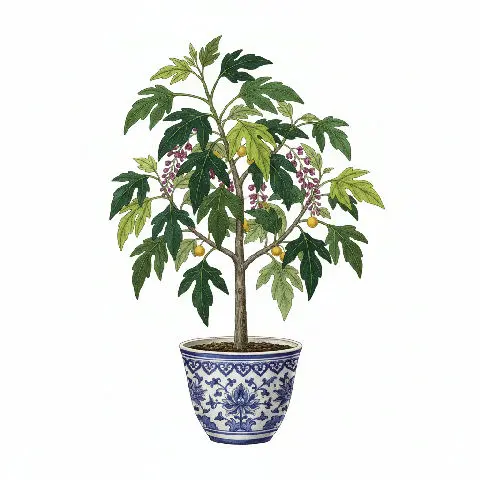
Melia azedarach, commonly known as Bakayan, Chinaberry, or Indian Lilac, is a resilient and fast-growing deciduous tree native to the Indomalayan realm and Australasia, belonging to the Meliaceae family. This adaptable species has naturalized across various global regions, thriving in diverse climates. Typically reaching heights of 7 to 15 meters, with some specimens soaring up to 45 meters, it develops a broad, spreading crown and a bole that becomes distinctly fluted with age. The young bark is smooth and greenish-brown, transitioning to a deeply fissured, grey texture in maturity.
Its striking leaves are alternate, bi- or occasionally tripinnate, measuring 20-40 cm long, comprising 3-11 serrated leaflets that are dark green above and paler beneath, emitting a characteristic pungent odor when crushed. In spring, Bakayan produces fragrant, pale purple to white flowers, arranged in axillary panicles up to 20 cm in length. Each pentamerous flower features five-lobed petals and a distinctive deep purple-blue staminal tube. The tree's most recognizable feature is its small, nearly spherical, yellow drupe fruits, approximately 15 mm in diameter.
These hard, stone-like berries contain 4 to 5 black seeds and historically served as beads, hence the 'Bead-tree' moniker. It is crucial to distinguish Melia azedarach from Azadirachta indica (Neem), its Meliaceae family cousin, as while they share some traditional uses and phytochemical profiles, their specific applications and toxicity differ. Culturally, Bakayan holds significant value in traditional medical systems like Unani and Ayurveda, where various parts are employed for a wide array of ailments, alongside its use for timber and as an ornamental tree.
Trusted Scientific References
1. Authoritative external sources for Melia azedarach
1.1 Wikipedia — Melia azedarach
1.2 Kew POWO (Plants of the World Online)
1.3 PubMed — peer-reviewed research
1.4 NCBI Taxonomy Browser
1.5 GBIF — Global Biodiversity
1.6Bakayan should be interpreted through verified botanical identity, practical care, and responsible safety language. This recovery note adds the missing context needed for a complete profile: match light to the plant's habit, use well-drained soil, water according to season, and avoid unsupported medicinal or edible claims. For publishing, the plant can be presented as a source-backed medicinal plant with clear care guidance, common problem diagnosis, and conservative safety wording.
1.1.Bakayan — Defining Traits
- ✓Common Names — Bakayan, Chinaberry, Indian Lilac, Persian Lilac.
- ✓Scientific Name — Melia azedarach.
- ✓Family — Meliaceae, related to Neem but distinct.
- ✓Growth Habit — Fast-growing deciduous tree, reaching up to 45 meters.
- ✓Distinctive Fruits — Small, yellow, spherical drupes used as beads, but highly toxic.
- ✓Fragrant Flowers — Pale purple to white flowers borne in panicles.
- ✓Traditional Medicine — Widely utilized in Unani and Ayurvedic systems.
- ✓Phytochemical Rich — Contains limonoids, triterpenes, and flavonoids.
- ✓Toxicity — Fruits and seeds are notably poisonous if ingested.
- ✓Versatile Uses — Medicinal, ornamental, timber, and insecticidal properties.
1.2.Bakayan — Concise Overview
- ✓Bakayan (Melia azedarach) is a versatile tree in the Meliaceae family, native to Asia and Australasia.
- ✓Traditionally used in Unani and Ayurvedic medicine for anti-inflammatory, analgesic, and anti-parasitic properties.
- ✓Contains potent limonoids, triterpenes, and flavonoids contributing to its medicinal actions.
- ✓All parts, especially the fruits and seeds, are highly toxic and ingestion can be fatal.
- ✓Requires strict professional guidance for any medicinal application, particularly internal use.
- ✓Valued for its timber, ornamental appeal, and traditional herbal uses, despite its toxicity.
2.Bakayan — Taxonomic Classification
3.Bakayan — Quick Facts
4.Bakayan — Morphological Account
5.Bakayan — Habitat & Distribution
6.Bakayan — Historical Applications
7.Bakayan — Secondary Metabolites
- ✓Limonoids — Key compounds like azedarachin, nimbolinin, melianone, and salannin are responsible for insecticidal, anti-feedant, and various medicinal properties.
- ✓Triterpenes — Compounds such as azedarachol and meliacin contribute to anti-inflammatory, antimicrobial, and cytotoxic activities.
- ✓Flavonoids — Quercetin, kaempferol, and their glycosides are present, offering antioxidant and anti-inflammatory benefits.
- ✓Steroids — Beta-sitosterol and stigmasterol are found, known for their anti-inflammatory and cholesterol-lowering potential.
- ✓Alkaloids — Although in smaller amounts, some alkaloidal compounds may contribute to its diverse pharmacological actions.
- ✓Saponins — These compounds exhibit detergent-like properties and are associated with anti-inflammatory and immune-modulating effects.
- ✓Tannins — Provide astringent properties, useful in traditional medicine for wound healing and anti-diarrheal applications.
- ✓Phenolic Acids — Including gallic acid and ferulic acid, these contribute significantly to the plant's antioxidant capacity.
- ✓Fatty Acids — Seeds contain various fatty acids, which can have emollient and nutritional properties.
- ✓Volatile Compounds — Present in leaves and flowers, contributing to the plant's characteristic aroma and potential antimicrobial effects.
8.Bakayan — Modern Studies
- ✓Analgesic (Musakkin) — Bakayan possesses pain-relieving properties, traditionally used to alleviate various forms of body aches and discomfort.
- ✓Anti-inflammatory (Mohallil-e-Waram) — Extracts from the plant help reduce inflammation, making it useful for conditions characterized by swelling and pain.
- ✓Blood Purifier (Musaffi-e-Khoom) — It is traditionally believed to cleanse the blood, aiding in the treatment of skin ailments and other systemic impurities.
- ✓Anti-diabetic (Dafa-e-Ziabetes) — Some studies suggest its potential to help regulate blood sugar levels, contributing to diabetes management.
- ✓Anti-helmintic (Qatil-e-Deedan) — Effective against intestinal worms, Bakayan has been used to expel parasites from the digestive tract.
- ✓Antipyretic (Dafa-e-Humma) — The plant exhibits fever-reducing qualities, providing relief during febrile conditions.
- ✓Diuretic (Mudir-e-Baul) — It promotes increased urine production, which can aid in flushing out toxins and managing fluid retention.
- ✓Skin Disease Treatment (Amraz-e-Jild) — Applied topically or consumed, it helps in managing various skin conditions like scabies, itching, and leucoderma.
- ✓Anti-Hemorrhoidal (Dafa-e-Bawaseer) — Traditional uses include alleviating symptoms of piles due to its astringent and anti-inflammatory actions.
- ✓Deobstruent (Mufatt-e-Sudda) — It is known to clear obstructions in the body's channels, particularly relevant in Unani medicine for improving organ function.
- ✓Brain Tonic (Muqawwi-e-Dimagh) — Traditionally used to support cognitive function and enhance mental well-being.
- ✓Heart Tonic (Muqawwi-e-Qalb) — Believed to strengthen the heart and improve cardiovascular health in traditional systems.
8.1.Bakayan — Reported Uses
9.Bakayan — Risk Profile
9.1.Bakayan — Side Effects & Warnings
- ✓Gastrointestinal Distress — Ingestion of fruits or high doses of other parts can cause nausea, vomiting, abdominal pain, and diarrhea.
- ✓Neurological Symptoms — Severe poisoning may lead to dizziness, confusion, seizures, and paralysis, particularly in children.
- ✓Liver and Kidney Damage — Toxic compounds can cause hepatotoxicity and nephrotoxicity, especially with prolonged or excessive use.
- ✓Bradycardia — May cause a slowing of the heart rate in cases of significant overdose or sensitivity.
- ✓Respiratory Depression — High doses can depress the respiratory system, leading to breathing difficulties.
- ✓Skin Irritation — Direct contact with sap or certain plant parts may cause dermatitis or allergic reactions in sensitive individuals.
- ✓Ocular Irritation — Contact with eye can lead to irritation and conjunctivitis.
9.2.Bakayan — Toxicity Assessment
- ✓High Toxicity — The fruits and seeds of Melia azedarach are highly toxic, particularly to humans and some animals, and should never be ingested.
- ✓Professional Guidance — Use of any part of Bakayan for medicinal purposes must be strictly under the supervision of a qualified medical herbalist or practitioner.
- ✓Contraindicated in Pregnancy and Lactation — Due to its toxic compounds, it is unsafe for pregnant or breastfeeding women.
- ✓Avoid in Children — Children are particularly vulnerable to the toxic effects, and ingestion can be fatal; keep plant parts out of reach.
- ✓Drug Interactions — May interact with medications, especially those affecting the liver, heart, or central nervous system; consult a doctor.
- ✓External Use Only (with caution) — While some external applications are traditional, even topical use should be mindful of skin sensitivity and absorption.
- ✓Dosage — Precise and very low dosages are critical when used medicinally, and self-medication is strongly discouraged.
10.Bakayan — How to Use
- ✓Decoction — Bark or leaves are boiled in water to extract active compounds, commonly used for internal ailments like fever or blood purification.
- ✓Poultice — Crushed fresh leaves or bark paste applied topically to reduce inflammation, treat skin infections, or relieve pain.
- ✓Powder — Dried leaves, bark, or seeds are ground into a fine powder for oral consumption, often mixed with honey or water, or used in formulations.
- ✓Oil Infusion — Leaves or flowers are infused in carrier oils (e.g., sesame oil) to create medicated oils for topical application on skin conditions or painful joints.
- ✓Juice — Fresh leaf juice can be extracted and consumed in small, diluted doses for specific internal conditions, but extreme caution is advised due to toxicity.
- ✓Paste — Seeds or bark are ground into a paste with water, used externally for skin issues or as an insect repellent.
- ✓Fumigation — Dried leaves or wood chips are sometimes burned for their insecticidal and repellent properties in enclosed spaces.
- ✓Gargle — A diluted decoction of leaves or bark can be used as a gargle for mouth ulcers or throat infections.
11.Bakayan — Growth Requirements
- ✓Climate — Thrives in tropical and subtropical climates, tolerating a wide range of temperatures but sensitive to severe frost.
- ✓Soil — Prefers well-drained, fertile loamy soils, but is highly adaptable to various soil types, including sandy and rocky soils.
- ✓Propagation — Primarily propagated by seeds, which require scarification or soaking to improve germination rates. Can also be propagated by cuttings.
- ✓Sunlight — Requires full sun exposure for optimal growth and fruit production, though it can tolerate partial shade.
- ✓Watering — Young trees need regular watering; established trees are drought-tolerant but benefit from occasional deep watering during dry spells.
- ✓Pests and Diseases — Generally resistant, but can be susceptible to some leaf-eating insects and fungal diseases in certain conditions.
- ✓Spacing — Plant saplings at least 5-10 meters apart to allow for its broad, spreading crown and robust root system.
- ✓Pruning — Light pruning can help shape the tree and remove dead or diseased branches, promoting healthy growth.
Reviewed by the Flora Medical Global Botanical Review Panel
Multi-disciplinary editorial group · Botany · Ethnobotany · Herbal-medicine literature
Who reviewed this: This page was checked by the Flora Medical Global Botanical Review Panel — an in-house editorial group of botany graduates, ethnobotany researchers, and horticulture practitioners who collectively maintain our 7,000+ plant encyclopedia. Meet the team.
Our 4-step verification process
1. Taxonomic verification
Scientific names and synonyms cross-checked against Kew POWO, World Flora Online, and The Plant List.
2. Phytochemical & medicinal cross-reference
Active compounds, traditional uses, and reported activities are cross-referenced with PubMed, USDA Dr. Duke's database, and peer-reviewed ethnobotanical literature.
3. Conservation & distribution check
Distribution, ecology, and conservation status confirmed against GBIF occurrence records and the IUCN Red List.
4. Editorial & safety review
Every entry passes an editorial pass for clarity, originality, and safety notices (toxicity, contraindications, dosage caveats) before publication.
Last reviewed:
Important medical disclaimer: This content is for educational and research purposes only. It is not medical advice and is not a substitute for consultation with a licensed healthcare provider. Do not use any herb to self-treat a medical condition without professional guidance.
Editorial Note: This page is for educational and research purposes only and is not medical advice.
Written by: Flora Medical Global Editorial Team
Reviewed by: Flora Medical Global Botanical Review Panel
Last Updated: June 16, 2026





Bakayan — Comments & Community Reviews
Rate this plant