


Medical Disclaimer: This content is for educational purposes only. It is not medical advice. Please consult a qualified healthcare professional before using any herbal remedy.
Safety Overview
1.Banana Flower — Botanical Snapshot
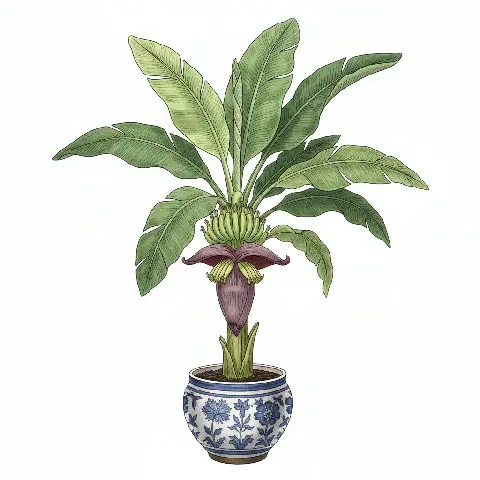
The banana flower, scientifically known as Musa paradisiaca, is a remarkable and often underutilized botanical structure from the Musaceae family. This distinctive, large, teardrop-shaped inflorescence, commonly referred to as a 'banana heart,' hangs prominently at the terminal end of a banana fruit cluster. Morphologically, it is characterized by several layers of tough, purplish-red, protective bracts or spathes that elegantly enclose rows of small, immature flowers. The outermost, darker bracts are typically fibrous and discarded, while the inner, paler ones are tender and highly prized for their edibility. Within the inflorescence, individual flowers are arranged in clusters, with male flowers generally located towards the tip and the female, fruit-producing flowers positioned closer to the stem.
As the male flowers mature, they are shed, leaving a characteristic scar, while the female flowers develop into the familiar banana fruits. The plant itself is a giant herbaceous perennial, not a tree, distinguished by its pseudostem formed from tightly packed, overlapping leaf sheaths. Its leaves are notably large, broad, and oblong, emerging gracefully from the central pseudostem. The root system is fibrous and relatively shallow, providing essential anchorage. Musa paradisiaca is native to the lush tropical and subtropical regions of South Asia, particularly India and Southeast Asia, where it has been cultivated for millennia.
Its geographical distribution now spans across all tropical zones globally due to its profound agricultural significance. Taxonomically, the genus Musa is complex, with many widely consumed edible bananas being sterile hybrids, often involving Musa acuminata and Musa balbisiana. Historically and culturally, the banana flower has been a culinary staple in numerous traditional cuisines, especially in Southeast Asian and South Indian dishes, where it is incorporated into curries, stir-fries, and salads. Beyond its extensive culinary applications, its significant role in traditional medicine systems further underscores its cultural importance as a versatile and valuable plant resource, offering a spectrum of health benefits.
Trusted Scientific References
1. Authoritative external sources for Musa ×paradisiaca
1.1 Wikipedia — Musa ×paradisiaca
1.2 Kew POWO (Plants of the World Online)
1.3 PubMed — peer-reviewed research
1.4 NCBI Taxonomy Browser
1.5 GBIF — Global Biodiversity
1.1.Banana Flower — Notable Characteristics
- ✓Edible Inflorescence — The 'banana heart' is a prized culinary ingredient.
- ✓Antioxidant Rich — High in phenolic acids and flavonoids for cellular protection.
- ✓Anti — inflammatory Properties — Helps reduce systemic inflammation.
- ✓Supports Women's Health — Traditionally used for lactation and menstrual issues.
- ✓Digestive Aid — Excellent source of dietary fiber.
- ✓Cardiovascular Benefits — May help manage cholesterol and blood pressure.
- ✓Anti — diabetic Potential — Contributes to blood sugar regulation.
- ✓Sustainable Resource — Utilizes an agricultural byproduct, reducing waste.
- ✓Unique Morphology — Distinctive teardrop shape with layered bracts.
- ✓Traditional Medicine Staple — Valued in various folk medicine systems.
1.2.Banana Flower — Quick Summary
- ✓Nutrient-rich botanical with significant health benefits.
- ✓A versatile culinary ingredient in many traditional cuisines.
- ✓Potent source of antioxidants, vitamins, and minerals.
- ✓Supports women's health, digestion, and cardiovascular wellness.
- ✓Offers anti-diabetic and anti-inflammatory properties.
- ✓An underutilized and sustainable agricultural byproduct.
2.Banana Flower — Botanical Identity
3.Banana Flower — Vital Statistics
4.Banana Flower — Botanical Description
5.Banana Flower — Ecological Habitat
6.Banana Flower — Traditional Uses
7.Banana Flower — Phytochemistry
- ✓Flavonoids — Such as quercetin and kaempferol, known for their antioxidant and anti-inflammatory effects.
- ✓Polyphenols — A broad class of compounds with significant antioxidant activity.
- ✓Tannins — Contributing to astringent properties and potential antimicrobial effects.
- ✓Saponins — May possess anti-inflammatory and cholesterol-lowering properties.
- ✓Alkaloids — Some alkaloids present may have analgesic or other pharmacological effects.
- ✓Minerals — Including iron, potassium, and magnesium, essential for various bodily functions.
- ✓Vitamins — Such as Vitamin A and Vitamin C, important for immune function and antioxidant defense.
8.Banana Flower — Pharmacological Findings
- ✓Antioxidant Powerhouse — The banana flower is rich in flavonoids, polyphenols, and tannins, potent antioxidants that combat free radical damage, thereby reducing oxidative stress implicated in chronic diseases like heart disease and cancer.
- ✓Diabetes Management — Studies suggest that compounds within the banana flower can help regulate blood sugar levels by inhibiting alpha-glucosidase, an enzyme that breaks down carbohydrates, and potentially increasing insulin sensitivity.
- ✓Digestive Health Support — High in dietary fiber, the banana flower promotes healthy digestion, aids in preventing constipation, and supports a balanced gut microbiome, contributing to overall gastrointestinal well-being.
- ✓Anemia Relief — Rich in iron, the banana flower can help boost hemoglobin levels in the blood, making it a beneficial dietary addition for individuals suffering from iron-deficiency anemia.
- ✓Menstrual Health Regulation — Traditionally used to manage excessive menstrual bleeding and pain, the flower's properties are believed to help balance hormones and reduce inflammation associated with menstruation.
- ✓Weight Management Aid — The fiber content contributes to satiety, helping to reduce overall calorie intake and supporting weight loss efforts by promoting a feeling of fullness.
- ✓Anti-inflammatory Properties — Bioactive compounds in the banana flower possess anti-inflammatory effects, which can be beneficial in alleviating symptoms of inflammatory conditions.
- ✓Wound Healing — Extracts from the banana flower have demonstrated antimicrobial and wound-healing properties, potentially accelerating the recovery process of minor cuts and abrasions.
- ✓Cardiovascular Health — The antioxidants and fiber content may contribute to lowering cholesterol levels and blood pressure, supporting a healthier cardiovascular system.
- ✓Lactation Support — In some cultures, banana flower is consumed to enhance milk production in breastfeeding mothers, though scientific evidence is limited.
- ✓Skin Health Improvement — The antioxidant and anti-inflammatory properties can contribute to healthier skin by combating aging signs and reducing inflammatory skin conditions.
- ✓Urinary Tract Health — Some traditional uses suggest a role in promoting urinary tract health, possibly due to diuretic properties.
- ✓Nutrient Richness — Beyond specific benefits, the flower provides essential vitamins and minerals, contributing to a balanced nutritional intake.
8.1.Banana Flower — Therapeutic Indications
9.Banana Flower — Cautions & Contraindications
9.1.Banana Flower — Warnings
- ✓While generally considered safe when consumed as food, excessive consumption of banana flower, particularly in concentrated extract form, might lead to mild gastrointestinal discomfort due to its high fiber content.
- ✓Individuals with specific allergies to plants in the Musaceae family should exercise caution.
9.2.Banana Flower — Risk Assessment
- ✓Banana flower is widely consumed as a vegetable in many cuisines and is generally recognized as safe (GRAS) when prepared and eaten in moderation.
- ✓However, pregnant or breastfeeding women and individuals with pre-existing medical conditions should consult a healthcare professional before using it for medicinal purposes or in large quantities.
10.Banana Flower — Preparations & Uses
- ✓Fresh Culinary Use — The inner tender parts of the banana flower are widely used in Southeast Asian and South Indian cuisines, typically sliced or chopped.
- ✓Soaking and Cleaning — Before cooking, the flower should be cleaned by removing tough outer bracts and soaking in water with lemon juice or buttermilk to reduce astringency.
- ✓Stir-fries and Curries — It can be stir-fried with spices, added to coconut milk-based curries, or incorporated into savory stews.
- ✓Salads — Finely shredded banana flower can be blanched and used in fresh salads, often dressed with lime and chili.
- ✓Traditional Medicinal Preparations — Used in decoctions, infusions, or poultices for various traditional remedies.
- ✓Fritters and Patties — The chopped flower can be mixed with flour and spices to make delicious fritters or patties.
- ✓Dried Powder — Can be dried and powdered for use as a nutritional supplement or in traditional herbal formulations.
- ✓Juices and Smoothies — Occasionally blended into juices or smoothies for its nutritional benefits, though astringency needs careful management.
11.Banana Flower — Garden Cultivation
- ✓Climate — Thrives in tropical and subtropical climates with high humidity and consistent warmth.
- ✓Soil — Requires well-drained, fertile loamy soil rich in organic matter, with a pH between 6.0 and 7.5.
- ✓Propagation — Primarily propagated using suckers (offsets) or rhizome sections from mature plants.
- ✓Sunlight — Needs full sun exposure, ideally 6-8 hours of direct sunlight daily for optimal growth and flowering.
- ✓Watering — Requires abundant and consistent watering, especially during dry periods, but avoid waterlogging.
- ✓Fertilization — Benefits from regular feeding with balanced, organic fertilizers rich in potassium and phosphorus.
- ✓Pest Management — Monitor for common banana pests like aphids and borers; employ integrated pest management strategies.
- ✓Harvesting — The banana flower is harvested when mature and fully developed, typically before the female flowers fully develop into fruits.
Reviewed by the Flora Medical Global Botanical Review Panel
Multi-disciplinary editorial group · Botany · Ethnobotany · Herbal-medicine literature
Who reviewed this: This page was checked by the Flora Medical Global Botanical Review Panel — an in-house editorial group of botany graduates, ethnobotany researchers, and horticulture practitioners who collectively maintain our 7,000+ plant encyclopedia. Meet the team.
Our 4-step verification process
1. Taxonomic verification
Scientific names and synonyms cross-checked against Kew POWO, World Flora Online, and The Plant List.
2. Phytochemical & medicinal cross-reference
Active compounds, traditional uses, and reported activities are cross-referenced with PubMed, USDA Dr. Duke's database, and peer-reviewed ethnobotanical literature.
3. Conservation & distribution check
Distribution, ecology, and conservation status confirmed against GBIF occurrence records and the IUCN Red List.
4. Editorial & safety review
Every entry passes an editorial pass for clarity, originality, and safety notices (toxicity, contraindications, dosage caveats) before publication.
Last reviewed:
Important medical disclaimer: This content is for educational and research purposes only. It is not medical advice and is not a substitute for consultation with a licensed healthcare provider. Do not use any herb to self-treat a medical condition without professional guidance.
Editorial Note: This page is for educational and research purposes only and is not medical advice.
Written by: Flora Medical Global Editorial Team
Reviewed by: Flora Medical Global Botanical Review Panel
Last Updated: June 16, 2026





Banana Flower — Comments & Community Reviews
Rate this plant