
Medical Disclaimer: This content is for educational purposes only. It is not medical advice. Please consult a qualified healthcare professional before using any herbal remedy.
Safety Overview
1.Baobab — Plant Snapshot
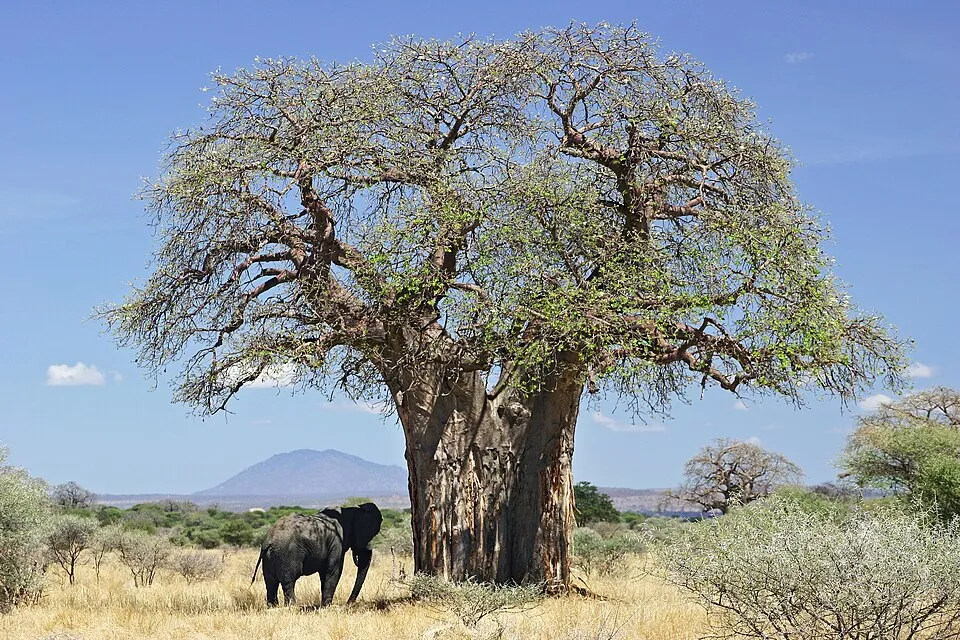
The Baobab tree, botanically designated Adansonia digitata, is an iconic and ancient deciduous tree deeply ingrained in the landscapes and cultures of the African savanna. Revered as the 'Tree of Life' or 'Pharmacy Tree' by indigenous communities, it thrives in the continent's arid and semi-arid zones. Its most distinguishing characteristic is its massive, often bottle-shaped trunk, which can swell to store considerable amounts of water, an adaptation crucial for its survival through prolonged dry spells.
Some of these majestic specimens are estimated to live for over 2,500 years, reaching heights of 5 to 25 meters with trunk diameters that can span 7 to 14 meters. The bark is typically smooth and grey, frequently bearing marks from wildlife or human interaction. During the dry season, the baobab sheds its leaves, creating a striking 'upside-down' appearance where its bare branches resemble roots extending towards the sky.
The leaves of Adansonia digitata are digitate, typically composed of 5 to 7 leaflets, emerging only during the brief wet season. Its large, pendulous white flowers, measuring up to 12 cm across, open at dusk, emitting a potent, musky fragrance primarily to attract fruit bats for pollination. These nocturnal blooms are short-lived, often wilting and falling by dawn.
Following successful pollination, the baobab produces its distinctive large, oblong to ovoid fruits, commonly known as 'monkey bread.' These fruits are encased within a hard, woody shell. Inside, the pulp is dry, powdery, and whitish, encasing numerous kidney-shaped seeds. This unique, desiccant fruit pulp is highly valued for its exceptional nutritional density, earning it 'Superfood' status in modern dietary science.
Historically, every part of the baobab tree—from its roots to its leaves, bark, and fruit—has been resourcefully utilized by indigenous populations for sustenance, traditional medicine, and raw materials for crafts and shelter, embodying profound cultural significance.
Trusted Scientific References
1. Authoritative external sources for Adansonia digitata
1.1 Wikipedia — Adansonia digitata
1.2 Kew POWO (Plants of the World Online)
1.3 PubMed — peer-reviewed research
1.4 NCBI Taxonomy Browser
1.5 GBIF — Global Biodiversity
1.1.Baobab — Defining Traits
- ✓Iconic 'Tree of — Iconic 'Tree of Life' native to African savannas.
- ✓Exceptionally long — lived, some specimens over 2,500 years old.
- ✓Colossal, water — storing, bottle-shaped trunk.
- ✓Nutritionally dense fruit — Nutritionally dense fruit pulp, a 'Superfood' rich in Vitamin C and minerals.
- ✓Significant antioxidant and anti — inflammatory bioactive compounds.
- ✓Traditional uses span — Traditional uses span across fever, diarrhea, pain, and hydration.
- ✓Leaves, bark, and — Leaves, bark, and seeds also hold medicinal and nutritional value.
- ✓Plays a critical — Plays a critical ecological role in its native habitat.
- ✓Unique nocturnal flowering — Unique nocturnal flowering pollinated by fruit bats.
- ✓Potential for blood — Potential for blood glucose regulation and digestive health.
1.2.Baobab — Concise Overview
- ✓Adansonia digitata, the African Baobab, is a 'Tree of Life' known for its massive trunk and longevity.
- ✓Its dry fruit pulp is a 'Superfood' rich in Vitamin C, fiber, and essential minerals.
- ✓Exhibits significant antioxidant, anti-inflammatory, and blood sugar regulating properties.
- ✓Traditionally used for hydration, fever, diarrhea, and as a general tonic.
- ✓Every part of the tree – leaves, bark, fruit, seeds – has medicinal and nutritional value.
- ✓Generally safe for consumption but warrants caution for specific health conditions or medications.
2.Baobab — Systematic Position
3.Baobab — Reference Facts
4.Baobab — Structural Profile
5.Baobab — Where It Grows
6.Baobab — Ethnobotanical Uses
7.Baobab — Bioactive Constituents
- ✓Vitamin C — A potent antioxidant crucial for immune function, collagen synthesis, and skin health.
- ✓Polyphenols (e.g., Epicatechin, Catechin, Quercetin) — A diverse group of antioxidants that combat oxidative stress and inflammation.
- ✓Dietary Fiber (Soluble and Insoluble) — Promotes digestive health, aids blood sugar control, and helps lower cholesterol.
- ✓Minerals (Calcium, Magnesium, Potassium, Phosphorus, Iron, Zinc) — Essential for bone health, nerve function, blood pressure regulation, and various metabolic processes.
- ✓B Vitamins (Thiamine, Riboflavin, Niacin, B6) — Involved in energy metabolism and nervous system function.
- ✓Triterpenoids — Compounds with potential anti-inflammatory and antioxidant activities.
- ✓Flavonoids — A class of plant pigments with antioxidant and anti-inflammatory properties.
8.Baobab — Modern Studies
- ✓Antioxidant Powerhouse — Baobab fruit pulp is exceptionally rich in antioxidants, particularly vitamin C and polyphenols like epicatechin and catechin. These compounds help neutralize harmful free radicals in the body, protecting cells from oxidative stress and potentially reducing the risk of chronic diseases such as heart disease and certain cancers.
- ✓Digestive Health Support — The high fiber content in baobab, both soluble and insoluble, acts as a prebiotic, feeding beneficial gut bacteria and promoting a healthy digestive system. It can help alleviate constipation, improve bowel regularity, and may play a role in managing conditions like irritable bowel syndrome (IBS).
- ✓Immune System Booster — The significant amount of vitamin C present in baobab is crucial for a robust immune system. Vitamin C supports the production and function of white blood cells, which are essential for fighting off infections and illnesses.
- ✓Anti-inflammatory Properties — Compounds found in baobab, including certain flavonoids and phenolic acids, exhibit anti-inflammatory effects. This can help reduce inflammation throughout the body, which is linked to numerous health problems, including arthritis and inflammatory bowel diseases.
- ✓Blood Sugar Regulation — Studies suggest that the soluble fiber in baobab can help slow down the absorption of sugar into the bloodstream, leading to more stable blood glucose levels. This makes it a potentially beneficial addition for individuals managing diabetes or seeking to prevent blood sugar spikes.
- ✓Skin Health and Wound Healing — The vitamin C content is vital for collagen synthesis, a protein essential for skin elasticity and repair. Baobab's antioxidant and anti-inflammatory properties also contribute to healthier skin and can support the healing of wounds and minor skin irritations.
- ✓Cardiovascular Health — The fiber and antioxidants in baobab can contribute to heart health by helping to lower cholesterol levels and reduce blood pressure. The potassium content also plays a role in maintaining healthy blood pressure.
- ✓Bone Health — Baobab contains essential minerals like calcium, magnesium, and phosphorus, which are critical for maintaining strong and healthy bones. Adequate intake of these minerals helps prevent osteoporosis and other bone-related conditions.
- ✓Energy Levels — The complex carbohydrates and minerals in baobab can provide a sustained release of energy, helping to combat fatigue and improve overall vitality without the crash associated with simple sugars.
- ✓Nutrient Density — Beyond vitamin C, baobab is a good source of several B vitamins, calcium, iron, magnesium, potassium, and zinc, offering a broad spectrum of essential nutrients in a single fruit.
- ✓Potential Antiviral Activity — Preliminary research indicates that certain compounds in baobab may possess antiviral properties, suggesting potential applications in combating viral infections, although more research is needed.
- ✓Liver Protection — Some studies suggest that baobab extract may have protective effects on the liver, potentially helping to mitigate damage caused by toxins and certain medications.
8.1.Baobab — Reported Uses
9.Baobab — Adverse Effects
9.1.Baobab — Warnings
- ✓Baobab is generally considered safe for most people when consumed in moderation as part of a balanced diet.
- ✓However, due to its high fiber content, excessive consumption may lead to digestive discomfort such as bloating, gas, or diarrhea, especially for individuals not accustomed to a high-fiber intake.
- ✓It is always advisable to start with small amounts and gradually increase intake.
9.2.Baobab — Toxicity Assessment
- ✓Baobab has a long history of traditional use and is recognized as safe (GRAS) by the FDA for use as a food ingredient in the United States.
- ✓Pregnant and breastfeeding women should consult with a healthcare professional before incorporating baobab supplements into their diet, as specific safety data for these populations is limited. Individuals with pre-existing digestive conditions should also exercise caution and consult their doctor.
10.Baobab — Preparation & Dosage
- ✓Fruit Pulp Powder — The dry fruit pulp is ground into a fine powder, commonly mixed into smoothies, yogurts, cereals, or water as a nutritional supplement.
- ✓Infusions and Teas — Leaves and bark can be steeped in hot water to create medicinal teas for various ailments like fever, inflammation, or digestive issues.
- ✓Edible Leaves — Young baobab leaves are eaten fresh or cooked, similar to spinach, providing vitamins and minerals.
- ✓Seed Oil — Seeds are pressed to extract a nutrient-rich oil used in cosmetics for skin and hair, and occasionally in cooking.
- ✓Traditional Porridges — Fruit pulp is often mixed with water or milk to create a nutritious, tangy porridge, especially for children or the sick.
- ✓Bark Decoctions — Bark is boiled to create decoctions used topically for wounds or internally for fevers and malaria in traditional medicine.
- ✓Roasted Seeds — Baobab seeds can be roasted and consumed as a snack or ground and used as a coffee substitute.
- ✓Hair and Skin Treatments — The oil and powdered fruit are incorporated into traditional remedies for skin conditions and hair health due to their moisturizing and antioxidant properties.
11.Baobab — Growing Guide
- ✓Climate Preference — Thrives in hot, dry climates with distinct wet and dry seasons, typically sub-Saharan savannas.
- ✓Soil Requirements — Prefers well-draining, sandy to loamy soils; tolerates poor soil fertility and rocky conditions.
- ✓Propagation — Primarily propagated by seeds, which require scarification or soaking to break dormancy, or by cuttings.
- ✓Watering — Young trees need regular watering; mature trees are highly drought-tolerant and require minimal irrigation.
- ✓Sunlight — Requires full sun exposure for optimal growth and fruit production.
- ✓Spacing — Given its massive size, requires ample space, ideally 10-15 meters between trees.
- ✓Pests and Diseases — Generally robust, but young trees can be susceptible to fungal diseases and termite attacks.
- ✓Harvest — Fruits are harvested when they naturally fall from the tree, typically during the dry season, indicating ripeness.
Reviewed by the Flora Medical Global Botanical Review Panel
Multi-disciplinary editorial group · Botany · Ethnobotany · Herbal-medicine literature
Who reviewed this: This page was checked by the Flora Medical Global Botanical Review Panel — an in-house editorial group of botany graduates, ethnobotany researchers, and horticulture practitioners who collectively maintain our 7,000+ plant encyclopedia. Meet the team.
Our 4-step verification process
1. Taxonomic verification
Scientific names and synonyms cross-checked against Kew POWO, World Flora Online, and The Plant List.
2. Phytochemical & medicinal cross-reference
Active compounds, traditional uses, and reported activities are cross-referenced with PubMed, USDA Dr. Duke's database, and peer-reviewed ethnobotanical literature.
3. Conservation & distribution check
Distribution, ecology, and conservation status confirmed against GBIF occurrence records and the IUCN Red List.
4. Editorial & safety review
Every entry passes an editorial pass for clarity, originality, and safety notices (toxicity, contraindications, dosage caveats) before publication.
Last reviewed:
Important medical disclaimer: This content is for educational and research purposes only. It is not medical advice and is not a substitute for consultation with a licensed healthcare provider. Do not use any herb to self-treat a medical condition without professional guidance.
Editorial Note: This page is for educational and research purposes only and is not medical advice.
Written by: Flora Medical Global Editorial Team
Reviewed by: Flora Medical Global Botanical Review Panel
Last Updated: June 16, 2026





Baobab — Comments & Community Reviews
Rate this plant